Types of Pressure Treated Wood for Structural Framing & Load-Bearing Builds
Discover the best types of pressure treated wood for structural applications, including AWPA use categories, retention levels, and framing specs.

Decoding Structural Pressure Treated Lumber
When specifying wood for structural framing, sill plates, load-bearing posts, and permanent wood foundations, selecting the correct preservative chemistry and retention level is non-negotiable. Using under-treated lumber in ground-contact or high-moisture applications leads to premature fungal decay, compromising the structural integrity of the entire building. Conversely, over-specifying treatment for above-grade framing wastes budget and introduces unnecessary moisture into the building envelope.
The American Wood Protection Association (AWPA) categorizes treated wood based on its end-use exposure. For structural engineers, architects, and builders, understanding these Use Categories (UC) and the specific types of pressure treated wood available is critical for code compliance and structural longevity.
- UC2 (Interior Dry): Protected from weather, dampness, and termites. (e.g., Interior sill plates over termite shields).
- UC3B (Above Ground, Exposed): Exposed to weather but not in contact with the ground. (e.g., Deck joists, exterior wall framing, ledgers).
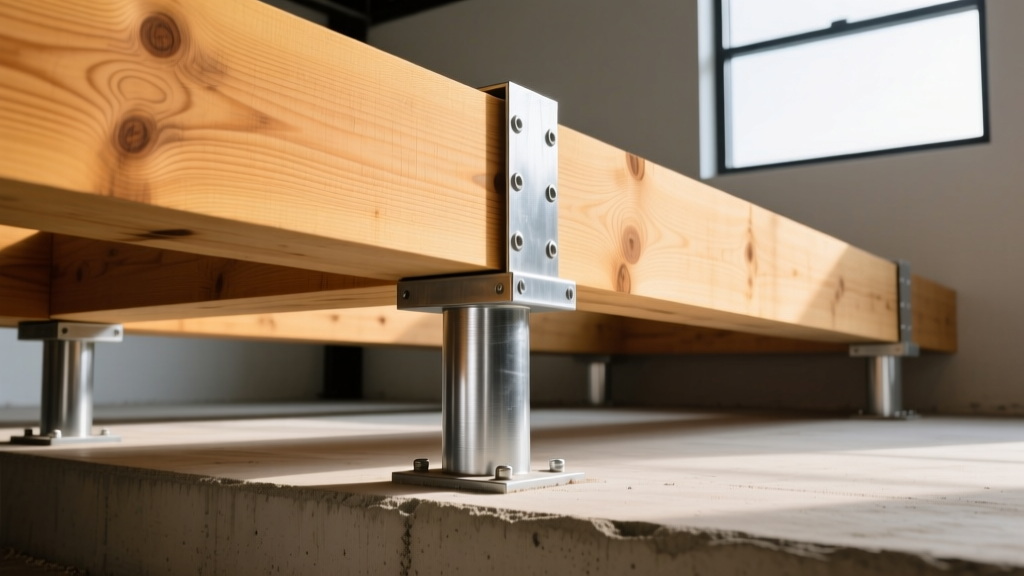
- UC4A (Ground Contact, General): In contact with ground or fresh water. (e.g., Structural posts on concrete piers, landscape retaining walls under 6 feet).
- UC4B (Ground Contact, Heavy Duty): Critical structural components or high-decay hazard areas. (e.g., Permanent wood foundation posts, building poles).
- UC4C (Ground Contact, Extreme): Extreme hazard environments. (e.g., Structural foundation piles, highway sign posts).
Preservative Chemistries for Load-Bearing Applications
Since the phase-out of Chromated Copper Arsenate (CCA) for residential use, the structural lumber market relies on copper-based organic preservatives. The specific chemistry dictates not only the decay resistance but also the corrosivity of the wood, which directly impacts your fastener and structural connector specifications.
| Preservative Type | AWPA Code | Min. Retention (pcf) | Primary Structural Application |
|---|---|---|---|
| Micronized Copper Azole | MCA-C | 0.25 (UC3B) / 0.40 (UC4A) | Deck joists, sill plates, above-grade framing |
| Copper Azole Type C | CA-C | 0.25 (UC3B) / 0.40 (UC4A) | General framing, ground contact posts |
| Alkaline Copper Quaternary | ACQ-D | 0.25 (UC3B) / 0.40 (UC4A) | Heavy timber, marine/landscape timbers |
| Disodium Octaborate Tetrahydrate | DOT (SBX) | 0.28 (UC2) | Interior sill plates, dry structural framing |
Micronized Copper Azole (MCA-C) vs. Copper Azole (CA-C)
MCA utilizes sub-micron copper particles suspended in water, rather than dissolved copper. This results in a lighter, more natural wood color and slightly lower corrosivity compared to traditional dissolved copper systems like CA-C or ACQ. For structural framing above grade (UC3B), MCA is the dominant choice due to its balance of efficacy and workability. CA-C, however, remains a staple for UC4A ground-contact structural posts, offering robust protection against both fungal decay and termite infestation. According to APA - The Engineered Wood Association, both chemistries are fully compatible with structural glued-laminated timber (glulam) and cross-laminated timber (CLT) when specified correctly for exterior or high-moisture assemblies.
Structural Fastener and Hardware Compatibility
The most common point of failure in pressure-treated structural assemblies is not the wood itself, but the corrosion of structural connectors and fasteners. The alkaline nature of modern copper-based preservatives (especially ACQ and CA-C) acts as an electrolyte, accelerating the galvanic corrosion of standard zinc-coated hardware.
Engineering Warning: Standard G90 galvanized fasteners (0.90 oz/sq ft zinc coating) are entirely insufficient for modern pressure-treated lumber. Using G90 nails or joist hangers with CA-C or ACQ treated wood will result in severe corrosion and structural connection failure within 3 to 5 years in exterior environments.
Required Hardware Specifications
To maintain structural integrity and meet International Building Code (IBC) requirements, you must specify the following hardware when framing with MCA, CA-C, or ACQ treated lumber:
- Hot-Dipped Galvanized (HDG): Must meet ASTM A153 Class D (minimum 1.0 oz/sq ft) for fasteners, or ASTM A653 Class G185 (minimum 1.85 oz/sq ft) for sheet metal connectors (joist hangers, post bases, hold-downs).
- Stainless Steel: Type 304 stainless steel is required for high-moisture environments, coastal zones (within 3,000 feet of saltwater), or when using wood treated with higher retention levels (UC4B/UC4C). Type 316 stainless steel is mandated for direct saltwater exposure or permanent wood foundations in highly corrosive soils.
- Proprietary Coatings: Connectors featuring advanced polymer or epoxy coatings (such as Simpson Strong-Tie's ZMAX® coating, which provides a G185 equivalent) are code-approved and highly recommended for structural connections in treated lumber.
The Case for KDAT in Structural Framing
Standard pressure-treated lumber is shipped directly from the treatment cylinder while still saturated with the waterborne preservative solution. Moisture content (MC) at the time of purchase often ranges from 35% to over 50%. Framing a load-bearing wall or installing roof trusses on lumber at this moisture level guarantees significant shrinkage, checking, and twisting as the wood acclimates to the building's interior environment.
This shrinkage can lead to:
- Drywall nail pops and seam cracking.
- Truss uplift and ceiling separation.
- Loosening of structural bolts and lag screws in post-and-beam connections.
For critical structural applications, specify KDAT (Kiln-Dried After Treatment) lumber. KDAT lumber is re-dried in a kiln after the pressure treatment process, bringing the moisture content down to 19% or less. This stabilizes the cellular structure of the wood, ensuring that the dimensional tolerances match those of untreated structural framing lumber. While KDAT commands a 15% to 25% price premium over standard wet treated lumber, it eliminates the costly callbacks associated with structural shrinkage and drywall repair.
Permanent Wood Foundations (PWF) and Deep Ground Contact
When designing Permanent Wood Foundations (also known as All-Weather Wood Foundations), the structural posts and plywood panels are subjected to continuous soil contact and hydrostatic pressure. Standard UC4A (0.40 pcf) treatment is inadequate for these applications.
For PWF applications, the Southern Pine Council and structural engineering guidelines mandate the use of UC4B (0.50 pcf) or UC4C (0.60 pcf) treated lumber. The most common preservative for this extreme duty cycle is ACQ-D or heavy-load CA-C. Furthermore, the structural plywood used for the foundation walls must be pressure-treated to a minimum retention of 0.60 pcf and bonded with exterior-grade phenol-formaldehyde adhesives to prevent delamination in saturated soil conditions.
Frequently Asked Questions
Can I use borate-treated (SBX) lumber for exterior structural framing?
No. Borate treatments (DOT/SBX) are highly effective against termites and fungi, but they are water-soluble. If exposed to rain or ground moisture, the borate will leach out of the wood, leaving it completely unprotected. Borate is strictly limited to UC2 applications, such as interior sill plates, interior load-bearing walls in termite-prone regions, and protected structural sheathing.
Does pressure treatment reduce the structural load capacity of the wood?
The pressure treatment process itself does not significantly reduce the bending or tensile strength of Southern Yellow Pine or Douglas Fir. However, the incising process (making small slits in the wood to allow preservative penetration, required for some species and UC4 applications) does reduce the structural design values. According to the National Design Specification (NDS) for Wood Construction, incised lumber requires a strength reduction factor (typically an incising factor of 0.80) applied to its reference design values.
How long must I wait before applying a structural epoxy or waterproofing membrane to treated wood?
Waterborne preservatives require time to "fix" or chemically bind to the wood fibers. You must wait a minimum of 30 to 45 days after installation before applying elastomeric waterproofing membranes or structural epoxies. Applying these coatings to wet, unfixed lumber traps moisture inside the wood, accelerating internal decay and preventing the preservative from properly fixing to the cellular structure.
Written by
Priya KapoorPriya Kapoor is a real estate market analyst and construction economics researcher with expertise in housing affordability, development feasibility, and infrastructure investment. She holds a Master of Regional Planning from Cornell University and previously worked as a senior analyst at CBRE's Investment Properties group, where she modeled returns for $4B in mixed-use development pipelines. Priya now runs an independent research practice advising developers, municipalities, and REITs on construction cost forecasting and market timing. She publishes the quarterly "BuildMat Market Pulse" report tracking material price indices across 12 commodity categories. Based in Austin, TX, Priya serves on the board of Habitat for Humanity Austin and is a marathon runner.
More from Priya Kapoor
View all
Construction Cost
Cost to Build a 1600 Sq Ft Home in 2026: Full Breakdown
Accurate 2026 cost to build a 1600 sq ft home—material, labor, and regional pricing breakdowns included. Plan your budget with real-time estimates.
Aug 11, 2026

Wood & Lumber
Name the Types of Wood for Pressure Treatment and Preservation
Learn how to name the types of wood best suited for pressure treatment. Compare species treatability, chemical retention levels, and 2026 preservation costs.
Aug 4, 2026

Stone & Masonry
Stone Veneer Suppliers Lindenhurst: 2026 Cost Analysis
Analyze 2026 stone veneer costs in Lindenhurst, NY. Compare local supplier pricing, delivery fees, and Suffolk County installation labor rates.
Aug 4, 2026