Types of Turned Wood Serving Bowls: 2026 Cost & Value Guide
Compare types of turned wood serving bowls with our 2026 cost and value analysis. Discover pricing, wood species durability, and long-term ROI.

The Economics of Artisanal Woodturning
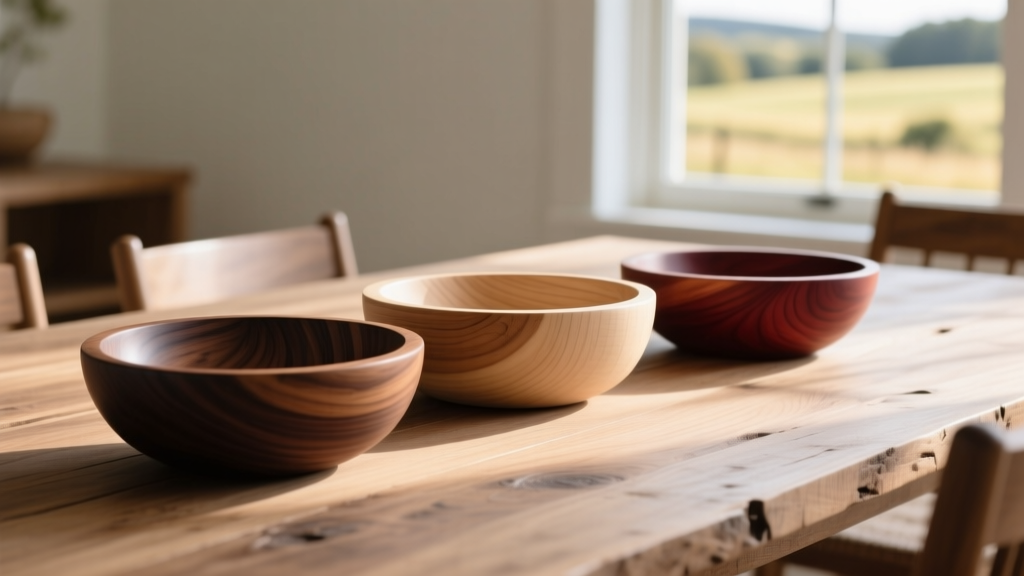
Evaluating the true cost and value of turned wood serving bowls requires looking past the retail price tag and understanding the physics, material waste, and labor intensity of the woodturning process. As of 2026, the market for artisanal kitchenware has bifurcated: mass-produced, CNC-milled bowls dominate the lower tier, while hand-turned, lathe-crafted bowls occupy the premium and heirloom tiers. For buyers and collectors, understanding the specific types of turned wood serving bowls is critical to determining whether a piece is a justified investment or an overpriced commodity.
Unlike furniture making, where yield from a board can exceed 70%, woodturning is an inherently subtractive and wasteful process. Turning a standard 12-inch diameter salad bowl requires a blank measuring at least 14 x 14 x 5 inches. This equates to roughly 6.8 board feet of raw lumber. The finished bowl, however, retains only about 15% to 20% of that original mass; the rest is reduced to shavings and sawdust. This extreme material waste is the primary driver of the base cost, making the selection of wood species a critical factor in both pricing and long-term value retention.
Wood Species Matrix: Hardness, Cost, and Value
The value of a turned bowl is heavily dictated by the Janka hardness rating of the timber, its grain stability, and its food-safe properties. According to data compiled by The Wood Database, tight-grained hardwoods are mandatory for food contact surfaces to prevent bacterial ingress and splintering.
| Wood Species | Janka Hardness (lbf) | Avg Blank Cost (per BF) | Retail Price (12" Bowl) | Value Proposition |
|---|---|---|---|---|
| Hard Maple | 1,450 | $8 - $12 | $120 - $180 | Supreme durability, neutral taste, ideal for daily heavy use. |
| Black Walnut | 1,010 | $15 - $22 | $180 - $280 | Premium aesthetic, moderate hardness, excellent for centerpieces. |
| American Cherry | 950 | $10 - $14 | $140 - $200 | Darkens beautifully with UV exposure, superb turning properties. |
| Olive Wood | 2,710 | $30 - $45 | $350 - $500+ | Extreme density, striking grain, true multi-generational heirloom. |
| Teak (Imported) | 1,000 - 1,155 | $25 - $35 | $250 - $350 | High natural silica and oil content, exceptional water resistance. |
Domestic Hardwoods: The Daily Drivers
For functional serving bowls that will endure daily washing, acidic dressings, and utensil impact, domestic closed-grain hardwoods are unmatched. Hard Maple (Acer saccharum) is the industry standard for commercial and high-end residential food prep. Its high Janka rating resists knife scarring, which can harbor bacteria. Cherry offers a slightly softer turning experience but provides immense aesthetic value as it oxidizes from a pale pinkish-brown to a deep, rich russet over its first year of exposure to light.
Exotic and Imported Timbers: The Heirloom Tier
Exotic woods like Olive and Teak command a premium not just for their rarity, but for their natural chemical defenses. Teak contains high levels of tectone and natural oils that repel water and resist fungal growth, reducing the maintenance burden on the owner. Olive wood is so dense that it sinks in water; turning it requires specialized, frequently sharpened carbide or high-speed steel (HSS) tools, drastically increasing the labor cost. However, an olive wood bowl is virtually indestructible under normal kitchen conditions, offering an unmatched return on investment for buyers seeking generational pieces.
Deconstructing the Price Tag: Where Does the Money Go?
When analyzing the cost of a $250 hand-turned walnut bowl, buyers are often shocked by the material-to-labor ratio. A breakdown of a typical artisanal pricing model reveals the true economics of the craft:
- Raw Material (Blank & Waste): 15% - 20% (Factoring in the 80% waste ratio)
- Lathe Time & Shaping: 30% (Roughing, drying, and final turning)
- Sanding & Finishing: 20% (Progressive grit sanding up to 600+ grit)
- Overhead (Tooling, Electricity, Studio): 15%
- Artisan Profit Margin: 15% - 20%
The most significant cost driver is not the wood itself, but the time required for stabilization and drying. Green (unseasoned) wood is easier to turn but will warp and crack as it loses moisture. Turners must either rough-turn the bowl to a uniform thickness, let it dry for 6 to 12 months, and then remount it on the lathe for final truing, or use expensive kiln-dried blanks. This dual-turning process effectively doubles the labor time for high-quality, crack-free domestic bowls.
Functional Typologies and Sizing Costs
The intended use-case dictates the geometry, wall thickness, and ultimately the cost of the turned bowl.
1. The Tossed Salad Bowl (11" - 14" Diameter)
Designed with a wide, flat bottom and gently flared sides to allow tongs to maneuver beneath the greens. These require large, flaw-free blanks. A 14-inch maple salad bowl requires a massive turning blank, pushing the retail price into the $200–$300 range due to the scarcity of wide, clear hardwood cants.
2. The Dough and Bread Bowl (8" - 10" Diameter)
Characterized by steep, thick walls and a heavy base. The mass of the wood acts as a thermal insulator, retaining the ambient heat required for yeast proofing. Because these bowls are often scraped with wooden or plastic bench knives, a harder wood like Hard Maple or Hickory (1,820 lbf) is highly recommended to prevent deep gouging.
3. The Live-Edge Centerpiece (16"+ Diameter)
Turned from cross-sections of logs (cookie blanks) or burls, these bowls retain the natural bark or undulating edge of the tree. While visually stunning, bark inclusions and pith centers introduce structural weaknesses. These are strictly low-utility, high-aesthetic pieces and should not be subjected to soaking or dishwasher use.
The Hidden Variable: Food-Safe Finishes and Maintenance
A turned bowl is only as valuable as its finish. The American Association of Woodturners (AAW) emphasizes that finishes used on food-contact surfaces must be fully inert once cured. The choice of finish dramatically alters the long-term maintenance cost and user experience.
| Finish Type | Application Cost | Durability | Maintenance Frequency |
|---|---|---|---|
| Food-Grade Mineral Oil | Low | Low (Does not cure) | Monthly |
| Beeswax / Mineral Oil Blend | Low-Medium | Medium (Provides water beading) | Bi-Monthly |
| Polymerized Tung Oil | Medium | High (Cures to a hard plastic-like shell) | Annually |
| Walnut Oil (Heat-Treated) | Medium | Medium-High (Semi-drying) | Every 6 Months |
Warning on Film Finishes: Never purchase a turned serving bowl finished with polyurethane, lacquer, or varnish if it will be used with utensils. While these film finishes are technically food-safe once fully cured, metal tongs and salad servers will inevitably scratch the surface, causing microscopic plastic flakes to enter your food and allowing moisture to become trapped beneath the film, leading to black mold and wood rot.
Long-Term ROI: Mass-Produced vs. Hand-Turned
To accurately assess value, one must calculate the cost-per-year of ownership. A $45 mass-produced, glue-laminated bamboo or thin-turned rubberwood bowl from a big-box retailer typically suffers from delamination, warping, or splitting within 3 to 5 years due to aggressive kiln-drying and thin wall profiles. Over a 20-year period, a consumer will replace this bowl four times, spending $180 and generating significant waste.
Conversely, a $220 hand-turned, 1.5-inch thick Black Walnut bowl, maintained with bi-annual applications of board cream, will easily outlast its original owner. According to moisture movement guidelines published by the USDA Forest Products Laboratory, properly seasoned and thick-turned hardwoods acclimate to seasonal humidity changes without catastrophic cellular failure. The hand-turned bowl's cost-per-year drops to roughly $3.60, while simultaneously serving as a functional piece of kinetic art that appreciates in aesthetic value as the wood's patina deepens.
Buyer’s Decision Framework
Use this matrix to select the exact type of turned wood serving bowl that aligns with your budget and functional requirements:
- If you need a daily-use salad bowl for acidic vinaigrettes: Buy Hard Maple finished with polymerized tung oil. It will not impart flavors and resists acid etching.
- If you are purchasing a wedding or retirement gift: Buy Black Walnut or American Cherry. The rich, dark tones convey luxury, and the wood is stable enough to survive varying climates if the recipient moves.
- If you want a low-maintenance fruit or bread bowl: Buy Teak. The natural silica and oils mean you can occasionally neglect the oiling schedule without risking structural dehydration.
- If you are on a strict budget but want artisanal quality: Look for turned Ash or Red Oak bowls. While open-grained (making them less ideal for wet salads), they are exceptionally strong, highly affordable, and make excellent dry-goods or popcorn serving bowls.
Ultimately, the value of a turned wood serving bowl is not merely in its capacity to hold food, but in its connection to material science and artisanal geometry. By prioritizing closed-grain domestic hardwoods, understanding the inherent waste of the turning process, and committing to proper oil-based maintenance, buyers can acquire functional heirlooms that defy the planned obsolescence of the modern kitchenware market.
Written by
David NakamuraDavid Nakamura is a licensed architect (AIA) and construction technology writer focused on sustainable building methods, mass timber engineering, and high-performance building envelopes. He holds a Master of Architecture from the University of Washington and is a certified Passive House Consultant (CPHC). David spent eight years at the Seattle firm Mithun, where he led the design of three LEED Platinum projects, before founding his own practice specializing in net-zero residential design. He serves on the editorial advisory board of GreenBuilder Magazine and has authored peer-reviewed papers on cross-laminated timber (CLT) connections for the Journal of Structural Engineering. In his spare time, David teaches woodworking at Pratt Fine Arts Center and kayaks the Puget Sound.
More from David Nakamura
View all
Construction Cost
Labor Cost to Build a Deck Per Sq Ft: 2026 Installation Guide
Discover the exact labor cost to build a deck per sq ft in 2026. This installation guide breaks down contractor rates, complexity factors, and hidden fees.
Aug 4, 2026

Construction Cost
How Much Does It Cost to Build a 3 Bedroom House? Financing Guide
Learn exactly how much it costs to build a 3 bedroom house and explore 2026 financing options, construction loan types, and budget frameworks for your build.
Aug 4, 2026

Construction Cost
Cost to Build a Tennis Court: 2026 Guide
How much does it cost to build a tennis court in 2026? Breakdowns for asphalt, concrete, and synthetic surfaces plus fencing and lighting.
Jul 30, 2026