How to Clean Timber Floors: Bona vs. Rubio vs. Black Diamond
Learn how to clean timber floors by comparing top brands like Bona, Rubio, and Black Diamond. Expert insights on pH, finishes, and residue prevention.
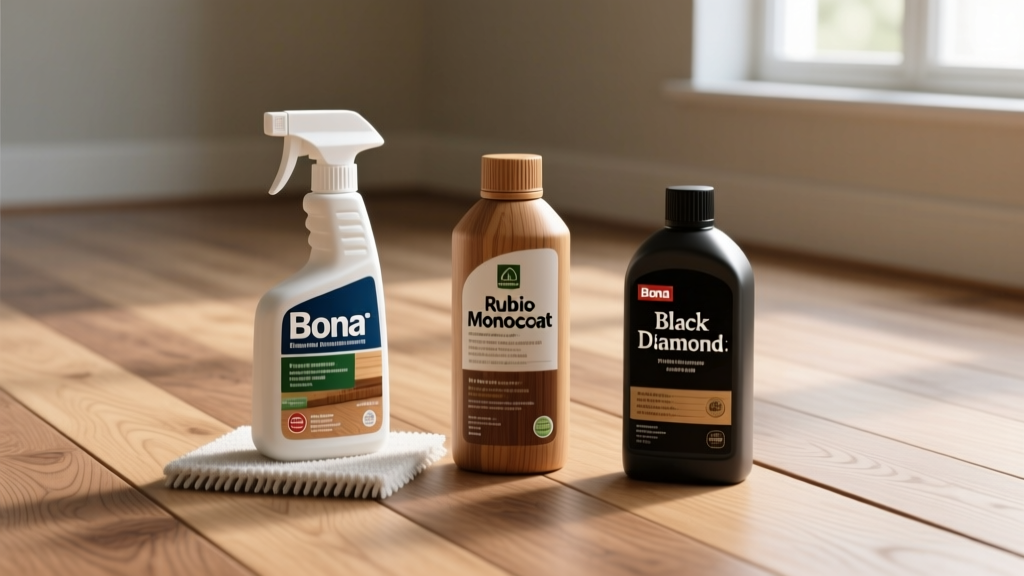
The Chemistry of Timber Floor Finishes
Understanding how to clean timber floors requires identifying the specific chemical finish protecting the wood. The cleaning formulation that works flawlessly on a surface-sealed polyurethane floor will actively degrade a penetrating hardwax oil finish. According to the National Wood Flooring Association (NWFA), improper cleaner selection is the leading cause of premature finish failure, hazing, and voided manufacturer warranties.
Timber floor finishes generally fall into two categories:
- Surface-Sealed (Polyurethane/Aluminum Oxide): The finish sits on top of the wood fibers, creating a hard, impermeable plastic-like shell. Cleaners for these floors must be fast-evaporating, low-residue, and mildly alkaline (pH 8.0–9.0) to cut through foot traffic oils without dulling the urethane.
- Penetrating (Hardwax Oil/Natural Oil): Products like Rubio Monocoat or Osmo Polyx-Oil soak into the wood pores and harden. These floors require lipid-replenishing, pH-neutral (pH 7.0) cleaners. Standard alkaline cleaners will strip the natural oils, leaving the timber dry, brittle, and susceptible to moisture ingress.
Brand Deep-Dive: Bona Hardwood Floor Cleaners
Bona dominates the North American market for surface-sealed timber floors. Their product line is specifically engineered for polyurethane and water-based acrylic finishes.
Bona Hardwood Floor Cleaner (Standard)
The flagship Bona spray features a pH of approximately 8.5. It utilizes non-ionic surfactants that lift dirt without leaving a soapy film. The critical advantage of Bona's standard formula is its evaporation rate; it dries within 90 seconds, preventing moisture from seeping into the microscopic seams between timber planks.
Bona PowerPlus Antibacterial
For high-traffic zones or homes with pets, the PowerPlus line introduces didecyldimethylammonium chloride (a quaternary ammonium compound) to kill 99.9% of bacteria. Warning: This formula is strictly for surface-sealed floors. Using antibacterial quats on penetrating oil floors will cause severe localized dulling.
Brand Deep-Dive: Rubio Monocoat Surface Care
When dealing with hardwax oil finishes, Rubio Monocoat sets the industry standard. Their cleaning philosophy diverges entirely from traditional "mop and shine" products, focusing instead on lipid maintenance.
Rubio Surface Care (Ready-to-Use)
This is a pH-neutral cleaner formulated specifically for oiled timber. Unlike Bona, which aims to leave zero residue, Rubio Surface Care intentionally leaves behind a microscopic layer of nourishing oils to replenish the floor's hardwax finish. It costs approximately $0.65 per ounce, making it a premium product reserved strictly for oiled timber, engineered hardwood with oil tops, and matte-finished natural woods.
Rubio Soap (Concentrate)
Used for periodic deep maintenance, Rubio Soap is a highly concentrated lipid-rich cleaner. The required dilution ratio is exactly 1:100 (soap to water). Over-diluting will result in a sticky, streaking surface that attracts dust, while under-diluting fails to clean effectively.
Brand Deep-Dive: Black Diamond Wood & Laminate
Black Diamond targets the commercial and heavy residential sector for polyurethane and UV-cured aluminum oxide floors. Their Wood & Laminate Floor Cleaner utilizes a proprietary alcohol-based solvent blend alongside water.
The inclusion of isopropyl alcohol lowers the surface tension of the water, allowing it to evaporate almost instantly upon contact. This makes Black Diamond exceptionally effective at preventing water-spotting on high-gloss timber finishes. However, the alcohol content makes it entirely unsuitable for penetrating oil finishes, as it will dissolve the lipid bonds.
Product Line Comparison Matrix
| Brand / Product | Ideal Finish Type | pH Level | Active Surfactant / Solvent | Est. Cost per Ounce |
|---|---|---|---|---|
| Bona Standard Spray | Polyurethane, Water-based Acrylic | ~8.5 | Non-ionic surfactants | $0.22 |
| Bona PowerPlus | Polyurethane (High Traffic) | ~8.0 | Quaternary Ammonium | $0.28 |
| Rubio Surface Care | Hardwax Oil, Penetrating Oil | 7.0 (Neutral) | Lipid-replenishing agents | $0.65 |
| Rubio Soap (Concentrate) | Hardwax Oil (Deep Maintenance) | ~7.5 | Natural plant oils | $0.45 (diluted) |
| Black Diamond Wood | High-Gloss Polyurethane, Aluminum Oxide | ~7.5 | Alcohol-based solvent blend | $0.18 |
Step-by-Step Protocol: How to Clean Timber Floors Safely
Regardless of the brand selected, the mechanical action of cleaning is just as critical as the chemical formulation. Follow this protocol to prevent micro-scratches and moisture damage.
- Dry Dusting (The Prerequisite): Never apply liquid cleaner to a dusty floor; this creates an abrasive mud that scratches the finish. Use a microfiber dust mop with a minimum density of 300 GSM (grams per square meter). Lower GSM pads push dust around rather than trapping it.
- The Mist Technique: Never pour cleaner directly onto the timber. Spray the cleaner directly onto the microfiber mop pad, or mist it lightly into the air ahead of the mop. The goal is a damp pad, not a wet floor.
- Directional Mopping: Always mop parallel to the grain of the timber. This ensures that any microscopic moisture that enters the seams is pushed along the length of the plank rather than forced into the end-grain, which absorbs water 50 times faster than edge-grain.
- The 3-Minute Rule: The floor must be completely dry to the touch within 3 minutes of mopping. If water remains longer, you are using too much product or your microfiber pad is oversaturated.
Never use a steam mop on timber floors. The EPA notes that indoor moisture control is vital, and steam mops force 212°F (100°C) vapor directly into the wood pores. This rapidly degrades polyurethane adhesives, causes white hazing in hardwax oils, and leads to irreversible cupping and crowning of the timber planks.
Troubleshooting Common Cleaning Failures
Symptom: White Hazing or Cloudiness
- Cause (Polyurethane): Moisture trapped under the finish or residue buildup from using oil-soaps (like Murphy's Oil Soap) on a surface-sealed floor.
- Fix: Use a dedicated residue remover (e.g., Bona Residue Remover) applied with a white scrub pad. For moisture-trapped hazing, the floor may require professional screening and recoating.
- Cause (Hardwax Oil): Over-application of Rubio Soap or using too much water, which emulsifies the surface oil.
- Fix: Clean with Rubio Surface Care and a slightly damp pad to re-emulsify and wipe away the excess soap buildup.
Symptom: Streaking and Smearing
- Cause: The microfiber mop pad is saturated with dirt and spent cleaning solution, essentially painting the floor with dirty water.
- Fix: Implement a multi-pad system. For every 500 square feet of timber flooring, swap to a fresh, clean microfiber pad. Wash used pads in a washing machine without fabric softener (softeners coat the fibers and destroy their absorbency).
Frequently Asked Questions
Can I use a vinegar and water solution to clean timber floors?
While a highly diluted vinegar solution (1/2 cup white vinegar to 1 gallon of water) is sometimes recommended for polyurethane floors, it is an acid (pH ~2.5). Over time, repeated use of acidic solutions will etch and dull the aluminum oxide or polyurethane topcoat. It will also severely damage hardwax oil finishes. It is highly recommended to stick to pH-balanced, manufacturer-approved cleaners.
How often should I deep clean vs. maintenance clean?
Dry dusting should occur daily in high-traffic zones. Damp mopping with a brand-specific cleaner (like Bona or Black Diamond) should be done weekly. Deep maintenance—such as applying Rubio Soap or a polyurethane refresher product—should only be performed every 3 to 6 months, depending on foot traffic and the visible wear of the finish.
Do I need to rinse the floor after using these cleaners?
No. Rinsing timber floors with plain water introduces unnecessary moisture and defeats the purpose of fast-evaporating, no-rinse formulations. Simply mist the cleaner, agitate with the microfiber pad, and allow it to air dry.