Safe Lumber Treatment for Types of Wood Ducks Nesting Boxes
Learn safe wood treatment and preservation methods for building nest boxes for types of wood ducks. Discover non-toxic sealants and ideal lumber species.

The Toxicity Hazard in Waterfowl Nest Box Construction
When building habitats for various types of wood ducks and related cavity-nesting waterfowl—such as the North American Wood Duck (Aix sponsa), the closely related Mandarin duck, and the Hooded Merganser—lumber selection and preservation are matters of life and death. Unlike human structures, waterfowl nest boxes house highly sensitive neonates. Ducklings possess fragile respiratory systems and a natural instinct to peck at their surroundings. Using standard pressure-treated lumber or conventional exterior sealants introduces heavy metals, volatile organic compounds (VOCs), and toxic mildewcides directly into the nesting cavity.
Modern pressure-treated lumber is preserved with Alkaline Copper Quaternary (ACQ) or Copper Azole (CA-C). In the high-humidity, high-temperature microclimate of a wetland nest box, copper compounds can leach into the wood shavings. Ingestion or prolonged dermal contact causes heavy metal toxicity in ducklings, leading to neurological failure and death. Always use untreated, naturally rot-resistant timber.
Lumber Selection Matrix for Cavity Nesters
The foundation of a safe nest box is untreated wood with high natural rot resistance. The interior of the box must remain completely bare and rough-sawn to allow ducklings to grip the wood and climb out after hatching. Below is a comparison of the top four lumber species for waterfowl boxes, based on 2026 market pricing and structural performance.
| Wood Species | Natural Rot Resistance | Avg. Cost (Per Board Foot) | Workability & Weight |
|---|---|---|---|
| Western Red Cedar | Exceptional (Class 1) | $5.50 - $7.00 | Lightweight, easy to cut, holds screws well without splitting. |
| Bald Cypress | Exceptional (Class 1) | $6.00 - $8.50 | Heavier than cedar, highly stable in wet environments, resists warping. |
| White Oak | High (Class 2) | $8.00 - $11.00 | Very heavy, difficult to work, requires pre-drilling, but highly predator-resistant. |
| Southern Yellow Pine (Untreated) | Low (Class 4) | $2.50 - $3.50 | Cheap and accessible, but requires rigorous exterior sealing to prevent rot. |
Approved Non-Toxic Wood Preservatives
While the interior of the box must remain untreated, the exterior requires protection from UV degradation, driving rain, and fungal growth. According to guidelines from Cornell NestWatch, any exterior treatment must be fully cured and non-toxic before the spring nesting season begins. The most common mistake builders make is using Boiled Linseed Oil (BLO) or standard exterior polyurethanes.
The Boiled Linseed Oil (BLO) Trap
Despite its name, modern BLO is not simply boiled; it contains metallic drying agents (usually cobalt or manganese naphthenate) to speed up polymerization. These heavy metals are highly toxic to waterfowl. If you use linseed oil, you must source 100% Raw Linseed Oil or flaxseed oil, which dries naturally through oxidation without toxic catalysts.
Recommended Safe Sealants
- 100% Pure Tung Oil (e.g., Hope's Pure Tung Oil): A natural, non-toxic penetrating oil derived from tung tree nuts. It polymerizes into a hard, water-resistant finish. Cost: ~$25 per quart. Requires 3-4 coats and 7 days to fully cure.
- Raw Linseed Oil mixed with Citrus Solvent: Penetrates deeply into cedar and cypress. The citrus solvent (d-limonene) thins the oil for better absorption and evaporates completely, leaving no toxic residue. Cost: ~$18 per quart.
- Water-Based Nano Sealers (e.g., Seal-Once Nano+Poly): A low-VOC, water-based exterior sealer that is safe for wildlife once fully cured (typically 72 hours). It forms a breathable barrier that prevents water intrusion while allowing the wood to release internal moisture. Cost: ~$45 per gallon.
Step-by-Step Exterior Treatment Protocol
Follow this exact protocol to preserve the exterior of your nest box while ensuring zero chemical migration to the interior cavity. The Wood Duck Society emphasizes that treatment should only occur on the outer faces and the roof overhang.
- Preparation: Sand the exterior faces with 80-grit paper to open the wood pores. Do not sand the interior; leave it rough-sawn for duckling traction.
- Masking: Use painter's tape to mask the interior edges and the entrance hole rim to prevent accidental sealer overlap into the cavity.
- First Coat (Penetration): Apply Pure Tung Oil or Raw Linseed Oil liberally using a natural bristle brush. Allow it to soak for 45 minutes, then wipe off all excess with a lint-free rag to prevent a sticky surface.
- Second Coat (Build): Apply a second coat 24 hours later. For Tung Oil, thinning the second coat with 50% natural citrus solvent improves deep-grain penetration.
- Third Coat (Protection): Apply a final full-strength coat. Allow the box to cure in a well-ventilated, dry garage for a minimum of 7 to 14 days before mounting near water.
For a traditional, highly effective, and wildlife-safe exterior preservative, mix authentic Swedish Pine Tar (e.g., Auson) with raw linseed oil in a 50/50 ratio. Pine tar is a natural antiseptic that prevents wood rot and deters woodpeckers from damaging the box exterior, while remaining entirely non-toxic to nesting waterfowl.
Hardware Selection to Prevent Runoff Toxicity
Wood preservation extends beyond the lumber itself; the fasteners used to assemble and mount the box interact with the wood and the wetland environment. Standard zinc-galvanized screws will corrode when exposed to the natural tannins and mild acidity of cedar and cypress. This corrosion creates zinc runoff that stains the wood and introduces toxic zinc salts into the soil and water below the box.
"Always use 304 or 316-grade stainless steel screws for assembling waterfowl boxes. 316 marine-grade is preferred if the box is mounted in a saltwater marsh or brackish estuary, as it resists chloride pitting that causes standard stainless to fail."
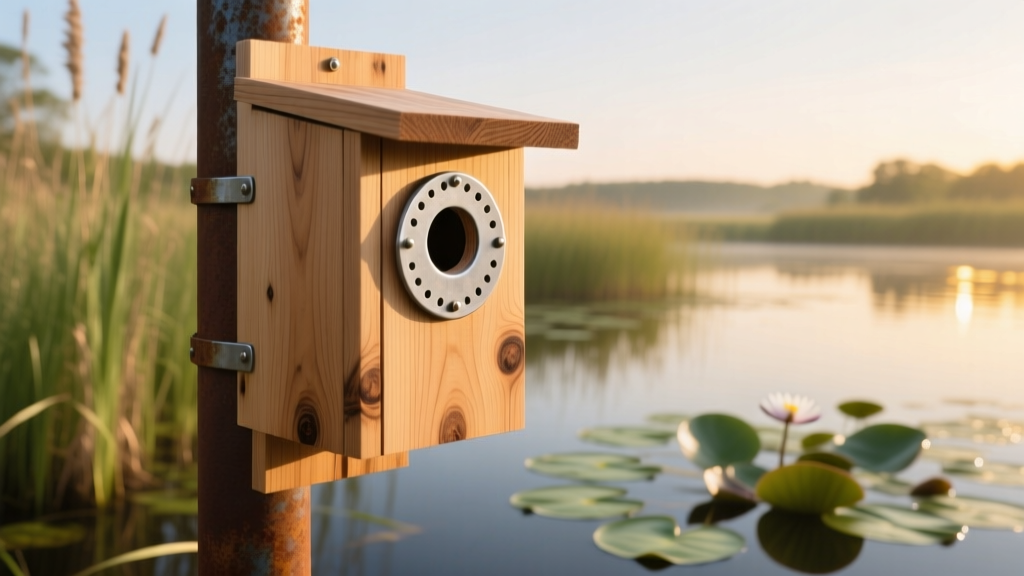
For the mounting pole, avoid treated wooden posts. Use a 1.5-inch galvanized steel conduit pipe driven into the ground, fitted with a 3-foot cone-shaped predator guard. The predator guard should be made of aluminum or PVC, never copper flashing, as copper oxidation is toxic to the surrounding wetland flora and fauna.
Annual Maintenance and Re-Treatment Schedule
Nest boxes require annual maintenance to ensure structural integrity and safety for the next generation of ducklings. Schedule your maintenance for late autumn (October to November), well after the breeding season has ended and before the spring migration.
- Interior Cleaning: Open the side panel and remove all old wood shavings and nesting material. This breaks the life cycle of nest parasites and avian pox.
- Interior Scoring: If the interior wood has become smooth from years of duckling traffic, use a rasp or coarse sandpaper to score horizontal grooves (1/8 inch deep) just below the entrance hole on the inside. This ensures the ducklings can climb out when it is time to fledge.
- Exterior Inspection: Check the roof overhang and side panels for water spotting or UV graying. If water no longer beads on the surface, lightly scuff the exterior with 120-grit sandpaper and apply a single maintenance coat of your chosen non-toxic oil or water-based sealer.
- Hardware Check: Tighten all stainless steel hinges and latches. Replace any latch that shows signs of mechanical fatigue to prevent raccoons from prying the box open.
By strictly adhering to non-toxic preservation methods and selecting the correct naturally durable lumber, you ensure that your nest boxes provide a safe, enduring habitat for wood ducks and other cavity-nesting species for a decade or more without introducing harmful chemicals into the wetland ecosystem.
Written by
Sarah WhitfieldSarah Whitfield is a chartered quantity surveyor (MRICS) and construction cost analyst with 15 years of experience in material pricing, procurement strategy, and project budgeting. She earned her degree in Construction Management from the University of Reading (UK) and has worked on projects ranging from $2M custom homes to $180M mixed-use developments across North America and Europe. Sarah currently leads cost estimating for BuildMat Insight, maintaining a proprietary database of 4,000+ material price points updated quarterly. She is a frequent contributor to RSMeans cost data panels and has presented at the International Cost Engineering Council (ICEC) congress. Based in Denver, CO, Sarah is an avid trail runner and volunteer mentor for Women in Construction.
More from Sarah Whitfield
View all
Wood & Lumber
What Are the Different Types of Wood? A Builder's Guide
Compare structural softwoods, finish hardwoods, and engineered lumber. Analyze Janka ratings, MOE values, and 2026 pricing for construction.
Aug 4, 2026

Walls & Panels
Steel Framing vs Wood Framing: Corrosion and Moisture Defense
Compare steel framing vs wood framing for moisture resistance. Learn about galvanized coatings, condensation risks, and corrosion protection strategies.
Jul 21, 2026

Stone & Masonry
How to Cut Stone Veneer: Wet Saw vs Grinder Comparison
Compare the best tools for cutting stone veneer. We review wet saws, angle grinders, and chop saws to help you achieve clean, chip-free cuts.
Jul 21, 2026