OSB Plywood Maintenance Playbook: Cleaning, Sealing, and Moisture
Master OSB plywood maintenance with our playbook. Learn construction moisture limits, cleaning protocols, and exact sealing products for exposed panels.
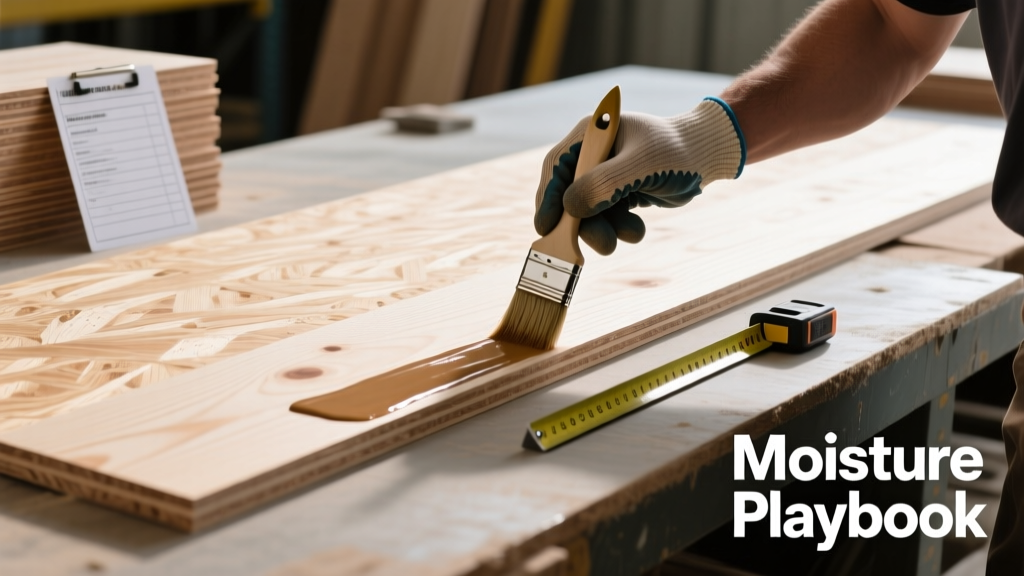
The 'OSB Plywood' Misnomer: Material Science Basics
Before executing any maintenance or cleaning protocol, it is critical to address a common industry misnomer: 'OSB plywood.' Oriented Strand Board (OSB) and traditional plywood are distinct engineered wood products with fundamentally different structural behaviors and moisture tolerances. While plywood consists of continuous cross-laminated veneers, OSB is manufactured from compressed rectangular wood strands layered in cross-oriented mats and bonded with synthetic resins—typically phenol-formaldehyde (PF) or methylene diphenyl diisocyanate (MDI).
This resin composition dictates how OSB reacts to moisture, cleaning agents, and mechanical abrasion. Unlike plywood, which can often be sanded down to a fresh veneer layer after surface damage, OSB's surface is a compressed matrix of strands. Aggressive sanding or high-alkaline chemical cleaning will break down the resin bonds, causing irreversible 'fuzzing' and delamination. Understanding this material science is the foundation of the maintenance playbook detailed below.
Phase 1: Construction-Stage Moisture and Exposure Limits
The most critical maintenance phase for OSB occurs before the building is even enclosed. Standard OSB panels carry an 'Exposure 1' rating, which is frequently misunderstood by contractors as a measure of waterproofing. Exposure 1 simply indicates that the panel's structural integrity will not be compromised by construction delays and weather exposure during the building process, provided it dries out properly.
While many manufacturers cite a 60-day construction exposure limit, this applies to the panel's face. The edges of standard OSB are highly susceptible to moisture intrusion. If water pools on the panel edges or in cutouts for plumbing and HVAC, edge swelling will occur within 24 to 48 hours. Always route standing water off panels immediately using a push broom.
According to APA - The Engineered Wood Association, OSB panels that have been exposed to rain must be allowed to dry to a moisture content of 19% or less before being covered with flooring underlayment or roofing materials. Trapping moisture above 19% will inevitably lead to mold growth and adhesive failure in the finished assembly.
Phase 2: Cleaning Protocols for Exposed and Sealed OSB
When OSB is used as an exposed interior surface—such as in budget workshops, agricultural sheds, or rustic cabin ceilings—cleaning requires specific protocols to preserve the resin bond. Never use a pressure washer, steam mop, or saturated wet mop on OSB, as forced moisture will penetrate the strand matrix and cause catastrophic swelling.
Approved vs. Banned Cleaning Agents
- APPROVED: pH-Neutral Cleaners. Products like Bona Hardwood Floor Cleaner (diluted) or a simple solution of 1 cup white vinegar to 1 gallon of warm water are safe for sealed OSB. They clean surface dirt without attacking the polyurethane or epoxy topcoats.
- APPROVED: Enzyme-Based Mold Removers. For unsealed OSB that has developed surface mold during construction, use Concrobium Mold Control. It crushes mold spores at the root without using bleach, which can degrade the wood lignin.
- BANNED: Trisodium Phosphate (TSP) and Heavy Bleach. High-alkaline cleaners (pH above 9) will saponify and break down the MDI and PF resins binding the wood strands, leading to surface flaking.
- BANNED: Ammonia-Based Glass Cleaners. Ammonia softens the resin matrix over time, leaving the OSB surface permanently tacky and prone to dirt accumulation.
Dry and Damp Cleaning Execution
For routine maintenance, rely on dry methods. Use a shop vacuum with a hard-floor brush attachment to remove sawdust, dirt, and debris. If damp mopping is required for sealed workshop floors, wring the microfiber mop until it is merely damp to the touch. Mop in the direction of the primary strand orientation (usually the long axis of the panel) to prevent pushing moisture into the panel seams.
Phase 3: Sealing Matrix for Workshops, Sheds, and Garages
Unsealed OSB acts like a sponge. If you are finishing a shed, garage, or workshop with exposed OSB walls or subfloors, sealing is mandatory to stabilize the surface, prevent off-gassing of volatile organic compounds (VOCs), and block tannin bleed. The following matrix outlines the most effective sealing systems based on 2026 material performance data.
| Product / System | Best Application | Est. Cost (per sq ft) | Critical Prep Step |
|---|---|---|---|
| Zinsser B-I-N Shellac Primer | Wall & Ceiling Panels (Blocks tannin/resin bleed) | $0.65 - $0.85 | Light scuff with 120-grit; wipe with denatured alcohol. |
| Minwax Fast-Drying Polyurethane | Light-Duty Workshop Floors & Shelving | $0.40 - $0.60 | Apply 3 coats; sand lightly with 220-grit between coats. |
| Rust-Oleum RockSolid Polycuramine | Garage Floors & Heavy-Duty Subfloors | $2.20 - $2.80 | Must prime OSB first with an oil-based bonding primer. |
| Thompson's Advanced Natural Wood Protector | Exterior Shed Walls & Agricultural Outbuildings | $0.30 - $0.45 | Apply only when panel moisture content is below 15%. |
Surface Preparation Note: Before applying any sealer, OSB must be sanded to remove the mill glaze—a waxy resin layer left over from the hot-press manufacturing process. Use an 80-grit aluminum oxide sanding screen on a floor buffer for large areas, or a random orbital sander for walls. Never use grits finer than 120 on raw OSB; the friction heat will melt the surface resins, creating a glazed barrier that prevents sealers from penetrating.
Troubleshooting Common OSB Failures
Edge Swelling and the 15% Threshold
Edge swelling is the most frequent failure mode in OSB subfloors, particularly around toilets, dishwashers, and exterior door thresholds. Industry standards dictate that edge swelling should not exceed 15% of the panel's original thickness. If you encounter swollen edges during a renovation or maintenance check, do not attempt to simply sand them flat. Sanding removes the compressed, resin-rich edge layer, exposing the porous core to future moisture.
The Fix: Apply a two-part penetrating wood hardener, such as Minwax High Performance Wood Hardener, directly to the swollen edge. The cyanoacrylate-based formula wicks into the porous strands and cures into a rigid, moisture-proof plastic matrix. Allow 24 hours to cure, then plane or sand the edge flush before reinstalling baseboards or transition strips.
Surface Flaking and Resin Burn
If an exposed OSB wall or ceiling begins to flake or shed wood fibers, it is usually the result of UV degradation or 'resin burn' from improper sanding during initial installation. UV light breaks down the lignin in the exposed wood strands, causing them to detach from the resin matrix.
The Fix: You cannot reverse UV degradation. The surface must be mechanically abraded using a stiff nylon brush (never wire, which leaves rust-prone metal fragments) to remove all loose fibers. Follow immediately with a heavy-bodied, penetrating oil sealer like Penofin Architectural Grade, which will bind the remaining surface strands and restore structural cohesion to the face layer.
Authoritative References
- APA - The Engineered Wood Association: OSB Design and Construction Guide - Provides definitive structural ratings, exposure limits, and moisture management protocols for engineered strand panels.
- Huber Engineered Woods: AdvanTech Subflooring Technical Data - Offers advanced insights into MDI resin technology, edge-sealing formulations, and high-moisture resistance thresholds in modern OSB manufacturing.