The Ultimate MDO Plywood Maintenance and Cleaning Playbook
Master MDO plywood maintenance with our expert cleaning playbook. Learn how to wash, repair overlay damage, and repaint for maximum exterior lifespan.
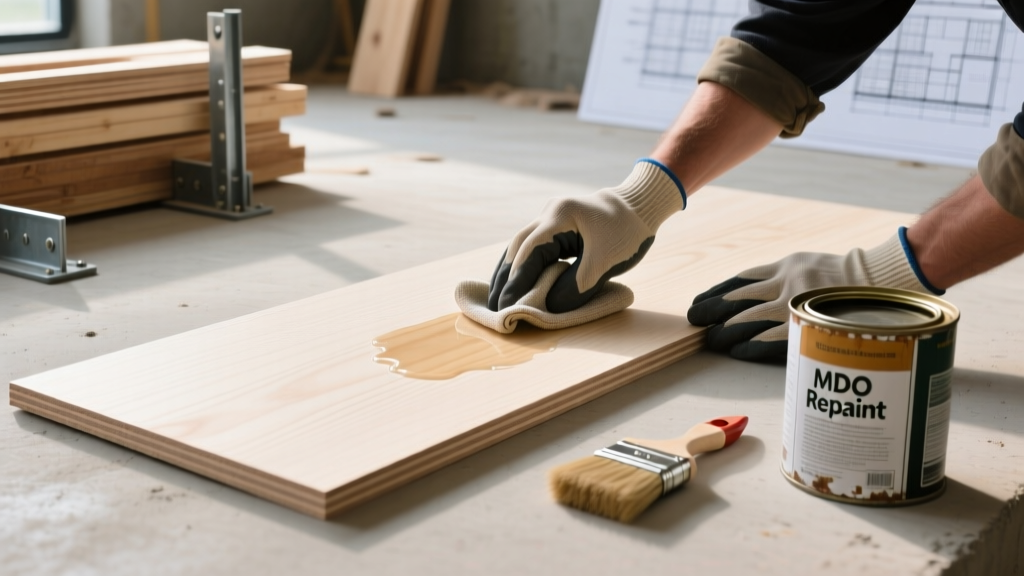
Medium Density Overlay (MDO) plywood is a premium engineered wood product featuring a structural plywood core bonded to a resin-treated fiber overlay. This overlay creates an exceptionally smooth, weather-resistant face that takes paint beautifully, making it a top choice for exterior siding, signage, and architectural concrete forms. However, the resin face is not invincible. Without a targeted maintenance protocol, UV degradation, moisture intrusion at the edges, and improper cleaning techniques can compromise the overlay, leading to delamination and premature failure.
Understanding MDO Overlay Vulnerabilities
To maintain MDO plywood effectively, you must understand where and how it fails. The resin-impregnated fiber face (typically 0.012 to 0.015 inches thick) is highly resistant to water penetration and surface checking. The vulnerabilities lie elsewhere:
- The Edges: The factory edges of MDO panels expose the raw plywood core. If these edges are not sealed with a high-quality edge sealer or primer during installation, capillary action will draw moisture into the veneers, causing edge swelling and face delamination.
- Fastener Penetrations: Nails or screws driven through the overlay break the resin seal. Unfilled or poorly filled fastener heads become direct conduits for moisture.
- UV Degradation: If left unpainted or if the paint film fails, ultraviolet light will break down the lignin in the overlay fibers, causing a fuzzy, degraded surface that cannot be simply painted over without extensive sanding.
The Routine Cleaning Protocol
Routine cleaning of painted MDO siding or signage should be performed annually to remove atmospheric dirt, biological growth, and oxidized paint chalk. Follow this precise sequence to avoid damaging the overlay.
Step 1: Chemical Selection and Mixing
Avoid chlorine bleach (sodium hypochlorite) on MDO plywood. Chlorine bleach can degrade the resin binders in the overlay and accelerate the corrosion of metal fasteners. Instead, use an oxygen-based bleach (sodium percarbonate).
Step 2: Application and Agitation
Apply the solution using a garden pump sprayer, working from the bottom of the wall up to prevent streaking. Allow a 10-minute dwell time, keeping the surface wet. Agitate stubborn areas using a soft-bristle nylon brush (never use wire brushes or stiff bristles, which will scratch the paint film and the overlay beneath).
Step 3: Rinsing and Pressure Washing Limits
Rinse thoroughly with clean water. If using a pressure washer to rinse, strict parameters must be followed to prevent blowing water behind the panels or gouging the overlay.
- Maximum Pressure: 1,200 PSI.
- Nozzle: 40-degree fan tip (never use a zero-degree or 15-degree rotary nozzle).
- Standoff Distance: Maintain at least 12 inches between the nozzle and the wood surface.
- Angle: Always spray at a downward angle to prevent forcing water into the horizontal lap joints.
Troubleshooting Matrix: MDO Plywood Defects
When inspecting MDO plywood during your annual maintenance check, use this decision matrix to diagnose and correct common surface anomalies. According to research on wood coating failures by the USDA Forest Products Laboratory, early intervention prevents core rot and structural compromise.
| Symptom | Root Cause | Corrective Action |
|---|---|---|
| Chalking paint surface | UV degradation of acrylic binders in the topcoat. | Wash with TSP substitute to remove chalk residue. If chalk remains, apply a penetrating bonding primer before repainting. |
| Edge swelling / checking | Unsealed factory edges absorbing ground moisture or rain runoff. | Scrape loose paint from edges. Apply a two-part epoxy wood filler, sand smooth, and seal with an oil-based edge sealer. |
| Overlay delamination (bubbling) | Moisture trapped between the plywood core and the resin face. | Cut an 'X' into the bubble, inject exterior-grade wood glue, press flat, and weight it until cured. Prime and paint immediately. |
| Black mildew spots | Spores feeding on dirt and organic matter on the paint film. | Treat with the oxygen bleach protocol. If stains persist, wipe with a 50/50 mix of denatured alcohol and water to kill deep spores. |
Repainting and Resealing MDO Plywood
Paint is the primary protective membrane for MDO plywood. Under 2026 EPA and regional VOC regulations, solvent-based alkyd primers are heavily restricted in many municipalities. Modern maintenance strategies must rely on high-solids, 100% acrylic latex formulations, which offer superior flexibility and UV resistance compared to older alkyd systems.
Surface Preparation
Proper adhesion is non-negotiable. Scrape all peeling paint down to the bare overlay. Sand the transitions between bare wood and existing paint using 120-grit aluminum oxide sandpaper to create a smooth feather edge. Never sand through the overlay into the plywood veneers below. If you expose the raw plywood core, the surface will require heavy filling and an oil-based stain-blocking primer to prevent tannin bleed-through.
Priming and Topcoat Application
For bare MDO spots, apply a premium 100% acrylic exterior wood primer (such as Sherwin-Williams Exterior Latex Wood Primer or Zinsser Bulls Eye 1-2-3 Water-Based). Ensure the primer achieves a dry film thickness of at least 1.5 mils. Follow with two coats of a 100% acrylic latex exterior house paint. According to guidelines from the University of Minnesota Extension, applying paint in direct sunlight or when surface temperatures exceed 90°F causes the paint to skin over too quickly, trapping solvents and leading to premature blistering. Paint in the shade, following the sun across the structure.
- Never use a heat gun to strip paint from MDO; the high heat will melt the resin overlay and release toxic fumes.
- Never apply a solid-color stain over MDO plywood. The resin face is non-porous and designed specifically for paint film adhesion; stains will peel in sheets within one season.
- Never allow sprinkler systems to continuously hit MDO siding. The constant wet-dry cycling will rapidly degrade the paint film and force moisture into the panel edges.
Frequently Asked Questions
Can I use a power washer to remove peeling paint from MDO plywood?
No. While a pressure washer at 3,000 PSI will strip paint, it will simultaneously gouge the 0.015-inch resin overlay and raise the grain of the underlying plywood. Always use mechanical scraping and chemical strippers formulated for latex paints, followed by light 120-grit sanding.
How often does exterior MDO siding need to be repainted?
With proper initial priming and high-quality 100% acrylic topcoats, MDO siding typically requires repainting every 8 to 12 years. South and West-facing elevations may require maintenance at the 6 to 8-year mark due to higher UV exposure. The APA – The Engineered Wood Association notes that maintaining a continuous paint film is the single most critical factor in achieving a 30-year service life for engineered wood siding.
Is MDO plywood maintenance different for concrete forms?
Yes. MDO used for architectural concrete forming is subjected to alkaline concrete and mechanical abrasion. After stripping the forms, they must be cleaned with a mild acidic wash (like diluted white vinegar) to neutralize the concrete alkalinity, then immediately re-coated with a commercial form release agent to protect the overlay before the next pour.