Names of Wood Types Explained: A Lumber Grade & Quality Guide
Master the names of wood types beyond species. Learn how softwood structural grades and hardwood appearance names dictate quality, strength, and cost.

The Dual Nomenclature: Species Names vs. Grade Names
When architects, engineers, and contractors research the names of wood types, they typically focus on biological species classifications like White Oak, Douglas Fir, or Southern Yellow Pine. However, in commercial and residential construction, the species name is only half of the material identifier. The true "name" of a piece of structural or finish lumber inherently includes its grade classification—a standardized nomenclature that dictates load-bearing capacity, moisture content, and visual defect limits.
Misinterpreting these names leads to catastrophic structural failures, failed municipal inspections, and severely blown budgets. A stamp reading "SYP" (Southern Yellow Pine) tells you the biological origin, but without the accompanying grade name—such as "Select Structural" or "No. 2"—the wood is structurally unquantifiable. This guide decodes the grading nomenclature that transforms raw timber into engineered building materials.
Structural Softwood Grades: Decoding the Framework Names
Softwood lumber, primarily used for framing, sheathing, and structural support, is graded by the American Lumber Standard Committee (ALSC) accredited agencies. The names of these grades correlate directly to the allowable bending stress (Fb) and modulus of elasticity (E) of the member. According to the American Wood Council (AWC), design values shift dramatically between grade names, even within the exact same species.
| Grade Name | Typical Application | Visual Defect Allowance | Approx. Fb (psi) for SYP 2x4 |
|---|---|---|---|
| Select Structural | Heavy load-bearing beams, long-span rafters | Very tight knots, minimal slope of grain | 2,550 |
| No. 1 | Standard floor joists, engineered trusses | Moderate knots, strict edge-knot limits | 2,050 |
| No. 2 | Wall studs, standard roof rafters, blocking | Larger knots allowed, wane permitted on edges | 1,500 |
| No. 3 | Temporary bracing, non-load-bearing partitions | Large knots, significant slope of grain | 900 |
| Stud | Vertical wall framing only (specific length limits) | Similar to No. 3, but restricted to 2x4 through 2x6 | 675 |
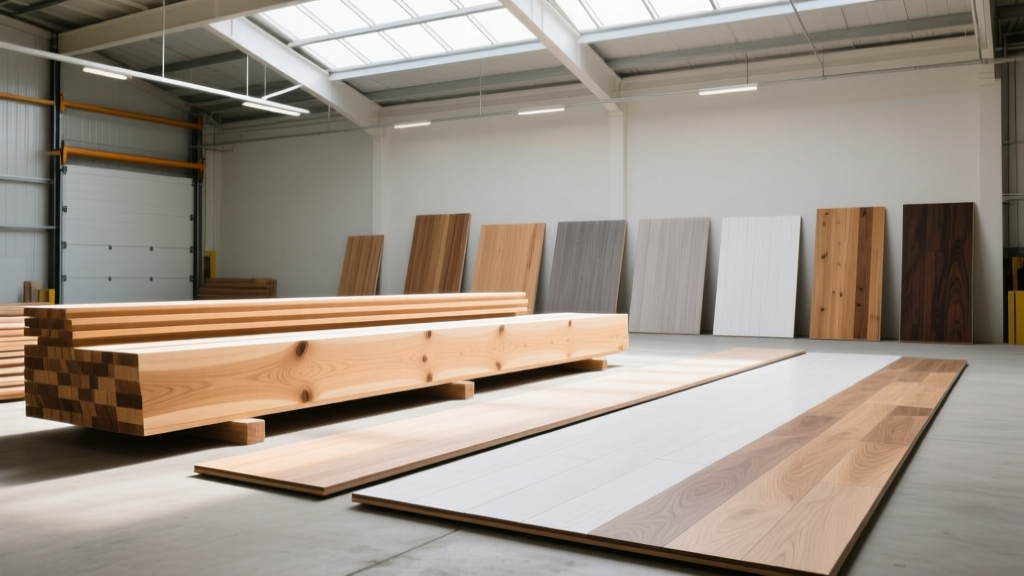
Hardwood Appearance Grades: The NHLA Naming System
Unlike softwoods graded for structural stress, hardwood lumber is graded for yield and appearance. The National Hardwood Lumber Association (NHLA) governs these names, which dictate the percentage of clear, defect-free cuttings that can be obtained from a board. This is critical for millwork, cabinetry, and finish flooring where visual continuity and waste-factor calculations dictate project profitability.
FAS (Firsts and Seconds)
The premier grade name for hardwoods. An FAS board must yield a minimum of 83-1/3% clear-face cuttings. The minimum board size is 6 inches wide and 8 feet long. This grade is mandatory for high-end architectural millwork, long continuous stair treads, and premium wide-plank flooring where long, uninterrupted grain patterns are required.
Select
Often paired with FAS in commercial transactions (sold as "FAS/Select"), this grade requires the same 83-1/3% clear yield but permits a smaller minimum board size (4 inches wide, 6 feet long). It is ideal for shorter cabinet stiles, furniture components, and interior trim where extreme length is unnecessary.
No. 1 Common
Yielding 66-2/3% clear cuttings, this is the workhorse grade for the cabinet and furniture industry. The smaller clear cuttings require more glue-ups and machining, but the cost savings over FAS make it the default choice for painted cabinetry, drawer boxes, and interior door components.
How to Read a Lumber Grade Stamp: A Practical Framework
The ink stamp on dimensional lumber is a dense matrix of data. Decoding these names and abbreviations ensures you are installing material that matches the engineered specifications. The USDA Forest Products Laboratory emphasizes that moisture content and treatment grades are just as vital as structural grades for long-term building durability.
- Mill Number or Logo: Identifies the specific manufacturing facility for quality tracing.
- Species Name Abbreviation: E.g., S-DRY (Douglas Fir), SYP (Southern Yellow Pine), SPF (Spruce-Pine-Fir).
- Grade Name: The structural classification (SS, 2, STU, 3).
- Moisture Content (MC):
- S-DRY: Surface dry, maximum 19% moisture content at time of surfacing.
- MC15: Kiln-dried to a maximum of 15% moisture content (critical for interior finish framing to prevent drywall nail pops).
- S-GRN: Surfaced green, over 19% MC (will shrink significantly; avoid for interior partitions).
- Treatment Designation: E.g., UC4A (Above ground, pressure-treated), UC4B (Ground contact). Never use UC4A for sill plates resting on concrete foundations.
2026 Pricing Impact: What the Names Cost
Understanding the names of wood types is fundamentally tied to budget management. The price delta between grades can make or break a material estimate. Below is a snapshot of early 2026 market averages for common structural and finish lumber.
| Species / Grade Name | Approx. 2026 Cost | Best Value Application |
|---|---|---|
| SYP No. 2 (2x4, 8') | $3.80 - $4.50 / piece | Standard exterior wall framing |
| SYP Select Structural (2x10) | $14.00 - $17.50 / piece | Long-span floor joists, ridge beams |
| White Oak FAS (4/4 Thickness) | $9.50 - $13.00 / board foot | Premium custom stair treads, wide-plank flooring |
| White Oak No. 1 Common (4/4) | $5.50 - $7.50 / board foot | Painted shaker cabinets, furniture parts |
Specification Matrix: Matching Grade Names to Load Paths
To eliminate guesswork on the job site, use this decision framework when reviewing blueprints or placing lumber orders. Matching the correct grade name to the specific structural demand prevents both over-engineering (wasting capital) and under-engineering (risking collapse).
| Structural Element | Minimum Recommended Grade Name | Why This Grade? |
|---|---|---|
| Mud Sill / Sill Plate | No. 2 + UC4B Treatment | Requires ground-contact preservative treatment; No. 2 ensures adequate compression perpendicular to grain. |
| Exterior Load-Bearing Walls | No. 2 or Stud (Single Story) | Handles vertical axial loads; Stud grade is sufficient for single-story, but No. 2 is required for multi-story or high wind/seismic zones. |
| Floor Joists (Spans > 14') | No. 1 or Select Structural | Longer spans demand higher modulus of elasticity (E) to prevent floor bounce and meet L/360 deflection limits. |
| Roof Rafters (Snow Load Zones) | No. 2 (Minimum) | Must resist dead loads plus heavy environmental snow loads; No. 3 lacks the bending stress (Fb) capacity for snow regions. |
Mastering the names of wood types requires looking past the species and focusing on the standardized grading nomenclature. By aligning the specific grade name with the structural or aesthetic demands of your project, you ensure compliance, optimize material costs, and guarantee the long-term integrity of the built environment.
Written by
James ThorntonJames Thornton is a construction industry veteran with 25 years of hands-on experience in wood framing, lumber grading, and residential building codes. He started as a framing carpenter in rural Oregon, earned his ICC Residential Building Inspector certification, and eventually became a senior plan reviewer for the City of Portland Bureau of Development Services. James holds a B.S. in Wood Science & Technology from Oregon State University and is a certified lumber grader through the West Coast Lumber Inspection Bureau (WCLIB). He has inspected over 3,000 residential construction sites and authored the city's internal guide on advanced framing techniques (2x6 at 24" O.C.). James lives in Bend, OR, where he builds custom timber-frame cabins and competes in lumberjack sports.
More from James Thornton
View all
Insulation
Best Home Insulation Materials: Complete 2026 Guide
Compare top home insulation materials for 2026. Find R-values, installed costs per square foot, and best uses for fiberglass, spray foam, and mineral wool.
Aug 4, 2026

Sustainable Building
Certify Your Green Building Material for LEED and WELL
Step-by-step guide to certifying a green building material for LEED v5 and WELL v2. Master EPDs, HPDs, and VOC limits for 2026 project specifications.
Aug 4, 2026

Stone & Masonry
Veneer Stacked Stone Panels: Interior Design & Style Showcase
Discover how veneer stacked stone panels transform interiors. Explore modern design profiles, material pairings, and technical installation specs.
Aug 4, 2026