Best Type of Wood for Fence Builds: Species Comparison & Cost Guide
Compare the best type of wood for fence projects. We analyze cedar, redwood, pine, and hardwoods for durability, cost, and lifespan.
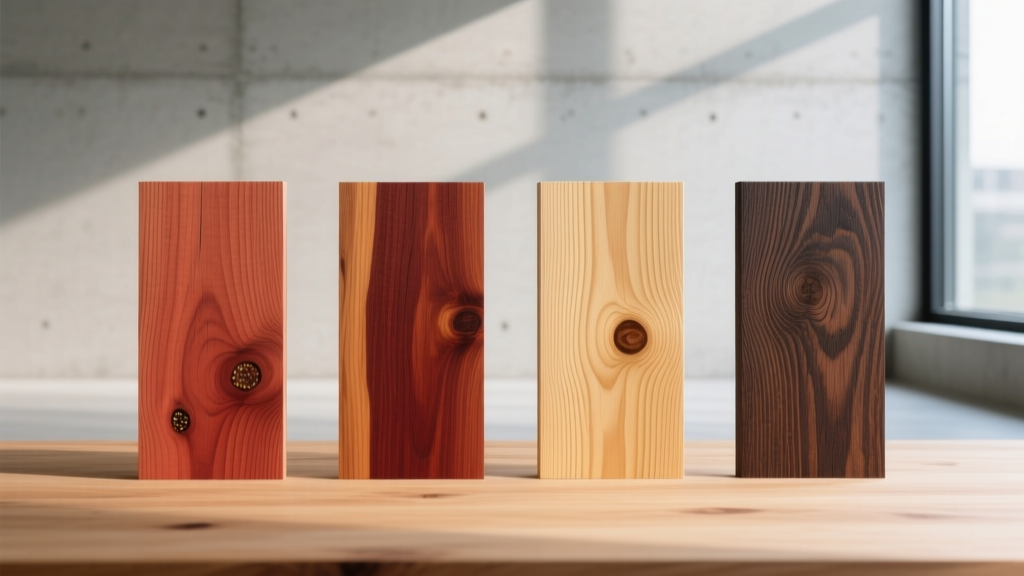
The Core Variables: Heartwood, Sapwood, and Preservatives
Selecting the best type of wood for fence construction requires moving beyond generic aesthetic preferences. The true deciding factors for longevity are the heartwood-to-sapwood ratio, the presence of natural extractives, and preservative retention levels for treated lumber. A fence built with premium sapwood will fail in five years, while a budget-friendly pressure-treated pine fence installed with correct ground-contact retention levels can easily last twenty-five.
Quick Decision Framework
- Best Overall Value: Pressure-Treated Southern Yellow Pine (PT SYP) with UC4B posts and UC4A rails.
- Best for Aesthetics & Low Maintenance: Western Red Cedar (Select Tight Knot grade, heartwood only).
- Best for High Moisture & Termite Zones: Black Locust or Micronized Copper Azole (MCA) treated pine.
- Best Premium/Heritage Build: California Redwood (Construction Heart grade).
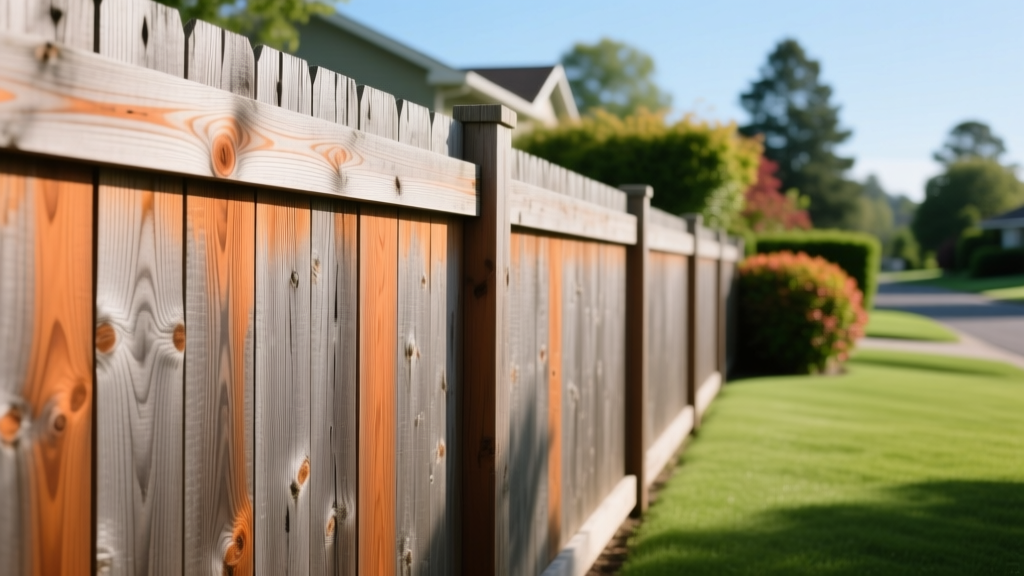
The Contenders: Wood Species Deep-Dive
1. Western Red Cedar (Thuja plicata)
Western Red Cedar (WRC) is the benchmark for natural fence lumber due to its high concentration of thujaplicins—natural fungicides that deter decay. However, these extractives exist almost exclusively in the heartwood. The outer sapwood of a cedar log has virtually no natural rot resistance. When purchasing WRC for fencing, you must verify the grade. 'Select Tight Knot' (STK) or 'Clear Heart' grades guarantee heartwood content. Avoid 'Common' or 'Fencing' grades from big-box stores, as they often contain wide bands of sapwood that will rot at the groundline within a few seasons. WRC has a Janka hardness of roughly 350 lbf, making it relatively soft and prone to denting, but highly dimensionally stable with minimal warping.
2. California Redwood (Sequoia sempervirens)
Redwood offers superior dimensional stability and a richer initial color than cedar, but it commands a significant price premium. Like cedar, its decay resistance is entirely dependent on the heartwood. The Western Wood Products Association (WWPA) classifies redwood grades rigorously. For fencing, you must specify 'Construction Heart' or 'Select Heart'. 'Construction Common' includes sapwood and is unsuitable for exterior ground-adjacent applications. According to the USDA Forest Products Laboratory, redwood heartwood contains complex phenolic compounds that provide exceptional resistance to both fungal decay and insect attack, yielding a Janka hardness of 420 lbf.
3. Pressure-Treated Southern Yellow Pine (PT SYP)
Southern Yellow Pine is the workhorse of American fencing. Because it lacks natural decay resistance, it is force-impregnated with chemical preservatives. The critical metric here is the American Wood Protection Association (AWPA) Use Category. Fence pickets and horizontal rails require UC4A (Above Ground) treatment, typically retaining 0.25 pounds per cubic foot (pcf) of copper preservative. Fence posts buried in soil or set in concrete require UC4B (Ground Contact) treatment, retaining a minimum of 0.40 pcf. Using UC4A posts in the ground is the most common cause of premature fence failure. SYP is dense and strong (Janka ~690 lbf), but it is highly prone to warping, twisting, and checking as it dries in place.
4. Black Locust (Robinia pseudoacacia)
Often overlooked, Black Locust is a domestic hardwood that rivals tropical species in durability. Penn State Extension notes that Black Locust heartwood is rated as very durable to durable regarding decay resistance, with a lifespan of 50+ years in direct ground contact. With a massive Janka hardness of 1,700 lbf, it is incredibly difficult to machine and requires pre-drilling for all fasteners. It is the ultimate choice for agricultural fencing, high-end privacy screens, and areas with severe termite pressure where chemical treatments are undesirable.
Head-to-Head Performance & Cost Matrix
The following matrix compares the four primary species based on 2026 national average material and installation costs for a standard 6-foot tall privacy fence.
| Wood Species | Required Grade / Treatment | Janka Hardness (lbf) | Avg. Cost (Installed / Lin. Ft.) | Expected Lifespan | Termite Resistance |
|---|---|---|---|---|---|
| Western Red Cedar | STK or Clear Heart | 350 | $22 - $35 | 15 - 25 Years | Moderate |
| California Redwood | Construction Heart | 420 | $35 - $55 | 20 - 30 Years | High |
| PT Southern Yellow Pine | UC4A (Rails) / UC4B (Posts) | 690 | $14 - $22 | 20 - 25 Years | High (Chemical) |
| Black Locust | Heartwood (Split or Sawn) | 1,700 | $40 - $65 | 50+ Years | Very High |
The Fastener Trap: Galvanic Corrosion and Tannin Bleed
The most expensive fence lumber will be ruined if paired with the wrong fasteners. The interaction between wood chemistry and metal hardware is a frequent point of failure.
Critical Fastener Warning
For Pressure-Treated Pine: Modern copper-based preservatives (like Alkaline Copper Quaternary or Micronized Copper Azole) are highly corrosive to standard metals. You must use hot-dipped galvanized fasteners meeting the G185 coating standard (0.185 oz/ft² of zinc) or 304/316 stainless steel. Electroplated galvanized nails will corrode and snap within three years.
For Cedar and Redwood: These species are loaded with tannic acid. When tannins react with iron or standard zinc galvanized coatings, they produce severe black streaking down the face of the boards. Use 304 stainless steel or silicone bronze fasteners for cedar and redwood to maintain a clean aesthetic.
Climate-Specific Selection Framework
Your local USDA Hardiness Zone and annual precipitation levels should dictate your material choice.
- High Moisture / Heavy Rainfall (PNW, Southeast): Avoid untreated sapwood entirely. PT SYP with UC4B ground-contact posts is the most economical choice. If budget allows, Black Locust posts paired with cedar pickets offers maximum longevity.
- Arid / High UV (Southwest, Mountain West): Rot is a minor concern, but UV degradation and thermal expansion are severe. Cedar and Redwood excel here due to their natural oils and dimensional stability. Use penetrating oil-based stains (e.g., Armstrong Clark) rather than film-forming acrylics, which will peel and blister under intense UV exposure.
- High Termite Pressure (Deep South, Coastal California, Hawaii): Subterranean termites will consume cedar and redwood heartwood if food sources are scarce. Rely on UC4B pressure-treated pine or naturally termite-resistant Black Locust for structural posts.
Lumber Yard Sourcing: Moisture Content and Acclimation
When purchasing PT SYP or green cedar from a commercial lumber yard, pay strict attention to the moisture content (MC). Lumber treated and shipped immediately is often 'wet' (MC above 30%). If you build a fence with wet lumber and immediately apply a sealant, you will trap moisture inside the wood, leading to internal rot and severe warping as the wood eventually tries to dry and equalize with the ambient humidity.
Always 'stick' wet lumber. Stack the boards with 1/2-inch spacers (stickers) between each layer in a shaded, well-ventilated area for 14 to 21 days before installation. This allows the moisture content to drop closer to the local Equilibrium Moisture Content (EMC), drastically reducing post-installation shrinkage, nail-popping, and board twisting.
Post-Setting Methodology: The Concrete Collar Problem
The species of wood matters little if the installation methodology is flawed. Setting wooden fence posts directly in a solid concrete cylinder creates a 'concrete collar' that traps water against the wood at the groundline—the exact zone where decay fungi thrive. The optimal installation method involves digging the post hole 6 inches deeper than the frost line or required depth, filling the bottom 6 inches with 3/4-inch crushed gravel for drainage, setting the UC4B treated or Black Locust post on the gravel, and then backfilling with concrete, sloping the top of the concrete away from the post to shed surface water. This simple drainage detail can add a decade to the life of your fence posts, regardless of the species you choose.
Written by
Sarah WhitfieldSarah Whitfield is a chartered quantity surveyor (MRICS) and construction cost analyst with 15 years of experience in material pricing, procurement strategy, and project budgeting. She earned her degree in Construction Management from the University of Reading (UK) and has worked on projects ranging from $2M custom homes to $180M mixed-use developments across North America and Europe. Sarah currently leads cost estimating for BuildMat Insight, maintaining a proprietary database of 4,000+ material price points updated quarterly. She is a frequent contributor to RSMeans cost data panels and has presented at the International Cost Engineering Council (ICEC) congress. Based in Denver, CO, Sarah is an avid trail runner and volunteer mentor for Women in Construction.
More from Sarah Whitfield
View all
Wood & Lumber
What Are the Different Types of Wood? A Builder's Guide
Compare structural softwoods, finish hardwoods, and engineered lumber. Analyze Janka ratings, MOE values, and 2026 pricing for construction.
Aug 4, 2026

Walls & Panels
Steel Framing vs Wood Framing: Corrosion and Moisture Defense
Compare steel framing vs wood framing for moisture resistance. Learn about galvanized coatings, condensation risks, and corrosion protection strategies.
Jul 21, 2026

Stone & Masonry
How to Cut Stone Veneer: Wet Saw vs Grinder Comparison
Compare the best tools for cutting stone veneer. We review wet saws, angle grinders, and chop saws to help you achieve clean, chip-free cuts.
Jul 21, 2026