What Type of Wood Was Noah's Ark Made Of? Structural Analysis
Explore what type of wood Noah's Ark was made of, analyzing gopher wood candidates and the modern structural framework for marine-grade timber.
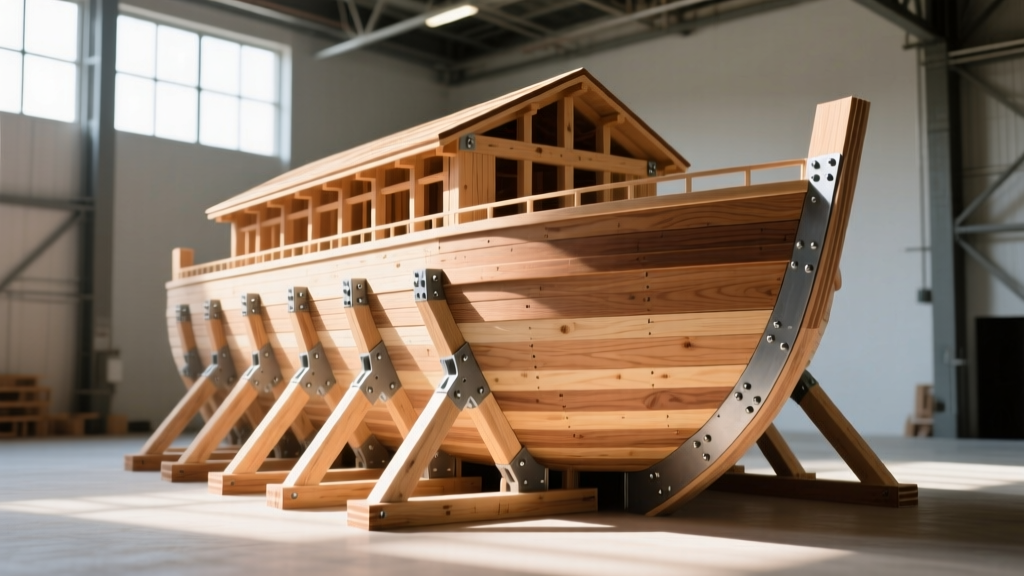
The 'Gopher Wood' Mystery: Translating Genesis 6:14
When architects, engineers, and timber specialists ask, 'what type of wood was noah's ark made of', they are confronting one of the oldest material science mysteries in human history. The biblical text of Genesis 6:14 specifies the use of 'gopher wood' (Hebrew: gopher or גֹּפֶר). Because this is a hapax legomenon—a word that appears only once in the entire Hebrew Bible—its exact botanical identity has been debated by theologians, botanists, and naval architects for centuries.
'Make yourself an ark of gopher wood; make rooms in the ark, and cover it inside and outside with pitch.' — Genesis 6:14 (NKJV)
From a structural engineering perspective, the material used to construct a vessel measuring 300 cubits long, 50 cubits wide, and 30 cubits high (approximately 450 x 75 x 45 feet) must possess extraordinary dimensional stability, natural rot resistance, and a high modulus of rupture (MOR) to withstand the hydrostatic pressure and dynamic hogging/sagging stresses of open-ocean swells. By analyzing the geographical availability of timber in the ancient Near East and the mechanical properties required for mega-structures, we can reverse-engineer the ultimate marine timber selection framework.
Top Botanical Candidates for the Ark's Hull
Based on archaeological evidence of ancient shipbuilding and the silviculture of the Mesopotamian and Levantine regions, four primary species emerge as the most likely candidates for gopher wood. Below is a structural comparison of these species based on modern testing data from the Wood Database and the USDA Forest Products Laboratory.
| Timber Species | Janka Hardness (lbf) | Modulus of Rupture (psi) | Rot Resistance | Ancient Availability |
|---|---|---|---|---|
| Mediterranean Cypress (Cupressus sempervirens) | 1,300 | 10,700 | Exceptional (High resin) | Abundant in Levant/Turkey |
| Cedar of Lebanon (Cedrus libani) | 820 | 10,060 | High (Rich in extractives) | Highly prized, heavily logged |
| Teak (Tectona grandis) | 1,155 | 14,310 | Exceptional (Silica/oils) | Unlikely (Requires import from India) |
| Acacia (Acacia spp.) | 1,700+ | 12,500+ | Very High | Available, but trees too small for hull planking |
Most naval historians and biblical scholars lean heavily toward Mediterranean Cypress. The phonetic similarity between the Hebrew gopher and the Greek kupar (cypress) is compelling, but the engineering argument is stronger. Cypress is highly resinous, naturally repelling marine borers and fungal decay, and it grows tall and straight, yielding the long, clear timbers necessary for hull planking.
Engineering a Mega-Structure: The Selection Framework
Whether you are analyzing an ancient vessel or specifying timber for a modern marine dock, timber-framed boathouse, or high-moisture structural pavilion, the selection framework remains identical. Building a 450-foot wooden hull requires managing three critical failure modes.
1. Dimensional Stability and Shrinkage
Wood is an anisotropic material; it shrinks and swells at different rates along its radial, tangential, and longitudinal axes. In a marine environment, timber constantly cycles between submerged (swollen) and exposed (drying) states. If the tangential-to-radial (T/R) shrinkage ratio is too high, the planks will cup, split, and pull their fasteners. Cypress boasts a T/R ratio of approximately 1.5, which is exceptionally stable, preventing the catastrophic hull leaks that would doom a rigid wooden mega-structure.
2. Natural Biocides and Extractives
Sapwood is highly susceptible to rot and marine borer attack (such as Teredo navalis, the naval shipworm). The structural framework demands the exclusive use of heartwood, which is packed with natural biocides. Cedar of Lebanon and Cypress contain high levels of terpenes and resin acids that act as natural fungicides. When sourcing modern equivalents, specifying 'All Heart' grades is non-negotiable for submerged or ground-contact applications.
3. Modulus of Rupture (MOR) and Bending Strength
A wooden ship hull acts as a massive beam. When the crest of a wave supports the bow and stern while the trough leaves the midship unsupported, the hull experiences 'hogging' stress. The reverse causes 'sagging.' The timber must possess a high MOR to resist snapping under these bending loads. While Teak offers a superior MOR of 14,310 psi, its geographical unavailability in ancient Mesopotamia makes Cypress (10,700 psi) the most logical, locally sourced structural compromise.
Modern Equivalents: Sourcing 'Ark-Grade' Timber Today
If a modern builder were tasked with constructing a vessel or marine structure of similar scale and durability, what would the material schedule look like? The ancient Near East timber supply has been heavily depleted, but modern silviculture offers engineered and old-growth alternatives.
- Old-Growth Bald Cypress (Taxodium distichum): Sourced from the American South, this is the closest modern equivalent to Mediterranean Cypress. It features a specific gravity of 0.46 and exceptional decay resistance. Specify 'Select Structural' grade per NLGA (National Lumber Grades Authority) rules.
- White Oak (Quercus alba): The traditional choice for wooden shipbuilding (like the USS Constitution). White Oak contains tyloses—cellular outgrowths that plug the xylem vessels, making the wood virtually impermeable to water. This prevents the capillary action that rots other species from the inside out.
- Accoya® (Acetylated Radiata Pine): For a 21st-century twist, acetylated wood modifies the cell wall polymers, reducing water absorption by up to 80%. It carries a 50-year above-ground and 25-year marine warranty, effectively mimicking the rot-resistance of ancient heartwood without requiring the harvest of old-growth forests.
The Pitch Factor: Waterproofing Ancient and Modern Timber
The Genesis account explicitly states the Ark was covered 'inside and outside with pitch.' In the ancient world, this meant bitumen (naturally occurring asphalt) or pine resin mixed with animal fats. This coating did not just waterproof the wood; it acted as a flexible elastomeric membrane that bridged the gaps between planks as they swelled and shrank.
In modern timber framing and marine construction, we replace bitumen with Clear Penetrating Epoxy Sealer (CPES) followed by flexible polyurethane marine sealants (such as Sikaflex-291). CPES penetrates deep into the wood fibers, stabilizing the surface and preventing moisture ingress, while the polyurethane sealant accommodates the seasonal movement of the timber joints without losing adhesion.
Frequently Asked Questions
Could a wooden ship actually be 450 feet long?
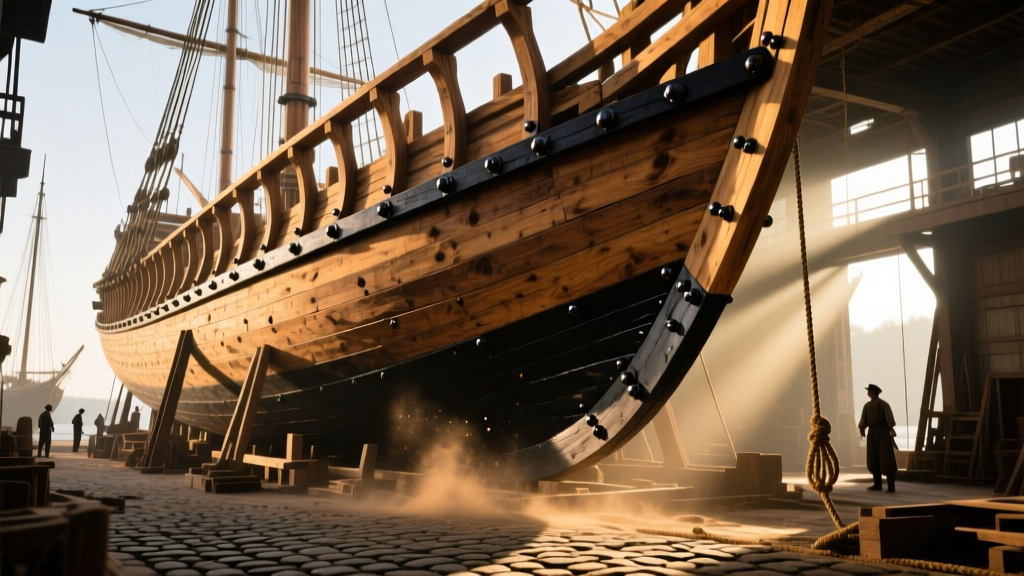
Yes, but it pushes the absolute limits of wooden naval architecture. In the late 19th century, wooden schooners like the Wyoming (built in 1909) reached 450 feet in length. However, these ships required massive internal iron cross-bracing (diagonal strapping) to prevent hogging and sagging. If the Ark was built purely of timber without metal bracing, it would have required an incredibly sophisticated internal lattice of transverse bulkheads and longitudinal stringers to maintain hull integrity.
Why isn't Oak mentioned as a candidate for the Ark?
While oak is a premier shipbuilding timber, true oaks (Quercus species suitable for large timber) were not abundant in the arid plains of Mesopotamia where the Ark was traditionally built. Cypress and Cedar were the dominant structural timbers in the ancient Near Eastern trade routes, heavily utilized by the Egyptians and Phoenicians for their fleets.
What is the modern building code equivalent for marine timber?
In the US, the American Wood Council (AWC) and the International Building Code (IBC) reference the WWPA Marine Piling and Timber Grades manual. For structural elements exposed to saltwater or continuous moisture, timber must meet strict criteria for heartwood content, grain slope (typically 1:12 or better), and absence of catastrophic knots, ensuring the structural integrity mirrors the rigorous demands of ancient shipwrights.
Written by
Marcus ChenMarcus Chen is a licensed structural engineer (PE) and building materials analyst with over 12 years of experience across residential, commercial, and industrial construction. He holds a Master of Science in Civil Engineering from UC Berkeley and spent six years at Thornton Tomasetti before transitioning to independent consulting and technical writing. Marcus specializes in material selection for seismic-prone regions, concrete reinforcement strategies, and lifecycle cost analysis. His work has been cited by the American Concrete Institute (ACI) and the Structural Engineers Association of California (SEAOC). When he is not on a job site or at his desk, you will find him hiking the Sierra Nevada or restoring a 1920s craftsman bungalow in Oakland, CA.
More from Marcus Chen
View all
Construction Cost
How Much Did the Eiffel Tower Cost to Build?
How much did the Eiffel Tower cost to build in 1889? We adjust for inflation and compare its budget to modern skyscraper construction.
Aug 4, 2026

Fire Resistance
What Is a Fire Resistant Material? Testing & Certification Guide
Discover what is a fire resistant material through ASTM and UL testing. Learn how fire ratings, certifications, and assemblies work in construction.
Aug 4, 2026

Construction Cost
How Much Did the Burj Khalifa Cost to Build?
How much did the Burj Khalifa cost to build? We break down the $1.5B project and extract 5 money-saving strategies for your next build.
Jul 30, 2026