A Selection Framework for Different Types of Pressure Treated Wood
Master our selection framework for different types of pressure treated wood. Compare AWPA use categories, chemical retentions, and costs for your project.

The AWPA Use Category System: Your Primary Selection Filter
Selecting the correct pressure-treated lumber requires moving beyond generic "treated wood" labels and applying the American Wood Protection Association (AWPA) Use Category (UC) system. According to the American Wood Protection Association (AWPA), the UC system classifies wood based on its specific environmental exposure and biological hazard level. Misclassifying your exposure environment is the leading cause of premature structural decay in exterior framing.
| AWPA Category | Exposure Environment | Minimum Retention (MCA pcf) | Primary Applications |
|---|---|---|---|
| UC3A | Above ground, uncoated, rapid water runoff | 0.15 | Deck joists, railing caps, fence rails |
| UC3B | Above ground, coated, or poor water runoff | 0.25 | Decking boards, fascia, exterior trim |
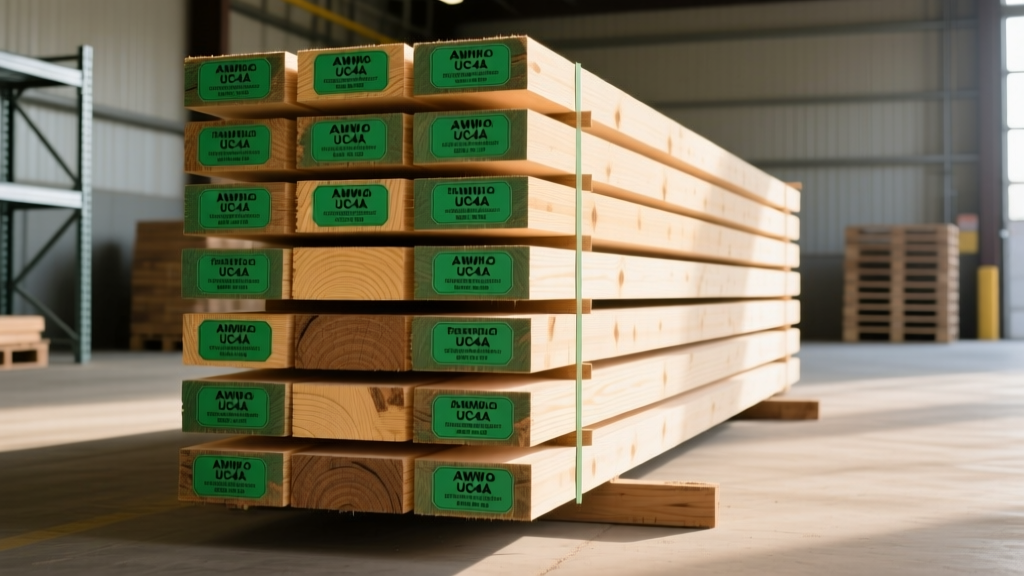
| UC4A | Ground contact, general use | 0.31 | Structural posts, fence posts, retaining walls |
| UC4B | Heavy-duty ground contact / freshwater | 0.40 | Critical structural components, permanent foundations |
| UC4C | Extreme ground contact / saltwater | 0.60 | Marine pilings, seawalls, agricultural posts |
Chemical Preservatives and Retention Levels (pcf)
The Environmental Protection Agency (EPA) regulates the copper-based preservatives used in modern pressure-treated wood. The two dominant residential chemicals are MCA (Microconazole Copper Azole) and CA-C (Copper Azole Type C). Both rely on copper as the primary fungicide, but their co-biocides differ, affecting their performance in specific soil conditions.
MCA vs. CA-C: A Functional Breakdown
- MCA (Microconazole Copper Azole): Features a finer copper particle size, resulting in a more uniform penetration in Southern Yellow Pine (SYP). It is the standard for most big-box retailer inventory. MCA performs exceptionally well in standard soil conditions but can be slightly less effective in highly alkaline soils.
- CA-C (Copper Azole Type C): Uses tebuconazole as a co-biocide. CA-C is often preferred for Douglas Fir and Hem-Fir species because the larger copper particles and specific solvent carriers penetrate the tighter grain of western species more effectively during the incising process.
- Borate (SBX): Used exclusively for interior or fully protected exterior applications (UC1 and UC2). Borate is highly toxic to termites and wood-destroying beetles but is water-soluble. It must never be used where it will be exposed to liquid water or ground contact.
Retention levels are measured in pounds per cubic foot (pcf). A 2x6 UC4A board stamped with "0.31 pcf MCA" contains exactly 0.31 pounds of the active chemical preservative per cubic foot of wood volume. Do not accept UC3A (0.15 pcf) lumber for any framing member that sits within 6 inches of a concrete slab or soil grade, as capillary action and splash-back will rapidly deplete the lower chemical threshold.
Wood Species and the Incising Requirement
The species of wood dictates how deeply the preservative chemicals can penetrate. Research from the USDA Forest Products Laboratory highlights the vast difference in treatability between softwoods.
Southern Yellow Pine (SYP)
SYP is highly permeable. The cellular structure allows preservative chemicals to penetrate deeply into the sapwood without mechanical assistance. If you are building east of the Mississippi River, 95% of your pressure-treated inventory will be SYP. Look for deep, uniform green or brown tinting on the end grains to verify full penetration.
Douglas Fir and Hem-Fir (Western Species)
Western species possess a tighter, more resistant cellular structure. To achieve AWPA-required penetration depths, these boards must undergo incising—a process where small, uniform slits are mechanically punched into the wood surface before treatment. If you are purchasing Douglas Fir for ground contact (UC4A), visually verify the presence of incising marks. Non-incised Douglas Fir will fail to meet structural decay resistance standards, even if it bears a treated stamp.
Hardware Compatibility and Corrosion Thresholds
The copper in MCA and CA-C preservatives acts as a galvanic catalyst, accelerating the corrosion of standard steel and aluminum fasteners. Your selection framework must include hardware pairing:
- Fasteners: Specify hot-dipped galvanized (HDG) fasteners meeting ASTM A153 Class D (G185 coating weight) or stainless steel (Type 304 for standard exterior, Type 316 for marine/coastal environments).
- Connectors (Joist Hangers, Post Bases): Require G185 hot-dipped galvanized steel. For concealed or highly corrosive environments, upgrade to ZMAX (G185 equivalent with proprietary passivation) or stainless steel connectors.
- Flashing: Use heavy-duty PVC, rubberized asphalt, or stainless steel. If using copper or lead-coated copper flashing, it must be separated from the treated wood by a minimum 40-mil rubberized membrane to prevent galvanic degradation of the metal and chemical leaching.
Project-Specific Selection Framework
Apply this decision matrix to common construction scenarios to ensure code compliance and longevity.
Scenario A: Elevated Deck Framing and Joists
Requirement: UC3B (Above Ground, coated/poor drainage) or UC4A (Ground Contact).
Rationale: While joists are technically "above ground," they are subject to poor water runoff, leaf debris accumulation, and splash-back from the ground. Specifying UC4A (0.31 pcf) for all joists, beams, and ledger boards provides a necessary safety margin against hidden moisture traps. Decking boards should be UC3B or upgraded to UC4A if they are low to the ground (under 18 inches of clearance).
Scenario B: Structural Posts and Retaining Walls
Requirement: UC4A (General Ground Contact) minimum; UC4B (Heavy Duty) for critical load-bearing columns.
Rationale: Posts embedded in concrete or soil require the 0.31 pcf retention of UC4A. If the post supports a primary structural roof load or is part of a permanent wood foundation system, upgrade to UC4B (0.40 pcf). Always apply a brush-on copper naphthenate end-cut treatment to the bottom 12 inches of the post before embedding it in concrete.
Scenario C: Interior Framing in High-Moisture Zones
Requirement: Borate-treated (UC2) or standard kiln-dried lumber with localized waterproofing.
Rationale: Do not use MCA/CA-C exterior treated wood for interior bathroom or kitchen framing. The high moisture content of wet-treated exterior wood will cause severe warping and shrinkage as it acclimates to interior HVAC environments, cracking drywall and tile. Use borate-treated lumber for termite resistance in sill plates, or rely on standard SPF lumber with proper vapor barriers.
KDAT vs. Wet Treated: Managing Shrinkage and Warping
Standard pressure-treated lumber is shipped wet, often with a moisture content (MC) exceeding 35%. As this wood dries in the field, it shrinks, twists, and checks. For high-visibility applications like deck railings, fascia, and exterior trim, specify KDAT (Kiln Dried After Treatment) lumber.
KDAT lumber is re-dried in a kiln after the chemical treatment process, bringing the MC down to approximately 15% to 19%. This stabilizes the cellular structure, drastically reducing post-installation shrinkage, minimizing checking (surface cracking), and allowing for immediate application of penetrating oil-based stains. While KDAT carries a 20% to 30% price premium over wet-treated stock, the labor savings in reduced callbacks for popped fasteners and split trim easily justify the material cost.
Field Treatment: The Mandatory End-Cut Protocol
The pressure treatment process forces chemicals into the wood from the exterior inward. When you cross-cut a treated board or drill large-diameter holes for plumbing and electrical penetrations, you expose untreated heartwood. Building codes (IRC Section R317.1) mandate that all field cuts, notches, and drilled holes in pressure-treated wood be coated with an approved end-cut preservative.
Use a copper naphthenate-based brush-on treatment (commonly sold under brand names like Copper-Green). Apply two heavy coats to all exposed end grains and drilled holes. This is not an optional aesthetic step; it is a critical chemical barrier that prevents fungal hyphae from entering the untreated core of the lumber, which is the most common initiation point for interior rot in deck joists and structural beams.
Written by
Priya KapoorPriya Kapoor is a real estate market analyst and construction economics researcher with expertise in housing affordability, development feasibility, and infrastructure investment. She holds a Master of Regional Planning from Cornell University and previously worked as a senior analyst at CBRE's Investment Properties group, where she modeled returns for $4B in mixed-use development pipelines. Priya now runs an independent research practice advising developers, municipalities, and REITs on construction cost forecasting and market timing. She publishes the quarterly "BuildMat Market Pulse" report tracking material price indices across 12 commodity categories. Based in Austin, TX, Priya serves on the board of Habitat for Humanity Austin and is a marathon runner.
More from Priya Kapoor
View all
Construction Cost
Cost to Build a 1600 Sq Ft Home in 2026: Full Breakdown
Accurate 2026 cost to build a 1600 sq ft home—material, labor, and regional pricing breakdowns included. Plan your budget with real-time estimates.
Aug 11, 2026

Wood & Lumber
Name the Types of Wood for Pressure Treatment and Preservation
Learn how to name the types of wood best suited for pressure treatment. Compare species treatability, chemical retention levels, and 2026 preservation costs.
Aug 4, 2026

Stone & Masonry
Stone Veneer Suppliers Lindenhurst: 2026 Cost Analysis
Analyze 2026 stone veneer costs in Lindenhurst, NY. Compare local supplier pricing, delivery fees, and Suffolk County installation labor rates.
Aug 4, 2026