Preservation Efficacy Across Different Types of Timber Wood
Discover how preservation treatments penetrate different types of timber wood. Compare species permeability, retention levels, and Use Class ratings.

The Permeability Problem: Why Wood Species Dictate Treatment
When specifying materials for exterior, ground-contact, or marine applications, understanding how different types of timber wood interact with chemical preservatives is critical. Preservation is not a uniform process; the cellular anatomy of the wood species determines whether a preservative will penetrate deeply into the core or remain trapped on the surface. The primary biological barrier to treatment is the aspiration of bordered pits in the heartwood. As trees mature, the heartwood cells die and the pit membranes shift, sealing off the pathways that allow liquids to flow. Consequently, while the sapwood of almost any species can be treated relatively easily, the heartwood of many commercially important timbers is highly refractory, meaning it actively resists chemical penetration.
Never assume a timber is fully treated just because the exterior is coated. In refractory species like Douglas Fir, standard pressure treatment without mechanical modification often yields less than 0.1 inches of preservative penetration into the heartwood, leaving the structural core entirely vulnerable to decay fungi and Formosan subterranean termites.
Treatment Penetration Matrix by Timber Species
To achieve the retention levels mandated by the American Wood Protection Association (AWPA) Standard U1, treatment facilities must adjust their protocols based on the specific types of timber wood being processed. The matrix below outlines the baseline permeability and required treatment modifications for common structural species.
| Timber Species | Heartwood Permeability | Sapwood Permeability | Required Modification | UC4A Target Retention (pcf) |
|---|---|---|---|---|
| Southern Yellow Pine (SYP) | Moderate to High | Very High | Standard Pressure Cycle | 0.25 (ACQ) / 0.15 (CA-C) |
| Douglas Fir | Highly Refractory | Moderate | Incising + Extended Pressure | 0.25 (ACQ) / 0.15 (CA-C) |
| Hem-Fir | Refractory | Moderate | Incising + Boultonizing | 0.25 (ACQ) / 0.15 (CA-C) |
| Western Red Cedar | Highly Refractory | Low | Thermal Modification / None | N/A (Naturally Durable) |
Pressure Treatment Protocols for Highly Refractory Timbers
When working with types of timber wood that possess highly refractory heartwood, such as Douglas Fir and Hemlock, standard vacuum/pressure cycles are insufficient. The preservative solution simply cannot bypass the aspirated pits. To force chemicals into the core, treatment plants employ mechanical and thermal disruptions.
Incising: Mechanical Pathway Creation
Incising involves passing the timber through a machine equipped with rollers studded with steel teeth. These teeth puncture the wood surface, creating artificial conduits that bypass the impermeable heartwood. For structural lumber destined for ground contact (AWPA Use Class 4A), incising teeth must penetrate exactly 0.25 to 0.5 inches deep, with a density of approximately 120 to 150 punctures per square foot. While this slightly reduces the bending strength (MOE) of the timber by about 5% to 10%, it is a mandatory trade-off to achieve the required 0.25 pounds per cubic foot (pcf) retention of Alkaline Copper Quaternary (ACQ) preservatives in Douglas Fir.
Boultonizing: Thermal Resin Mobilization
For species heavily laden with pitch and resin, such as Hem-Fir, the Boultonizing process is utilized. Before the water-based preservative is introduced, the timber is submerged in a heated oil bath (typically between 200°F and 230°F) under vacuum. This heat liquefies the internal resins and drives out trapped moisture and air. Once the timber is sufficiently conditioned, the preservative is introduced into the same cylinder, allowing the waterborne chemicals to occupy the voids left by the expelled moisture.
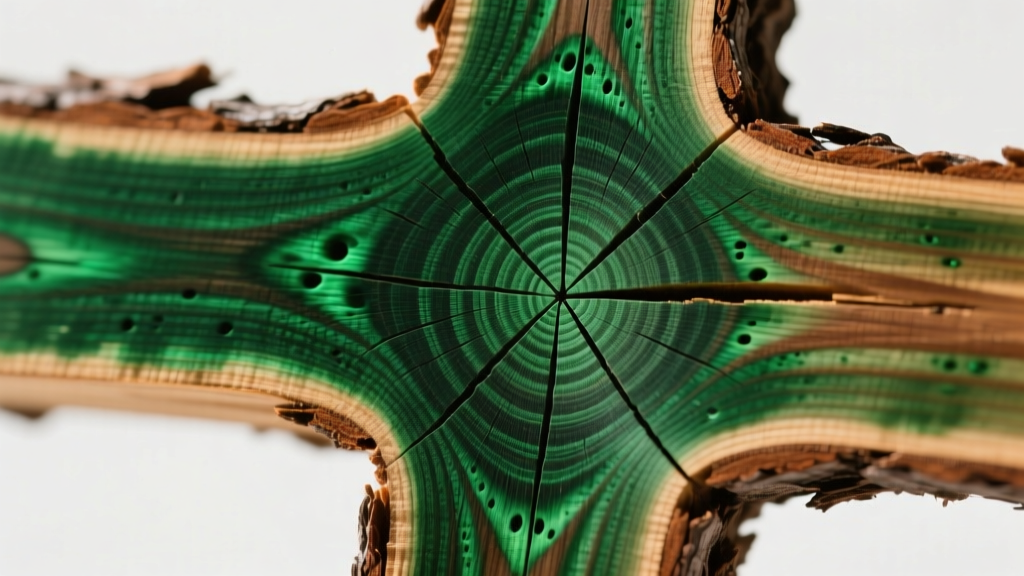
Thermal Modification: An Alternative for Low-Permeability Types
For types of timber wood that are both highly refractory and intended for above-ground exterior applications (Use Class 3), the industry is increasingly pivoting away from chemical preservation toward thermal modification. Processes like Thermowood or Kebony alter the wood at the molecular level rather than relying on chemical penetration.
During thermal modification, the timber is baked in a low-oxygen environment at temperatures ranging from 212°C to 230°C (413°F to 446°F). This intense heat degrades the hemicellulose chains within the cell walls. Because hemicellulose is the primary food source for decay fungi and the main pathway for moisture absorption, its destruction fundamentally changes the timber's performance profile. The Equilibrium Moisture Content (EMC) of thermally modified timber drops to between 4% and 6%—roughly half that of untreated wood. This massive reduction in hygroscopicity eliminates the swelling and shrinking that causes checking, making it an ideal, chemical-free alternative for decking and cladding using species like Ash or Pine.
When any pressure-treated timber is cross-cut, ripped, or drilled on the job site, the untreated core is exposed. AWPA Standard M4 mandates that all field cuts must be coated with a heavy-duty end-cut preservative. Apply a minimum of two flood coats of Copper Naphthenate (containing 2% copper metal) or Copper 8-Quinolinolate to the exposed end-grain. Allow 24 hours of drying time between coats to ensure adequate penetration into the end-grain capillaries.
Matching Timber Types to AWPA Use Classes
Selecting the correct preservative retention level depends entirely on the specific hazard environment the timber will face. The American Wood Protection Association categorizes these environments into distinct Use Classes (UC). Here is how different types of timber wood should be specified across the spectrum:
- UC1 & UC2 (Interior, Dry / Damp): Borate treatments (DOT) at 0.25 pcf are ideal for SYP and Spruce framing where moisture is controlled but termite risk exists. Borates do not leach, making them perfect for interior use.
- UC3A & UC3B (Exterior, Above Ground): Requires 0.15 pcf of Micronized Copper Azole (MCA-C) or CA-C. SYP, Douglas Fir, and thermally modified hardwoods perform exceptionally well here.
- UC4A, UC4B, UC4C (Ground / Freshwater Contact): Demands heavy retentions (0.25 to 0.60 pcf depending on hazard). Only highly permeable SYP or heavily incised Douglas Fir should be specified. Ensure the treatment tag explicitly states 'UC4A' or higher.
- UC5 (Marine/Saltwater): Requires dual-treatment (e.g., Creosote + ACQ) at extreme retentions (up to 2.5 pcf). Only select, tight-grained SYP or naturally durable tropical hardwoods like Greenheart are viable.
Field Verification: Checking Retention and Penetration
You cannot verify the efficacy of preservation simply by looking at the green or brown tint on the surface of the wood. To ensure the types of timber wood delivered to your site meet the architectural specifications, implement the following field verification protocols based on USDA Forest Products Laboratory guidelines:
- Extract a Core Sample (AWPA A3): Use a 5/16-inch increment borer to extract a core from the timber, ensuring you drill past the pith to capture both sapwood and heartwood.
- Apply a Chemical Indicator (AWPA A7): For copper-based preservatives (ACQ, CA, MCA), spray the freshly extracted core with a 0.5% solution of Chrome Azural S or a specialized commercial copper indicator dye.
- Measure the Penetration Envelope: The dye will turn the treated wood a distinct blue or purple. Use digital calipers to measure the depth of the color change from the bark edge inward. For UC4A ground-contact timber, the AWPA mandates a minimum average penetration of 0.4 inches, with no single core showing less than 0.25 inches.
- Verify the Retention Tag: Cross-reference the physical measurements with the end-tag on the timber bundle. The tag must display the AWPA U1 standard, the specific Use Class, and the treating company's quality mark. If the tag is missing or the dye test fails, reject the shipment.
By understanding the cellular limitations and required mechanical interventions for different types of timber wood, specifiers and builders can eliminate premature structural decay. Always demand documentation of the treatment cycle and verify penetration in the field to guarantee long-term structural integrity.
Written by
David NakamuraDavid Nakamura is a licensed architect (AIA) and construction technology writer focused on sustainable building methods, mass timber engineering, and high-performance building envelopes. He holds a Master of Architecture from the University of Washington and is a certified Passive House Consultant (CPHC). David spent eight years at the Seattle firm Mithun, where he led the design of three LEED Platinum projects, before founding his own practice specializing in net-zero residential design. He serves on the editorial advisory board of GreenBuilder Magazine and has authored peer-reviewed papers on cross-laminated timber (CLT) connections for the Journal of Structural Engineering. In his spare time, David teaches woodworking at Pratt Fine Arts Center and kayaks the Puget Sound.
More from David Nakamura
View all
Construction Cost
Labor Cost to Build a Deck Per Sq Ft: 2026 Installation Guide
Discover the exact labor cost to build a deck per sq ft in 2026. This installation guide breaks down contractor rates, complexity factors, and hidden fees.
Aug 4, 2026

Construction Cost
How Much Does It Cost to Build a 3 Bedroom House? Financing Guide
Learn exactly how much it costs to build a 3 bedroom house and explore 2026 financing options, construction loan types, and budget frameworks for your build.
Aug 4, 2026

Construction Cost
Cost to Build a Tennis Court: 2026 Guide
How much does it cost to build a tennis court in 2026? Breakdowns for asphalt, concrete, and synthetic surfaces plus fencing and lighting.
Jul 30, 2026