Choosing the Right Type of Saws to Cut Wood: A Pro Framework
Master the selection framework for every type of saws to cut wood. Compare track, miter, and reciprocating saws for precision and framing.
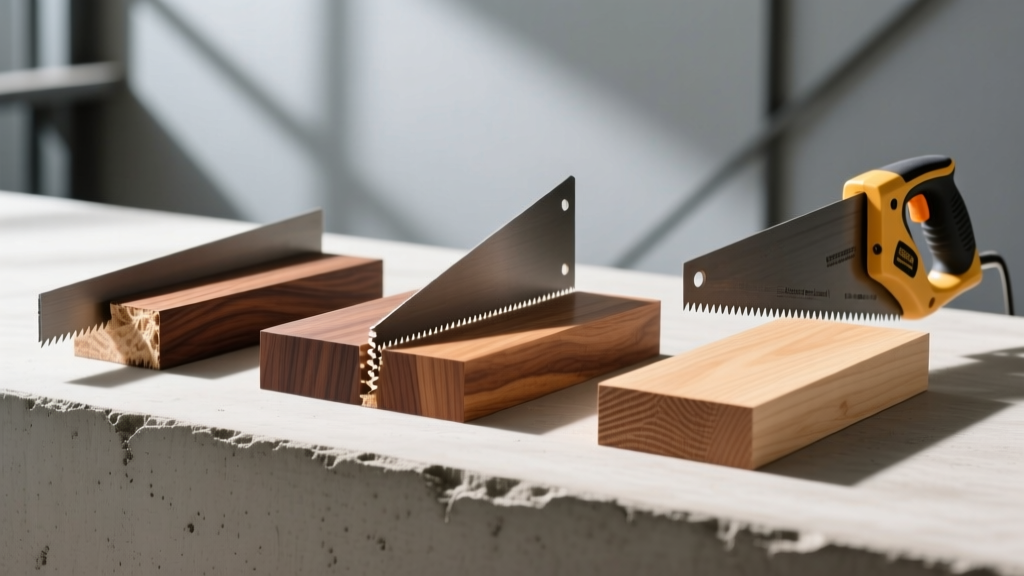
The Kinematics of Wood Cutting: Beyond the Brand Name
Selecting the correct type of saws to cut wood is not about purchasing the most expensive tool on the shelf; it is about matching the tool's kinematics to the wood's grain structure, the material's density, and the cut's tolerance requirements. A framing carpenter cutting 2x12 LVL headers faces entirely different mechanical challenges than a finish carpenter scribing 3/4-inch pre-finished oak plywood. Using the wrong saw category results in tear-out, motor burnout, or catastrophic kickback. This framework categorizes saw selection by cut geometry, material volume, and precision tolerances, providing exact specifications for professional applications.
The 4-Quadrant Saw Selection Matrix
Before evaluating specific models, map your primary task to the correct mechanical action. The following matrix dictates the baseline tool category required for specific structural and finish applications.
| Cut Geometry | Primary Saw Category | Ideal Blade TPI & Grind | Max Material Thickness |
|---|---|---|---|
| Ripping Sheet Goods (Plywood, OSB) | Track Saw / Table Saw | 48 TPI, ATB (Alternate Top Bevel) | 2-1/2 inches (Track) |
| Crosscutting Dimensional Lumber | 12-inch Sliding Miter Saw | 60-80 TPI, TCG (Triple Chip Grind) | 12 inches (Nominal) |
| Demolition & Nail-Embedded Wood | Reciprocating Saw (Orbital) | 6-8 TPI, Bi-Metal with Raker Set | Unlimited (Stroke dependent) |
| Precision Trim & Joinery | 8-1/2 inch Miter / Jigsaw | 90+ TPI, High-ATB, Negative Hook | 3/4 inch to 2 inches |
Sheet Goods and Panel Processing: Track Saws vs. Table Saws
Cutting 4x8 sheets of 3/4-inch cabinet-grade plywood or melamine requires zero tear-out and dead-straight edges. The traditional approach relies on a 3HP cabinet table saw, such as the SawStop PCS ($4,299), which requires a massive 10-foot outfeed table and significant shop footprint. For job-site mobility and edge quality, the track saw is the superior framework choice.
Track Saw Mechanics and Splinter Guards
Track saws, like the Festool TS 55 REQ ($750) or Makita XPS01PTJ ($650), utilize a spring-loaded riving knife and a sacrificial splinter guard on the aluminum guide rail. When the blade (typically a 48-tooth ATB design with a 0.071-inch kerf) scores the melamine face on a shallow 1/16-inch pre-cut pass before the full-depth plunge, it eliminates bottom-side tear-out entirely. Table saws struggle with this unless equipped with a zero-clearance insert and a scoring blade, which adds setup time.
Crosscutting and Framing: The Miter Saw Hierarchy
Crosscutting dimensional lumber and engineered headers introduces the challenge of rail deflection. When determining the right type of saws to cut wood for framing, a 12-inch sliding compound miter saw is the standard. However, the sliding mechanism inherently introduces lateral play.
Mitigating Sliding Rail Deflection
Models like the DeWalt DWS779 ($400) or Makita XSL06PT ($900) offer 12-inch to 15-inch crosscut capacities, easily handling 2x12 LVLs. However, pushing the saw head forward through a dense LVL can cause the blade to deflect up to 1/16-inch out of square due to rail flex. To eliminate this failure mode, use the pull-plunge-push technique: pull the saw head toward you, plunge the blade into the wood, and push it away from you to complete the cut. This forces the blade against the natural cutting resistance, neutralizing lateral deflection.
Finish Carpentry: Downsizing for Accuracy
For baseboards, crown molding, and picture frame joinery, a 12-inch saw is overkill and prone to micro-wobble. Transition to an 8-1/2 inch or 10-inch non-sliding miter saw (e.g., Bosch CM8S, $300). The fixed pivot point eliminates rail deflection entirely, yielding glass-smooth cuts on MDF and solid hardwoods when paired with an 80-tooth TCG blade.
Demolition and Curves: Reciprocating Saws and Jigsaws
When the framework requires removing existing structures, cutting nail-embedded framing, or scribing irregular curves, high-RPM rotary saws are ineffective and dangerous.
Reciprocating Saws: Stroke Length and Orbital Action
The Milwaukee M18 FUEL Super Sawzall features a 1-1/4-inch stroke length and an orbital action setting. Orbital action forces the blade into an elliptical path, aggressively clearing sawdust when ripping through green lumber or nail-heavy demolition. For cutting PVC or thin metal alongside wood, disable orbital action and switch to a 14-TPI bi-metal blade to prevent tooth stripping. Always verify OSHA Woodworking Safety Guidelines regarding PPE, as reciprocating saws generate high-velocity debris clouds.
Jigsaws for Scribing and Cutouts
For sink cutouts in laminate countertops or scribing stair treads, a barrel-grip jigsaw with a variable-speed dial is mandatory. Use a down-stroke blade (teeth pointing downward) for laminates to prevent top-surface chipping, and rely on a zero-clearance shoe insert to support the fragile veneer edges during the upstroke.

The Hidden Variable: Blade Geometry and Hook Angles
The saw provides the power; the blade dictates the cut quality. Misunderstanding blade geometry is the most common reason professionals blame their tools for poor results. Refer to the APA - The Engineered Wood Association guidelines when cutting abrasive engineered woods like LVL or OSB, as standard steel blades will dull within 20 cuts.
- Alternate Top Bevel (ATB): Teeth alternate left and right bevels. Slices wood fibers cleanly. Mandatory for crosscutting solid wood and plywood. (40-80 TPI).
- Flat Top Grind (FTG): Teeth are flat across the top. Acts like a chisel. Highly efficient for ripping solid lumber with the grain, but causes severe tear-out on crosscuts. (20-30 TPI).
- Triple Chip Grind (TCG): Alternates between a flat raker tooth and a trapeze tooth. Designed specifically for highly abrasive materials like MDF, melamine, OSB, and LVL headers. Prevents rapid carbide wear.
- Hook Angle: A high positive hook (15° to 20°) aggressively pulls the material into the blade, ideal for ripping. A negative hook (-5° to 5°) pushes the material down against the fence, mandatory for sliding miter saws and cutting metals to prevent the blade from climbing and kicking back.
Final Selection Decision Tree
Use this rapid diagnostic to finalize your tool selection on the job site:
- Is the cut longer than 48 inches on sheet goods? Select a Track Saw with a 110-inch guide rail.
- Is the material thicker than 3-1/2 inches and requires a square crosscut? Select a 12-inch Sliding Miter Saw with a TCG blade.
- Does the material contain unknown fasteners or require demolition? Select an Orbital Reciprocating Saw with a 6-TPI bi-metal blade.
- Is the cut an interior radius or scribed profile? Select a Variable-Speed Jigsaw with a down-stroke blade.
By aligning the mechanical action of the saw with the specific grain orientation and density of the wood product, you eliminate secondary sanding, reduce material waste, and maintain strict adherence to structural tolerances.
Written by
Sarah WhitfieldSarah Whitfield is a chartered quantity surveyor (MRICS) and construction cost analyst with 15 years of experience in material pricing, procurement strategy, and project budgeting. She earned her degree in Construction Management from the University of Reading (UK) and has worked on projects ranging from $2M custom homes to $180M mixed-use developments across North America and Europe. Sarah currently leads cost estimating for BuildMat Insight, maintaining a proprietary database of 4,000+ material price points updated quarterly. She is a frequent contributor to RSMeans cost data panels and has presented at the International Cost Engineering Council (ICEC) congress. Based in Denver, CO, Sarah is an avid trail runner and volunteer mentor for Women in Construction.
More from Sarah Whitfield
View all
Wood & Lumber
What Are the Different Types of Wood? A Builder's Guide
Compare structural softwoods, finish hardwoods, and engineered lumber. Analyze Janka ratings, MOE values, and 2026 pricing for construction.
Aug 4, 2026

Walls & Panels
Steel Framing vs Wood Framing: Corrosion and Moisture Defense
Compare steel framing vs wood framing for moisture resistance. Learn about galvanized coatings, condensation risks, and corrosion protection strategies.
Jul 21, 2026

Stone & Masonry
How to Cut Stone Veneer: Wet Saw vs Grinder Comparison
Compare the best tools for cutting stone veneer. We review wet saws, angle grinders, and chop saws to help you achieve clean, chip-free cuts.
Jul 21, 2026