Best Type of Wood Flooring: Complete Hardwood Species Guide
Discover the best type of wood flooring for your home. Compare Janka hardness, costs, and stability of top domestic and exotic hardwood species.
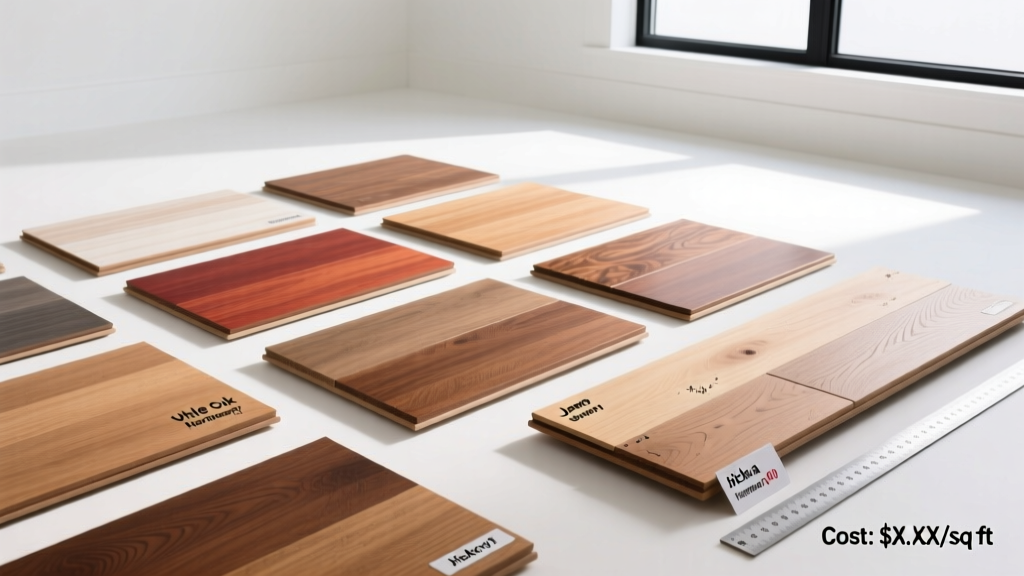
The Myth of the Single Best Wood
Determining the best type of wood flooring for a specific project requires moving past aesthetic preferences to evaluate cellular structure, dimensional stability, and site-specific moisture dynamics. There is no universal 'best' species; a floor that performs flawlessly in a climate-controlled Chicago high-rise may fail catastrophically in a humid Florida beachfront home. To make an informed decision, contractors and homeowners must analyze the mechanical properties of the wood, its reaction to modern finishes, and its long-term maintenance requirements.
The Janka Hardness Scale: Beyond the Numbers
The Janka hardness test measures the force required to embed a 0.444-inch steel ball halfway into a wood sample. While it is the industry standard for dent resistance, it does not measure brittleness, scratch resistance, or dimensional stability. A high Janka rating does not automatically make a species the best type of wood flooring for high-traffic areas if the wood is prone to splintering or severe seasonal gapping.
| Species | Janka Rating (lbf) | Tangential Shrinkage | Pore Structure |
|---|---|---|---|
| Hard Maple | 1,450 | 9.9% | Closed / Diffuse |
| White Oak | 1,360 | 10.5% | Closed (Tyloses) |
| Red Oak | 1,290 | 8.6% | Open |
| Hickory | 1,820 | 12.6% | Semi-Ring |
| Brazilian Walnut (Ipe) | 3,680 | 6.6% | Closed |
Note: Tangential shrinkage indicates how much the wood shrinks from green to oven-dry. Higher percentages mean greater susceptibility to seasonal cupping and gapping.
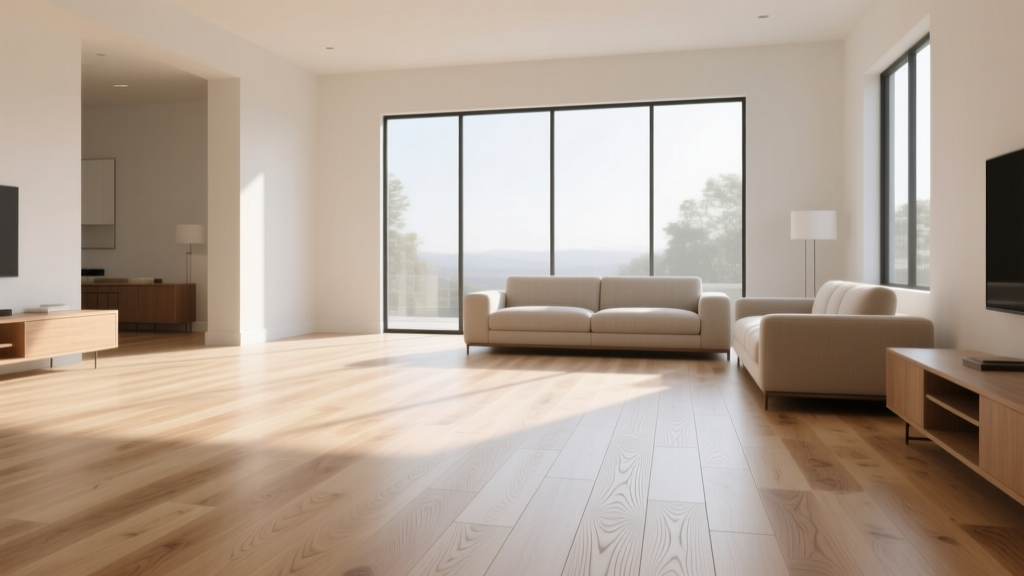
Domestic Heavyweights: Species Deep-Dive
White Oak: The Modern Standard
White oak (Quercus alba) is currently the most specified hardwood in architectural design, and for good reason. Unlike red oak, white oak contains tyloses—cellular outgrowths that plug the xylem vessels, making the wood highly impermeable to water and rot. This is the same biological trait that makes it ideal for whiskey barrels and shipbuilding. With a Janka rating of 1,360, it offers a perfect balance of dent resistance and workability. White oak takes penetrating hardwax oils (like Rubio Monocoat 2C) exceptionally well, though its high tannin content requires a stain-blocking primer if you intend to use water-based white or grey stains to prevent yellowing over time.
Red Oak: The Budget-Friendly Classic
Red oak (Quercus rubra) remains a staple due to its availability and lower price point. However, its open-pore structure makes it highly susceptible to water infiltration. Spills left unattended on a red oak floor can quickly cause black tannin stains that require oxalic acid treatments or aggressive sanding to remove. According to the National Wood Flooring Association, red oak is best reserved for low-moisture environments like bedrooms and formal living rooms, and should be sealed with a high-build, two-component waterborne polyurethane to fill the open grain.
Hard Maple: The Pale Perfectionist
Hard maple (Acer saccharum) boasts a Janka rating of 1,450 and a tight, diffuse-porous grain that yields a remarkably smooth, contemporary surface. Its primary drawback is finishing. Maple's dense cellular structure resists traditional oil-based stains, often resulting in severe blotching. To achieve dark colors on maple, professionals must use a technique called 'water-popping' (wiping the sanded floor with water to open the grain) or utilize specialized dye stains rather than pigment-based stains. If left natural with a matte clear coat, maple offers an incredibly durable, light-reflective surface.
Hickory: The High-Traffic Workhorse
Hickory (Carya spp.) is the hardest commercially available domestic species, scoring a massive 1,820 on the Janka scale. It is the undisputed best type of wood flooring for homes with large dogs or heavy foot traffic. However, this hardness comes with a structural trade-off: hickory has a high tangential shrinkage rate of 12.6%.
Exotic Species: Beauty with Behavioral Quirks
Exotic woods like Brazilian Cherry (Jatoba) and Brazilian Walnut (Ipe) offer unparalleled hardness and rich, deep colors. However, they are highly photosensitive. Brazilian Cherry, for instance, starts as a pale tan/pink board and undergoes rapid photodegradation, oxidizing to a deep, dark reddish-brown within six months of UV exposure. Homeowners must be prepared for dramatic color shifts and should avoid placing area rugs on newly installed exotic floors for the first 90 days to ensure even patina development. Furthermore, the extreme density of woods like Ipe (3,680 Janka) requires specialized carbide-tipped saw blades and pre-drilling for every single fastener, significantly increasing labor costs.
2026 Material Cost & ROI Matrix
Pricing for premium hardwood has stabilized following the supply chain disruptions of the early 2020s. The following matrix reflects Q1 2026 material costs for premium-grade, unfinished solid hardwood (3/4-inch thick) and comparable engineered alternatives (1/2-inch thick with a 4mm wear layer).
| Species | Solid (3/4') Cost/Sq Ft | Engineered (4mm Wear) Cost/Sq Ft | Installation Difficulty |
|---|---|---|---|
| Red Oak (Select) | $4.50 - $6.00 | $5.50 - $7.50 | Low |
| White Oak (Select) | $6.50 - $9.00 | $8.00 - $11.50 | Low-Medium |
| Hard Maple (Firsts) | $5.50 - $8.00 | $7.00 - $9.50 | Medium (Staining) |
| Hickory (Character) | $6.00 - $9.50 | $7.50 - $10.50 | High (Fastening) |
| European Oak (Rift) | $9.00 - $13.00 | $11.00 - $16.00 | Medium |
Note: Engineered hardwood is strongly recommended for installations over radiant heat systems or below-grade concrete slabs, as the cross-ply core neutralizes the wood's natural expansion and contraction.
The 'If-Then' Species Selection Framework
Use this decision matrix to pinpoint the best type of wood flooring for your specific environmental and lifestyle constraints:
- If you have large dogs and active children: Choose Hickory or a wire-brushed White Oak. The wire-brushing process removes the soft summer wood, leaving only the dense winter grain, which naturally hides scratches and claw marks.
- If installing over radiant floor heating: Choose Engineered European Oak or Engineered White Oak with a sliced (not rotary-peeled) wear layer. Keep plank widths under 7 inches to minimize edge-curling.
- If you want a dark, modern floor without maintenance: Avoid staining Red Oak (which reveals pink undertones). Instead, use solid Hard Maple with a water-popped ebony dye stain, or opt for fumed White Oak, which uses ammonia gas to react with the wood's natural tannins, creating a permanent, rich brown color that goes entirely through the wear layer.
- If installing in a high-humidity coastal or lakefront home: Avoid solid Hickory and solid Maple. Opt for Engineered Teak or Engineered White Oak, utilizing a high-quality urethane adhesive for a glue-down installation that provides superior moisture vapor resistance from the subfloor.
Selecting the right species is an exercise in matching biological material properties to the built environment. By prioritizing dimensional stability and pore structure alongside visual grain patterns, you ensure the floor performs as beautifully in its tenth year as it did on the day of installation.
Written by
Elena RodriguezElena Rodriguez is a civil engineer and technical writer specializing in concrete technology, masonry systems, and ASTM/ACI compliance. She earned her B.S. in Civil Engineering from Texas A&M University and spent a decade at a materials testing laboratory, performing over 2,000 concrete compressive strength tests and masonry prism evaluations. Elena is an ACI-certified Field Testing Technician (Grade I) and a member of ASTM Committee C12 on Natural Building Stone. She currently consults on forensic engineering cases involving concrete failures and moisture intrusion. Based in San Antonio, TX, Elena is a proud member of the Society of Women Engineers (SWE) and coaches her daughter's FIRST Robotics team.
More from Elena Rodriguez
View all
Walls & Panels
Cost Analysis: Light Gauge Steel Framing Advantages and Disadvantages
Evaluate light gauge steel framing advantages and disadvantages through a strict cost analysis lens, comparing material, labor, and lifecycle expenses.
Aug 4, 2026

Walls & Panels
Gypsum Board Types: Exact Specifications, Thickness & Dimensions
Compare standard, Type X, and moisture-resistant gypsum board types. Get exact specifications, thicknesses, dimensions, and ASTM standards for your project.
Aug 4, 2026

Fire Resistance
Best Fire-Resistant Outdoor Decking Materials: 2026 Buyer Guide
Discover the best fire-resistant outdoor decking materials for 2026. Compare Class A PVC, aluminum, and hardwood options for WUI compliance and safety.
Aug 4, 2026