Shaw Hardwood Floors Review: Product Lines & 2026 Costs
Explore Shaw hardwood floors in our 2026 brand deep-dive. Compare Epic Plus, Repertoire, and Premier lines with exact costs, specs, and installation tips.
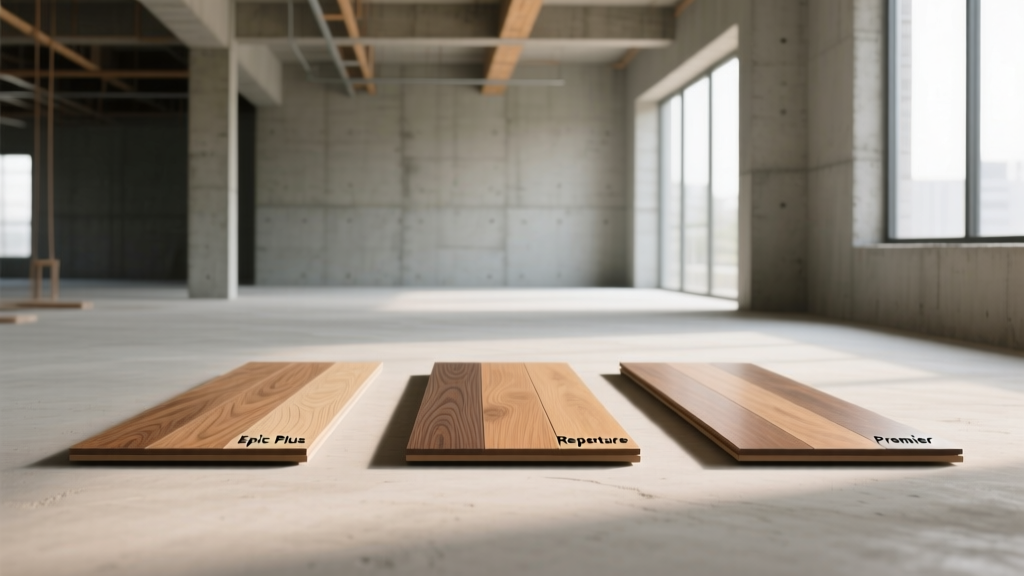
The Architecture of Shaw's Hardwood Ecosystem
When evaluating premium wood flooring, Shaw Industries stands out due to its sheer scale and vertical integration. As a Berkshire Hathaway company, Shaw controls its supply chain from timber harvesting and milling to finishing and distribution. This level of oversight results in exceptional batch-to-batch color consistency and structural reliability, addressing two of the most common failure points in boutique hardwood brands. For contractors and homeowners specifying hardwood floors in 2026, understanding the distinct engineering behind Shaw’s primary product lines is critical for matching the right plank to the right environmental condition.
- Parent Company: Berkshire Hathaway
- Core Technology: 5-ply cross-banded engineered cores, ScufResist urethane finishes
- Manufacturing Base: vertically integrated US-based mills and finishing plants
- Primary Warranty: Lifetime structural, 35-50 year residential finish
Decoding the Core Product Lines
Shaw segments its hardwood offerings into distinct tiers based on core construction, veneer slicing method, and aesthetic finishing techniques. The two dominant lines in their current portfolio are Epic Plus and Repertoire.
Epic Plus Engineered Hardwood
The Epic Plus line is Shaw’s high-volume, performance-driven workhorse. Unlike engineered floors that rely on a high-density fiberboard (HDF) core—which can swell and disintegrate if exposed to prolonged moisture—Epic Plus utilizes a 5-ply cross-banded hardwood core. The alternating grain directions of the core layers neutralize the natural expansion and contraction of the top veneer. This dimensional stability allows Epic Plus to be installed above, on, or below grade (including basements), provided a proper moisture barrier is utilized. The face veneers are typically sliced rather than rotary-peeled, eliminating the "plywood" look that plagues lower-tier engineered floors and allowing for widths up to 7.5 inches without cupping.
Repertoire Collection
Repertoire is Shaw’s design-forward tier, targeting architects and custom home builders. This line focuses heavily on surface texture and reactive staining. Planks in the Repertoire collection frequently feature wire-brushing, hand-scraping, and saw-mark texturing. More importantly, Shaw utilizes reactive stains (such as iron acetate solutions) that interact with the natural tannins in White Oak to create complex, multi-tonal color variations that penetrate deep into the wood grain. Because these are premium SKUs, the wear layers are substantially thicker, often reaching 3mm to 4mm, which fundamentally changes the long-term maintenance profile of the floor.
Technical Specifications & Performance Matrix
Selecting between Shaw's lines requires balancing budget, plank width requirements, and long-term refinishing potential. The matrix below outlines the critical engineering differences.
| Feature | Epic Plus Engineered | Repertoire Collection | Shaw Solid Hardwood (Legacy) |
|---|---|---|---|
| Core Construction | 5-Ply Cross-Banded Hardwood | Multi-Ply Baltic Birch / Hardwood | 3/4" Solid Sawn Lumber |
| Face Veneer Thickness | 1.2mm - 2.0mm (Sliced) | 3.0mm - 4.0mm (Sawn) | N/A (Solid through) |
| Max Plank Width | 7.5 inches | 9.0 inches | 5.0 inches |
| Installation Methods | Glue-down, Staple, Float | Glue-down, Staple | Nail/Staple only |
| Below-Grade Approved? | Yes (with moisture barrier) | Yes (with moisture barrier) | No |
| 2026 Material Cost | $5.50 - $8.50 / sq. ft. | $8.00 - $12.50 / sq. ft. | $4.50 - $7.00 / sq. ft. |
The Refinishing Reality: Wear Layer Thickness
A persistent myth in the flooring industry is that engineered hardwood floors cannot be refinished. The truth is dictated entirely by the thickness of the lamella (the top wear layer) and the skill of the flooring contractor.
Shaw’s Epic Plus features a 1.2mm to 2.0mm wear layer. This thickness will not survive a full drum-sander pass, which typically removes 0.8mm to 1.0mm of wood. However, it will easily withstand 2 to 3 "screen-and-recoat" cycles, where the top urethane layer is lightly abraded and a fresh coat of polyurethane is applied. Conversely, the Repertoire collection’s 3mm to 4mm sawn veneers can endure 1 to 2 full sanding cycles over a 50-year lifespan, bringing it to parity with solid hardwood in terms of generational longevity.
2026 Pricing Breakdown & Installation Variables
Budgeting for Shaw hardwood requires looking beyond the per-square-foot material cost. The total installed price is heavily influenced by subfloor preparation and adhesive selection.
- Material Costs: Expect to pay between $5.50 and $12.50 per square foot for the planks, depending on the line and species (e.g., Hickory commands a 15% premium over Red Oak due to its 1820 Janka hardness rating).
- Subfloor Preparation: Engineered hardwood requires a flat subfloor (within 3/16" over a 10-foot radius). Self-leveling compound application adds $1.50 to $2.50 per square foot.
- Adhesives & Moisture Mitigation: For glue-down installations over concrete slabs, a dual-purpose moisture-curing urethane adhesive (such as Bostik Ultra-Set SingleStep2) is mandatory. This adds $1.75 to $2.25 per square foot to the material cost but acts as a vapor retarder, eliminating the need for a separate epoxy moisture barrier.
- Labor: Professional installation in 2026 averages $3.50 to $5.50 per square foot, scaling upward for complex patterns like herringbone or chevron, which require precision cutting and 20% more material waste.
Despite being engineered, Shaw hardwood floors must be acclimated to the home's interior environment before installation. The National Wood Flooring Association (NWFA) mandates that the HVAC system be running and maintaining a relative humidity (RH) between 35% and 55% for at least 14 days prior to delivery and installation. Failing to acclimate engineered planks can result in edge-bonding failure and micro-gapping, which voids the manufacturer's structural warranty.
Environmental Certifications & Indoor Air Quality
Indoor air quality is a non-negotiable metric for modern residential and commercial builds. Shaw’s hardwood lines are manufactured using low-VOC, water-based finishes and formaldehyde-free core adhesives. All Shaw engineered hardwood products carry FloorScore certification and comply with CARB Phase 2 (California Air Resources Board) regulations for formaldehyde emissions. According to the Environmental Protection Agency (EPA), adhering to CARB Phase 2 standards ensures that composite wood products emit negligible levels of volatile organic compounds, making Shaw floors safe for sensitive environments like schools, healthcare facilities, and homes with allergy sufferers. Furthermore, Shaw’s official hardwood portfolio highlights their participation in the USGBC LEED program, providing crucial material credit documentation for commercial contractors pursuing green building certifications.
Decision Framework: Which Shaw Line Fits Your Project?
Use this practical framework to specify the correct Shaw product for your build:
- Choose Epic Plus if: You are installing over a concrete slab, in a basement, or over radiant heat systems. Its 5-ply cross-banded core provides the necessary dimensional stability to handle the thermal expansion and moisture fluctuations inherent in these environments.
- Choose Repertoire if: You are designing a high-end custom home where wide-plank aesthetics (7" to 9"), deep wire-brushed textures, and the ability to fully sand and refinish the floor decades from now are the primary drivers.
- Choose Solid Hardwood if: You are renovating a historical property with a traditional wood joist subfloor, require nail-down installation, and want the absolute lowest upfront material cost, accepting the limitation that it cannot be installed below grade.