Burning Temperature of Wood Types: Heat Output & Grade Guide
Discover the burning temperature of wood types, from ignition to peak coaling. Learn how species density, moisture grade, and BTU output affect heat.

The Thermodynamics of Wood Combustion
Wood does not burn at a single, static temperature. Instead, combustion is a complex, multi-stage thermochemical process. When evaluating the burning temperature of wood types, structural engineers, masonry heater builders, and biomass boiler operators must look beyond simple flame color and understand the three distinct thermal stages of wood oxidation. The peak temperature achieved in a firebox is dictated by the wood species' cellular density, lignin content, and fuel grade moisture levels.
Stage 1: Moisture Evaporation (Up to 212°F / 100°C)
Before wood can burn, it must boil off its internal water content. This is an endothermic (heat-absorbing) phase. If you load a firebox with wood graded above 25% moisture content (MC), the fire's thermal energy is wasted on converting water to steam rather than raising the combustion chamber temperature. Kiln-dried premium fuel grade wood (under 15% MC) bypasses this thermal penalty, allowing the firebox to reach pyrolysis temperatures rapidly.
Stage 2: Pyrolysis and Volatile Gas Ignition (572°F to 1,500°F)
At approximately 572°F (300°C), the cellulose and hemicellulose in the wood begin to thermally degrade, releasing volatile gases. It is these gases—not the solid wood itself—that produce the visible yellow and orange flames. In a well-oxygenated, high-efficiency EPA-certified stove, secondary air injection ignites these gases, pushing flame temperatures to between 1,100°F and 1,500°F (590°C to 815°C). Softwoods like Pine, which are rich in volatile resins, flare intensely during this stage but burn out quickly.
Stage 3: Charcoal Oxidation (1,600°F to 2,200°F)
Once the volatile gases are depleted, the remaining solid carbon (charcoal) undergoes surface oxidation. This is the hottest phase of combustion. Dense hardwoods with high lignin content form a robust coal bed that can sustain temperatures exceeding 2,000°F (1,093°C) at the core. This stage provides the steady, radiant heat required for masonry thermal mass charging and hydronic boiler systems.
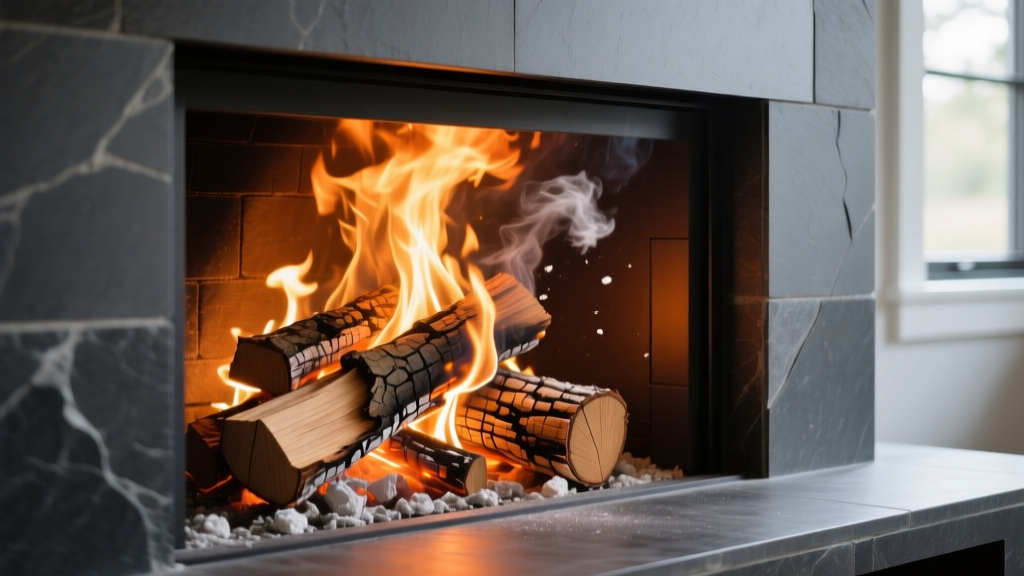
Peak Burning Temperature of Wood Types: Species Data Matrix
The following matrix correlates wood species with their physical density, peak achievable temperatures under optimal draft conditions, and overall heat yield. Data aligns with baseline metrics published by the USDA Forest Products Laboratory.
| Wood Species | Density (lbs/ft³) | Peak Flame Temp (Gas Phase) | Peak Coal Bed Temp | BTU per Full Cord | Coaling Quality |
|---|---|---|---|---|---|
| Osage Orange | 48.0 | 1,600°F (870°C) | 2,200°F+ (1,200°C) | 32.9 Million | Exceptional (Caution: Can warp standard stove baffles) |
| Shagbark Hickory | 47.0 | 1,550°F (843°C) | 2,100°F (1,148°C) | 28.3 Million | Excellent |
| White Oak | 44.0 | 1,500°F (815°C) | 2,050°F (1,120°C) | 25.7 Million | Excellent |
| Hard Maple | 40.0 | 1,450°F (788°C) | 1,950°F (1,065°C) | 24.0 Million | Very Good |
| White Ash | 38.0 | 1,400°F (760°C) | 1,850°F (1,010°C) | 23.6 Million | Good |
| Yellow Birch | 36.0 | 1,450°F (788°C) | 1,750°F (954°C) | 22.5 Million | Moderate |
| Eastern White Pine | 25.0 | 1,650°F (898°C) [Resin Flare] | 1,200°F (648°C) | 15.9 Million | Poor (Ash-heavy, minimal coal bed) |
Defining Fuel Grade: Moisture, Density, and Defects
Unlike dimensional lumber graded for structural load (e.g., Select Structural, No. 1), firewood and biomass fuel are graded by combustion readiness. The EPA BurnWise program mandates specific moisture thresholds for clean combustion, but true premium fuel grading goes deeper.
- Premium Grade (Kiln-Dried): 12% to 15% MC. Achieves peak burning temperatures immediately. Zero fungal degradation. Required for commercial pizza ovens and precision masonry heaters where thermal shock and exact temperature curves are critical.
- Standard Grade (Seasoned): 16% to 20% MC. The standard for residential EPA-certified wood stoves. Requires 12 to 18 months of air-drying in a solar-ventilated stack. Burns cleanly but sacrifices roughly 5% to 8% of its theoretical BTU output to residual moisture evaporation.
- Utility Grade (Green/Punk): 25% to 50%+ MC. Contains sapwood rot, fungal hyphae, or has been cut within the last 6 months. Burning utility grade wood suppresses firebox temperatures below 800°F, leading to incomplete combustion.
If your firebox temperature remains below 600°F (315°C) due to damp, low-grade wood or choked air supply, volatile gases condense on the cooler flue walls as creosote. This highly flammable tar accumulates rapidly and is the primary catalyst for catastrophic chimney fires, which can exceed 2,100°F and destroy Class A chimney liners.
Application-Specific Wood Selection Framework
Matching the burning temperature profile of a wood species to your specific heating appliance maximizes efficiency and prevents hardware damage.
1. Masonry Heaters and Russian Fireplaces
These systems rely on a short, intensely hot fire (1,500°F to 2,000°F) to charge thousands of pounds of soapstone or firebrick. Use: Premium Grade White Oak, Hickory, or Maple. The high lignin content ensures a rapid, high-temperature coal phase that fully charges the thermal mass before the damper is closed.
2. Commercial Wood-Fired Pizza Ovens
Neapolitan pizza requires a sustained ambient dome temperature of 850°F to 900°F, with direct flame licking the ceiling. Use: Kiln-dried Hard Maple or Cherry. Maple provides a consistent, high-heat coal bed, while Cherry offers a clean flame with minimal sparking and excellent aromatic profiles without the resinous soot of softwoods.
3. Outdoor Hydronic Biomass Boilers
These systems use water jackets to capture heat, meaning firebox temperatures are naturally capped by the boiling point of the pressurized water. Use: Standard Grade Ash or Birch. High-BTU, ultra-dense woods like Osage Orange are wasted here and can actually cause the boiler to overheat and trigger safety dump valves if the thermal load isn't high enough.
Troubleshooting Sub-Optimal Burn Temperatures
When your appliance fails to reach the expected burning temperature for the wood type loaded, use this diagnostic matrix to identify the failure point.
| Symptom Observed | Thermodynamic Cause | Corrective Action |
|---|---|---|
| Lazy, dark orange flames; heavy smoke from stack. | Firebox temp below 600°F; incomplete pyrolysis due to high moisture content or insufficient primary air. | Test wood with a pin-type moisture meter. If >20% MC, switch to kiln-dried fuel. Open primary air intake fully until flames stabilize. |
| Rapid, noisy, roaring burn that dies out in 45 minutes. | Using low-density softwoods (Pine/Spruce) or over-firing the air intake. High volatile gas release with zero coal bed retention. | Blend softwoods with 50% dense hardwood (Oak/Hickory) to establish a lasting coal bed. Reduce air intake once the secondary burn engages. |
| Glass door blackens within 10 minutes of closing the air damper. | Choking the air supply too early. The firebox temperature dropped below the threshold required for the air-wash system to keep the glass clean. | Allow the wood to fully char and reach the coal oxidation phase (glowing red embers) before reducing the air draft to the cruising position. |
| Stove baffles warping or firebricks cracking prematurely. | Over-firing with ultra-dense species like Osage Orange or Locust, pushing localized temperatures past 2,200°F. | Mix ultra-dense species with lower-density hardwoods (like Ash or Elm) to moderate the peak thermal output and protect internal refractory components. |
Sourcing and Verifying Premium Fuel Grade Wood
Do not rely on visual estimates for wood quality. According to the U.S. Department of Energy, properly seasoned wood is critical for achieving the high burning temperatures necessary for clean, efficient heating. When purchasing bulk cords, require the supplier to provide the harvest date and splitting dimensions. Wood split to 4 to 6 inches in diameter exposes more surface area to oxygen, accelerating the pyrolysis stage and allowing the firebox to reach peak temperatures faster. Always verify the moisture content of a freshly split log's interior—not the exterior bark—using a calibrated electrical resistance moisture meter before loading your appliance.
Written by
Sarah WhitfieldSarah Whitfield is a chartered quantity surveyor (MRICS) and construction cost analyst with 15 years of experience in material pricing, procurement strategy, and project budgeting. She earned her degree in Construction Management from the University of Reading (UK) and has worked on projects ranging from $2M custom homes to $180M mixed-use developments across North America and Europe. Sarah currently leads cost estimating for BuildMat Insight, maintaining a proprietary database of 4,000+ material price points updated quarterly. She is a frequent contributor to RSMeans cost data panels and has presented at the International Cost Engineering Council (ICEC) congress. Based in Denver, CO, Sarah is an avid trail runner and volunteer mentor for Women in Construction.
More from Sarah Whitfield
View all
Wood & Lumber
What Are the Different Types of Wood? A Builder's Guide
Compare structural softwoods, finish hardwoods, and engineered lumber. Analyze Janka ratings, MOE values, and 2026 pricing for construction.
Aug 4, 2026

Walls & Panels
Steel Framing vs Wood Framing: Corrosion and Moisture Defense
Compare steel framing vs wood framing for moisture resistance. Learn about galvanized coatings, condensation risks, and corrosion protection strategies.
Jul 21, 2026

Stone & Masonry
How to Cut Stone Veneer: Wet Saw vs Grinder Comparison
Compare the best tools for cutting stone veneer. We review wet saws, angle grinders, and chop saws to help you achieve clean, chip-free cuts.
Jul 21, 2026