Understanding Different Types of Varnish for Wood Preservation
Compare the top types of varnish for wood preservation. Learn about polyurethane, spar, and phenolic resins, plus application tips and failure modes.

The Chemistry of Wood Varnish: Resins, Oils, and Solvents
Varnish is fundamentally a transparent, hard, protective finish or film primarily used in wood finishing but also for other materials. Unlike penetrating oils (such as raw linseed or pure tung oil) that cure within the wood fibers, varnish forms a distinct surface film. The performance of any varnish depends on the precise ratio of its three core components: resins (which provide hardness and durability), drying oils (which provide flexibility and water resistance), and solvents (which dictate viscosity and drying time).
In architectural and structural wood preservation, selecting the correct formulation is not merely an aesthetic choice; it is a critical defense against moisture ingress, ultraviolet (UV) photodegradation, and fungal decay. The USDA Forest Products Laboratory emphasizes that film-forming finishes like varnish must be matched to the dimensional movement characteristics of the specific wood species to prevent catastrophic coating failures.
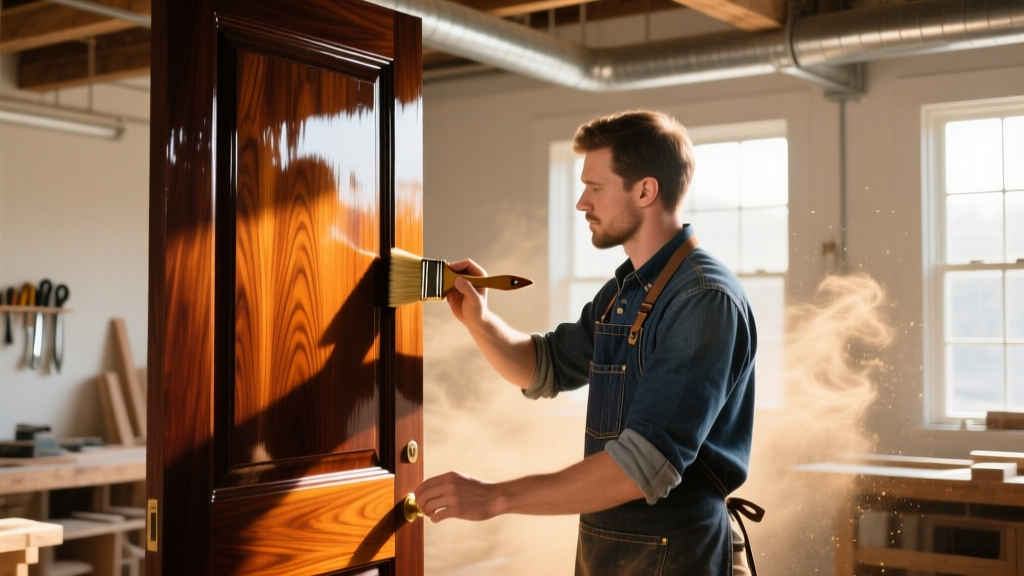
Core Types of Varnish for Wood Protection
While the consumer market often groups all clear topcoats under the umbrella term 'varnish,' true varnishes and modern urethane hybrids possess distinct chemical profiles. Here is a breakdown of the primary types of varnish for wood used in professional preservation.
1. Polyurethane Varnish (Oil-Based and Water-Based)
Polyurethane varnishes are technically urethane-modified alkyds or acrylics. They offer exceptional abrasion resistance, making them the standard for interior hardwood floors and high-traffic cabinetry.
- Oil-Based Polyurethane: Utilizes linseed or soya oil combined with polyurethane resins. It cures to a hard, amber-tinted film. Products like Minwax Fast-Drying Polyurethane cost approximately $22 per quart and offer excellent chemical resistance to household solvents.
- Water-Based Polyurethane: Uses acrylic-polyurethane dispersions. It dries crystal clear and remains non-yellowing. General Finishes High Performance Water Based Urethane (approx. $38 per quart) utilizes advanced cross-linking polymers that rival oil-based hardness without the high VOC off-gassing.
2. Spar (Marine) Varnish
Originally developed for the spars (masts) of sailing ships, spar varnish is engineered for extreme flexibility and UV resistance. Wood expands and contracts significantly with humidity changes; a rigid finish would crack. Spar varnish contains a higher ratio of flexible oils (typically tung or long-oil alkyds) and incorporates specialized UV absorbers, such as benzotriazoles, to block sunlight from degrading the lignin in the wood.
3. Phenolic Varnish
Phenolic resins, derived from phenol and formaldehyde, create the most water-resistant and chemically inert varnish film available. Because phenolic varnishes tend to yellow significantly and darken over time, they are rarely used for fine interior furniture. Instead, they are the premier choice for exterior architectural millwork, marine applications, and preserving dense tropical hardwoods like Ipe or Teak where moisture exclusion is the absolute priority. Waterlox Original Sealer/Finish ($55 per quart) is a premier tung oil-phenolic resin blend widely used by preservationists.
4. Alkyd Varnish
Alkyd resins are synthetic polyesters modified with fatty acids. Standard alkyd varnishes offer a good balance of hardness, clarity, and ease of application. They lack the extreme water resistance of phenolics and the UV blockers of spar varnishes, making them best suited for interior trim, doors, and protected exterior porch ceilings.
Performance Comparison Matrix
| Varnish Type | Abrasion Resistance | UV Stability | Flexibility | Dry Time (Recoat) | Best Application |
|---|---|---|---|---|---|
| Oil-Based Polyurethane | Excellent | Poor | Low | 6 - 8 Hours | Interior Floors, Cabinetry |
| Water-Based Polyurethane | Very Good | Good | Low | 2 - 4 Hours | Light Floors, Trim, Furniture |
| Spar (Marine) Varnish | Fair | Excellent | High | 12 - 24 Hours | Exterior Doors, Boats, Decks |
| Phenolic Resin Varnish | Good | Fair | Medium | 12 - 24 Hours | Exterior Millwork, Marine |
| Alkyd Varnish | Good | Poor | Medium | 8 - 12 Hours | Interior Trim, Protected Wood |
Application Scenarios: Matching Varnish to the Environment
Choosing the correct types of varnish for wood requires analyzing the environmental stressors the timber will face. Applying an interior polyurethane to an exterior door guarantees failure within 18 months due to UV breakdown and moisture trapping.
Interior High-Traffic Zones
For hardwood flooring (oak, maple, hickory), moisture movement is minimal, but mechanical abrasion is high. A two-component water-based polyurethane (such as Bona Traffic HD) provides commercial-grade durability with low VOC emissions. The rigid film resists scuffing and heel marks effectively.
Exterior Architectural Millwork
Exterior timber faces cyclic moisture loading and UV radiation. The Environmental Protection Agency (EPA) notes that exterior coatings must also comply with strict regional VOC limits. For exterior mahogany or cedar doors, a long-oil spar varnish is mandatory. The high oil content allows the film to stretch as the wood swells in summer humidity and contracts in winter dryness without micro-cracking.
The Moisture Trap Rule: Never apply a highly impermeable film finish (like epoxy or rigid polyurethane) to exterior wood that is exposed to ground moisture or driving rain. If water breaches the finish via a microscopic crack, it becomes trapped behind the impermeable film, leading to rapid sub-film fungal rot and catastrophic peeling.
Step-by-Step Preservation Protocol for Exterior Hardwoods
Proper preparation dictates 80% of a varnish system's lifespan. Follow this protocol for applying spar varnish to an exterior entry door:
- Substrate Preparation: Sand the bare wood progressively through 80, 120, and 150-grit aluminum oxide sandpaper. Do not exceed 150-grit; a slightly rougher profile increases mechanical adhesion for the first coat.
- Solvent Wipe: Remove all sanding dust using a vacuum, followed by a wipe-down with mineral spirits to extract natural wood oils (especially critical for teak or ipe).
- The Seal Coat: Thin the first coat of spar varnish by 20% with mineral spirits. This reduces viscosity, allowing the varnish to penetrate deeply into the wood pores rather than sitting on the surface.
- Build Coats: Apply 4 to 6 full-strength coats. Scuff-sand between every coat using 320-grit silicon carbide sandpaper to ensure intercoat adhesion. Wipe away dust with a tack cloth.
- UV Threshold: Ensure the final film thickness reaches at least 4 to 6 mils. Thinner films do not contain enough UV absorbers to protect the underlying lignin from solar degradation.
Common Varnish Failure Modes and Troubleshooting
Even premium types of varnish for wood will fail if application parameters are ignored. Recognizing these failure modes allows for immediate correction.
Blushing (Moisture Entrapment)
Symptom: The varnish film turns milky white or cloudy as it cures.
Cause: Applying varnish in high humidity (above 70% RH) or low temperatures. The solvents evaporate rapidly, cooling the surface and causing ambient moisture to condense and trap itself under the film.
Fix: Maintain shop temperatures between 65°F and 80°F. If blushing occurs, sand the affected coat off completely and reapply with a slower-evaporating solvent or retarder additive.
Alligatoring (Intercoat Tension)
Symptom: The finish develops a pattern of deep cracks resembling alligator skin.
Cause: Applying a hard, rigid topcoat (like interior polyurethane) over a softer, more flexible undercoat (like raw oil or spar varnish), or applying coats too thickly before the underlying solvents have fully off-gassed.
Fix: Always follow the 'fat over lean' and 'flexible over rigid' rules. Strip the finish to bare wood and rebuild using a chemically compatible system.
Peeling and Delamination
Symptom: The varnish lifts off the wood in sheets.
Cause: Poor surface preparation (sanding dust or natural oils left on the wood) or applying exterior varnish to wood with a moisture content above 15%.
Fix: Use a pinless moisture meter to verify wood moisture content is between 8% and 12% before the first seal coat is applied.
Environmental and VOC Considerations
As of 2026, architectural coating regulations have tightened significantly. The California Air Resources Board (CARB) and federal EPA guidelines restrict the VOC content of exterior wood varnishes to 275 g/L, and interior varnishes to even lower thresholds in many municipalities. When specifying types of varnish for wood in commercial or multi-family residential projects, always verify the manufacturer's current Safety Data Sheet (SDS) for VOC compliance. Water-based acrylic-urethane hybrids and high-solids UV-cured varnishes are rapidly replacing traditional solvent-heavy alkyds in professional preservation workflows to meet these stringent environmental mandates without sacrificing film integrity.
Written by
James ThorntonJames Thornton is a construction industry veteran with 25 years of hands-on experience in wood framing, lumber grading, and residential building codes. He started as a framing carpenter in rural Oregon, earned his ICC Residential Building Inspector certification, and eventually became a senior plan reviewer for the City of Portland Bureau of Development Services. James holds a B.S. in Wood Science & Technology from Oregon State University and is a certified lumber grader through the West Coast Lumber Inspection Bureau (WCLIB). He has inspected over 3,000 residential construction sites and authored the city's internal guide on advanced framing techniques (2x6 at 24" O.C.). James lives in Bend, OR, where he builds custom timber-frame cabins and competes in lumberjack sports.
More from James Thornton
View all
Insulation
Best Home Insulation Materials: Complete 2026 Guide
Compare top home insulation materials for 2026. Find R-values, installed costs per square foot, and best uses for fiberglass, spray foam, and mineral wool.
Aug 4, 2026

Sustainable Building
Certify Your Green Building Material for LEED and WELL
Step-by-step guide to certifying a green building material for LEED v5 and WELL v2. Master EPDs, HPDs, and VOC limits for 2026 project specifications.
Aug 4, 2026

Stone & Masonry
Veneer Stacked Stone Panels: Interior Design & Style Showcase
Discover how veneer stacked stone panels transform interiors. Explore modern design profiles, material pairings, and technical installation specs.
Aug 4, 2026