Best Types of Wood Fence Materials: A Complete Species Guide
Compare the best types of wood fence materials. This species guide covers cedar, redwood, treated pine, and tropical hardwoods with 2026 costs and grades.
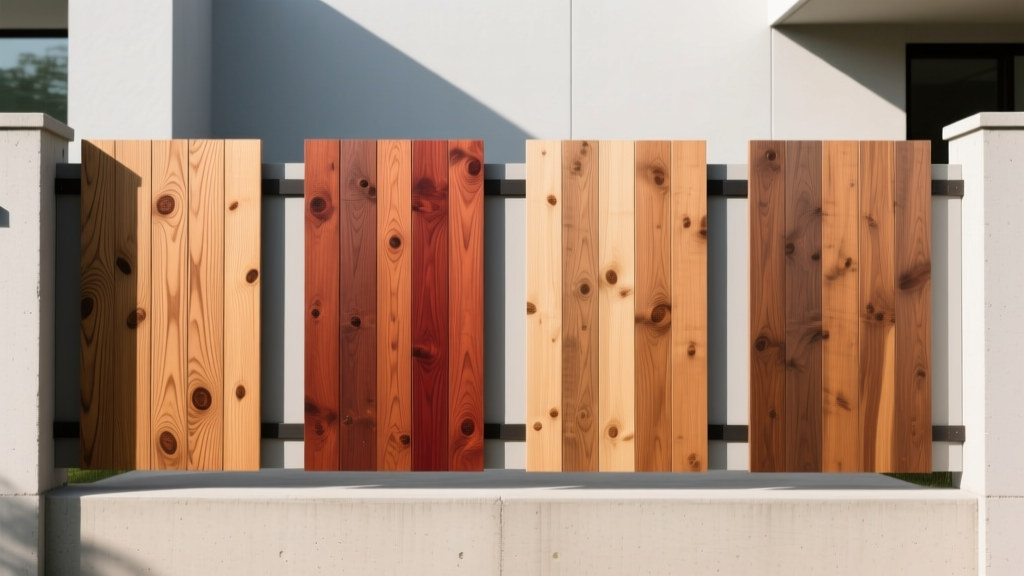
The Core Species Matrix: Cedar vs. Redwood vs. PT Pine
Selecting the right lumber for a fence requires balancing natural decay resistance, dimensional stability, and budget. While composite and metal alternatives exist, natural wood remains the premier choice for its structural integrity and aesthetic warmth. The three dominant species in the North American fencing market—Western Red Cedar, California Redwood, and Pressure-Treated Southern Yellow Pine (PT SYP)—each possess distinct cellular structures that dictate their performance in the ground and above it.
| Species | Janka Hardness (lbf) | Natural Rot Resistance | Dimensional Stability | Best Application |
|---|---|---|---|---|
| Western Red Cedar | 350 | High (Heartwood) | Excellent (Low Shrinkage) | Pickets, Rails, Privacy Panels |
| California Redwood | 450 | Very High (Heartwood) | Very Good | Posts, Premium Panels, Gates |
| PT Southern Yellow Pine | 870 | High (Chemically Treated) | Poor (Prone to Warp/Twist) | Structural Posts, Horizontal Rails |
| Ipe (Tropical) | 3,680 | Exceptional | Moderate | Luxury Estate Fencing, Accents |
Western Red Cedar (Thuja plicata): The Aromatic Standard
Western Red Cedar is the benchmark for residential privacy fencing due to its high concentration of thujaplicins, naturally occurring fungicides that deter rot and insect infestation. However, not all cedar fencing performs equally. The durability of your fence depends entirely on the lumber grade and the ratio of heartwood to sapwood.
Grading and Specification
According to the Western Red Cedar Lumber Association, fencing materials typically fall into two categories:
- Select Tight Knot (STK): Contains sound, tight knots. It offers a rustic aesthetic and is highly cost-effective for standard 6-foot dog-ear pickets. Ensure the STK grade specifies 'heartwood only,' as the white sapwood lacks natural rot resistance and will decay within 3 to 5 years if exposed to moisture.
- Clear All Heart: Free of knots and entirely composed of heartwood. This premium grade is mandatory for high-end horizontal slat fences where visual continuity and maximum dimensional stability are required.
Never use standard galvanized nails or screws with cedar. The natural tannins react with zinc, causing unsightly black streaking and accelerating fastener corrosion. Specify 304 or 316 stainless steel ring-shank nails or polymer-coated structural screws for all cedar installations.
California Redwood: The Premium Benchmark
California Redwood (Sequoia sempervirens) offers superior density and a tighter grain structure than cedar, making it exceptionally resistant to warping and cupping. Its deep reddish-brown hue weathers to a distinguished silvery-gray if left untreated, though UV-inhibiting penetrating oils can preserve the original color.
Post vs. Panel Specifications
When specifying redwood for fencing, structural components require different grades than aesthetic panels:
- Construction Heart (Posts & Rails): This grade allows for larger knots and slight sapwood margins but guarantees the structural core is decay-resistant heartwood. It is the most economical choice for 4x4 and 6x6 fence posts.
- Clear All Heart (Pickets & Slats): Used for the visible face of the fence. It machines smoothly, holds finishes exceptionally well, and resists splitting when fastened near the edges.
Pressure-Treated Southern Yellow Pine: The Budget Workhorse
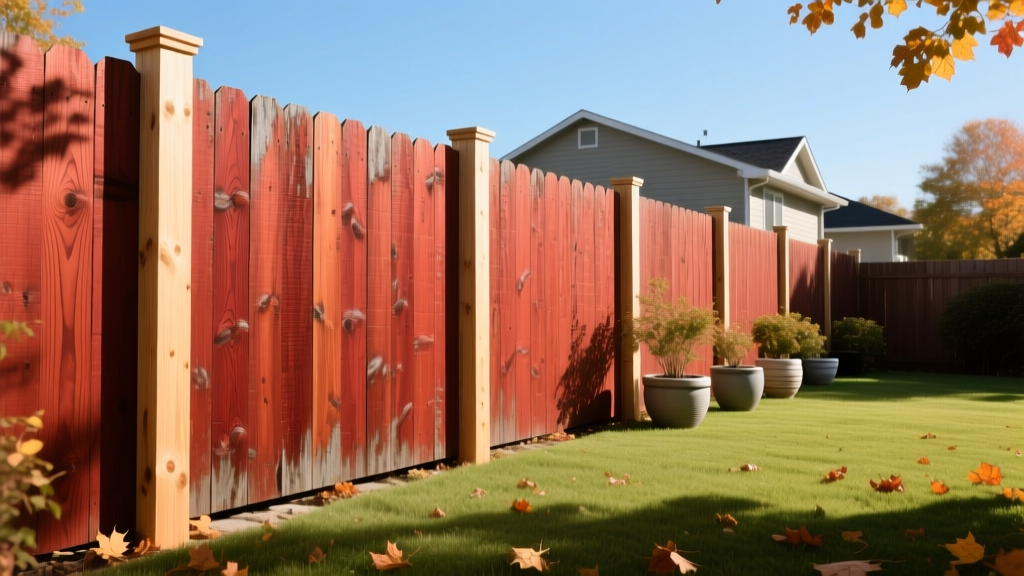
Southern Yellow Pine (SYP) is dense, strong, and highly receptive to chemical preservatives. It dominates the market for structural fence posts and budget-friendly stockade fences. However, the most common point of failure in PT SYP fencing is the misapplication of treatment retention levels.
Understanding AWPA Use Categories
The American Wood Protection Association (AWPA) classifies treated wood by Use Categories (UC). Buying the wrong category is a guaranteed path to premature fence failure.
- UC3B (Above Ground): Treated to a minimum retention level of 0.25 pcf (pounds per cubic foot) for MCA (Micronized Copper Azole). Never use UC3B for fence posts. It is strictly for rails and pickets that will not contact the soil or concrete.
- UC4A (Ground Contact): Treated to 0.40 pcf. This is the mandatory minimum for any 4x4 or 6x6 post set in the ground or encased in concrete. The higher copper concentration protects against subterranean termites and fungal decay in high-moisture soil environments.
When setting UC4A pressure-treated posts in concrete, do not pour concrete directly beneath the post. Pour a gravel base, set the post, and slope the concrete collar away from the wood to shed water. Trapping moisture beneath the post will bypass the chemical treatment and cause end-grain rot.
Tropical Hardwoods (Ipe & Cumaru): The Century Fence
For luxury estates, commercial properties, or coastal environments where salt spray destroys standard lumber, tropical hardwoods like Ipe (Handroanthus spp.) and Cumaru (Dipteryx odorata) are the ultimate solution. According to data from the USDA Forest Products Laboratory, Ipe boasts a Janka hardness of 3,680 lbf and a natural life expectancy exceeding 40 years without chemical treatment.
Fabrication and Installation Realities
Working with tropical hardwoods requires specialized tooling and techniques:
- Pre-drilling is Mandatory: The density of Ipe will snap standard steel screws and burn out drill bits. Use carbide-tipped drill bits and pre-drill all fastener holes to 110% of the screw shank diameter.
- End-Grain Sealing: Tropical hardwoods check (split) rapidly at the ends when exposed to sun and wind. Apply a commercial end-grain sealer (like Anchorseal) to every cut end immediately after sawing.
- FSC Certification: Always specify FSC (Forest Stewardship Council) 100% certified tropical hardwoods to ensure the lumber was harvested legally and sustainably, avoiding materials linked to illegal deforestation.
2026 Installed Cost & Lifespan Analysis
The following table reflects average national installed costs for a standard 6-foot-tall privacy fence in 2026, factoring in material, labor, site prep, and standard concrete footings. Regional variations apply, particularly in high-cost coastal markets.
| Material Species | Material Cost (per lin. ft.) | Total Installed Cost (per lin. ft.) | Expected Lifespan | Maintenance Requirement |
|---|---|---|---|---|
| PT SYP (Stockade) | $12 - $18 | $35 - $50 | 15 - 20 Years | Annual sealing after year 2 |
| Western Red Cedar (STK) | $22 - $32 | $55 - $75 | 20 - 25 Years | UV oil every 3-5 years |
| Redwood (Clear Heart) | $45 - $65 | $90 - $130 | 25 - 30+ Years | Penetrating oil every 3-5 years |
| Ipe (Tropical Hardwood) | $85 - $120 | $160 - $220 | 40 - 50+ Years | None (if allowing silver patina) |
Climate-Specific Selection Framework
Do not select a wood species based solely on aesthetics; match the lumber to your local microclimate and soil conditions.
High-Moisture & Coastal Zones
In areas with high annual rainfall, heavy fog, or salt spray (e.g., Pacific Northwest, Gulf Coast), avoid untreated sapwood entirely. Specify Western Red Cedar Clear All Heart or Redwood Construction Heart for panels. For structural posts, consider upgrading to marine-grade galvanized steel posts sleeved in cedar, or use UC4A heavy-duty pressure-treated pine buried in a gravel drainage bed.
Heavy Termite Zones (Formosan Subterranean)
In the deep South and coastal Southeast, Formosan subterranean termites can destroy standard pressure-treated pine and cedar heartwood. In these high-risk zones, tropical hardwoods (Ipe/Cumaru) are the only natural wood species that offer reliable resistance. Alternatively, use borate-treated wood (UC4B) for posts, though borate can leach out if exposed to constant ground moisture, requiring physical moisture barriers.
Frequently Asked Questions
Should I let my cedar or redwood fence weather naturally?
Allowing cedar or redwood to weather to a silvery-gray is structurally safe, as the UV degradation only penetrates the top 1/16th of an inch. However, UV exposure breaks down the surface lignin, making the wood slightly more porous and susceptible to moisture absorption. If you prefer the gray look but want to protect the cellular structure, apply a clear, non-film-forming water repellent with UV inhibitors every three years.
How do I prevent horizontal wood fence rails from sagging?
Horizontal fences are prone to gravitational sagging over time. To prevent this, limit the span between posts to a maximum of 6 feet (rather than the standard 8 feet). Use 2x6 or 2x8 dimensional lumber for the rails, install them on edge (vertically oriented), and fasten them using structural lag screws or hidden steel brackets rather than toe-nailing, which loses grip as the wood shrinks.
Is 'Kiln-Dried After Treatment' (KDAT) pine worth the premium?
Yes. Standard pressure-treated pine is shipped wet and will shrink, twist, and crack as it dries in place, often pulling nails and warping pickets. KDAT lumber is dried in a kiln after the chemical treatment process, stabilizing the cellular structure. It costs roughly 15% to 20% more upfront but installs flat, holds paint and stain immediately, and drastically reduces long-term warping and fastener pop-outs.
Written by
Elena RodriguezElena Rodriguez is a civil engineer and technical writer specializing in concrete technology, masonry systems, and ASTM/ACI compliance. She earned her B.S. in Civil Engineering from Texas A&M University and spent a decade at a materials testing laboratory, performing over 2,000 concrete compressive strength tests and masonry prism evaluations. Elena is an ACI-certified Field Testing Technician (Grade I) and a member of ASTM Committee C12 on Natural Building Stone. She currently consults on forensic engineering cases involving concrete failures and moisture intrusion. Based in San Antonio, TX, Elena is a proud member of the Society of Women Engineers (SWE) and coaches her daughter's FIRST Robotics team.
More from Elena Rodriguez
View all
Walls & Panels
Cost Analysis: Light Gauge Steel Framing Advantages and Disadvantages
Evaluate light gauge steel framing advantages and disadvantages through a strict cost analysis lens, comparing material, labor, and lifecycle expenses.
Aug 4, 2026

Walls & Panels
Gypsum Board Types: Exact Specifications, Thickness & Dimensions
Compare standard, Type X, and moisture-resistant gypsum board types. Get exact specifications, thicknesses, dimensions, and ASTM standards for your project.
Aug 4, 2026

Fire Resistance
Best Fire-Resistant Outdoor Decking Materials: 2026 Buyer Guide
Discover the best fire-resistant outdoor decking materials for 2026. Compare Class A PVC, aluminum, and hardwood options for WUI compliance and safety.
Aug 4, 2026