Types of Wooden Tables: Cost, Value, and ROI Analysis
Compare the long-term value and upfront costs of different types of wooden tables. Analyze solid wood, veneer, and species pricing for smart investments.
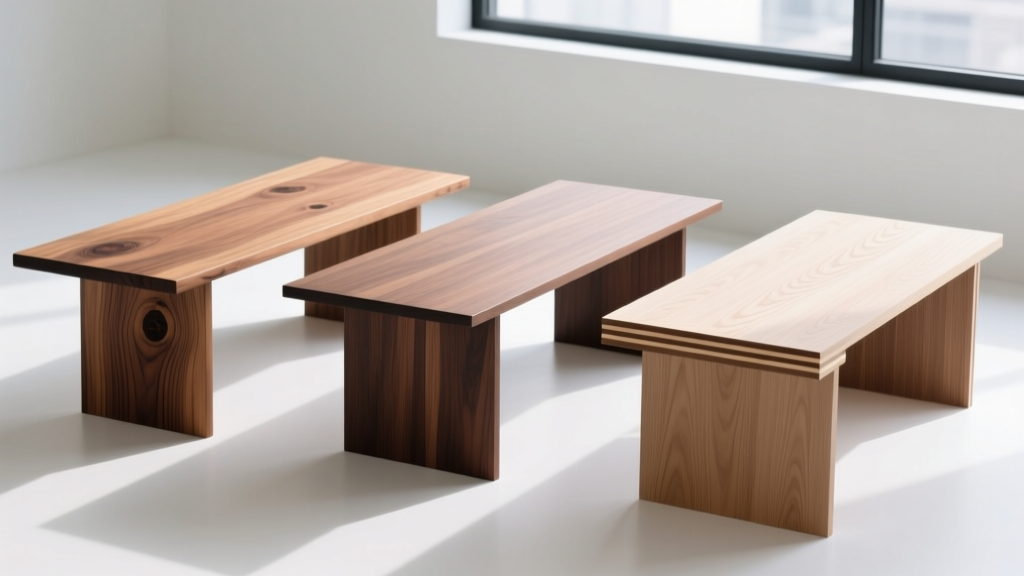
The True Cost of Wooden Tables: Beyond the Sticker Price
Evaluating the types of wooden tables on the market requires looking past the initial retail price to understand the underlying material economics. A table's true cost is a function of its lumber species, milling technique, joinery, and dimensional stability. In 2026, with hardwood supply chains experiencing fluctuating tariffs and kiln-drying energy costs rising, the price gap between entry-level plantation woods and premium domestic hardwoods has widened significantly. Understanding this gap is critical for architects, interior designers, and homeowners aiming to maximize their furniture ROI.
The fundamental divide in wooden table manufacturing is between solid hardwood, engineered core veneers, and composite 'solid wood' hybrids. Each category carries distinct maintenance liabilities, refinishing potential, and structural lifespans that dictate its long-term value.
Wood Species Cost and Durability Matrix
The species of wood dictates not only the aesthetic but the table's resistance to mechanical wear and moisture-induced movement. The Janka hardness test measures the force required to embed a steel ball into the wood, serving as a reliable proxy for dent resistance in high-traffic dining or conference environments. According to data compiled by The Wood Database, hardness varies wildly even among premium furniture woods.
| Wood Species | Janka Hardness (lbf) | Avg. Board-Foot Cost (2026) | Retail Table Price Range (6-8 ft) | Dimensional Stability |
|---|---|---|---|---|
| Rubberwood (Plantation) | 960 | $3.50 - $5.00 | $350 - $700 | Moderate (Prone to warping if not kiln-dried properly) |
| Hard Maple | 1,450 | $7.00 - $10.00 | $1,200 - $2,400 | Low (High tangential shrinkage) |
| White Oak (Quarter-sawn) | 1,360 | $11.00 - $16.00 | $2,200 - $4,500 | Excellent (Medullary rays restrict movement) |
| Black Walnut | 1,010 | $15.00 - $24.00 | $2,800 - $6,000 | Good (Stable, but softer surface) |
| Genuine Teak | 1,070 | $35.00 - $55.00+ | $5,500 - $12,000+ | Superior (High natural oil content) |
Construction Methods: Solid Wood vs. Veneer vs. Reclaimed
Solid Hardwood (Traditional Joinery)
True solid wood tables built with mortise and tenon or sliding dovetail joinery represent the highest tier of value retention. Because solid wood expands and contracts across the grain (tangential shrinkage), premium makers use figure-8 fasteners or slotted cleats to attach the tabletop to the base. This allows the wood to move seasonally without cracking. A well-constructed 2-inch thick White Oak table can be sanded and refinished up to 10 times over a 50-year lifespan, effectively making it a multi-generational asset.
Engineered Core with Hardwood Veneer
While often dismissed by purists, high-end architectural veneer over a Baltic birch plywood or MDF core offers superior dimensional stability for exceptionally large tables (over 10 feet). The USDA Forest Products Laboratory notes that engineered cores eliminate the seasonal gapping and cupping inherent in wide solid wood panels. However, the value proposition drops sharply if the veneer is paper-thin (under 1/42"). Specify tables with 1/16" to 1/8" sawn veneers, which allow for at least two professional sandings and refinishing cycles.
Reclaimed and Salvaged Timber
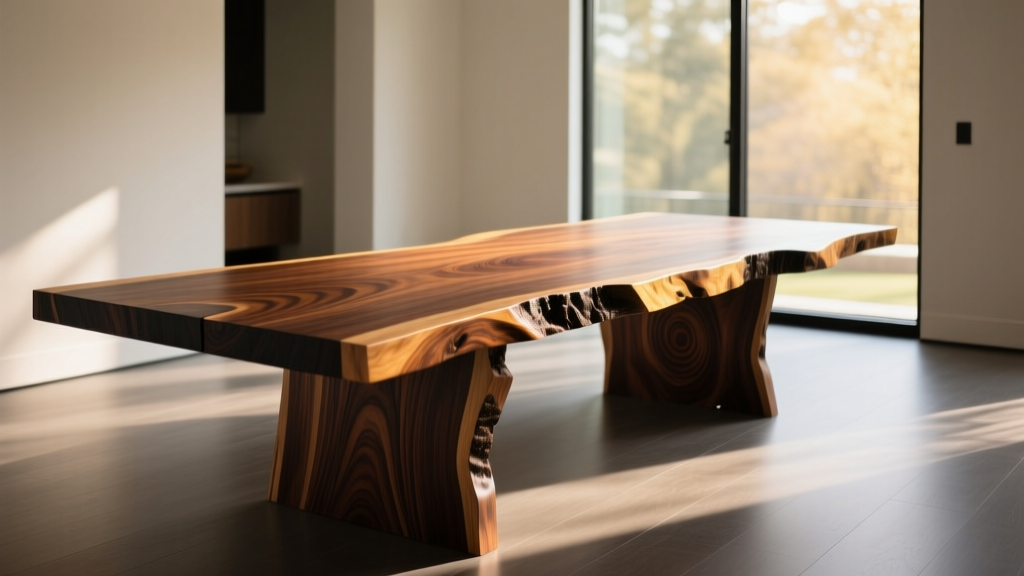
Reclaimed wood tables (often sourced from old-growth barn beams or industrial flooring) carry a 20% to 40% premium over new domestic hardwoods due to processing costs. The value here lies in the wood's history and its extreme stability; old-growth timber has tighter growth rings and has already undergone decades of acclimation, making it highly resistant to modern HVAC-induced humidity swings.
The Value Retention Framework: Calculating Cost-Per-Year
To accurately compare the types of wooden tables, apply a Cost-Per-Year (CPY) framework that factors in the expected functional lifespan and refinishing costs.
- Entry-Level (Rubberwood/Pine with Cam-Locks): $450 retail. Lifespan: 5 years before joint loosening or severe surface scarring. CPY: $90/year.
- Mid-Tier (Solid Ash/Maple with Dowels): $1,400 retail. Lifespan: 15 years. Requires one refinish ($350) at year 8. CPY: $116/year.
- Heirloom Tier (Quarter-Sawn White Oak with Pegged Tenons): $3,200 retail. Lifespan: 50+ years. Requires two refinishes ($800 total). CPY: $80/year.
When viewed through this lens, the heirloom-tier table actually provides a lower annual cost of ownership than the disposable entry-level option, while simultaneously acting as a functional art piece that retains secondary market resale value.
"The cheapest table you will ever buy is the one you never have to replace. Investing in quarter-sawn lumber and mechanical joinery transforms a piece of furniture from a depreciating commodity into a permanent architectural fixture."
Hidden Costs of Ownership and Maintenance
When budgeting for premium wooden tables, factor in the environmental and maintenance requirements that protect your investment.
- Climate Control: Solid wood tables require an ambient relative humidity (RH) between 35% and 55%. In dry winter climates, failing to use a whole-home humidifier can cause the tabletop to split along the glue lines. Budget $200-$400 for a high-capacity console humidifier if your home's winter RH drops below 30%.
- Finish Maintenance: Tables finished with penetrating hardwax oils (like Rubio Monocoat or Osmo) require annual re-oiling, which costs about $40 in materials and 2 hours of labor. However, they allow for spot-repairs of scratches. Polyurethane finishes require zero annual maintenance but cost $600+ to professionally strip and refinish once the surface is compromised.
- UV Degradation: Woods like Black Walnut and Cherry are highly photosensitive. A walnut table placed in direct southern sunlight will bleach to a pale honey color within 24 months. Mitigating this requires UV-blocking window films ($8-$12 per square foot) or strategic room placement.
Final Verdict: Which Type Offers the Best ROI?
For commercial spaces, conference rooms, or large dining areas exceeding 9 feet in length, an engineered plywood core with a 1/8" sawn White Oak veneer offers the highest ROI. It eliminates the risk of catastrophic warping while providing the authentic tactile feel and refinishing capability of solid wood.
For residential dining tables in the 6-to-8-foot range, solid Quarter-Sawn White Oak or Hard Maple built with traditional mortise and tenon joinery remains the undisputed king of value retention. The upfront premium is entirely offset by the elimination of replacement cycles, the ability to repair deep mechanical damage, and the enduring secondary market demand for heirloom-quality domestic hardwoods.
Written by
Elena RodriguezElena Rodriguez is a civil engineer and technical writer specializing in concrete technology, masonry systems, and ASTM/ACI compliance. She earned her B.S. in Civil Engineering from Texas A&M University and spent a decade at a materials testing laboratory, performing over 2,000 concrete compressive strength tests and masonry prism evaluations. Elena is an ACI-certified Field Testing Technician (Grade I) and a member of ASTM Committee C12 on Natural Building Stone. She currently consults on forensic engineering cases involving concrete failures and moisture intrusion. Based in San Antonio, TX, Elena is a proud member of the Society of Women Engineers (SWE) and coaches her daughter's FIRST Robotics team.
More from Elena Rodriguez
View all
Walls & Panels
Cost Analysis: Light Gauge Steel Framing Advantages and Disadvantages
Evaluate light gauge steel framing advantages and disadvantages through a strict cost analysis lens, comparing material, labor, and lifecycle expenses.
Aug 4, 2026

Walls & Panels
Gypsum Board Types: Exact Specifications, Thickness & Dimensions
Compare standard, Type X, and moisture-resistant gypsum board types. Get exact specifications, thicknesses, dimensions, and ASTM standards for your project.
Aug 4, 2026

Fire Resistance
Best Fire-Resistant Outdoor Decking Materials: 2026 Buyer Guide
Discover the best fire-resistant outdoor decking materials for 2026. Compare Class A PVC, aluminum, and hardwood options for WUI compliance and safety.
Aug 4, 2026