Types of Wood Moldings: A Complete Wood Species Selection Guide
Discover the best wood species for all types of wood moldings. Compare pine, poplar, oak, and MDF alternatives for paint-grade and stain-grade trim.
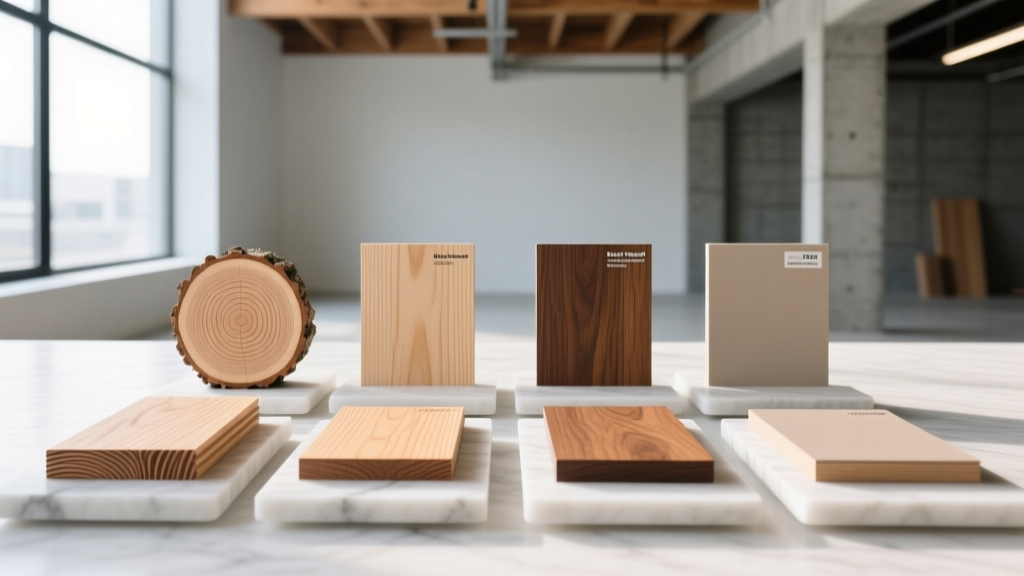
The Anatomy of Trim: Why Wood Species Dictates Performance
When specifying types of wood moldings for residential or commercial construction, architects and builders often focus entirely on the profile—crown, baseboard, casing, or chair rail. However, the underlying wood species is the true determinant of the molding's dimensional stability, machinability, and final aesthetic. Selecting the wrong species for a specific finish type leads to catastrophic failures: paint cracking at miter joints, tannin bleed-through, or severe blotching under clear coats.
The performance of any wood molding hinges on three critical metrics: Janka hardness (dent resistance), Tangential/Radial (T/R) shrinkage ratio (dimensional stability), and grain porosity. According to data from the Wood Database, a lower T/R ratio indicates that the wood shrinks more uniformly across its growth rings, significantly reducing the risk of cupping or twisting in long trim runs.
The Golden Rule of Trim Selection
Always select your wood species based on the final finish, not just the profile. A paint-grade profile milled from expensive walnut is a waste of capital, while a stain-grade profile milled from poplar will result in a blotchy, unprofessional finish.
Top Wood Species for Paint-Grade Moldings
Paint-grade moldings require species with tight, closed grains, minimal resin channels, and high dimensional stability. The goal is a glass-smooth substrate that will not telegraph grain texture through the topcoat.
Poplar (Liriodendron tulipifera): The Industry Standard
Poplar is the undisputed workhorse for paint-grade casing, baseboards, and crown moldings. With a Janka hardness of 540 lbf and an exceptionally low T/R ratio of 1.4, it resists warping in long, continuous runs better than almost any other domestic hardwood. It machines cleanly without tear-out, making it ideal for complex, multi-layered crown molding profiles.
Expert Edge Case: Poplar frequently contains green, purple, or black mineral streaks. If you are painting the molding a light color (white or off-white), these mineral stains will bleed through standard latex primers. You must specify a shellac-based primer, such as Zinsser B-I-N, to seal the tannins and minerals before applying the topcoat.
Sugar Pine (Pinus lambertiana): The Budget Alternative
While Ponderosa pine is common, Sugar pine is the superior choice for paint-grade trim. It features a more uniform texture and smaller, tighter knots. However, with a Janka hardness of just 380 lbf, it is highly susceptible to denting from furniture impacts and vacuum cleaners. It is best reserved for upper-wall applications like crown molding or picture rails, rather than baseboards.
Basswood (Tilia americana): The Carver's Choice
For custom, hand-carved appliques or highly ornate, traditional molding profiles, basswood is the premier choice. Its Janka hardness is a mere 410 lbf, and it lacks the distinct earlywood/latewood density variations found in pine, allowing for incredibly crisp, detailed milling without splintering.
Paint-Grade Species Comparison Matrix
| Species | Janka Hardness | T/R Ratio | Avg. Cost / LF (2026) | Best Application |
|---|---|---|---|---|
| Poplar | 540 lbf | 1.4 (Excellent) | $1.80 - $3.20 | Baseboard, Casing, Crown |
| Sugar Pine | 380 lbf | 1.7 (Good) | $2.50 - $4.00 | Crown, Picture Rail |
| Basswood | 410 lbf | 1.8 (Good) | $3.00 - $5.50 | Ornate Appliques, Custom Millwork |
| MDF (Medium-Density Fiberboard) | N/A (Composite) | N/A (Stable) | $0.80 - $1.50 | Budget Baseboard, Dry Areas Only |
Premier Wood Species for Stain-Grade & Clear-Coat Moldings
Stain-grade moldings demand species with striking grain patterns, excellent stain absorption, and high surface hardness to protect the clear coat. The Architectural Woodwork Institute (AWI) strictly grades these materials, requiring "Premium" or "Custom" grades where visible defects, sapwood, and color variations are minimized.
Red Oak & White Oak: The Traditional Heavyweights
Oak remains the benchmark for stain-grade trim. Red Oak (Janka 1290 lbf) features an open, pronounced grain that absorbs dark stains beautifully, making it a staple in traditional and transitional interiors. White Oak (Janka 1360 lbf) offers a tighter, more linear grain with subtle ray fleck patterns, aligning perfectly with modern and craftsman aesthetics.
Moisture Warning: White oak contains tyloses—cellular structures that block water penetration. If you are installing stain-grade baseboards in high-moisture environments like full bathrooms or mudrooms, white oak will resist bottom-edge swelling far better than red oak.
Hard Maple: The Modern Minimalist
Hard Maple (Janka 1450 lbf) is incredibly dense and features a tight, subtle grain. While it is a phenomenal paint-grade wood, it is notoriously difficult to stain. The dense earlywood and latewood absorb liquid stains at drastically different rates, resulting in severe, irreversible blotching. If a client insists on stained maple moldings, you must specify a gel stain or apply a dedicated pre-stain wood conditioner to seal the pores before the color coat.
Cherry & Walnut: The Luxury Tier
For high-end residential projects, American Black Cherry and Black Walnut are the premier choices. Cherry (Janka 950 lbf) is highly photosensitive; it will naturally darken and develop a rich patina when exposed to UV light over the first year of installation. Walnut (Janka 1010 lbf) offers deep, natural chocolate tones that often require nothing more than a clear penetrating oil to achieve a stunning finish. Expect to pay $8.00 to $16.00+ per linear foot for these species in complex profiles.
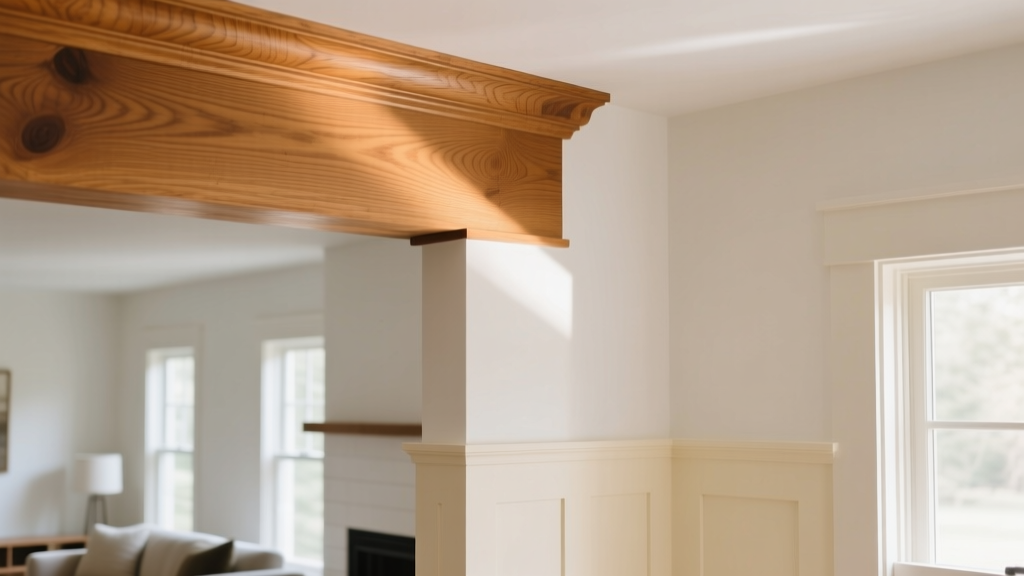
Moisture, Movement, and Installation Edge Cases
Even the most expensive wood molding will fail if installed without accounting for seasonal moisture content (MC) fluctuations. The USDA Forest Products Laboratory notes that wood moves primarily across the grain, not along the length. This tangential and radial movement is the primary cause of miter joint separation.
- Acclimation is Non-Negotiable: Wood moldings must be delivered to the job site and allowed to acclimate to the interior environment (typically 6% to 9% MC) for at least 72 hours before installation. Installing 12% MC trim in a winter-heated home will guarantee massive gaps by February.
- Cope Inside Corners, Miter Outside: Never miter an inside corner. As wood shrinks across its width during dry winter months, a mitered inside corner will open up, revealing a dark, unsightly gap. Always cope the intersecting piece so the profile overlaps the face of the adjoining board, hiding the shrinkage gap.
- Back-Priming for Exterior/High-Moisture Trim: If installing wood casing around exterior doors or in wet rooms, back-prime all six sides of the molding before installation. This equalizes the moisture absorption rate, preventing the board from cupping away from the wall.
Sourcing and Milling: What to Specify on Your Purchase Order
When ordering types of wood moldings from a millwork supplier, vague specifications lead to rejected deliveries and project delays. To ensure quality, reference AWI standards in your purchase orders. Specify the exact grade (e.g., "AWI Custom Grade" for stain-grade oak), the moisture content range ("Kiln-dried to 6-8% MC"), and the specific cut (e.g., "Plain-sliced" vs. "Quarter-sawn" for white oak). For long runs of baseboard or crown, request "finger-jointed" material only for paint-grade applications, as continuous solid-wood lengths over 16 feet are highly prone to bowing and are exponentially more expensive.
Written by
Elena RodriguezElena Rodriguez is a civil engineer and technical writer specializing in concrete technology, masonry systems, and ASTM/ACI compliance. She earned her B.S. in Civil Engineering from Texas A&M University and spent a decade at a materials testing laboratory, performing over 2,000 concrete compressive strength tests and masonry prism evaluations. Elena is an ACI-certified Field Testing Technician (Grade I) and a member of ASTM Committee C12 on Natural Building Stone. She currently consults on forensic engineering cases involving concrete failures and moisture intrusion. Based in San Antonio, TX, Elena is a proud member of the Society of Women Engineers (SWE) and coaches her daughter's FIRST Robotics team.
More from Elena Rodriguez
View all
Walls & Panels
Cost Analysis: Light Gauge Steel Framing Advantages and Disadvantages
Evaluate light gauge steel framing advantages and disadvantages through a strict cost analysis lens, comparing material, labor, and lifecycle expenses.
Aug 4, 2026

Walls & Panels
Gypsum Board Types: Exact Specifications, Thickness & Dimensions
Compare standard, Type X, and moisture-resistant gypsum board types. Get exact specifications, thicknesses, dimensions, and ASTM standards for your project.
Aug 4, 2026

Fire Resistance
Best Fire-Resistant Outdoor Decking Materials: 2026 Buyer Guide
Discover the best fire-resistant outdoor decking materials for 2026. Compare Class A PVC, aluminum, and hardwood options for WUI compliance and safety.
Aug 4, 2026