Types of Wood Burning Fireplace Inserts: 2026 Selection Guide
Master the selection framework for types of wood burning fireplace inserts. Compare catalytic vs. hybrid tech, BTU sizing, and 2026 EPA specs.
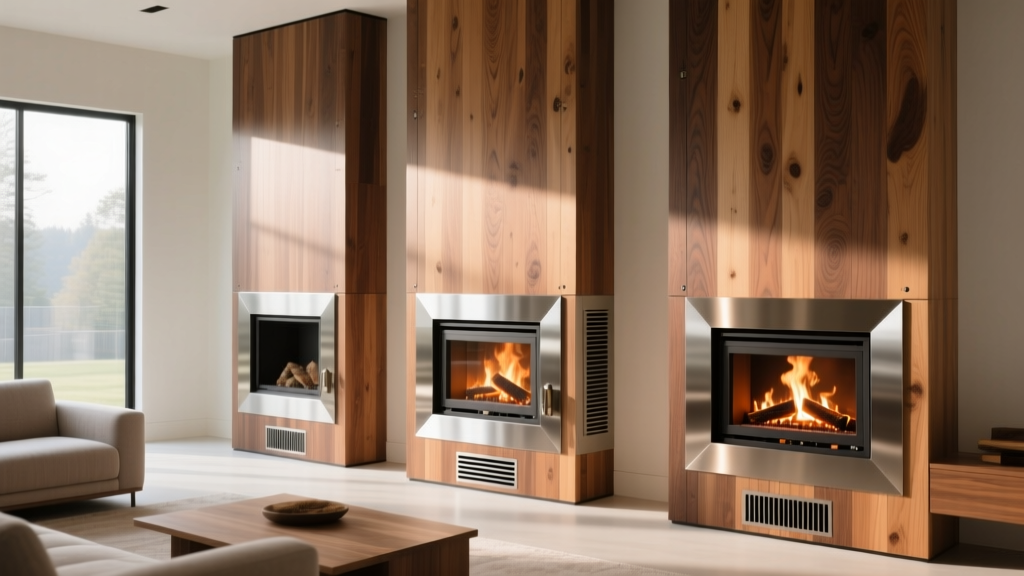
The Core Taxonomy: Combustion Technologies
Selecting from the various types of wood burning fireplace inserts requires moving beyond aesthetic preferences to evaluate the underlying combustion engineering. Modern inserts are sealed, high-efficiency heating appliances designed to retrofit into existing masonry or zero-clearance fireboxes. The primary differentiator is how they manage secondary combustion to meet the strict EPA 2020/2026 emission standards of 2.0 grams per hour (g/hr) for cordwood.
Non-Catalytic Inserts
Non-catalytic units rely on secondary burn tubes—typically made of stainless steel or ceramic—located at the top of the firebox. These tubes inject pre-heated oxygen into the exhaust gases, igniting volatile smoke before it escapes up the flue.
- Performance Profile: Fast heat-up times and aggressive convective output. Burn times generally max out at 8 to 10 hours on low settings.
- Maintenance: Low. The primary wear items are the baffle boards and secondary tubes, which may need replacement every 5 to 7 years depending on usage intensity.
- Top Model Benchmark: The Lopi Liberty (2.4 cu. ft. firebox) delivers up to 75,000 BTUs and is a staple for open-concept spaces requiring rapid thermal recovery.
Catalytic Inserts
Catalytic technology routes exhaust through a honeycomb combustor coated in palladium or platinum. When the catalyst reaches its 'light-off' temperature (approximately 500°F), it chemically ignites the smoke at much lower firebox temperatures.
- Performance Profile: Unmatched burn duration. Units like the Blaze King Princess can achieve 30+ hour burn times on a single load of seasoned hardwood, making them ideal for primary heat sources in cold climates.
- Maintenance: High. The catalytic combustor degrades over time and requires replacement every 4 to 6 years (costing $250–$400). The internal bypass gasket must also be meticulously maintained to prevent smoke leakage.
Hybrid (Dual-Burn) Inserts
Hybrid models combine secondary burn tubes with a catalytic combustor. The tubes handle the initial heavy lifting during high-burn phases, while the catalyst scrubs the remaining emissions during the long, low-smolder phases.
Material Science: Steel vs. Cast Iron vs. Soapstone
The chassis material dictates the thermal radiation profile and the physical footprint of the insert.
| Material | Thermal Response | Heat Retention | Best Application |
|---|---|---|---|
| Welded Steel | Rapid (15-20 mins) | Low (Cools quickly) | Weekend cabins, rapid supplemental heating |
| Cast Iron | Moderate (30-45 mins) | Medium (2-3 hours) | Daily use, traditional aesthetic, radiant heat |
| Soapstone | Slow (1-2 hours) | High (8-12 hours) | Primary heat, consistent temperature regulation |
Soapstone inserts, such as those crafted by Hearthstone, possess high thermal mass. They absorb intense heat during the active burn phase and slowly radiate it as long-wave infrared energy well after the fire has extinguished. However, soapstone is heavy and significantly increases the unit price, often pushing the base MSRP past $4,500.
The 2026 Selection Matrix: Matching Insert to Architecture
Undersizing an insert leads to continuous overfiring (warping the steel baffle), while oversizing causes the homeowner to choke the air supply, resulting in creosote buildup and poor efficiency. Use this framework to match the firebox volume to your home's thermal envelope.
| Target Heated Area | Firebox Volume | Max Log Length | Optimal BTU Output | Recommended Tech |
|---|---|---|---|---|
| 800 - 1,200 sq ft | 1.2 - 1.6 cu. ft. | 16 inches | 35,000 - 45,000 | Non-Catalytic Steel |
| 1,200 - 1,800 sq ft | 1.8 - 2.2 cu. ft. | 18 inches | 45,000 - 60,000 | Hybrid or Cast Iron |
| 1,800 - 2,500+ sq ft | 2.4 - 3.0+ cu. ft. | 20+ inches | 65,000 - 85,000 | Catalytic / Soapstone |
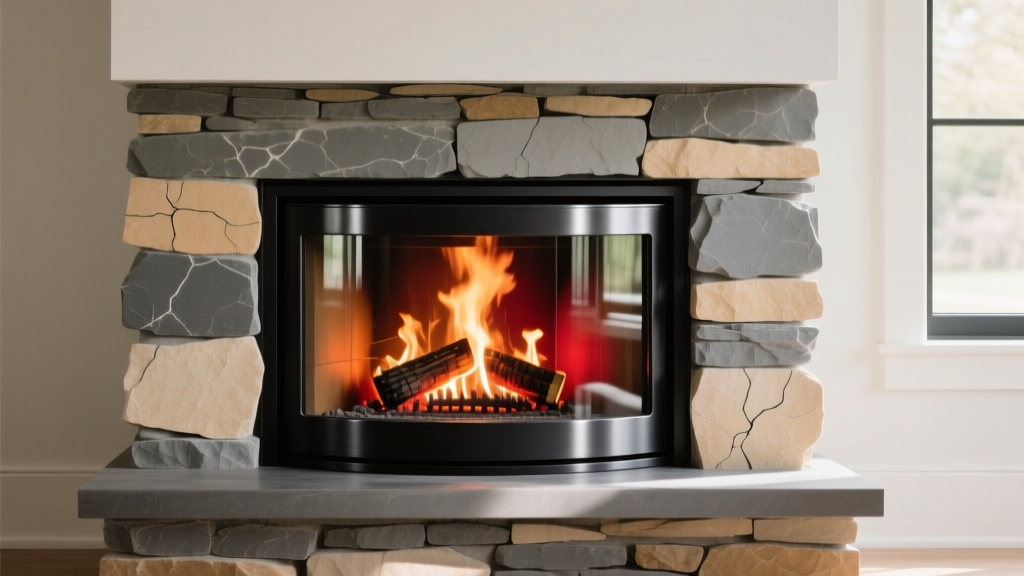
Navigating Draft Physics and Code Requirements
According to the Chimney Safety Institute of America (CSIA), inserting a modern appliance into an unlined masonry chimney is a severe code violation and a functional failure. Modern inserts require a continuous, insulated draft to operate correctly.
The Mandatory Stainless Steel Liner
You must install a 6-inch diameter stainless steel liner from the insert collar to the chimney crown. For wood-burning applications, specify 316Ti (Titanium-stabilized) alloy rather than standard 304 stainless. The 316Ti alloy resists the highly corrosive sulfuric and hydrochloric acids present in wood creosote condensation, extending the liner's lifespan from 10 years to 25+ years.
Negative Pressure and Outside Air Kits (OAK)
Homes built after 2012 are exceptionally tight, often falling below 0.35 Air Changes per Hour (ACH). When exhaust fans, dryers, or HRVs run, they create negative indoor pressure, starving the insert of combustion air and causing smoke spillage. If your home passes a blower door test at under 3.0 ACH50, an Outside Air Kit (OAK) is mandatory. The OAK ducts exterior air directly into the insert's intake manifold, bypassing the home's internal pressure dynamics.
Installed Cost Breakdown and ROI Analysis
Budgeting for a wood insert requires looking past the sticker price of the unit. The Hearth, Patio & Barbecue Association (HPBA) tracks average installation metrics, which have stabilized in 2026 following post-pandemic supply chain adjustments.
- Insert Unit (Mid-Range Hybrid): $2,800 – $3,600
- 6-inch 316Ti Liner Kit & Insulation: $800 – $1,300
- Surround Panels & Trim: $350 – $600
- Certified Installation Labor: $1,400 – $2,500
- Total Project Cost: $5,350 – $8,000
Common Installation Failure Modes
Even premium inserts fail if the architectural integration is flawed. Watch for these specific edge cases during the selection and installation phase:
- Hearth Extension R-Value Deficits: Modern inserts project further into the room than traditional fireboxes. The non-combustible hearth extension must meet an R-value of at least 1.0 (for ember protection) or higher if the manufacturer specifies thermal resistance. Standard 1/2-inch slate tile over plywood does not meet this requirement; you must use a Micore or Durock cement board substrate.
- Mantle Clearance Violations: The intense convective heat rolling off the top of the insert's surround panels can scorch or ignite wooden mantles. Most manufacturers require a minimum 18-inch clearance from the top of the firebox opening to combustible trim, or the installation of a specialized heat shield.
- Catalyst Choking via Unseasoned Wood: Burning wood with a moisture content above 20% in a catalytic insert will rapidly coat the palladium honeycomb in soot and acidic tar, permanently deactivating the catalyst within a single season. A moisture meter reading of 18% or less at the core of a split log is non-negotiable for catalytic owners.
By systematically evaluating combustion technology, material thermal mass, and the strict physics of chimney drafting, you can select a wood-burning insert that functions as a highly efficient, code-compliant primary heating engine rather than a mere decorative novelty.
Written by
Priya KapoorPriya Kapoor is a real estate market analyst and construction economics researcher with expertise in housing affordability, development feasibility, and infrastructure investment. She holds a Master of Regional Planning from Cornell University and previously worked as a senior analyst at CBRE's Investment Properties group, where she modeled returns for $4B in mixed-use development pipelines. Priya now runs an independent research practice advising developers, municipalities, and REITs on construction cost forecasting and market timing. She publishes the quarterly "BuildMat Market Pulse" report tracking material price indices across 12 commodity categories. Based in Austin, TX, Priya serves on the board of Habitat for Humanity Austin and is a marathon runner.
More from Priya Kapoor
View all
Construction Cost
Cost to Build a 1600 Sq Ft Home in 2026: Full Breakdown
Accurate 2026 cost to build a 1600 sq ft home—material, labor, and regional pricing breakdowns included. Plan your budget with real-time estimates.
Aug 11, 2026

Wood & Lumber
Name the Types of Wood for Pressure Treatment and Preservation
Learn how to name the types of wood best suited for pressure treatment. Compare species treatability, chemical retention levels, and 2026 preservation costs.
Aug 4, 2026

Stone & Masonry
Stone Veneer Suppliers Lindenhurst: 2026 Cost Analysis
Analyze 2026 stone veneer costs in Lindenhurst, NY. Compare local supplier pricing, delivery fees, and Suffolk County installation labor rates.
Aug 4, 2026