What Type of Wood Maximizes ROI in Residential Construction?
Discover what type of wood maximizes ROI in residential construction. Compare lifecycle costs, cull rates, and structural value for framing and finishes.
Beyond the Price Tag: Defining True Wood Value
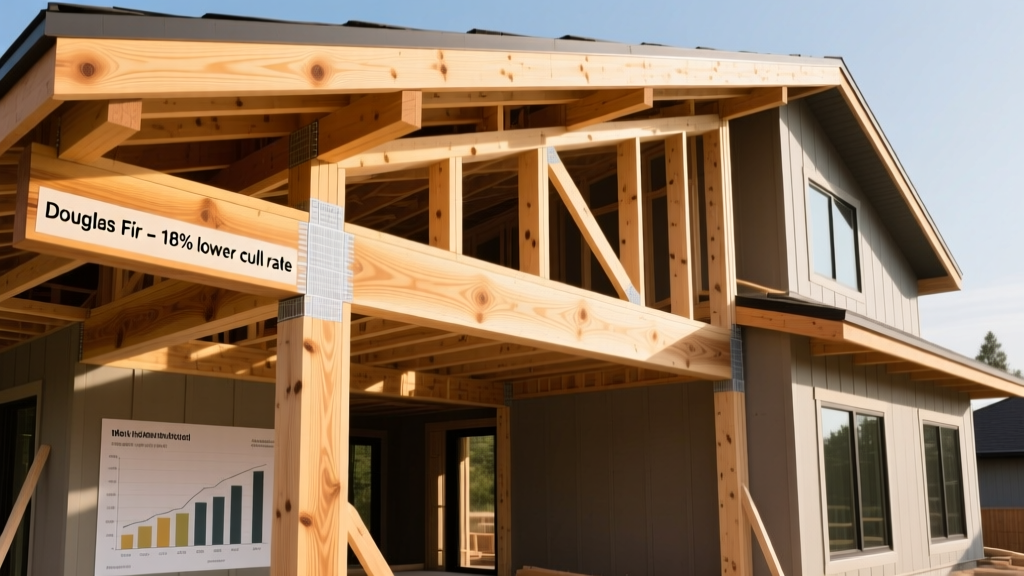
When builders and homeowners ask, "what type of wood" should be used for a project, the conversation usually stalls at the initial board-foot price. However, evaluating lumber purely on upfront cost is a critical financial error in modern construction. True material value is a function of structural yield, installation labor, cull rates (waste), and long-term lifecycle maintenance. A cheaper softwood that requires 15% more fasteners, generates 10% job-site waste, and demands annual sealing will rapidly outpace the cost of a premium hardwood or engineered alternative.
This analysis breaks down the hidden economics of structural framing, exterior cladding, and interior millwork, providing a concrete framework to determine which wood species actually maximize return on investment (ROI) in current 2026 market conditions.
The Framing Dilemma: SPF vs. Douglas Fir vs. Engineered Lumber
For structural framing, the choice typically falls between Spruce-Pine-Fir (SPF), Douglas Fir (DF), and engineered wood products like Laminated Veneer Lumber (LVL). While SPF is the default budget option, its lower allowable design values often force tighter joist and stud spacing, increasing both material volume and labor hours.
Structural Yield and Spacing Economics
According to span tables published by the American Wood Council, a 2x10 Douglas Fir-Larch (DF-L) #2 floor joist can span up to 16 feet 1 inch at 16 inches on-center (o.c.), and 14 feet 7 inches at 24 inches o.c. By contrast, an SPF #2 of the same dimensions maxes out at 14 feet 10 inches at 16 inches o.c., and fails to meet standard live-load requirements at 24 inches o.c. for that span. By upgrading to DF, builders can often widen joist spacing to 24 inches o.c., reducing the total joist count by 33% and significantly cutting installation labor.
| Material (2x4x8 Stud) | Avg. Unit Cost | Estimated Cull Rate | True Cost Per Usable Stud | Primary ROI Advantage |
|---|---|---|---|---|
| SPF #2 (S-DRY) | $3.65 | 8% - 12% | $4.01 | Lowest baseline material cost |
| Douglas Fir #2 (S-DRY) | $5.85 | 3% - 5% | $6.09 | Higher design values, wider spacing |
| Engineered Wood Studs | $7.20 | < 1% | $7.27 | 100% straight, zero warping callbacks |
Exterior Decking and Cladding: The Lifecycle Cost Trap
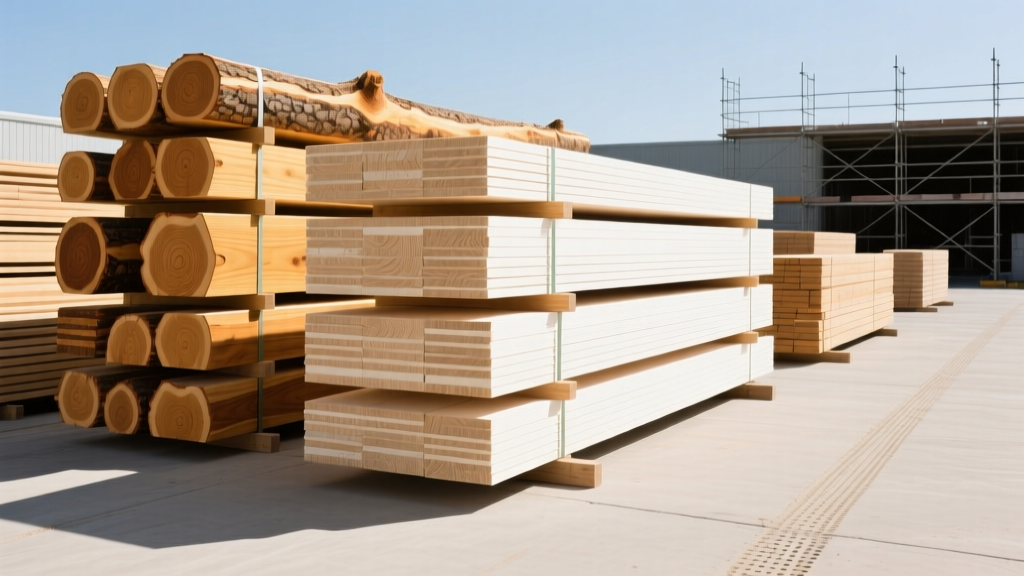
Exterior applications are where the "what type of wood" question has the most severe long-term financial implications. The initial savings of pressure-treated (PT) pine are frequently erased by mandatory chemical sealing and premature board replacement.
Comparing the 25-Year Decking Matrix
Data from the USDA Forest Products Laboratory highlights the natural decay resistance of dense hardwoods and thermally modified species. When calculating a 25-year lifecycle cost—including material, substructure adjustments, fasteners, and professional sealing every two years—the financial hierarchy flips completely.
- Pressure-Treated Southern Yellow Pine: Initial cost is roughly $2.50 per linear foot (5/4x6). However, it requires biennial sealing ($1.25/lf per application) and has a functional lifespan of 12-15 years before severe checking and rot necessitate a full deck rebuild. 25-Year Cost: ~$21.00/lf (includes one full rebuild).
- Western Red Cedar: Initial cost is $7.50/lf. Naturally resistant to decay but prone to surface weathering. Requires oiling every 3 years. Lifespan is 20-25 years. 25-Year Cost: ~$16.50/lf.
- Ipe (Brazilian Walnut): Initial cost is $14.50/lf. Requires hidden fastener systems and pre-drilling, adding $3.00/lf to labor. Needs only occasional UV oil for color retention (not structural integrity). Lifespan exceeds 50 years. 25-Year Cost: ~$18.50/lf (zero rebuilds required).
- Thermally Modified Ash: Initial cost is $9.50/lf. The thermal modification process (baking the wood to 400°F+ in an oxygen-deprived kiln) alters the cellular structure, rendering it immune to rot and insect damage without chemicals. 25-Year Cost: ~$12.00/lf.
Interior Millwork and Flooring: Hardness vs. Refinishing ROI
For interior finishes, the value of wood is dictated by the Janka hardness scale and cellular structure. Homeowners often choose Red Oak for flooring due to its lower price point ($4.50 to $6.00 per square foot for unfinished select), but White Oak ($6.50 to $8.50 per square foot) offers superior long-term value in high-moisture or high-traffic zones.
The Cellular Advantage of White Oak
White Oak contains tyloses—cellular outgrowths that plug the xylem vessels, making the wood virtually impermeable to water. Red Oak lacks tyloses, meaning its open pores act like straws, wicking up spills and causing localized cupping. In kitchens, mudrooms, or powder rooms, the $2.00/sq.ft. premium for White Oak prevents thousands of dollars in localized floor replacement or aggressive sanding. Furthermore, according to the APA The Engineered Wood Association, utilizing engineered wood flooring (a hardwood veneer over a plywood core) in below-grade basements provides the aesthetic ROI of solid wood while completely eliminating the risk of seasonal gapping and cupping caused by concrete slab moisture vapor.
Hidden Cost Variables That Destroy Lumber Budgets
Even after selecting the optimal species, three hidden variables can obliterate your lumber ROI if not managed during the procurement phase:
- Wane and Edge Defects: Lower-grade boards (like #3 or Stud grade) feature excessive wane (missing bark edges). This reduces the nailing surface for sheathing and drywall, forcing carpenters to add blocking or sister studs, adding $0.40 to $0.60 per linear foot in hidden labor.
- Twist and Bow Tolerances: A 2x4 with a 1/2-inch bow can be forced into place, but a 1/2-inch twist cannot. Twisted studs require planing or replacement. Sourcing from mills with strict Automated Grading Scanners reduces twist-related cull rates from 10% down to 2%.
- Acclimatization Timing: Delivering kiln-dried interior trim (like MDF-core veneered baseboards or solid poplar) to a site before the HVAC system is operational and the drywall is fully cured will result in the wood absorbing ambient moisture. When the HVAC is finally turned on, the trim will shrink, opening miter joints at every corner.
Final Verdict: Calculating Your True Wood Budget
Answering "what type of wood" requires shifting from a procurement mindset to a lifecycle management mindset. For structural framing, Douglas Fir or engineered lumber offsets its higher unit cost through wider spacing and near-zero cull rates. For exteriors, thermally modified woods and dense hardwoods eliminate the compounding maintenance costs of pressure-treated pine. For interiors, paying a premium for closed-cell species like White Oak prevents moisture-related callbacks.
Always request the mill certificate for moisture content and grading statistics before signing a lumber package contract. The cheapest board on the rack is rarely the most profitable one to install.
Written by
James ThorntonJames Thornton is a construction industry veteran with 25 years of hands-on experience in wood framing, lumber grading, and residential building codes. He started as a framing carpenter in rural Oregon, earned his ICC Residential Building Inspector certification, and eventually became a senior plan reviewer for the City of Portland Bureau of Development Services. James holds a B.S. in Wood Science & Technology from Oregon State University and is a certified lumber grader through the West Coast Lumber Inspection Bureau (WCLIB). He has inspected over 3,000 residential construction sites and authored the city's internal guide on advanced framing techniques (2x6 at 24" O.C.). James lives in Bend, OR, where he builds custom timber-frame cabins and competes in lumberjack sports.
More from James Thornton
View all
Insulation
Best Home Insulation Materials: Complete 2026 Guide
Compare top home insulation materials for 2026. Find R-values, installed costs per square foot, and best uses for fiberglass, spray foam, and mineral wool.
Aug 4, 2026

Sustainable Building
Certify Your Green Building Material for LEED and WELL
Step-by-step guide to certifying a green building material for LEED v5 and WELL v2. Master EPDs, HPDs, and VOC limits for 2026 project specifications.
Aug 4, 2026

Stone & Masonry
Veneer Stacked Stone Panels: Interior Design & Style Showcase
Discover how veneer stacked stone panels transform interiors. Explore modern design profiles, material pairings, and technical installation specs.
Aug 4, 2026