Wood Beam Lifespan: Durability of Solid vs. Engineered Timber
Compare the lifespan and durability of solid sawn vs. engineered wood beams. Learn decay resistance, load degradation, and maintenance for 2026 builds.
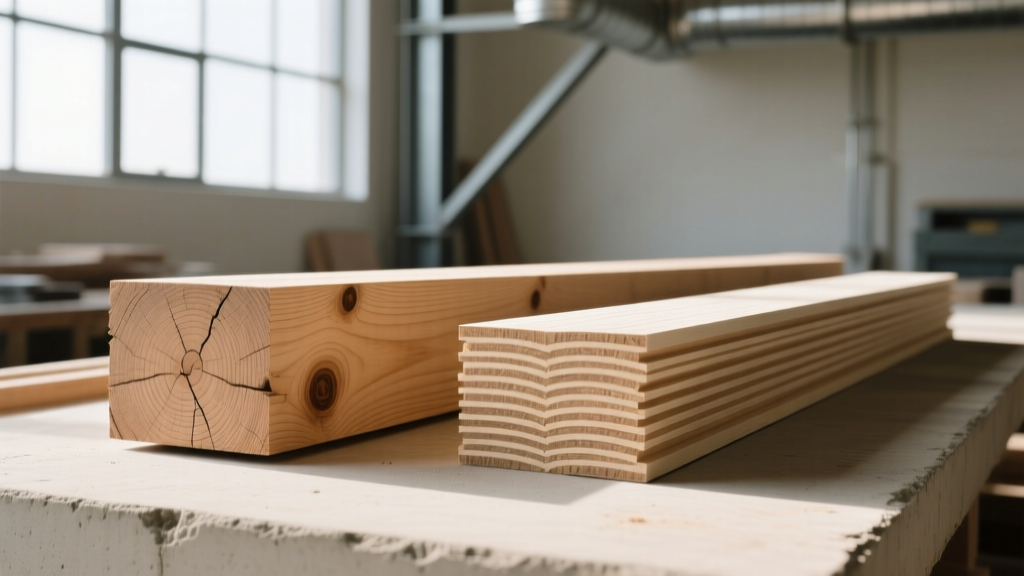
The Core Question: How Long Does a Structural Wood Beam Last?
When evaluating a wood beam for structural applications, lifespan is rarely a function of time alone; it is a function of moisture management, load creep, and material degradation. A properly protected solid-sawn timber can easily exceed 300 years in service, while an unprotected engineered beam in a high-humidity environment may suffer critical delamination in under a decade. Understanding the specific failure modes of different beam types is critical for architects, builders, and homeowners planning long-term structural integrity.
- Solid Sawn Timber (Heartwood): 100 to 300+ years
- Glulam (Glued Laminated): 75 to 150 years
- LVL (Laminated Veneer Lumber): 50 to 100 years
- PSL (Parallel Strand Lumber): 50 to 100 years
Solid Sawn Timber: Centuries of Service (With Caveats)
Solid sawn beams, cut directly from a single log, have been the backbone of construction for centuries. However, their durability is highly dependent on the species, the presence of heartwood versus sapwood, and how the timber handles natural checking (cracking) as it dries.
Moisture and the 19% Threshold
The biological limit for wood-decaying fungi is a moisture content (MC) of 20%. According to the USDA Forest Products Laboratory, keeping a wood beam's MC below 19% effectively halts all biological degradation. In modern climate-controlled interiors, beams typically equilibrate to an MC of 8% to 12%. The danger zone exists in unconditioned spaces (crawlspaces, barns, exposed overhangs) where ambient humidity can drive MC above 20%, inviting brown rot and white rot fungi.
Species-Specific Decay Resistance
Not all solid beams are created equal. The natural decay resistance of a beam relies almost entirely on its heartwood. Sapwood, regardless of species, offers virtually zero natural resistance to decay.
| Species (Heartwood) | Natural Decay Resistance | Typical Structural Use |
|---|---|---|
| Western Red Cedar | High | Exposed exterior beams, pergolas |
| Douglas Fir | Moderate | Interior framing, covered porches |
| Southern Yellow Pine | Low to Moderate | Heavy timber framing, treated for exterior |
| White Oak | High | Historic restoration, marine environments |
Engineered Wood Beams: LVL, Glulam, and PSL Degradation Profiles
Engineered wood products (EWP) solve many of the dimensional instability issues of solid timber, but they introduce new failure modes related to adhesives and lamination integrity. The APA - The Engineered Wood Association provides extensive data on how these materials perform under long-term environmental stress.
Adhesive Failure vs. Wood Fiber Failure
In a solid beam, failure usually occurs when the wood fibers themselves snap or shear. In engineered beams, the weakest link can be the adhesive bond line.
- Glulam: Exterior-rated Glulam uses Phenol-Resorcinol-Formaldehyde (PRF) or Resorcinol adhesives. These are fully boil-proof and will not degrade from moisture. If a Glulam beam fails in a wet environment, it is usually because the wood laminations themselves rotted, not the glue.
- LVL: LVL uses phenol-formaldehyde adhesives. While highly moisture-resistant, LVL is typically manufactured with exterior-grade face veneers but may have interior-grade core veneers in some older or specific product lines. Edge-sealing is critical; if moisture wicks into the unsealed edges of an LVL beam, it can cause localized delamination.
Critical Warning: Never use interior-rated EWP beams in applications where they may be exposed to weather during construction delays. If an LVL or I-joist gets rained on before the building is dried in, the swelling can permanently compromise the structural bond, requiring costly replacement.
Environmental Stressors and Load Creep Over Time
Beyond biological decay, wood beams suffer from mechanical degradation over decades of service. Understanding these stressors is vital for accurate lifespan analysis.
Long-Term Deflection (Creep)
Wood exhibits "creep"—a gradual increase in deflection under a constant sustained load over time. While a beam might only deflect 0.5 inches under a dead load on day one, that same beam could deflect 0.75 inches after 10 years due to creep. Engineered beams like LVL generally exhibit lower and more predictable creep rates compared to solid sawn timber, making them preferable for long-span floor systems where strict deflection limits (e.g., L/480) are required.
Checking and Shear Capacity
As solid beams dry, they develop checks (cracks parallel to the grain). Surface checks on the top or bottom of the beam do not significantly reduce bending strength (Fb). However, if a check develops horizontally through the neutral axis (the center of the beam's depth), it can severely reduce the beam's horizontal shear capacity (Fv). Engineers must account for this by sizing solid beams with a higher shear safety factor in environments with rapid humidity fluctuations.
Protective Treatments and 2026 Coating Standards
For beams that cannot be kept below the 19% MC threshold, preservative treatments are mandatory. The American Wood Protection Association (AWPI) sets the standards for these treatments, which have evolved significantly to prioritize environmental safety while maintaining efficacy.
- Borate Treatments: Excellent for interior beams at risk of termite or fungal attack. Borates are water-soluble, meaning they will leach out if the beam is exposed to liquid water. They are strictly for protected, dry-in-use applications.
- Alkaline Copper Quaternary (ACQ) & Copper Azole: Used for exterior or ground-contact timber. These treatments protect against decay but are highly corrosive to standard steel fasteners. Any steel hangers, bolts, or bearing plates used with ACQ-treated beams must be hot-dip galvanized or stainless steel.
- Surface Sealants: For architectural Glulam or solid beams left exposed, penetrating oil-based sealants (like those containing alkyd resins) must be reapplied every 3 to 5 years to prevent UV degradation and surface checking.
Decision Matrix: Selecting the Right Beam for High-Moisture Zones
When designing for areas with high moisture potential (e.g., basements, covered outdoor pavilions, or agricultural buildings), use this matrix to select the optimal wood beam type.
| Environment | Recommended Beam Type | Required Treatment / Detail |
|---|---|---|
| Conditioned Interior | LVL, PSL, or Solid Sawn | Standard untreated; paint or stain for aesthetics. |
| Unconditioned Crawlspace | Pressure-Treated Solid or Glulam | AWPI UC4A treatment; isolate from masonry piers with neoprene pads. |
| Covered Exterior (Porch) | Exterior-Rated Glulam or Cedar | PRF adhesives; apply penetrating UV-blocking water repellent. |
| Fully Exposed / Ground Contact | Pressure-Treated Solid Sawn | AWPI UC4B or UC4C treatment; hot-dip galvanized hardware only. |
Inspection Protocols for Existing Wood Beams
Assessing the remaining lifespan of an existing wood beam requires a systematic approach. Do not rely on visual surface cues alone; internal decay can hollow out a beam while the exterior remains pristine.
- Check the Bearing Points: 90% of beam rot occurs where the wood rests on a concrete, stone, or brick pier. Use a pin-type moisture meter at the bearing point. If MC exceeds 20%, probe the wood with an awl. If the awl sinks easily, the structural capacity is compromised.
- Measure Deflection: Run a taut string line from one end of the beam to the other. Measure the gap at the center. Compare this to the allowable deflection limit (typically Span/360 for live loads). Excessive sag indicates long-term creep overload or internal shear failure.
- Sound the Beam: Strike the beam with a steel hammer. A sharp, resonant "ping" indicates solid, dense wood. A dull "thud" often indicates internal honeycomb decay or severe delamination in engineered products.
- Inspect Fastener Corrosion: In older structures, check the bolts and shear plates connecting the beam to columns. Galvanic corrosion from acidic wood tannins (especially in Oak and Cedar) can eat through standard steel bolts, effectively disconnecting the beam from its structural supports.
By understanding the specific material properties, environmental vulnerabilities, and long-term mechanical behaviors of both solid and engineered wood beams, builders can specify materials that will safely outlast the structures they support.