Wood Fence Durability: Species Lifespans and Decay Failure Modes
Analyze wood fence durability across species. Compare pressure-treated pine, cedar, and hardwood lifespans, decay failure modes, and preservative treatments.
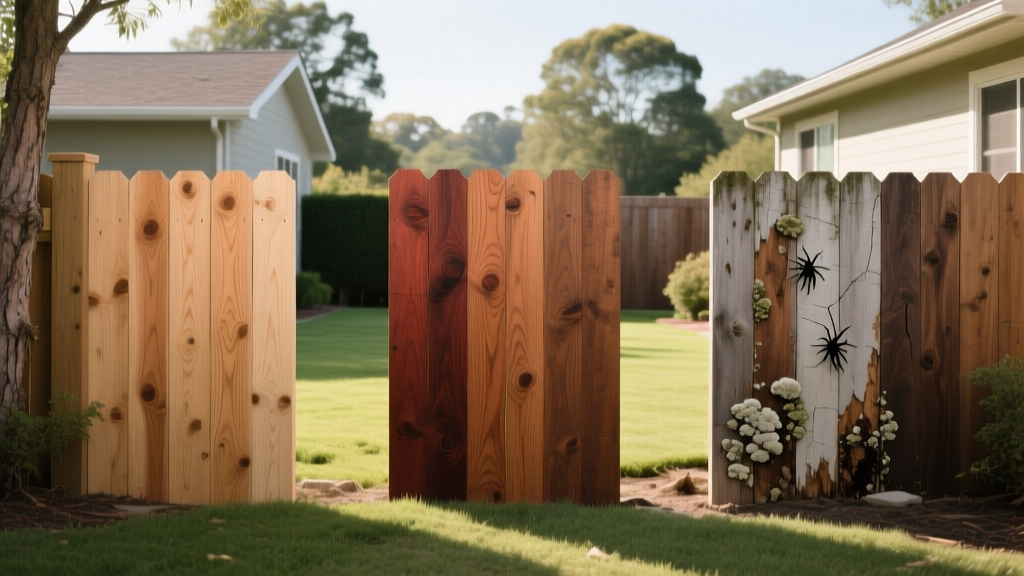
The Anatomy of Wood Fence Degradation
When evaluating wood fence durability, the primary enemy is not wind load or impact damage, but biological decay and photodegradation. Fungal decay requires three conditions: oxygen, a temperature between 50°F and 90°F, and a wood moisture content exceeding 20%. In a typical fence system, the critical failure zone is the transition point exactly 2 inches above and 6 inches below the soil line, where moisture wicking and oxygen availability intersect to create an ideal environment for basidiomycete fungi.
Above ground, ultraviolet (UV) radiation breaks down the lignin that binds wood fibers together. This photodegradation causes surface checking, graying, and eventual structural friability. Understanding how different species and chemical treatments mitigate these specific failure modes is essential for specifying a fence system that aligns with your long-term capital expenditure goals.
Species-by-Species Lifespan and Durability Matrix
The following matrix compares the most common structural and cladding woods used in fencing, evaluating their mechanical hardness, natural decay resistance, and real-world installed costs.
| Wood Species | Janka Hardness (lbf) | Natural Decay Resistance | Expected Lifespan | Avg. Installed Cost (per lin. ft.) |
|---|---|---|---|---|
| Pressure-Treated Southern Yellow Pine (PT SYP) | 870 | Low (Relies on chemical treatment) | 15–20 Years | $18 – $28 |
| Western Red Cedar (Heartwood) | 350 | High (Extractives: thujaplicins) | 20–30 Years | $28 – $45 |
| Coastal Redwood (Heartwood) | 420 | Very High | 25–35 Years | $35 – $55 |
| Ipe (Brazilian Walnut) | 3,680 | Exceptional (Class A Fire Rating) | 50+ Years | $75 – $110 |
Pressure-Treated Southern Yellow Pine (PT SYP)
PT SYP dominates the market due to its low cost and high structural strength. However, its durability is entirely dependent on the preservative retention level. According to the American Wood Protection Association (AWPA) Use Category System, fence posts require a UC4A (Ground Contact) or UC4B (Heavy-Duty Ground Contact) rating. UC4A mandates a minimum preservative retention of 0.40 pounds per cubic foot (pcf), while UC4B requires 0.60 pcf. Using UC3B (Above Ground, 0.25 pcf) lumber for fence posts is a common contractor shortcut that leads to catastrophic base rot.
Western Red Cedar and Heart Redwood
Cedar and redwood rely on natural extractives (thujaplicins in cedar, polyphenols in redwood) for fungal and insect resistance. The critical caveat is that only the heartwood contains these extractives in sufficient quantities. Sapwood—the lighter-colored outer rings of the tree—has virtually zero natural decay resistance and will rot in ground contact within 3 to 5 years. When specifying cedar or redwood for a fence, you must explicitly order 'All-Heart' or 'Clear Heart' grades. Using 'Construction' or 'Select Tight Knot' grades, which contain high sapwood percentages, severely compromises the lifespan of the posts.
Tropical Hardwoods (Ipe and Cumaru)
Tropical hardwoods offer unmatched durability. Ipe boasts a Janka hardness of 3,680 lbf, making it highly resistant to physical impact, scratching, and wood-boring insects. Its density is so high that it naturally sinks in water, severely limiting the moisture uptake required for fungal growth. The USDA Forest Products Laboratory classifies Ipe as highly resistant to decay, often lasting over 50 years without chemical treatments. The trade-off is extreme difficulty in machining; Ipe requires pre-drilling for every fastener and carbide-tipped saw blades to prevent tool burnout.
Preservative Chemistry and Fastener Corrosion
Modern pressure-treated wood no longer uses Chromated Copper Arsenate (CCA), which was phased out for residential use. Today's primary preservatives are Alkaline Copper Quaternary (ACQ) and Micronized Copper Azole (MCA). While these copper-based treatments are highly effective against rot and termites, the Environmental Protection Agency (EPA) notes that the alkaline nature of ACQ makes it highly corrosive to standard metals.
- Standard Zinc-Plated Fasteners: Will corrode and fail within 2 to 4 years when in contact with ACQ or MCA treated lumber.
- Hot-Dipped Galvanized (ASTM A153): The minimum acceptable standard for framing nails and structural screws in PT wood. The thick zinc coating sacrifices itself slowly to protect the steel core.
- Type 304 Stainless Steel: Recommended for all above-ground fasteners, pickets, and rails to prevent unsightly black tannin/copper staining streaks.
- Type 316 Stainless Steel: Mandatory for all ground-contact fasteners, post bases, and coastal installations where salt spray accelerates galvanic corrosion.
Engineering the Post-Base: Preventing the #1 Failure Point
To maximize the lifespan of any wood fence, the post-to-ground interface must be engineered to shed water and block capillary action. Follow this specific installation protocol to prevent base rot:
- Excavation and Drainage: Auger the post hole 6 inches deeper than the local frost line. Fill the bottom 6 inches with washed, angular gravel (never pea gravel, which traps water) to create a French-drain effect at the base of the post.
- Moisture Barrier Application: Apply a bituminous coating or install a heat-shrink polyethylene sleeve (such as PostSaver) over the bottom 24 inches of the post. This physically blocks soil moisture and oxygen from reaching the wood fibers.
- Concrete Collar Sloping: When pouring the concrete collar, do not let it sit flush with the soil grade. Slope the top of the concrete away from the post at a 15-degree to 45-degree angle. A flat or concave concrete collar will pool rainwater, keeping the post perpetually wet and accelerating decay.
- Grade Clearance: Ensure all horizontal rails and pickets maintain a minimum 2-inch clearance above the final soil or mulch grade to prevent splash-back moisture and lawn-trimmer damage.
Maintenance Cycles: Penetrating Oils vs. Film-Forming Stains
UV protection dictates the maintenance cycle for above-ground fence components. The choice of finish fundamentally alters long-term labor costs.
Film-Forming Stains (Solid Acrylics/Urethanes): These products sit on the surface of the wood, creating a plastic-like film. While they offer excellent initial UV blocking and uniform color, they trap moisture inside the wood when the film inevitably cracks. Once a film-forming stain begins to peel, it cannot be simply recoated; the entire fence must be chemically stripped or media-blasted before reapplication, resulting in massive labor costs in years 4 through 6.
Penetrating Alkyd/Oil Stains: Products formulated with linseed, tung, or modified alkyd oils penetrate the wood cellular structure rather than coating the surface. They do not peel or flake. As UV radiation degrades the oil, the fence simply fades gracefully. Maintenance requires only a light power-washing and a fresh coat applied directly over the weathered wood every 3 to 5 years, eliminating the need for stripping.
Annualized Cost-to-Lifespan ROI Analysis
Initial installation cost is a poor metric for evaluating wood fence durability. A true material analysis requires calculating the annualized cost over the expected lifespan of the structure.
A standard pressure-treated pine fence costing $22 per linear foot with a 15-year lifespan yields an annualized cost of $1.46 per linear foot per year. Conversely, an Ipe hardwood fence costing $90 per linear foot with a conservative 50-year lifespan yields an annualized cost of $1.80 per linear foot per year. While Ipe carries a premium, its annualized cost is remarkably competitive when factoring in the complete elimination of chemical treatments, the lack of required staining, and the avoidance of a total tear-out and replacement cycle at year 20. For homeowners planning to remain in the property long-term, specifying high-durability hardwoods or meticulously detailed heartwood cedar with engineered post bases provides superior long-term capital preservation.