What Type of Inner Pack Is in This Wooden Box? A Quality Guide
Learn what type of inner pack is in a wooden box. This grade and quality guide covers dunnage, moisture barriers, ISPM 15 compliance, and inspection steps.

Decoding the Inner Pack: Core Components and Grades
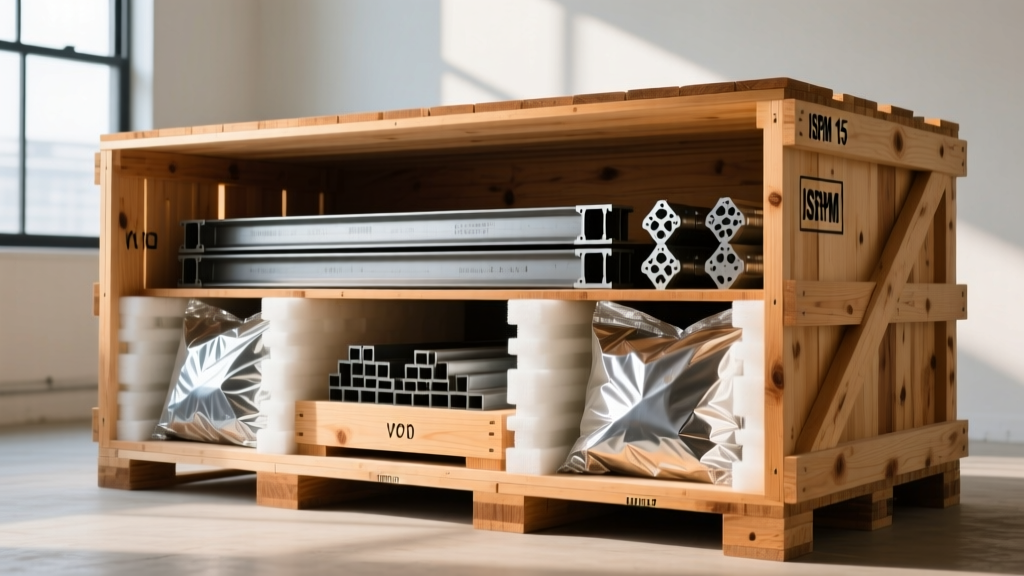
When a wooden shipping crate arrives at a job site or lumber yard, the outer box is only half the equation. The question of "what type of inner pack is in this wooden box" is critical for project managers and receiving inspectors handling high-value building materials, custom millwork, or heavy structural timber. The inner pack—comprising dunnage, moisture barriers, and shock absorption—dictates whether the cargo survives transit without warping, corrosion, or impact damage.
1. Structural Dunnage (Blocking and Bracing)
Dunnage refers to the internal wooden framework used to secure the load. High-quality inner packs use graded lumber (typically Southern Yellow Pine or SPF) that is kiln-dried to a maximum moisture content of 19%. For international shipments or cross-border transit, all raw wood dunnage must comply with USDA APHIS ISPM 15 regulations. Look for the visible IPPC stamp indicating Heat Treatment (HT). Avoid crates where the inner blocking lacks this stamp, as customs will reject the entire shipment.
2. Moisture and Corrosion Barriers
Wood is hygroscopic, meaning the crate itself can off-gas moisture into the enclosed space. Premium inner packs utilize multi-layer aluminum foil barrier bags (often 5-7 mil thick) heat-sealed around the cargo. Inside the sealed bag, desiccant packs are placed to absorb residual ambient humidity. Specify desiccants that meet the MIL-D-3464 Type I standard, typically utilizing indicating silica gel or activated clay, calculated at 1 unit per 1.2 cubic feet of void space.
3. Shock and Vibration Cushioning
For fragile architectural hardware or precision-cut timber, the inner pack must mitigate G-forces. Closed-cell polyethylene (PE) foam is the professional grade choice; it does not absorb water and maintains its structural memory under static loads. Avoid open-cell polyurethane (PU) foam for construction materials, as it acts like a sponge, trapping moisture directly against metal fasteners or finished wood surfaces.
If you open a wooden crate and notice condensation on the inside of the foil barrier (container rain), the desiccant calculation was incorrect or the heat-seal was compromised during transit. Do not accept the shipment without documenting the moisture intrusion, as latent mold growth on structural timber can begin within 48 hours.
Material Comparison Matrix: Inner Packaging Grades
| Inner Pack Component | Professional Grade Material | Economy/Low-Grade Material | Quality Standard / Spec |
|---|---|---|---|
| Moisture Barrier | 5-7 mil Foil Laminate Bag | 4-mil Polyethylene (PE) Sheeting | ASTM F1249 (WVTR testing) |
| Desiccant | Indicating Silica Gel / Clay | Untested Calcium Chloride | MIL-D-3464 Type I |
| Cushioning | Closed-Cell PE Foam | Open-Cell PU Foam / Bubble Wrap | ASTM D3574 / D3575 |
| Wood Dunnage | Kiln-Dried, ISPM 15 Stamped | Green/Unstamped Raw Lumber | IPPC ISPM 15 (HT Stamp) |
| Strapping | PET Plastic or Steel Banding | Woven Polyester or Nylon | ASTM D3950 |
ISPM 15 Compliance: Inspecting the Wood Dunnage
The International Plant Protection Convention (IPPC) mandates that all wood packaging materials (WPM), including internal blocking and bracing, be treated to prevent the spread of invasive pests. When inspecting the inner pack, locate the IPPC stamp on the dunnage. A compliant stamp includes:
- IPPC Symbol: The stylized wheat logo.
- Country Code: Two letters (e.g., US, CA, CN).
- Producer Code: A unique number assigned to the treatment facility.
- Treatment Code: HT (Heat Treated to a minimum core temperature of 56°C for 30 minutes) or KD (Kiln Dried). Methyl Bromide (MB) is largely banned for new packaging.
If the inner wooden blocking is made of manufactured wood products like plywood, OSB, or oriented strand board, it is exempt from ISPM 15 stamping because the manufacturing process inherently destroys pests. However, solid timber bracing must always bear the mark. Furthermore, the wood must be debarked prior to treatment, meaning inspectors should look for the absence of large bark patches on the internal dunnage as a secondary visual quality check.
Step-by-Step Inner Pack Inspection Protocol
Use this framework when receiving high-value building materials to determine if the inner pack meets contractual quality grades:
- Exterior Assessment: Check for forklift punctures or crushed corners on the outer wooden box before opening. Damage here often compromises the inner foil barrier.
- Seal Integrity Check: Once the outer wood is removed, inspect the heat-sealed seams of the moisture barrier. Look for micro-tears, punctures, or delamination along the folds.
- Desiccant Verification: Open the barrier bag and check the indicating desiccant. If the silica gel beads have turned from orange to green (or blue to pink), the barrier was breached, and moisture has saturated the pack.
- Pest Evidence Scan: Despite an HT stamp, re-infestation can occur in poorly managed lumber yards. Look for frass (sawdust-like droppings) or 2mm exit holes in the inner dunnage.
- Dunnage Load-Bearing Check: Ensure the wooden blocking is in direct contact with the cargo's structural nodes, not just resting against drywall or fragile cladding. There should be no lateral shift play.
- Strapping Tension: PET or steel strapping should be tight enough to prevent movement but must utilize rigid edge protectors (cardboard or molded plastic) to prevent the strap from cutting into the lumber or material edges.
Troubleshooting Common Inner Pack Failures
| Failure Mode | Root Cause | Corrective Specification for Next Order |
|---|---|---|
| Surface rust on metal hardware | Use of standard PE bags instead of VCI (Volatile Corrosion Inhibitor) or foil barriers. | Mandate VCI-impregnated foil bags with MIL-D-3464 desiccants. |
| Crushed edges on structural timber | Steel strapping applied without edge protectors; dunnage not aligned with load-bearing nodes. | Require high-density polyethylene (HDPE) edge protectors and engineered blocking diagrams. |
| Customs hold or rejection | Inner solid wood bracing lacks ISPM 15 HT stamp. | Specify 100% plywood/OSB for internal dunnage to bypass ISPM 15, or enforce strict stamp audits. |
| Material shifted inside crate | Under-specified void fill; reliance on friction rather than mechanical blocking. | Implement honeycomb cardboard void fill and bolted wooden bracing for loads exceeding 2,000 lbs. |
Specifying the Inner Pack in Procurement Contracts
To avoid receiving substandard packaging, do not leave the inner pack to the supplier's discretion. In your procurement documents for wooden crates, explicitly define the required inner packaging grade. A robust specification clause should read: "All cargo must be enclosed in a heat-sealed, 5-mil aluminum foil moisture barrier bag with MIL-D-3464 Type I indicating silica gel desiccants calculated per ASTM D3950. Internal blocking and bracing must utilize kiln-dried, ISPM 15 compliant lumber with visible IPPC stamps, secured with PET strapping and HDPE edge protectors."
For high-value shipments exceeding $50,000, consider mandating a third-party pre-shipment inspection to photograph the inner pack before the outer wooden box is closed and strapped. By mastering the components of the inner pack, construction buyers and site managers can drastically reduce material rejection rates, prevent latent moisture damage, and ensure that high-value building products arrive in install-ready condition.
Written by
James ThorntonJames Thornton is a construction industry veteran with 25 years of hands-on experience in wood framing, lumber grading, and residential building codes. He started as a framing carpenter in rural Oregon, earned his ICC Residential Building Inspector certification, and eventually became a senior plan reviewer for the City of Portland Bureau of Development Services. James holds a B.S. in Wood Science & Technology from Oregon State University and is a certified lumber grader through the West Coast Lumber Inspection Bureau (WCLIB). He has inspected over 3,000 residential construction sites and authored the city's internal guide on advanced framing techniques (2x6 at 24" O.C.). James lives in Bend, OR, where he builds custom timber-frame cabins and competes in lumberjack sports.
More from James Thornton
View all
Insulation
Best Home Insulation Materials: Complete 2026 Guide
Compare top home insulation materials for 2026. Find R-values, installed costs per square foot, and best uses for fiberglass, spray foam, and mineral wool.
Aug 4, 2026

Sustainable Building
Certify Your Green Building Material for LEED and WELL
Step-by-step guide to certifying a green building material for LEED v5 and WELL v2. Master EPDs, HPDs, and VOC limits for 2026 project specifications.
Aug 4, 2026

Stone & Masonry
Veneer Stacked Stone Panels: Interior Design & Style Showcase
Discover how veneer stacked stone panels transform interiors. Explore modern design profiles, material pairings, and technical installation specs.
Aug 4, 2026