Eco Friendly Insulation Materials: 2026 Cost & ROI Guide
Compare 2026 costs and ROI for top eco friendly insulation materials like sheep wool, cellulose, and hemp. Find the best sustainable option for your budget.
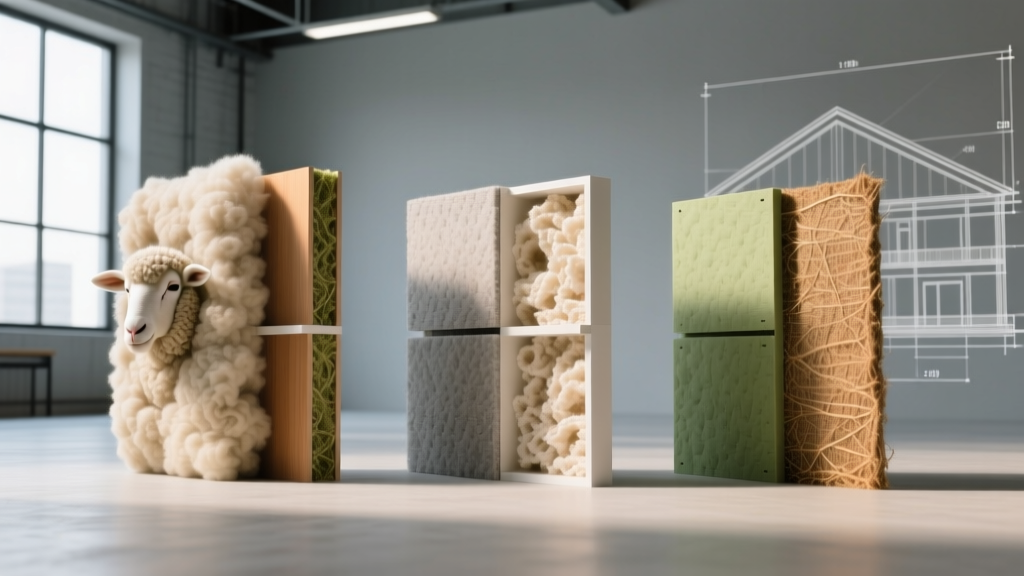
The 2026 Market Shift: From Niche to Mainstream
Historically, specifying eco friendly insulation materials meant accepting a 40% to 60% upfront premium over standard fiberglass batts. In 2026, that gap has narrowed significantly. Driven by scaled manufacturing of bio-based binders, stabilized agricultural supply chains, and the extended Inflation Reduction Act (IRA) 25C tax credits, the cost delta for sustainable insulation now sits between 15% and 25%. More importantly, when factoring in HVAC downsizing, moisture-management benefits, and reduced embodied carbon, the lifecycle ROI of natural and recycled insulators frequently outperforms petroleum-based foams.
Material Cost Matrix: Upfront Pricing vs. Thermal Performance
The following matrix breaks down the 2026 national average installed costs for residential applications (2x4 and 2x6 framing). Pricing includes material and professional installation labor.
| Material Type | Brand Example | Cost per Sq. Ft. (Installed) | R-Value per Inch | Embodied Carbon Profile |
|---|---|---|---|---|
| Fiberglass Batts (Baseline) | Owens Corning EcoTouch | $0.95 - $1.30 | 3.1 - 3.4 | Moderate (High melt energy) |
| Dense-Pack Cellulose | Applegate / Greenfiber | $1.40 - $1.90 | 3.5 - 3.7 | Negative (Carbon sequestered) |
| Recycled Cotton/Denim | Bonded Logic UltraTouch | $2.10 - $2.75 | 3.5 | Low (Recycled textile waste) |
| Hemp Fiber Batts | Hempitecture HempWool | $2.80 - $3.60 | 3.7 | Negative (Rapid growth crop) |
| Sheep Wool Batts | Havelock Wool | $3.80 - $5.20 | 3.6 | Negative (Renewable animal fiber) |
Deep Dive: Top Eco Friendly Insulation Materials
1. Dense-Pack Cellulose (Recycled Newsprint)
Cellulose remains the most cost-effective entry point for sustainable insulation. Composed of 80% to 85% recycled paper fiber treated with borates for fire and pest resistance, it excels in retrofit applications. According to the U.S. Department of Energy's guide on insulation types, cellulose provides superior air-sealing properties when dense-packed into closed cavities, reducing infiltration by up to 30% compared to standard batts.
Critical Installation Spec: To prevent long-term settling, cellulose must be installed at a minimum density of 3.5 lbs per cubic foot. If blown loose into open attics, installers must apply a 20% "overblow" to compensate for the 15% settling that occurs over the first five years.
2. Sheep Wool (e.g., Havelock Wool)
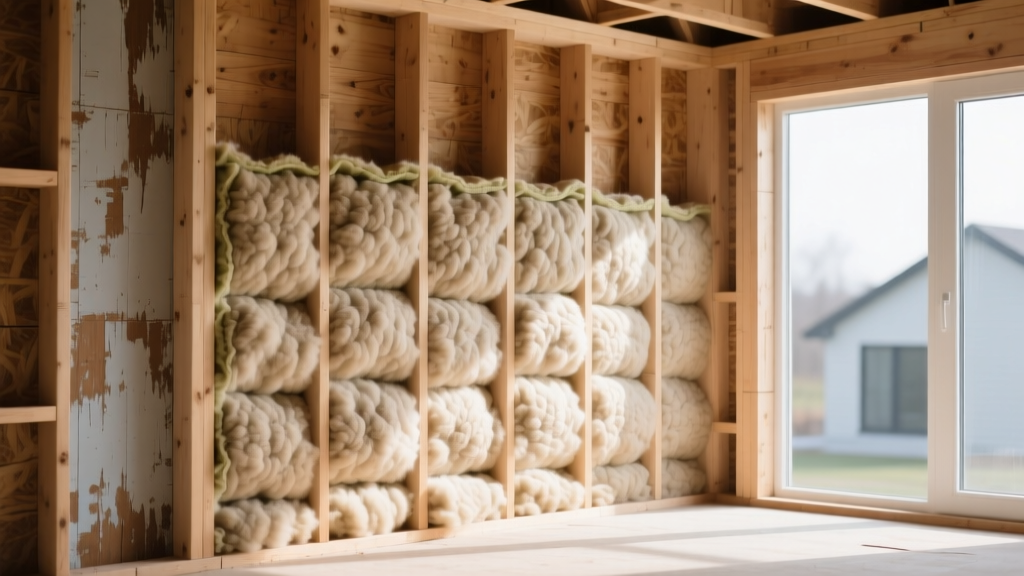
Sheep wool is a premium bio-insulator with unique hygroscopic properties. The keratin protein structure naturally binds and releases moisture vapor, allowing it to absorb up to 30% of its weight in water without losing thermal resistance or promoting mold growth. This eliminates the need for a Class I vapor retarder in many mixed-humid climates (IECC Zones 4 and 5), saving approximately $0.40 per square foot on membrane materials.
3. Hemp Fiber (e.g., Hempitecture HempWool)
Hemp insulation has moved from experimental to commercially viable. HempWool uses a proprietary thermoplastic binder, making it entirely formaldehyde-free and highly resilient to compression during shipping. Hemp grows rapidly, sequestering carbon at a rate of roughly 1.6 tons per acre, making it one of the few truly carbon-negative building materials on the market.
4. Recycled Cotton/Denim
Manufactured from post-industrial textile waste, cotton batts are treated with boric acid to meet ASTM E84 Class A fire ratings. While highly effective and itch-free to install, supply chain volatility in the recycled textile market has caused pricing fluctuations. In 2026, cotton remains a mid-tier premium option, best suited for interior acoustic partitions and exterior walls where budget allows for a step up from cellulose.
Lifecycle ROI and Energy Payback Period
Calculating the true ROI of eco friendly insulation materials requires looking beyond the utility bill. Use this framework:
Payback Period = (Upfront Material Premium) / (Annual Energy Savings + HVAC Downsizing Savings + Moisture Damage Avoidance)
In cold climates (IECC Zones 6-8), specifying Havelock Wool or HempWool over fiberglass typically yields a 5-to-7-year payback period. In mixed-humid climates, the payback accelerates to 3-to-5 years due to the elimination of vapor barrier materials and reduced dehumidification loads.
Hidden Costs and Installation Edge Cases
Failing to account for the physical properties of natural materials is the primary cause of budget overruns and performance failures. Avoid these common edge cases:
- The Cellulose Moisture Trap: While cellulose handles minor moisture well, it cannot dry quickly if subjected to bulk water leaks. Never use cellulose in below-grade applications or directly against masonry walls without a capillary break.
- Denim Compression Loss: Recycled cotton batts are highly compressible. If an installer forces a 6.25-inch batt into a 5.5-inch 2x6 cavity, the R-value drops disproportionately. Always specify the exact cavity depth and order accordingly.
- Wool and Moth Mitigation: Ensure the sheep wool product you specify is treated with borax or a proprietary ionic treatment. Untreated, raw wool is highly susceptible to moth larvae, which will destroy the insulation matrix from the inside out.
- Fastener Interference: Dense-pack cellulose and rigid hemp boards require specific netting or mechanical fasteners. Standard staple-guns used for fiberglass will fail under the outward pressure of 3.5 lb/cu ft cellulose. Budget for specialized InsulWeb netting and cap staples.
Decision Framework: Which Material Fits Your Project?
Use the EPA's guidelines on recycling building materials alongside this scenario matrix to select the optimal material for your specific build.
| Project Scenario | Recommended Material | Why It Wins |
|---|---|---|
| Existing Wall Retrofit (Drill-and-Fill) | Dense-Pack Cellulose | Flows around existing wiring/pipes; provides excellent air-sealing without demolishing drywall. |
| New Build in Mixed-Humid Climate | Sheep Wool | Manages vapor drive naturally; eliminates the need for interior poly vapor barriers, preventing trapped moisture. |
| High-Performance Net-Zero Envelope | Hemp Fiber + Exterior Cork | Maximizes embodied carbon reduction; provides high R-value per inch with excellent acoustic dampening. |
| Interior Acoustic Partitions | Recycled Cotton/Denim | High density and fibrous structure absorb mid-to-high frequency sound transmission better than standard glass wool. |
Frequently Asked Questions
Do eco friendly insulation materials qualify for the 25C tax credit?
Yes. Under the current provisions of the Inflation Reduction Act, homeowners can claim a 30% tax credit (up to $1,200 annually) for insulation materials that meet the International Energy Conservation Code (IECC) standards in effect at the time of installation. Cellulose, wool, hemp, and cotton all easily meet these R-value thresholds when installed to manufacturer specifications. Always retain the manufacturer's certification statement for your tax records.
How does the fire resistance of natural insulation compare to spray foam?
Natural materials like cellulose and sheep wool, when properly treated with borates, achieve a Class A fire rating (ASTM E84). Unlike closed-cell polyurethane spray foam, which requires a 15-minute thermal barrier (like drywall) because it releases toxic hydrogen cyanide gas when exposed to flame, borate-treated cellulose actually forms a carbonized char that starves the fire of oxygen. According to Energy Star's building product guidelines, properly installed cellulose can improve a wall assembly's fire-resistance rating by up to 50% compared to uninsulated or foam-insulated cavities.
Written by
Elena RodriguezElena Rodriguez is a civil engineer and technical writer specializing in concrete technology, masonry systems, and ASTM/ACI compliance. She earned her B.S. in Civil Engineering from Texas A&M University and spent a decade at a materials testing laboratory, performing over 2,000 concrete compressive strength tests and masonry prism evaluations. Elena is an ACI-certified Field Testing Technician (Grade I) and a member of ASTM Committee C12 on Natural Building Stone. She currently consults on forensic engineering cases involving concrete failures and moisture intrusion. Based in San Antonio, TX, Elena is a proud member of the Society of Women Engineers (SWE) and coaches her daughter's FIRST Robotics team.
More from Elena Rodriguez
View all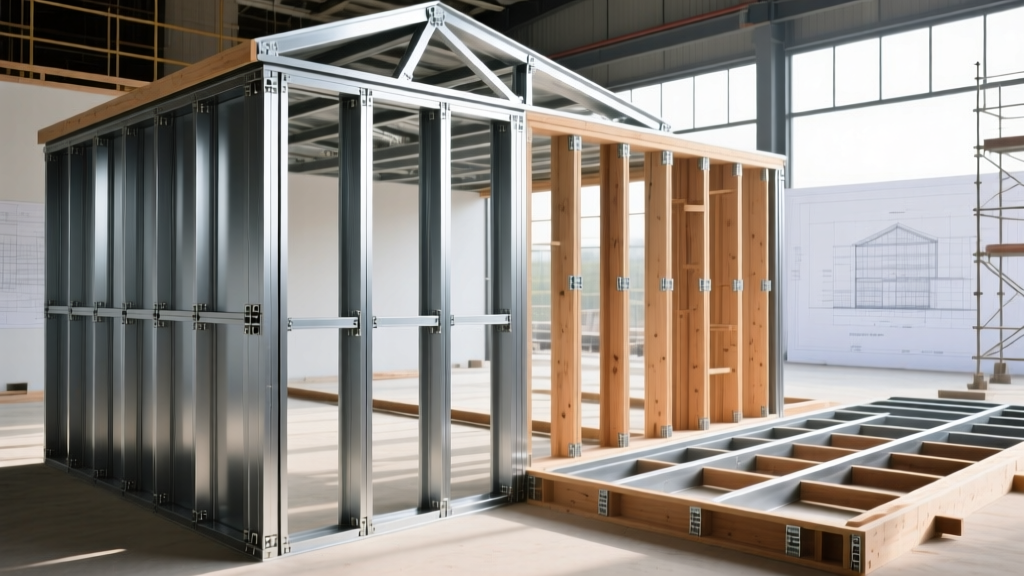
Walls & Panels
Cost Analysis: Light Gauge Steel Framing Advantages and Disadvantages
Evaluate light gauge steel framing advantages and disadvantages through a strict cost analysis lens, comparing material, labor, and lifecycle expenses.
Aug 4, 2026
Walls & Panels
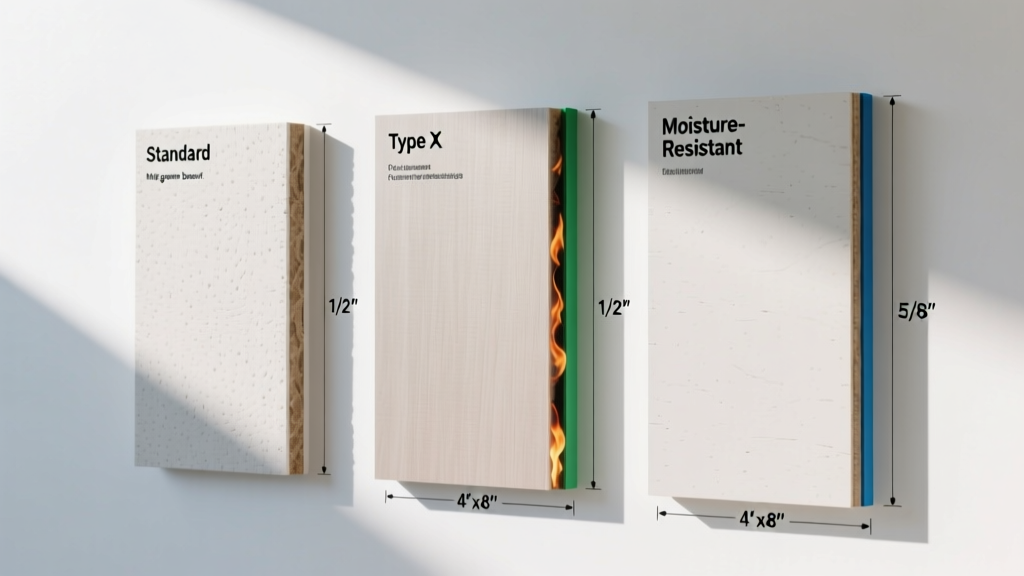
Gypsum Board Types: Exact Specifications, Thickness & Dimensions
Compare standard, Type X, and moisture-resistant gypsum board types. Get exact specifications, thicknesses, dimensions, and ASTM standards for your project.
Aug 4, 2026
Fire Resistance
Best Fire-Resistant Outdoor Decking Materials: 2026 Buyer Guide
Discover the best fire-resistant outdoor decking materials for 2026. Compare Class A PVC, aluminum, and hardwood options for WUI compliance and safety.
Aug 4, 2026