How to Maintain Durable Flooring Options: Expert Care Guide
Discover expert maintenance protocols for durable flooring options like LVP, porcelain, and concrete to maximize lifespan and avoid costly damage.
The Hidden Cost of Improper Maintenance on Durable Floors
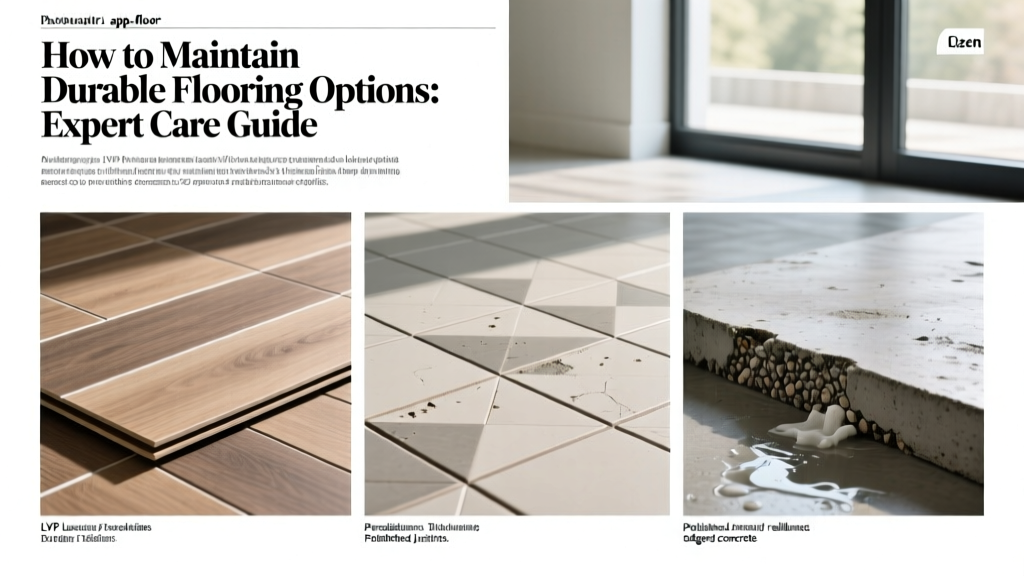
When homeowners invest in durable flooring options, they often assume the material's inherent toughness negates the need for rigorous upkeep. This is a costly misconception. While products like rigid core luxury vinyl plank (LVP), glazed porcelain, and polished concrete boast exceptional resistance to impact and moisture, their surface wear layers and structural locking mechanisms are highly vulnerable to chemical degradation and improper cleaning techniques. According to the Resilient Floor Covering Institute (RFCI), over 60% of premature LVP failures are linked to the use of unauthorized cleaning agents that strip the urethane topcoat or degrade the click-lock joints.
This guide details the exact chemical, mechanical, and environmental maintenance protocols required to preserve the aesthetic and structural integrity of high-durability flooring systems over a 20- to 30-year lifespan.
Never use steam mops on rigid core LVP or engineered hardwood. The localized heat (often exceeding 212°F / 100°C) and forced moisture will compromise the structural integrity of the WPC/SPC core, delaminate the photographic layer, and instantly void manufacturer warranties from major brands like Shaw, COREtec, and Armstrong.
Material-Specific Maintenance Protocols
Rigid Core Luxury Vinyl Plank (LVP)
Modern SPC (Stone Plastic Composite) and WPC (Wood Plastic Composite) floors feature a clear urethane or aluminum oxide wear layer, typically ranging from 12 mil to 22 mil thick. The primary maintenance goal is to preserve this layer without leaving residue.
- Daily/Weekly Cleaning: Use a pH-neutral (pH 7.0) cleaner specifically formulated for hard surfaces, such as Bona Hard-Surface Floor Cleaner. Avoid soap-based detergents, oil soaps, and paste waxes, which leave a hazy, dirt-attracting film that dulls the floor's optical clarity.
- Scratch Prevention: While SPC cores are dent-resistant, the wear layer can still be micro-scratched by abrasive debris. Use exterior walk-off mats to trap silica sand, and fit all heavy furniture with 2-inch or wider non-staining felt pads (avoid rubber or latex-backed pads, which can cause chemical plasticizer migration and permanent yellowing).
- Deep Cleaning: For heavily soiled commercial or high-traffic residential areas, use an auto-scrubber with a white or red 3M pad. Never use black stripping pads, which will instantly gouge the 20-mil wear layer.
Glazed and Unglazed Porcelain Tile
Porcelain tile ranks 7 to 8 on the Mohs hardness scale, making the tile itself virtually impervious to scratching. The vulnerability lies entirely in the grout joints. The Tile Council of North America (TCNA) emphasizes that grout maintenance dictates the overall hygiene and appearance of a tile installation.
- Cementitious Grout: Standard cement grout is highly porous. It must be sealed 72 hours after installation using a penetrating fluorocarbon-based sealer (e.g., Miracle Sealants 511 Impregnator). Reapply the sealer every 18 to 24 months. Clean with alkaline cleaners (pH 8-9) to break down organic soils without degrading the sealer.
- Epoxy Grout (e.g., SpectraLOCK): Epoxy is non-porous and requires no sealing. However, it is prone to haze buildup. Clean with a dedicated epoxy grout cleaner or a mild acidic solution (pH 4-5) to dissolve mineral deposits and soap scum.
- Glaze Care: Avoid hydrofluoric acid-based cleaners at all costs. While effective on masonry, hydrofluoric acid will permanently etch and destroy the glass-like glaze on porcelain tiles.
Polished and Sealed Concrete
Polished concrete relies on a combination of mechanical densification and topical guard coatings. Maintenance focuses on preserving the topical layer and preventing chemical etching.
- Routine Mopping: Use an automatic scrubber or microfiber mop with a neutral-pH cleaner. High-alkaline cleaners will degrade the topical polyurethane or acrylic guard coats, causing them to chalk and peel.
- Stain Mitigation: Concrete is inherently porous. Acidic spills (wine, citrus juice, vinegar, pet urine) will etch through the guard coat and react with the calcium carbonate in the cement, leaving permanent white stains. Wipe up acidic spills within 5 minutes.
- Recoating Schedule: Topical guard coats in high-traffic areas require burnishing with a high-speed propane burnisher (1,500 to 3,000 RPM) and a hog hair pad every 6 months to re-melt and level the micro-scratches in the guard coat.
Engineered Hardwood with Thick Wear Layers
For engineered hardwood to be considered a truly durable flooring option, it must feature a minimum 3mm to 4mm hardwood veneer backed by a cross-plywood core. This allows for screening and recoating, unlike 1.2mm veneers which can only be cleaned.
- Humidity Control: The National Wood Flooring Association (NWFA) mandates maintaining indoor relative humidity (RH) between 35% and 55% year-round. Failure to use a whole-home humidifier in winter or dehumidifier in summer will cause the plywood core to expand and contract, leading to face-checking (splintering of the veneer) and joint gapping.
- Finish Maintenance: UV-cured aluminum oxide finishes are highly scratch-resistant but cannot be easily spot-repaired. When the finish shows wear patterns (usually after 7-10 years), the floor must be lightly screened (abraded) with a 120-grit screen and recoated with a two-component waterborne polyurethane, such as Bona Traffic HD.
The 2026 Maintenance Cost & Protocol Matrix
Budgeting for long-term floor care requires looking beyond the initial installation cost. The table below outlines the estimated annual maintenance expenditures and critical protocols for 1,000 square feet of flooring.
| Flooring Type | Primary Upkeep Protocol | Decadal Intervention | Est. Annual Cost (per 1k sq ft) | Common Warranty Voider |
|---|---|---|---|---|
| Rigid Core LVP | pH-neutral damp mopping | None (replace when wear layer fails) | $45 - $80 | Steam mopping, rubber mats |
| Porcelain Tile | Alkaline cleaning, grout sealing | Professional grout color-sealing | $120 - $200 | Acidic cleaners on cement grout |
| Polished Concrete | Neutral mopping, burnishing | Re-apply topical guard coat | $150 - $300 | Acidic spill neglect |
| Engineered Hardwood | Dry dusting, strict RH control | Screen and recoat polyurethane | $250 - $400 | Wet mopping, RH < 30% |
Troubleshooting Common Failure Modes
Even with durable flooring options, visual defects can emerge if maintenance protocols are ignored. Use this diagnostic guide to identify and reverse common issues.
- Symptom: LVP flooring appears cloudy, streaky, or hazy despite regular mopping.
Cause: Accumulation of soap residue, oil soaps, or acrylic polishes that trap dirt and scatter light.
Fix: Do not use more soap. Apply a dedicated, ammonia-free hard surface floor stripper (e.g., Bona Remove) to dissolve the film. Rinse thoroughly with clean water and a microfiber pad. Switch to a residue-free, pH-neutral cleaner immediately. - Symptom: White, powdery spots appearing on polished concrete or unglazed tile.
Cause: Efflorescence. Moisture migrating through the concrete slab carries soluble salts to the surface, where they crystallize upon evaporation.
Fix: Dry brush the area to remove loose salts. Apply a mild phosphoric acid wash to neutralize the remaining salts, then rinse thoroughly. Address the underlying moisture vapor transmission rate (MVTR) by applying a penetrating lithium silicate densifier to cap the capillaries. - Symptom: Micro-gapping (hairline cracks) between engineered hardwood planks during winter.
Cause: Indoor relative humidity dropping below 30%, causing the wood fibers to lose moisture and shrink.
Fix: Integrate a whole-home bypass or steam humidifier tied to your HVAC system. Monitor with a digital hygrometer. The gaps will naturally close once the RH is stabilized between 35% and 55% for a period of 14 to 21 days.
Environmental Controls: The Invisible Maintenance Step
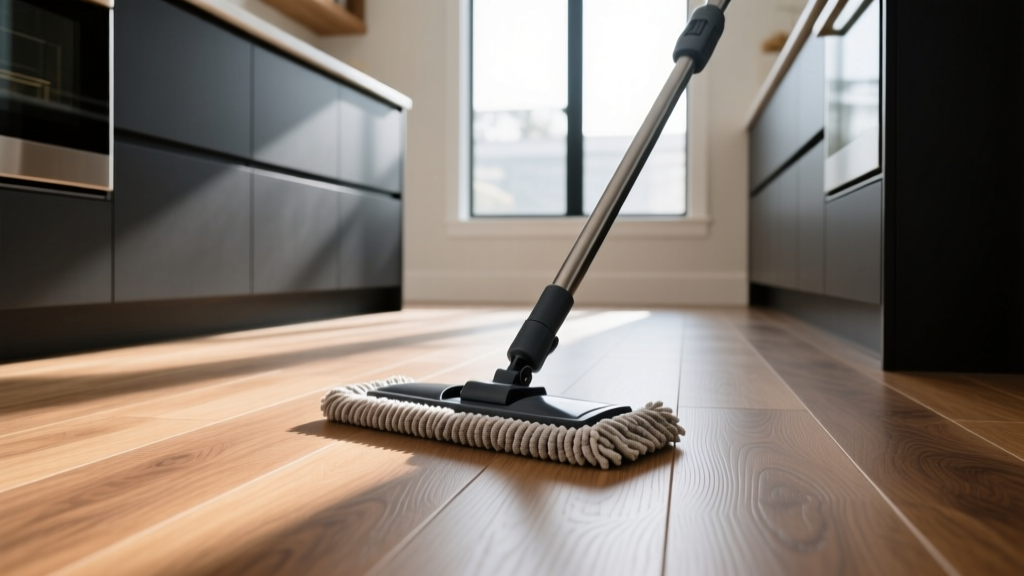
The most critical maintenance tool for durable flooring options is not a mop or a chemical; it is a high-quality digital hygrometer. Dimensional stability in floating floors (LVP, laminate, engineered wood) is entirely dependent on ambient environmental conditions.
"Wood is hygroscopic. It will absorb or release moisture until it reaches equilibrium with the surrounding air. Failure to control the indoor climate is the leading cause of structural failure in wood and wood-composite flooring systems."
— National Wood Flooring Association (NWFA) Installation Guidelines
For homes with radiant floor heating, the surface temperature of the floor must never exceed 85°F (29°C). Exceeding this threshold will rapidly bake the moisture out of engineered hardwood, causing irreversible face-checking, and will soften the PVC wear layers on lower-grade LVP, leading to permanent indentation under heavy furniture. Always use a floor thermostat with an integrated floor sensor to cap the maximum heat output.
Ultimately, treating durable flooring options with material-specific precision transforms them from a mere surface covering into a lifelong structural asset. By abandoning generic cleaning habits and adopting targeted chemical and environmental protocols, you ensure the floor performs exactly as engineered for decades to come.
Written by
Marcus ChenMarcus Chen is a licensed structural engineer (PE) and building materials analyst with over 12 years of experience across residential, commercial, and industrial construction. He holds a Master of Science in Civil Engineering from UC Berkeley and spent six years at Thornton Tomasetti before transitioning to independent consulting and technical writing. Marcus specializes in material selection for seismic-prone regions, concrete reinforcement strategies, and lifecycle cost analysis. His work has been cited by the American Concrete Institute (ACI) and the Structural Engineers Association of California (SEAOC). When he is not on a job site or at his desk, you will find him hiking the Sierra Nevada or restoring a 1920s craftsman bungalow in Oakland, CA.
More from Marcus Chen
View all
Construction Cost
How Much Did the Eiffel Tower Cost to Build?
How much did the Eiffel Tower cost to build in 1889? We adjust for inflation and compare its budget to modern skyscraper construction.
Aug 4, 2026
Fire Resistance
What Is a Fire Resistant Material? Testing & Certification Guide
Discover what is a fire resistant material through ASTM and UL testing. Learn how fire ratings, certifications, and assemblies work in construction.
Aug 4, 2026
Construction Cost
How Much Did the Burj Khalifa Cost to Build?
How much did the Burj Khalifa cost to build? We break down the $1.5B project and extract 5 money-saving strategies for your next build.
Jul 30, 2026