Acid vs Water Based Concrete Stain: 2026 Cost Breakdown
Compare the true 2026 costs of acid vs water based concrete stain. Get per-square-foot pricing, labor rates, and long-term ROI analysis.
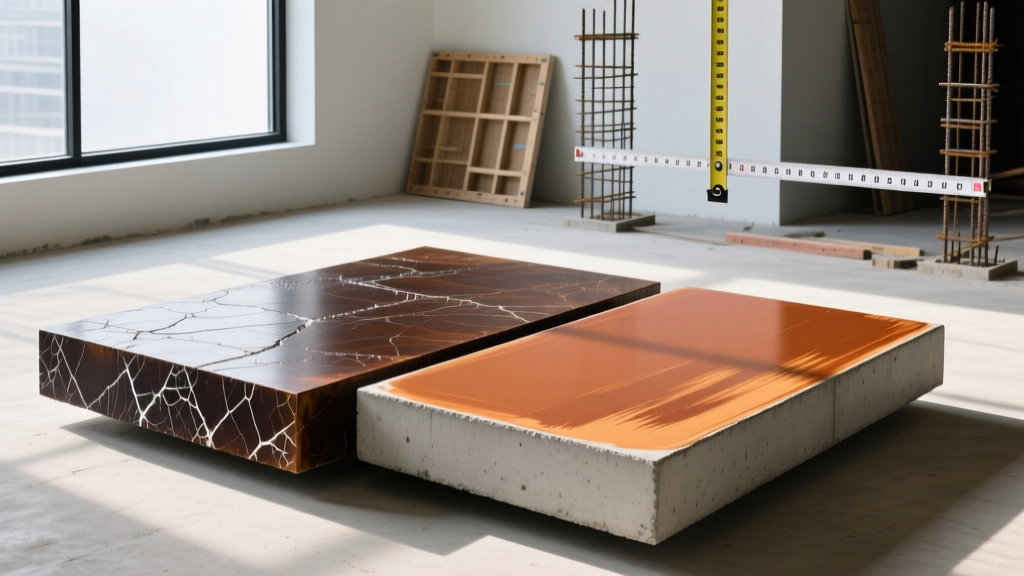
The True Cost of Concrete Staining: Beyond the Gallon Price
When evaluating acid vs water based concrete stain for residential or commercial flooring, contractors and homeowners often make the mistake of comparing only the retail price per gallon. This superficial metric ignores the drastically different substrate preparation, neutralization requirements, and long-term maintenance profiles inherent to each chemistry. In 2026, with material supply chains stabilized and labor rates adjusting to post-inflation baselines, the financial gap between these two systems is defined by the hidden costs of surface manipulation and lifecycle durability.
Acid stains rely on a chemical reaction between metallic salts, mild hydrochloric acid, and the calcium hydroxide (free lime) present in cured concrete. Water-based stains, conversely, utilize microscopic pigment particles or penetrating dyes that physically lodge into the concrete's pores without altering its chemical structure. This fundamental divergence dictates everything from the diamond grits required for prep to the VOC-compliant sealers needed for topcoating.
Material Cost Matrix: Acid vs Water Based Concrete Stain
The raw material cost per square foot is surprisingly competitive, though water-based options carry a slight premium due to advanced UV-stable pigment suspensions. Below is a breakdown of leading professional-grade products available in 2026.
| Product / Brand | Stain Type | Coverage (per Gallon) | Cost per Gallon | Material Cost / Sq. Ft. |
|---|---|---|---|---|
| Kemiko Stone Tone | Acid (Reactive) | 300 - 400 sq. ft. | $48.00 - $55.00 | $0.12 - $0.18 |
| Scofield Formula One | Acid (Reactive) | 250 - 350 sq. ft. | $52.00 - $60.00 | $0.15 - $0.24 |
| Direct Colors Vibrance | Water-Based (Pigment) | 250 - 400 sq. ft. | $55.00 - $65.00 | $0.14 - $0.26 |
| Brickform Pro-Grade | Water-Based (Dye/Pigment) | 300 - 450 sq. ft. | $60.00 - $72.00 | $0.13 - $0.24 |
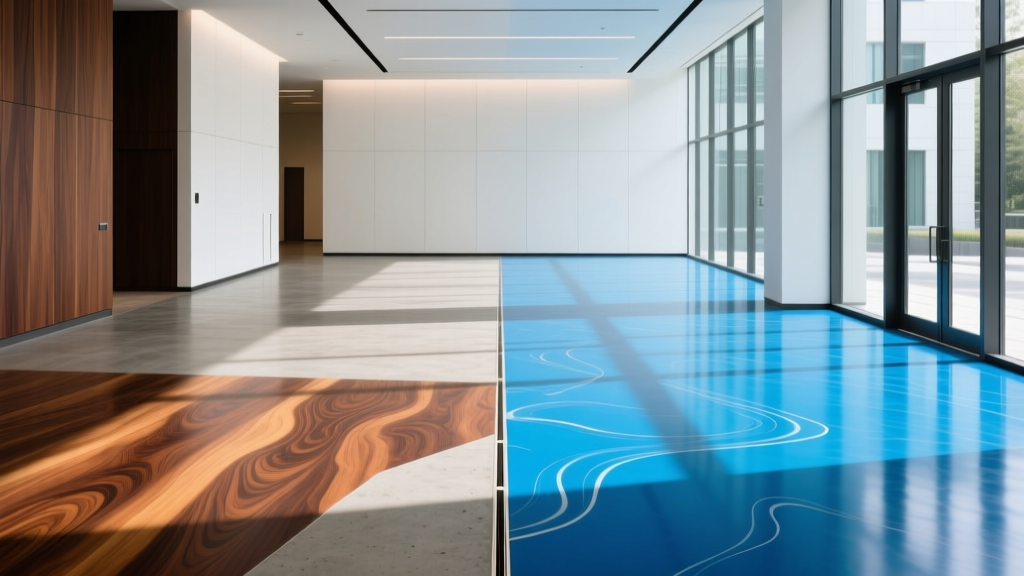
Surface Preparation: The Hidden Budget Killer
Preparation accounts for 40% to 60% of the total project cost. The substrate requirements for acid and water-based stains are mutually exclusive in several key areas, heavily influencing your final budget.
Acid Stain Preparation Constraints
Because acid stain requires free lime to react, you cannot use muriatic acid to etch the slab prior to staining. Acid etching depletes the surface lime, rendering the stain useless. Therefore, preparation must be entirely mechanical or alkaline-based.
- Mechanical Grinding: Renting a planetary floor grinder with 40-grit to 80-grit diamond pads costs approximately $65 to $95 per day, plus $40 per pad. Professional grinding averages $0.50 to $1.25 per square foot.
- Alkaline Cleaning: Using a high-pH degreaser (like trisodium phosphate or specialized concrete cleaners) to remove oils without neutralizing the lime. Cost: ~$0.05 per square foot.
- The Neutralization Step: After the acid stain reacts (usually 2 to 8 hours), the floor must be neutralized with a baking soda and water solution (1 lb per 5 gallons) to halt the chemical reaction and balance the pH before sealing. This adds 1.5 hours of labor per 1,000 square feet and requires a wet vacuum for extraction.
Water-Based Stain Preparation Advantages
Water-based stains do not rely on lime, meaning the slab can be lightly acid-etched or cleaned with standard neutral-pH concrete cleaners. This eliminates the mandatory neutralization and washing phase required by reactive stains, saving approximately $0.15 to $0.25 per square foot in labor and disposal costs.
Sealer Selection and Application Expenses
Neither stain type provides a protective wear layer; both require a high-quality sealer. According to technical guidelines from the Concrete Network, the sealer you choose must be compatible with the stain's residual chemistry.
| Sealer Type | Best Used With | Cost per Gallon | Coverage | Installed Cost / Sq. Ft. |
|---|---|---|---|---|
| Solvent-Based Acrylic | Acid Stain (Enhances color depth) | $45.00 - $60.00 | 300 sq. ft. | $0.15 - $0.25 |
| Water-Based Polyurethane | Water-Based Stain (Low odor, UV stable) | $70.00 - $95.00 | 350 sq. ft. | $0.20 - $0.35 |
| Aliphatic Epoxy/Polyaspartic | Both (High traffic commercial) | $120.00 - $180.00 (Kit) | 250 sq. ft. | $0.50 - $0.85 |
Note: Solvent-based sealers applied over acid stains often require proper ventilation and respirators due to high VOCs, which may increase labor costs in occupied commercial spaces due to after-hours application requirements.
Professional Labor Rates vs. DIY Time Investment
If you are hiring a decorative concrete contractor in 2026, expect labor rates to reflect the complexity of the chemistry. Data aggregated by home improvement platforms like Bob Vila and regional contractor indexes show distinct pricing tiers.
Professional Installation Costs (Turnkey)
- Acid Stain (Basic 1-Color): $3.50 to $5.50 per square foot.
- Acid Stain (Custom Multi-Color/Scored): $6.00 to $9.00+ per square foot.
- Water-Based Stain (Basic 1-Color): $3.00 to $5.00 per square foot.
- Water-Based Stain (Faux Finishes/Stencils): $5.50 to $8.50 per square foot.
DIY Cost Reality Check
For a standard 500-square-foot basement or garage, a DIY water-based stain project will cost roughly $450 to $600 in materials, prep solutions, and sealer. An equivalent acid stain DIY project will cost $350 to $500 in materials, but requires renting a floor scrubber, wet vacuum, and potentially a grinder, pushing the actual out-of-pocket DIY cost to $550 to $750. The primary DIY advantage of water-based stain is the forgiveness of application; acid stain can easily result in harsh demarcation lines if the applicator overlaps incorrectly during the chemical reaction window.
10-Year Lifecycle and Maintenance Cost Analysis
The initial installation cost is only half the financial equation. Decorative concrete requires maintenance, and the UV-stability of the pigments plays a massive role in long-term ROI.
| Maintenance Factor | Acid Stained Concrete | Water-Based Stained Concrete |
|---|---|---|
| Resealing Interval (Interior) | Every 3 - 5 years | Every 2 - 4 years |
| Resealing Interval (Exterior) | Every 1 - 2 years | Every 1 - 2 years |
| Color Fading (UV Exposure) | None (Inorganic salts) | Low to Moderate (Depends on pigment grade) |
| Touch-Up Blending | Difficult (Chemical reaction varies) | Easy (Pigment can be layered seamlessly) |
| Estimated 10-Year Maintenance Cost | $0.80 - $1.20 / sq. ft. | $1.00 - $1.50 / sq. ft. |
Decision Framework: Substrate Condition vs. Budget
Choosing between acid and water-based systems should not be based solely on the upfront quote. Use this diagnostic framework to determine which system aligns with your specific concrete slab and financial parameters.
Choose Acid Stain If:
- The slab is new or highly alkaline: Fresh concrete (less than 5 years old) is rich in calcium hydroxide, guaranteeing a deep, vibrant chemical reaction.
- You desire natural, mottled variances: Acid stain creates organic, marble-like patinas that cannot be perfectly replicated by synthetic pigments.
- The area is exposed to intense, direct sunlight: The inorganic metallic salts guarantee zero UV fading over decades.
- Budget allows for mechanical prep: You have the budget to hire a crew for diamond grinding, as acid etching is off the table.
Choose Water-Based Stain If:
- The slab is old, weathered, or leached: Exterior concrete older than 10 years has often lost its surface lime due to rain and carbonation. Acid stain will fail to react here; water-based pigment will still penetrate and color the pores.
- You need specific, non-earth-tone colors: Acid stains are limited to earth tones (browns, tans, terracottas, soft blues/greens). Water-based stains offer the full spectrum, including vibrant reds, deep blacks, and bright whites.
- Time is a critical constraint: Water-based stains dry in 1 to 2 hours and require no neutralization wash, allowing you to seal the floor the same day. Acid stains require an overnight reaction and a lengthy wash/dry cycle.
- You are working in a poorly ventilated interior: Avoiding the harsh fumes of acid and the subsequent solvent-based sealers makes water-based systems the only viable choice for occupied homes or basements without egress windows.
Ultimately, the acid vs water based concrete stain debate is resolved by looking at the slab's chemistry first and your wallet second. Test a small, inconspicuous 2x2 foot area with an acid stain sample before committing to a full 2,000-square-foot order. If the slab fails to react, the decision is made for you, and water-based pigments will save you from a catastrophic material failure.
Written by
David NakamuraDavid Nakamura is a licensed architect (AIA) and construction technology writer focused on sustainable building methods, mass timber engineering, and high-performance building envelopes. He holds a Master of Architecture from the University of Washington and is a certified Passive House Consultant (CPHC). David spent eight years at the Seattle firm Mithun, where he led the design of three LEED Platinum projects, before founding his own practice specializing in net-zero residential design. He serves on the editorial advisory board of GreenBuilder Magazine and has authored peer-reviewed papers on cross-laminated timber (CLT) connections for the Journal of Structural Engineering. In his spare time, David teaches woodworking at Pratt Fine Arts Center and kayaks the Puget Sound.
More from David Nakamura
View all
Construction Cost
Labor Cost to Build a Deck Per Sq Ft: 2026 Installation Guide
Discover the exact labor cost to build a deck per sq ft in 2026. This installation guide breaks down contractor rates, complexity factors, and hidden fees.
Aug 4, 2026

Construction Cost
How Much Does It Cost to Build a 3 Bedroom House? Financing Guide
Learn exactly how much it costs to build a 3 bedroom house and explore 2026 financing options, construction loan types, and budget frameworks for your build.
Aug 4, 2026

Construction Cost
Cost to Build a Tennis Court: 2026 Guide
How much does it cost to build a tennis court in 2026? Breakdowns for asphalt, concrete, and synthetic surfaces plus fencing and lighting.
Jul 30, 2026