Evaluate CertainTeed Fiber Cement Siding: 2026 Cost Breakdown Analysis
Evaluate CertainTeed fiber cement siding with our 2026 cost breakdown. Discover legacy WeatherBoards repair costs, market exit realities, and top alternatives.

The 2026 Market Reality: CertainTeed’s Fiber Cement Exit
When you set out to evaluate the building materials company CertainTeed on fiber cement siding for a 2026 exterior project, the most critical piece of data isn't a price per square foot—it's a market reality check. CertainTeed officially exited the North American fiber cement siding market several years ago, discontinuing their WeatherBoards fiber cement line to consolidate manufacturing around their highly profitable vinyl and polymer siding divisions.
For general contractors, architects, and homeowners planning a 2026 exterior renovation, this corporate pivot fundamentally changes the cost breakdown analysis. You cannot purchase new CertainTeed fiber cement siding from authorized distributors today. Therefore, a true cost evaluation must address two distinct scenarios: the hidden costs of maintaining legacy CertainTeed WeatherBoards installations, and the comparative cost of pivoting to active market leaders like James Hardie or CertainTeed’s own premium polymer alternatives.
Cost Breakdown: Maintaining Legacy CertainTeed WeatherBoards
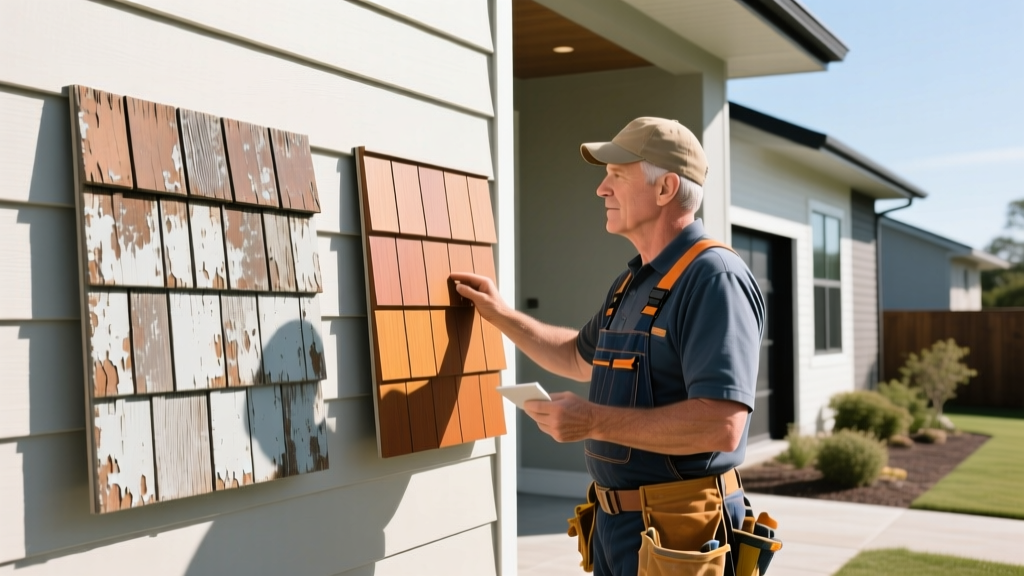
If you are evaluating costs for a repair or partial replacement on a home built between 2005 and 2018 featuring CertainTeed WeatherBoards, the financial dynamics are heavily skewed by scarcity. Because the product is no longer in production, material acquisition shifts from standard distribution channels to specialized salvage and custom fabrication.
Legacy Repair & Partial Replacement Matrix
| Cost Category | Standard Fiber Cement (Active Brands) | Legacy CertainTeed WeatherBoards (2026) |
|---|---|---|
| Material Sourcing (per sq. ft.) | $1.75 - $2.50 | $4.50 - $8.00 (Salvage/Reclaimed market) |
| Color Matching (Factory Pre-finish) | $0.80 - $1.20 / sq. ft. | N/A (Requires custom on-site CV painting) |
| Custom Paint Formulation | $0.00 | $350 - $500 (Spectrophotometer matching) |
| Labor (Tear-out & Install) | $3.50 - $5.00 / sq. ft. | $6.00 - $8.50 / sq. ft. (Careful salvage work) |
| Total Estimated Cost (per sq. ft.) | $6.05 - $8.70 | $12.50 - $18.00+ |
As the data illustrates, attempting to patch or repair legacy CertainTeed fiber cement is financially unviable for large sections. If more than 15% of a wall plane requires replacement, the industry standard in 2026 is to strip the entire elevation and transition to a modern, warrantied product.
Evaluating the Pivot: 2026 Full Replacement Alternatives
Since new CertainTeed fiber cement is unavailable, evaluating the company's current offerings requires looking at their direct competitor in the premium siding space: Cedar Impressions Polymer Shingles. To provide a complete cost breakdown, we must compare CertainTeed’s current premium polymer offering against the undisputed fiber cement market leader, James Hardie ColorPlus.
Material & Installation Cost Comparison (Per Square Foot)
| Component | James Hardie ColorPlus (Fiber Cement) | CertainTeed Cedar Impressions (Polymer) |
|---|---|---|
| Base Material Cost | $3.25 - $4.50 | $5.50 - $7.80 |
| Trim & Soffit Accessories | $1.50 - $2.20 | $2.00 - $3.10 |
| Specialized Fasteners & Flashing | $0.45 (Stainless steel ring-shank) | $0.25 (Standard aluminum/corrosion-resistant) |
| Labor (Union/Prevailing Wage) | $5.50 - $7.50 | $4.00 - $5.50 |
| Silica Dust Mitigation (OSHA) | $0.60 - $0.95 | $0.00 |
| Total Installed Cost (2026) | $11.30 - $15.75 / sq. ft. | $11.75 - $16.65 / sq. ft. |
Hidden Cost Variables: Silica, Demolition, and Substrate Prep
Surface-level material pricing rarely tells the full story of a siding budget. When evaluating fiber cement versus polymer or vinyl, contractors must account for regulatory compliance and structural prep costs that drastically alter the final invoice.
1. OSHA Silica Dust Compliance (Fiber Cement Only)
Cutting fiber cement generates respirable crystalline silica. Under OSHA's stringent silica dust regulations, contractors must utilize specialized shear guillotines or diamond-blade saws integrated with HEPA vacuum extraction systems. Failure to comply results in fines exceeding $15,000 per violation. This mandatory equipment rental, PPE, and slowed cutting speed adds an unavoidable $0.60 to $0.95 per square foot to fiber cement labor costs. CertainTeed’s polymer siding cuts cleanly with standard snips or fine-tooth saws, entirely bypassing this regulatory expense.
2. Demolition and Disposal Weights
Fiber cement is exceptionally heavy, weighing approximately 2.5 to 3.0 pounds per square foot. Tearing off an existing fiber cement exterior on a 2,500 sq. ft. home yields roughly 7,500 pounds of waste. In 2026, with municipal landfill tipping fees averaging $75 to $110 per ton, disposal costs for fiber cement demolition are roughly 300% higher than tearing off standard vinyl or wood composites. Always line-item a heavy-material dumpster surcharge when bidding fiber cement removal.
3. Substrate Sheathing Reinforcement
Because fiber cement is rigid and brittle, it cannot bridge undulations in the wall plane. If the existing OSB or plywood sheathing has warped more than 1/8-inch over a 10-foot span, the sheathing must be planed, shimmed, or entirely replaced to prevent the fiber cement from cracking under wind-load deflection. Polymer siding, by contrast, features integrated flexibility and expansion slots that forgive minor substrate imperfections, saving $1.50 to $3.00 per square foot in carpentry prep work.
"The biggest mistake estimators make in 2026 is treating fiber cement like vinyl. You aren't just paying for the board; you are paying for the heavy-duty scaffolding, the silica mitigation, the stainless-steel fasteners, and the perfectly plumb substrate. When you run the true burden rate, premium polymer often beats fiber cement on total project cost." — Director of Preconstruction, National Exterior Envelope Firm
Long-Term ROI and Maintenance Cost Analysis
According to the latest data from Remodeling Magazine's Cost vs. Value Report, fiber cement siding consistently ranks among the top exterior upgrades for return on investment, typically recouping 80% to 88% of its cost at resale. However, the maintenance costs over a 30-year lifecycle differ wildly between pre-finished fiber cement and solid-color polymer.
- James Hardie ColorPlus: The factory-applied acrylic finish carries a 15-year fade resistance warranty. In high-UV environments (Southwest US), homeowners should budget for a professional clear-coat or repaint around year 18-20, costing roughly $3.50 to $5.00 per square foot.
- CertainTeed Cedar Impressions Polymer: Molded from real cedar shakes and infused with solid-through color, polymer siding never requires painting. The 2026 cost of ownership drops to zero for cosmetic maintenance, requiring only occasional low-pressure washing to remove organic algae growth in damp climates.
Decision Framework: What Should You Specify?
Use this actionable framework to finalize your material specification for 2026 exterior projects:
- Specify James Hardie Fiber Cement IF: The project requires a smooth, modern lap siding profile (like HardiePlank), the local HOA mandates masonry/cementitious materials, or the home is located in a severe wildfire zone (WUI) where non-combustible Class A fire ratings are legally required for insurance underwriting.
- Specify CertainTeed Polymer IF: The architectural design calls for authentic-looking cedar shingles or half-round scallops, the project is in a coastal/salt-spray environment where fiber cement fasteners are prone to premature corrosion, or the homeowner demands a zero-maintenance lifecycle without future painting costs.
- Reject Legacy CertainTeed Fiber Cement IF: A client asks you to "match their existing WeatherBoards" for a large addition. Pivot the conversation immediately to a full-elevation tear-off and transition to an active, warrantied product line to protect your firm from moisture and aesthetic mismatch liabilities.
Ultimately, evaluating CertainTeed's footprint in the fiber cement space requires acknowledging their strategic retreat from the category. By understanding the true burden costs of legacy repairs, silica compliance, and substrate prep, contractors can accurately price 2026 exterior envelopes and guide clients toward warrantied, high-ROI alternatives like James Hardie fiber cement or CertainTeed's premium polymer lines. For more technical specifications on modern fiber cement installations, refer to the James Hardie ColorPlus installation guidelines.
Written by
Priya KapoorPriya Kapoor is a real estate market analyst and construction economics researcher with expertise in housing affordability, development feasibility, and infrastructure investment. She holds a Master of Regional Planning from Cornell University and previously worked as a senior analyst at CBRE's Investment Properties group, where she modeled returns for $4B in mixed-use development pipelines. Priya now runs an independent research practice advising developers, municipalities, and REITs on construction cost forecasting and market timing. She publishes the quarterly "BuildMat Market Pulse" report tracking material price indices across 12 commodity categories. Based in Austin, TX, Priya serves on the board of Habitat for Humanity Austin and is a marathon runner.
More from Priya Kapoor
View all
Construction Cost
Cost to Build a 1600 Sq Ft Home in 2026: Full Breakdown
Accurate 2026 cost to build a 1600 sq ft home—material, labor, and regional pricing breakdowns included. Plan your budget with real-time estimates.
Aug 11, 2026

Wood & Lumber
Name the Types of Wood for Pressure Treatment and Preservation
Learn how to name the types of wood best suited for pressure treatment. Compare species treatability, chemical retention levels, and 2026 preservation costs.
Aug 4, 2026

Stone & Masonry
Stone Veneer Suppliers Lindenhurst: 2026 Cost Analysis
Analyze 2026 stone veneer costs in Lindenhurst, NY. Compare local supplier pricing, delivery fees, and Suffolk County installation labor rates.
Aug 4, 2026