Concrete Pools vs Fiberglass: 2026 Cost Breakdown Analysis
Compare the true 2026 costs of concrete pools vs fiberglass. Detailed breakdown of installation, maintenance, resurfacing, and 20-year TCO.

The True Cost of Ownership: Concrete Pools vs Fiberglass
Choosing between a custom gunite shell and a pre-manufactured fiberglass insert is the most consequential financial decision in residential pool construction. While marketing brochures often highlight aesthetic differences, the actual divergence lies in the lifecycle cost structure. A concrete pool operates as a high-maintenance, highly customizable capital asset, whereas a fiberglass pool functions as a lower-maintenance, fixed-dimension utility. This 2026 cost breakdown analysis dissects the upfront capital requirements, long-term operational expenses, and inevitable structural interventions required for both materials.
Executive Cost Summary
- Average Initial Installation (2026): Concrete ($85,000 - $135,000+) vs. Fiberglass ($60,000 - $95,000).
- Annual Chemical & Energy Maintenance: Concrete ($1,100 - $1,400) vs. Fiberglass ($500 - $750).
- 20-Year Major Intervention: Concrete requires $12,000+ interior resurfacing; Fiberglass requires gelcoat touch-ups ($2,500).
Phase 1: Upfront Installation & Construction Costs
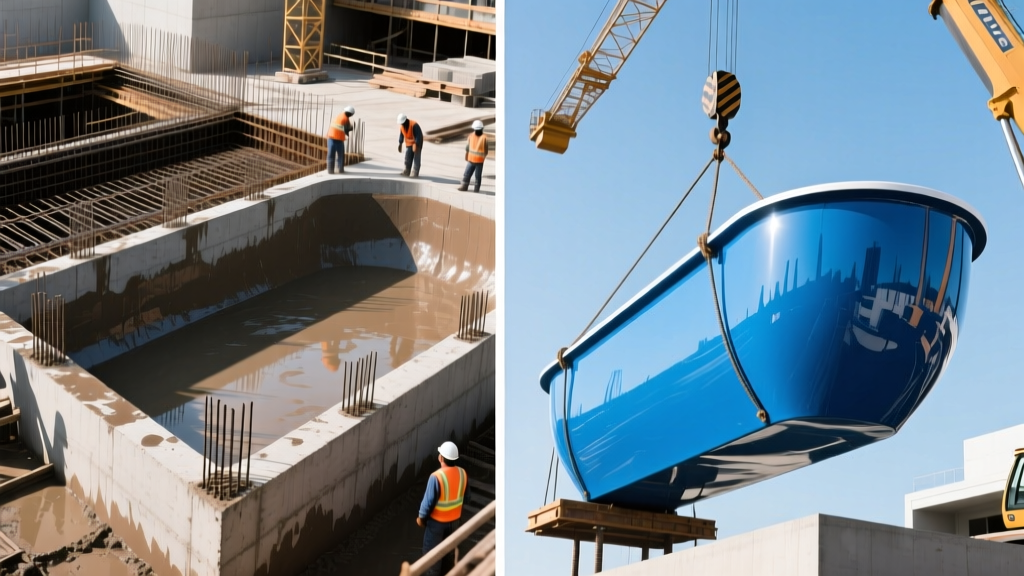
The initial price gap between concrete pools vs fiberglass stems primarily from labor intensity, material logistics, and site preparation. Concrete pools are built entirely on-site, while fiberglass pools are manufactured in a controlled factory environment and shipped as a single unit.
Concrete (Gunite/Shotcrete) Installation Breakdown
A standard 14' x 28' gunite pool requires a structural cage of #3 or #4 steel rebar tied at 12-inch centers, followed by a 3,000 to 4,000 PSI concrete mix applied pneumatically to a thickness of 8 to 12 inches. The labor timeline spans 8 to 12 weeks.
- Excavation & Haul-off: $6,500 - $9,000 (Concrete pools require wider excavation for forming and plumbing trenches).
- Steel & Plumbing: $12,000 - $16,000 (Schedule 40 PVC plumbing, dual main drains, and extensive rebar tying).
- Gunite Application: $18,000 - $24,000 (Material and specialized nozzleman labor).
- Interior Finish (Pebble Tec/Quartz): $9,000 - $15,000 (Standard white marcite is cheaper but degrades faster; aggregate finishes are the 2026 standard).
- Coping & Decking: $12,000 - $20,000 (Cantilever concrete coping or natural stone).
Fiberglass Shell Installation Breakdown
Fiberglass installation is heavily dependent on crane access and logistics. A 14' x 28' fiberglass shell weighs between 3,500 and 5,000 pounds. The timeline is drastically shorter, often taking 3 to 5 weeks from excavation to fill.
- Excavation & Crane Logistics: $8,000 - $12,000 (Includes $1,500+ daily crane rental and potential road closure permits).
- Shell Purchase & Freight: $22,000 - $35,000 (Freight costs fluctuate heavily based on distance from the manufacturer).
- Backfill & Plumbing: $14,000 - $18,000 (Requires clean, crushed gravel or flowable fill to prevent shell deformation, unlike the sand/dirt mix sometimes used in concrete).
- Coping & Decking: $10,000 - $16,000 (Often limited to precast concrete or specific cantilever forms designed for the fiberglass lip).
| Cost Category | Concrete (Gunite) | Fiberglass | Cost Variance |
|---|---|---|---|
| Site Prep & Excavation | $7,500 | $10,000 | Fiberglass +$2,500 (Crane) |
| Structural Shell | $32,000 | $28,000 | Concrete +$4,000 |
| Interior Finish | $12,000 | $0 (Included) | Concrete +$12,000 |
| Plumbing & Equipment | $14,000 | $14,000 | Neutral |
| Backfill & Cleanup | $4,000 | $8,500 | Fiberglass +$4,500 (Gravel) |
| Total Base Cost | $69,500 | $60,500 | Concrete +$9,000 |
Note: Base costs exclude premium water features, infinity edges, and extensive hardscaping, which skew heavily toward concrete due to its structural versatility.
Phase 2: Long-Term Maintenance & Operational Expenses
The divergence in material porosity dictates the ongoing chemical and energy budgets. According to the Pool & Hot Tub Alliance (PHTA), the interior surface of the pool accounts for the majority of routine chemical consumption and water balance challenges.
Surface Porosity & Chemical Demand
Concrete: Even high-end aggregate finishes possess microscopic porosity. Algae spores embed in the surface, requiring higher chlorine residuals (2.0 - 4.0 ppm) and frequent brushing. Expect to spend $800 - $1,100 annually on chlorine, muriatic acid (to combat high pH from cement leaching), and algaecides.
Fiberglass: The non-porous gelcoat surface inhibits algae adhesion. Chlorine residuals can be maintained at 1.0 - 2.0 ppm. Annual chemical costs typically range from $350 - $550. Furthermore, fiberglass does not leach alkaline materials, drastically reducing the need for pH-lowering acids.
Energy and Pump Efficiency
Because concrete surfaces are rougher than fiberglass, they create higher hydraulic friction loss in the plumbing circuit. To maintain proper turnover rates, concrete pools often require variable-speed pumps to run at slightly higher RPMs. The U.S. Department of Energy notes that optimizing pump speed and reducing hydraulic friction can lower pool energy consumption by up to 30%. Over a 10-year period, the smoother interior of a fiberglass shell can yield $400 to $600 in energy savings compared to a rougher concrete aggregate finish.
Phase 3: Hidden Costs, Site Constraints, and Failure Modes
Standard cost calculators rarely account for material-specific failure modes and site limitations. Understanding these edge cases is critical for accurate budget forecasting.
Concrete Pool Failure Modes
- Structural Cracking: Expansive clay soils or improper hydrostatic relief valve installation can lead to structural shell cracking. Repairing a structural leak requires partial drainage, epoxy injection, and structural stapling, costing $2,500 - $5,000.
- Delamination & Spalling: If the gunite mix was applied with too much water or rebound (bounced-back material) was not properly cleared during shooting, the interior plaster can delaminate from the shell within 5 to 7 years, requiring premature replastering.
Fiberglass Pool Failure Modes
- Osmotic Blistering: If the manufacturer used inferior resins or the gelcoat was applied too thinly, water vapor can penetrate the fiberglass matrix, causing cobalt or osmotic blisters. As noted in InterNACHI's pool inspection guidelines, these blisters require draining, grinding, and specialized resin patching, which is highly visible and costly ($3,000+).
- Shell Bulging (The 'Bathtub' Effect): If the pool is drained without installing wellpoints to relieve groundwater pressure, or if improper sand backfill was used instead of clean gravel, the walls can bulge inward or the floor can float upward, totaling the shell.
- Size and Access Limits: Fiberglass shells are limited to roughly 16 feet in width due to highway shipping restrictions. If your property lacks the 30-foot clearance required for a crane boom and flatbed truck, fiberglass is physically impossible to install.
10-Year and 20-Year Total Cost of Ownership (TCO)
To evaluate the true financial impact, we must project costs over the lifespan of the materials, factoring in the inevitable need for concrete resurfacing.
| Expense Category | Concrete (10-Year) | Fiberglass (10-Year) | Concrete (20-Year) | Fiberglass (20-Year) |
|---|---|---|---|---|
| Initial Installation | $85,000 | $68,000 | $85,000 | $68,000 |
| Annual Chemicals (x10/x20) | $11,000 | $5,000 | $22,000 | $10,000 |
| Annual Energy Premium | $1,500 | $0 | $3,000 | $0 |
| Acid Washing / Buffing | $1,200 | $0 | $2,400 | $0 |
| Interior Resurfacing | $0 | $0 | $14,000 | $0 |
| Gelcoat Restoration | $0 | $0 | $0 | $3,500 |
| Total TCO | $98,700 | $73,000 | $126,400 | $81,500 |
Decision Framework: Which Material Fits Your Budget?
"The choice between concrete and fiberglass is rarely just about the initial invoice. It is a choice between paying for custom architectural flexibility upfront (concrete) versus paying for long-term chemical and operational stability (fiberglass)."
Choose Concrete (Gunite) If:
- You require custom dimensions or architectural features: Infinity edges, vanishing edges, integrated tanning ledges, and non-geometric freeform shapes demand the structural versatility of steel and gunite.
- Site access is restricted: If a crane cannot reach your backyard, or if the pool must be built on a steep hillside requiring complex retaining wall integration, concrete is the only viable option.
- You plan to stay in the home for 15+ years: You can amortize the cost of the first resurfacing cycle and capitalize on the higher resale value premium that custom hardscaping provides in luxury real estate markets.
Choose Fiberglass If:
- You prioritize low weekly maintenance: The non-porous gelcoat drastically reduces brushing time and chemical balancing, making it ideal for vacation homes or busy professionals.
- You have a strict 10-year financial horizon: If you plan to sell the home within a decade, fiberglass allows you to avoid the massive $12,000+ resurfacing expense that often triggers buyer concessions during real estate inspections.
- Your site permits crane access: You have the requisite overhead clearance and street access for heavy logistics, and your desired pool size fits within the manufacturer's standard molds (typically maxing out at 16' x 40').
Written by
James ThorntonJames Thornton is a construction industry veteran with 25 years of hands-on experience in wood framing, lumber grading, and residential building codes. He started as a framing carpenter in rural Oregon, earned his ICC Residential Building Inspector certification, and eventually became a senior plan reviewer for the City of Portland Bureau of Development Services. James holds a B.S. in Wood Science & Technology from Oregon State University and is a certified lumber grader through the West Coast Lumber Inspection Bureau (WCLIB). He has inspected over 3,000 residential construction sites and authored the city's internal guide on advanced framing techniques (2x6 at 24" O.C.). James lives in Bend, OR, where he builds custom timber-frame cabins and competes in lumberjack sports.
More from James Thornton
View all
Insulation
Best Home Insulation Materials: Complete 2026 Guide
Compare top home insulation materials for 2026. Find R-values, installed costs per square foot, and best uses for fiberglass, spray foam, and mineral wool.
Aug 4, 2026

Sustainable Building
Certify Your Green Building Material for LEED and WELL
Step-by-step guide to certifying a green building material for LEED v5 and WELL v2. Master EPDs, HPDs, and VOC limits for 2026 project specifications.
Aug 4, 2026

Stone & Masonry
Veneer Stacked Stone Panels: Interior Design & Style Showcase
Discover how veneer stacked stone panels transform interiors. Explore modern design profiles, material pairings, and technical installation specs.
Aug 4, 2026