Concrete vs Portland Cement: Full Cost Breakdown Guide
Discover the true cost differences in the concrete vs portland cement debate. Analyze raw material pricing, ready-mix costs, and DIY project budgets.

The 'Concrete vs Portland Cement' Misconception
When evaluating building materials, the search for 'concrete vs portland cement' almost always stems from a fundamental misunderstanding of material science. Homeowners and novice builders frequently use the terms interchangeably, leading to severe miscalculations in project budgeting and material procurement. To accurately break down costs, we must first establish the physical relationship between the two materials.
According to the Portland Cement Association (PCA), cement typically makes up only 10% to 15% of a standard concrete mix by volume. The remaining 85% to 90% consists of aggregates and water. Therefore, a true cost breakdown analysis requires evaluating the cost of purchasing raw Portland cement (and the necessary aggregates) against the cost of purchasing finished, ready-mix concrete.
Raw Material Cost: Portland Cement Pricing
Portland cement is sold either in bulk (by the ton) for commercial operations or in standardized 94-pound bags for retail and small-scale commercial use. Pricing fluctuates based on regional manufacturing capacity, energy costs, and the specific chemical formulation of the cement.
| Cement Type | Primary Use | Retail Bag (94 lb) | Bulk Pricing (Per Ton) |
|---|---|---|---|
| Type I/II (General Purpose) | Standard slabs, footings, driveways | $14.50 - $18.00 | $135 - $165 |
| Type III (High Early Strength) | Cold weather pours, rapid form removal | $18.50 - $22.00 | $170 - $210 |
| Type V (Sulfate Resistant) | Marine environments, high-sulfate soils | $20.00 - $25.00 | $190 - $240 |
Note: Bulk pricing requires minimum delivery tonnages (typically 20+ tons) and specialized pneumatic transport, making it inaccessible for residential projects.
Finished Product Cost: Concrete Pricing
Finished concrete is procured in two primary ways: delivered wet via a ready-mix truck, or purchased dry in pre-proportioned bags. The National Ready Mixed Concrete Association (NRMCA) notes that ready-mix concrete remains the most cost-effective and structurally reliable method for pours exceeding one cubic yard.
Ready-Mix Concrete (Delivered Wet)
Ready-mix pricing is calculated by the cubic yard (CY). As of current market rates, a standard 3,000 to 4,000 PSI mix costs between $140 and $175 per cubic yard delivered. However, the critical hidden cost in ready-mix procurement is the short-load fee. Most batch plants charge a penalty of $50 to $100 for any order under 3 to 4 cubic yards, as it takes the truck out of rotation for a high-margin commercial route.
Pre-Bagged Concrete Mix (Dry)
For micro-projects (setting fence posts, small patching), 80-pound bags of pre-mixed concrete (containing the exact ratio of cement, sand, and gravel) cost between $6.50 and $8.00 per bag. While the per-pound material cost is higher than raw ingredients, it eliminates the labor and error margin of measuring raw aggregates.
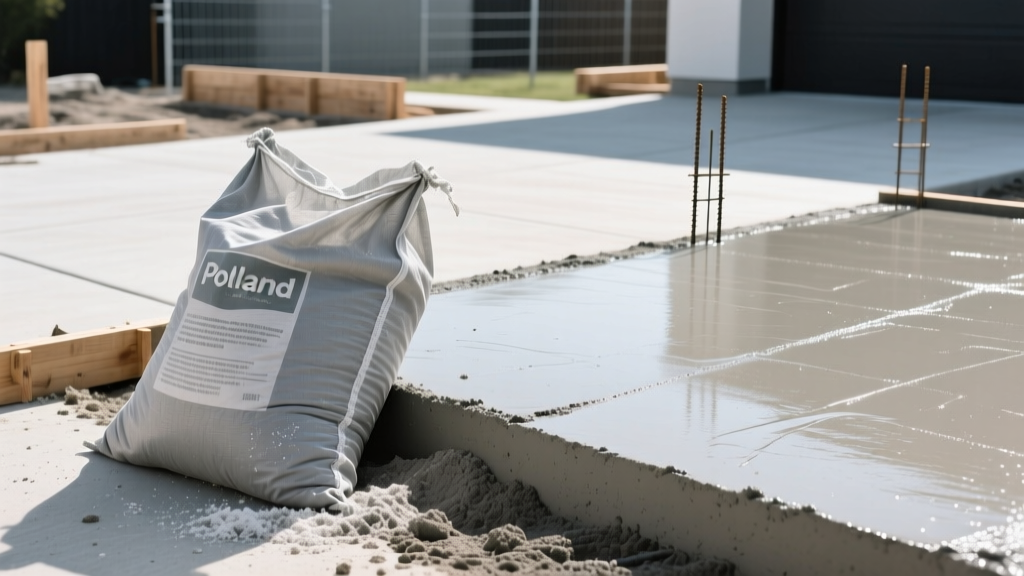
Project Cost Matrix: 10x10 Patio Breakdown
To provide actionable data, let us analyze a standard 10x10 foot patio slab poured at a 4-inch thickness. This requires approximately 1.25 cubic yards of concrete. We will compare three procurement strategies: ordering ready-mix, buying pre-bagged concrete, and mixing raw Portland cement with purchased aggregates.
| Cost Category | Ready-Mix Truck (1.25 CY) | Pre-Bagged (80 lb Bags) | Raw Mix (Cement + Aggregates) |
|---|---|---|---|
| Base Material Cost | $187.50 | $392.00 (56 bags) | $265.00 |
| Short-Load / Delivery Fees | $75.00 | $0.00 | $85.00 (Sand/Gravel delivery) |
| Equipment Rental (Mixer) | $0.00 | $75.00 | $75.00 |
| Estimated Labor (Time) | 2 Hours (Placement only) | 8-10 Hours | 10-12 Hours |
| Total Hard Cost | $262.50 | $467.00 | $425.00 |
The Hidden Costs of Mixing Concrete from Raw Cement
Many DIYers attempt to save money by purchasing raw Portland cement and mixing it with sand and gravel using the standard 1:2:3 volumetric ratio (1 part cement, 2 parts sand, 3 parts gravel). As the matrix above demonstrates, this approach is financially counterproductive for volumes over 0.5 cubic yards. The hidden costs include:
- Aggregate Delivery Minimums: Landscape supply yards often charge flat delivery fees of $75 to $120 for bulk sand and gravel drops, regardless of how small the load is.
- Proportioning Errors: Without a calibrated batching system, manual shovel-measuring leads to inconsistent water-cement ratios. Adding just one extra gallon of water per 94 lb bag of cement can reduce the final compressive strength by up to 10%, leading to premature surface scaling and cracking.
- Cold Joint Formation: Mixing raw materials in a standard 3.5 cubic foot portable mixer yields roughly 2.5 cubic feet per batch. For a 1.25 CY patio, you must mix 14 separate batches. If your finishing pace lags behind your mixing pace, the earlier batches will begin their initial set, creating structural weak points known as cold joints.
Decision Framework: Which Should You Buy?
Use this strict volume-based framework to determine your procurement strategy. Do not deviate from these thresholds unless dealing with extreme site-access limitations.
Under 0.5 Cubic Yards
Buy: Pre-bagged 80 lb concrete mix.
Why: Eliminates the need for aggregate delivery fees and complex ratio calculations. Ideal for setting posts, small footings, or patching.
0.5 to 2.0 Cubic Yards
Buy: Ready-mix truck (expect a short-load fee) OR a towable portable mixer trailer from a rental yard (which includes the pre-mixed materials).
Why: Guarantees consistent PSI and eliminates the physical toll of mixing 40+ bags manually.
Over 2.0 Cubic Yards
Buy: Ready-mix concrete truck.
Why: The per-yard cost drops significantly, short-load fees are waived, and the continuous pour prevents cold joints in large slabs.
Expert Insight: The only scenario where purchasing raw Portland cement to mix your own concrete is financially and logistically justified is if you already possess a stockpile of clean, properly graded aggregates on-site, own a mechanical mixer, and are working in a remote location where ready-mix trucks cannot access or where transit time would cause the truck's load to set before arrival.
Ultimately, the 'concrete vs portland cement' cost debate resolves quickly when you factor in labor, equipment, and aggregate logistics. For 95% of residential and light commercial applications, paying the premium for factory-batched, ready-mix concrete yields a vastly superior structural result at a lower total project cost than attempting to batch raw cement on-site.
Written by
Elena RodriguezElena Rodriguez is a civil engineer and technical writer specializing in concrete technology, masonry systems, and ASTM/ACI compliance. She earned her B.S. in Civil Engineering from Texas A&M University and spent a decade at a materials testing laboratory, performing over 2,000 concrete compressive strength tests and masonry prism evaluations. Elena is an ACI-certified Field Testing Technician (Grade I) and a member of ASTM Committee C12 on Natural Building Stone. She currently consults on forensic engineering cases involving concrete failures and moisture intrusion. Based in San Antonio, TX, Elena is a proud member of the Society of Women Engineers (SWE) and coaches her daughter's FIRST Robotics team.
More from Elena Rodriguez
View all
Walls & Panels
Cost Analysis: Light Gauge Steel Framing Advantages and Disadvantages
Evaluate light gauge steel framing advantages and disadvantages through a strict cost analysis lens, comparing material, labor, and lifecycle expenses.
Aug 4, 2026

Walls & Panels
Gypsum Board Types: Exact Specifications, Thickness & Dimensions
Compare standard, Type X, and moisture-resistant gypsum board types. Get exact specifications, thicknesses, dimensions, and ASTM standards for your project.
Aug 4, 2026

Fire Resistance
Best Fire-Resistant Outdoor Decking Materials: 2026 Buyer Guide
Discover the best fire-resistant outdoor decking materials for 2026. Compare Class A PVC, aluminum, and hardwood options for WUI compliance and safety.
Aug 4, 2026