Epoxy vs Stained Concrete Cost: 2026 Pricing & Material Guide
Compare epoxy vs stained concrete cost for 2026. Explore per-square-foot pricing, material lifespans, prep requirements, and ROI for your floors.

The True Cost Breakdown: Epoxy vs. Stained Concrete
When upgrading a concrete slab, homeowners and commercial builders typically face a critical crossroads: apply a surface coating or chemically alter the concrete itself. The debate over epoxy vs stained concrete cost goes far beyond the initial price per square foot. It encompasses surface preparation, long-term maintenance, environmental exposure, and structural limitations. In 2026, material innovations have shifted the pricing landscape, making high-performance 100% solids epoxies more accessible, while advanced water-based stains have reduced the labor hours required for traditional acid staining.
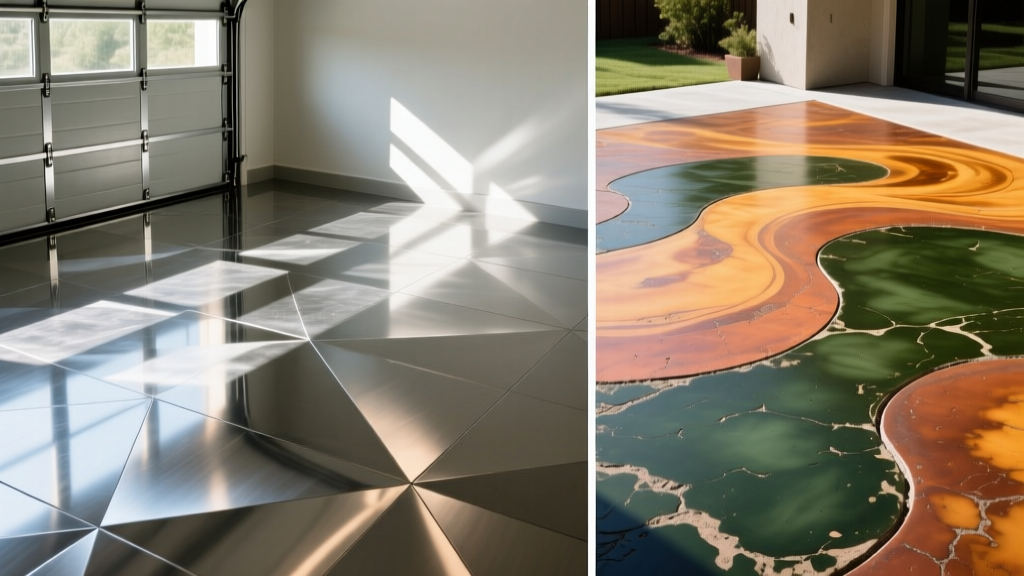
To make an informed decision, you must understand that epoxy is a coating that sits on top of the concrete, while stain is a treatment that penetrates the pores. This fundamental difference dictates the pricing structure, failure modes, and ideal applications for each system.
2026 Material & Labor Cost Matrix
The following matrix reflects current national averages for professional installation, including mandatory surface preparation and topcoats. DIY material-only costs generally range from 30% to 40% of these totals but exclude the specialized equipment required for proper prep.
| Finish System | Material Cost (per sq. ft.) | Labor & Prep (per sq. ft.) | Total Installed Cost | Expected Lifespan |
|---|---|---|---|---|
| Water-Based Epoxy (1-Part) | $1.50 - $2.50 | $2.50 - $4.00 | $4.00 - $6.50 | 2 - 5 Years |
| 100% Solids Epoxy (2-Part) | $3.50 - $6.00 | $4.50 - $7.00 | $8.00 - $13.00 | 10 - 20 Years |
| Metallic Epoxy System | $5.00 - $8.00 | $6.00 - $9.00 | $11.00 - $17.00 | 15 - 25 Years |
| Acid Stain + Acrylic Sealer | $1.00 - $2.50 | $4.00 - $6.50 | $5.00 - $9.00 | 10+ Years (Reseal every 2-3) |
| Water-Based Stain + Polyurethane | $1.50 - $3.00 | $4.50 - $7.00 | $6.00 - $10.00 | 15+ Years (Reseal every 5-7) |
Deep Dive: Epoxy Flooring Costs & Variables
Epoxy pricing is heavily skewed by the chemical composition of the resin and the rigor of the surface preparation. According to industry experts at Bob Vila, the biggest mistake consumers make is comparing a big-box store water-based epoxy kit to a professionally installed 100% solids system.
The Chemistry of Cost
- Water-Based Epoxy: Contains up to 60% water. It applies thin (3-5 mils) and acts more like a paint. While cheap upfront, it lacks abrasion resistance and will peel under heavy vehicular traffic or hot tire pickup.
- Solvent-Based Epoxy: Thicker than water-based and offers better adhesion, but high VOC levels have led to strict regulatory phase-outs in states like California and New York, artificially inflating its cost where still legal.
- 100% Solids Epoxy: Contains zero solvents or water. It builds at 10-16 mils per coat, creating a self-leveling, impact-resistant shell. This is the commercial standard for garages, warehouses, and high-traffic kitchens.
Concrete is porous. If your slab emits moisture vapor, it will create hydrostatic pressure that blisters and delaminates epoxy. Professional installers must perform a Calcium Chloride test (ASTM F1869 standard). If moisture exceeds 3-5 lbs per 1,000 sq. ft. per 24 hours, a specialized moisture-mitigating epoxy primer (adding $2.00 - $3.50 per sq. ft.) is mandatory before the base coat.
Deep Dive: Stained Concrete Costs & Variables
Unlike epoxy, stained concrete does not hide imperfections; it highlights them. The cost of staining is driven by the artistic labor involved and the mandatory sealing process. As detailed by the Concrete Network, the condition of your existing slab will dictate which staining method is viable.
Staining Methods Compared
- Acid Stains (Reactive): These contain mild hydrochloric acid and metallic salts that react with the lime in the concrete. They produce beautiful, mottled, earth-toned variegation. Cost driver: Requires meticulous neutralization and washing after application, increasing labor time.
- Water-Based Stains (Non-Reactive): These rely on pigments and acrylic polymers to penetrate the pores. They offer a vastly broader color palette (including bright blues and reds) and do not require neutralization. Cost driver: Material is slightly more expensive, but labor is significantly reduced.
- Concrete Dyes: Extremely fine colorants suspended in solvents or water. They penetrate deeply and dry in minutes. Cost driver: Often used in conjunction with stains to add depth, requiring a highly skilled applicator to avoid lap marks.
The Sealer Mandate
You cannot leave stained concrete raw. The stain itself offers zero protection against spills, UV rays, or abrasion. The cost of a high-performance sealer (such as an aliphatic polyurethane or polyaspartic topcoat) must be factored into the initial budget. While an acrylic sealer costs around $0.75 per sq. ft., a two-part polyaspartic topcoat can add $3.00+ per sq. ft., though it will triple the lifespan of the finish and eliminate the need for annual waxing.
Long-Term ROI and Maintenance Economics
When evaluating epoxy vs stained concrete cost over a 15-year horizon, the maintenance schedule drastically alters the total cost of ownership.
Epoxy Maintenance Profile
A properly installed 100% solids epoxy floor with a polyaspartic or urethane topcoat is virtually maintenance-free. It requires only routine sweeping and occasional mopping with a pH-neutral cleaner. If the topcoat dulls after 10-15 years, it can be lightly sanded and recoated for roughly 30% of the original installation cost.
Stained Concrete Maintenance Profile
Stained concrete requires a proactive maintenance regimen. Acrylic sealers must be reapplied every 1 to 3 years in high-traffic areas, and the floor must be buffed with commercial wax periodically to maintain its sheen and protect the sealer from micro-scratches. Over 15 years, the cumulative cost of resealing a stained floor can exceed the initial installation price.
If your concrete slab contains embedded radiant heating tubes, choose stained concrete. Epoxy coatings act as thermal insulators, significantly reducing the efficiency of radiant heat transfer and potentially causing the resin to soften or off-gas when subjected to constant high temperatures from below.
Decision Framework: Which Should You Choose?
Use this practical framework to select the right system based on your specific environmental and structural needs.
- Choose 100% Solids Epoxy If: The floor is in a garage, commercial kitchen, or warehouse. You need resistance to chemical spills, oil, hot tire pickup, and heavy impact. You want a seamless, easily sanitized surface that hides minor slab cracking.
- Choose Stained Concrete If: The floor is outdoors (epoxy will yellow and chalk under UV exposure unless heavily modified). The space features radiant floor heating. You desire a natural, variegated aesthetic that integrates with the architecture rather than looking like an applied coating. The slab has a history of minor moisture vapor transmission that would blister an epoxy coating.
Frequently Asked Questions
Can I apply epoxy over stained concrete?
Yes, but it is generally not recommended unless the stain was sealed with a highly specific, epoxy-compatible primer. Most standard acrylic or polyurethane sealers used on stained concrete will prevent the epoxy from achieving a mechanical bond, leading to catastrophic delamination. If you want the look of stain with the durability of epoxy, opt for a metallic epoxy system instead.
Which option is more resistant to dog scratches and pet accidents?
A 100% solids epoxy topped with a polyaspartic clear coat is vastly superior for pet owners. It is completely impervious to urine (which can etch and dull the sealers used on stained concrete) and offers higher scratch resistance against dog claws. Stained concrete sealed with a soft acrylic will show scratch patterns in high-traffic pet areas within months.
Does floor preparation cost the same for both?
No. Epoxy requires aggressive mechanical profiling, usually via shot blasting or heavy diamond grinding, to open the pores and create a CSP (Concrete Surface Profile) of 2 or 3. This is labor-intensive. Stained concrete requires diamond grinding only to remove existing sealers or level the slab; overly aggressive profiling can actually ruin the dense surface layer needed for a smooth acid stain reaction.
Written by
Sarah WhitfieldSarah Whitfield is a chartered quantity surveyor (MRICS) and construction cost analyst with 15 years of experience in material pricing, procurement strategy, and project budgeting. She earned her degree in Construction Management from the University of Reading (UK) and has worked on projects ranging from $2M custom homes to $180M mixed-use developments across North America and Europe. Sarah currently leads cost estimating for BuildMat Insight, maintaining a proprietary database of 4,000+ material price points updated quarterly. She is a frequent contributor to RSMeans cost data panels and has presented at the International Cost Engineering Council (ICEC) congress. Based in Denver, CO, Sarah is an avid trail runner and volunteer mentor for Women in Construction.
More from Sarah Whitfield
View all
Wood & Lumber
What Are the Different Types of Wood? A Builder's Guide
Compare structural softwoods, finish hardwoods, and engineered lumber. Analyze Janka ratings, MOE values, and 2026 pricing for construction.
Aug 4, 2026

Walls & Panels
Steel Framing vs Wood Framing: Corrosion and Moisture Defense
Compare steel framing vs wood framing for moisture resistance. Learn about galvanized coatings, condensation risks, and corrosion protection strategies.
Jul 21, 2026

Stone & Masonry
How to Cut Stone Veneer: Wet Saw vs Grinder Comparison
Compare the best tools for cutting stone veneer. We review wet saws, angle grinders, and chop saws to help you achieve clean, chip-free cuts.
Jul 21, 2026