Fiberglass vs Concrete Pool Cost: 2026 Price Breakdown
Compare the true fiberglass vs concrete pool cost in 2026. We break down installation, long-term maintenance, and hidden expenses to help you decide.
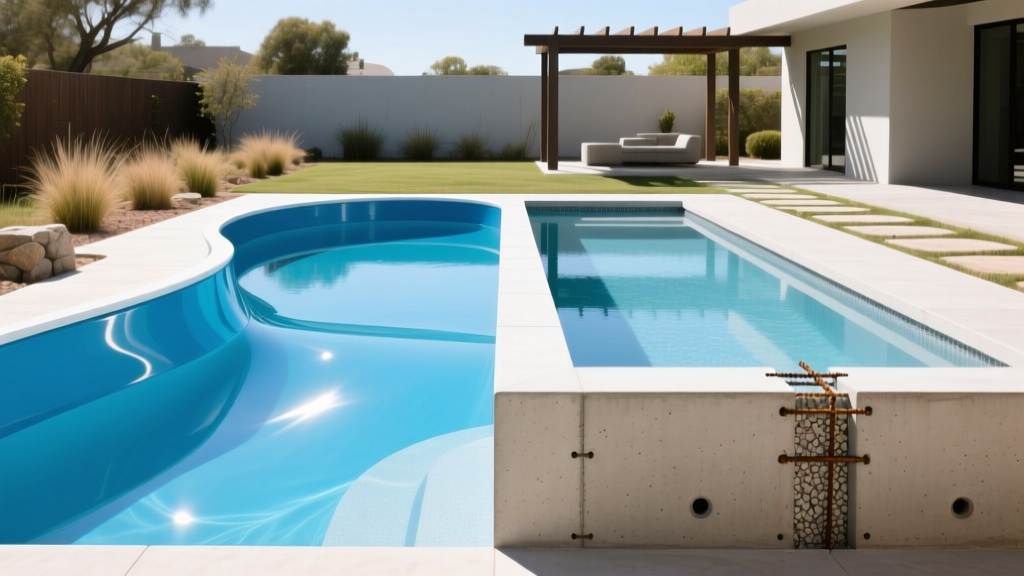
The Upfront Installation Matrix
When evaluating the fiberglass vs concrete pool cost, homeowners frequently fixate on the initial excavation and shell installation. However, a true cost breakdown analysis requires projecting expenses across a 15-year lifecycle, factoring in material science, site-specific variables, and ongoing chemical consumption. In 2026, supply chain stabilization has normalized material costs, but specialized labor rates for shotcrete application and heavy crane operations continue to drive regional price variance.
The following matrix outlines the baseline cost ranges for a standard 14x28 foot pool (approximately 392 square feet of water surface) with basic coping and standard equipment pads. These figures exclude premium hardscaping, water features, and extreme soil remediation.
| Cost Phase | Concrete (Gunite/Shotcrete) | Fiberglass Shell |
|---|---|---|
| Engineering & Permits | $2,500 - $4,000 | $1,500 - $3,000 |
| Excavation & Haul-off | $8,000 - $14,000 | $9,500 - $16,000 |
| Shell Material & Labor | $35,000 - $55,000 | $28,000 - $45,000 |
| Plumbing & Electrical | $12,000 - $18,000 | $10,000 - $15,000 |
| Crane / Pump Equipment | $1,500 - $3,000 (Concrete Pump) | $2,500 - $6,000 (Heavy Crane) |
| Base Installation Total | $95,000 - $145,000+ | $78,000 - $115,000 |
Notice that excavation and haul-off costs are often higher for fiberglass. A fiberglass shell requires a wider, more precisely sloped hole to accommodate the structural bracing and backfill material placed around the exterior walls before the shell is lowered. Conversely, a concrete pool is formed and shotcreted directly inside a tighter excavation footprint.
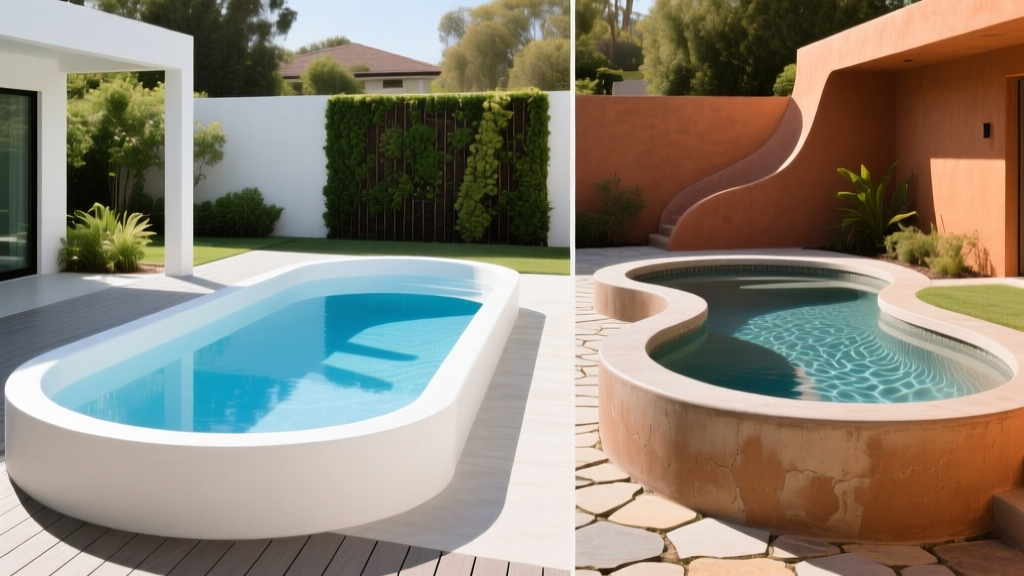
Concrete (Gunite) Shell Economics
Concrete pools are custom-built on-site using pneumatically applied dry-mix shotcrete (commonly referred to as gunite). The structural integrity and ultimate cost depend heavily on the steel reinforcement matrix and the compressive strength of the mix.
Material and Labor Variables
A premium 2026 concrete pool shell utilizes #4 or #5 rebar (1/2-inch to 5/8-inch thickness) tied on 10-inch to 12-inch centers, creating a continuous steel cage. The gunite mix must achieve a minimum compressive strength of 4,000 to 5,000 PSI. According to guidelines maintained by the American Concrete Institute (ACI), proper curing is non-negotiable; the shell must be kept moist for a minimum of 7 to 14 days to prevent plastic shrinkage cracking, which can compromise the waterproofing layer and lead to catastrophic structural leaks down the line.
The interior finish is where concrete costs diverge wildly. Standard white marcite plaster is the cheapest option ($4,000 - $6,000) but degrades rapidly, often showing calcium scaling and algae rooting within 5 years. Upgrading to a quartz aggregate finish adds $2,500 to $4,500 to the upfront cost but extends the interior lifespan to 12-15 years. Premium glass bead or pebble finishes can push the interior cost past $10,000.
Fiberglass Shell Economics
Fiberglass pools are manufactured in a controlled factory environment using a one-piece mold. The structural composition typically features a 10-12 mil isophthalic polyester gel coat over multiple layers of chopped fiberglass mat and woven roving, bonded with vinyl ester resin to prevent water migration and osmotic blistering.
The Backfill Mandate
The most critical economic factor in fiberglass installation is the backfill material. Installers must use clean, 3/8-inch crushed angular gravel (often called pea gravel or clean stone) to backfill the sides and floor of the excavation. This gravel acts as a French drain, allowing groundwater to percolate freely and preventing hydrostatic pressure from bowing the fiberglass walls inward. If a contractor attempts to cut costs by backfilling with native soil or sand, the pool walls will almost certainly deflect over time, voiding the manufacturer's structural warranty and requiring a $15,000+ excavation and reset procedure.
Fiberglass shells are delivered as single, fully cured units weighing between 3,500 and 8,000 pounds. If your property lacks wide side-yard access (minimum 12-14 feet of clearance), the installation will require a massive 100-ton boom crane to lift the shell over your house. Crane mobilization for this specific scenario can add $4,000 to $8,000 to your total project cost, instantly erasing the baseline price advantage fiberglass holds over concrete.
Hidden Cost Triggers to Anticipate
Both materials are vulnerable to specific geological and site conditions that trigger immediate change orders during the construction phase.
- High Water Tables: If the excavation hits groundwater, both pools require a hydrostatic relief valve in the main drain sump. However, concrete pools may require continuous dewatering pumps running for weeks during the 28-day curing process, adding $1,500 to $3,000 in equipment rental and labor. Fiberglass shells can be installed and ballasted with water much faster, mitigating this risk.
- Expansive Clay Soils: In regions with highly expansive clay, concrete pools require deeper structural beams (grade beams) and potentially drilled piers to prevent the shell from cracking as the soil swells and shrinks. This structural over-engineering can add $8,000 to $15,000 to a concrete build. Fiberglass pools, being slightly flexible and surrounded by free-draining gravel, are largely immune to minor soil expansion.
- Custom Geometry: If your design requires a vanishing edge, a shallow tanning ledge exceeding 100 square feet, or highly irregular asymmetrical curves, fiberglass is either impossible to manufacture or prohibitively expensive to mold. Concrete is the only viable option for true custom geometry.
The 10-Year Maintenance and Lifecycle Ledger
The initial installation price is only the entry fee. The long-term operational costs are where the fiberglass vs concrete pool cost debate is ultimately settled. Concrete is inherently porous; even the densest quartz finishes possess microscopic voids where algae spores can anchor. This necessitates higher baseline chlorine levels and more frequent brushing.
Furthermore, the EPA WaterSense program notes that surface material and pump efficiency dictate long-term resource consumption. Because fiberglass is completely non-porous and exceptionally smooth, it requires significantly less chemical intervention and allows variable-speed pool pumps to run at lower RPMs while maintaining adequate turnover, a dynamic supported by efficiency data from the U.S. Department of Energy.
Projected 10-Year Maintenance Costs
- Concrete (Quartz Finish):
- Acid Washing (Every 4 years): $800 - $1,200 total
- Chemical Consumption (10 years): $3,500 - $5,000
- Year 10-15 Replastering: $10,000 - $16,000 (Reserve this capital)
- Estimated 10-Year Maintenance Total: $14,300 - $22,200
- Fiberglass:
- Acid Washing: $0 (Never required)
- Chemical Consumption (10 years): $2,000 - $3,000
- Gel Coat Repair/Polishing: $0 - $1,500 (Only if water chemistry is severely neglected)
- Estimated 10-Year Maintenance Total: $2,000 - $4,500
When amortized over a decade, the fiberglass pool will save the homeowner between $10,000 and $17,000 in direct maintenance, chemical, and resurfacing costs compared to a standard concrete pool.
The Final Decision Framework
Use this practical framework to determine which material aligns with your specific site constraints and financial strategy.
Choose Concrete (Gunite) If:
1. Your property has tight access restrictions that prevent a 100-ton crane from reaching the backyard.
2. You require a highly customized shape, deep diving wells (>8 feet), or integrated architectural features like infinity edges.
3. You are building in an area with extreme rock formations where blasting is required, and a flexible shell might be compromised by settling bedrock.
Choose Fiberglass If:
1. You have clear overhead and lateral access for a crane and delivery truck.
2. You want the pool operational within 30 to 45 days of breaking ground (concrete requires 60 to 90+ days).
3. You want to minimize weekly chemical balancing and eliminate the inevitability of a $15,000 replastering bill in the next decade.
4. Your soil features a high water table or moderate expansive clay, where a gravel-bedded flexible shell outperforms rigid shotcrete.
Ultimately, the fiberglass vs concrete pool cost analysis reveals that concrete demands a higher long-term financial and temporal commitment in exchange for limitless design flexibility. Fiberglass offers a predictable, lower-maintenance financial trajectory, provided your site can accommodate the logistical realities of delivering and setting a massive, one-piece shell.
Written by
David NakamuraDavid Nakamura is a licensed architect (AIA) and construction technology writer focused on sustainable building methods, mass timber engineering, and high-performance building envelopes. He holds a Master of Architecture from the University of Washington and is a certified Passive House Consultant (CPHC). David spent eight years at the Seattle firm Mithun, where he led the design of three LEED Platinum projects, before founding his own practice specializing in net-zero residential design. He serves on the editorial advisory board of GreenBuilder Magazine and has authored peer-reviewed papers on cross-laminated timber (CLT) connections for the Journal of Structural Engineering. In his spare time, David teaches woodworking at Pratt Fine Arts Center and kayaks the Puget Sound.
More from David Nakamura
View all
Construction Cost
Labor Cost to Build a Deck Per Sq Ft: 2026 Installation Guide
Discover the exact labor cost to build a deck per sq ft in 2026. This installation guide breaks down contractor rates, complexity factors, and hidden fees.
Aug 4, 2026

Construction Cost
How Much Does It Cost to Build a 3 Bedroom House? Financing Guide
Learn exactly how much it costs to build a 3 bedroom house and explore 2026 financing options, construction loan types, and budget frameworks for your build.
Aug 4, 2026

Construction Cost
Cost to Build a Tennis Court: 2026 Guide
How much does it cost to build a tennis court in 2026? Breakdowns for asphalt, concrete, and synthetic surfaces plus fencing and lighting.
Jul 30, 2026