Concrete Tile Roof vs Clay Tile: Cost, Weight, and Lifespan
Compare a concrete tile roof vs clay tile. Explore structural weight loads, material costs, ASTM standards, and lifespan to choose the best roofing option.
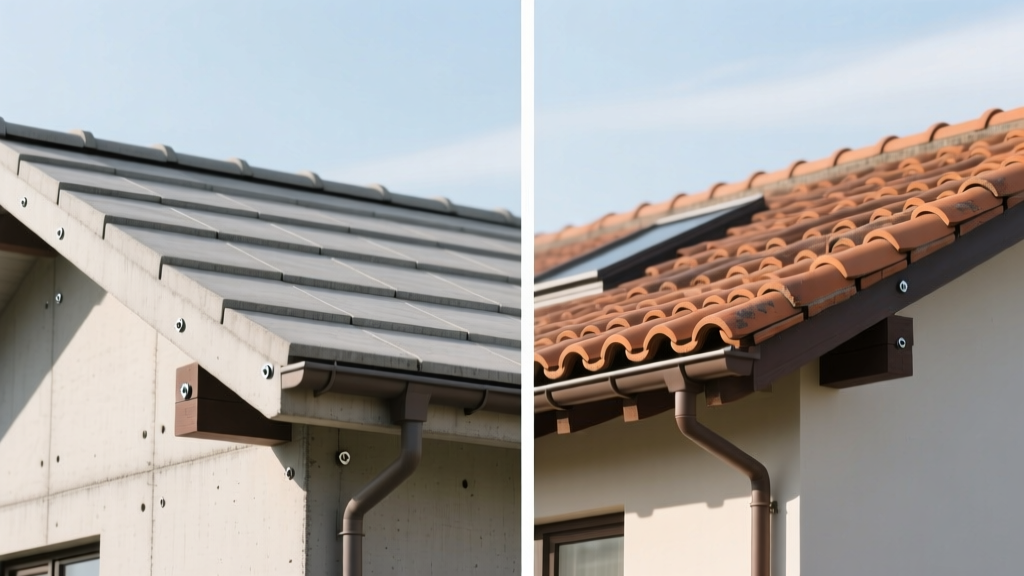
Core Material Composition and Manufacturing
When specifying heavy roofing assemblies, the choice between concrete and clay dictates structural framing requirements, long-term maintenance schedules, and lifecycle costs. While both materials offer Class A fire ratings and exceptional longevity, their manufacturing processes result in fundamentally different physical properties.
Concrete Roof Tiles
Concrete tiles are manufactured from a dense mixture of Portland cement, sand, water, and iron oxide pigments. The mixture is either extruded onto aluminum pallets or molded under high pressure. Modern concrete tiles are typically cured in controlled environments rather than kiln-fired. The color is either integrally mixed throughout the batch (color-through) or applied as an acrylic slurry coating on the surface. According to the Tile Roofing Institute (TRI), concrete tiles must comply with ASTM C1492, which dictates minimum flexural strength, water absorption limits, and freeze-thaw durability grades.
Clay Roof Tiles
Clay tiles are formed from natural shale and clay deposits, shaped via extrusion or pressing, and then fired in kilns at temperatures exceeding 2,000°F. This vitrification process fuses the clay particles, resulting in a highly dense, glass-like matrix that is inherently impervious to water and UV degradation. Clay tile manufacturing is governed by ASTM C1167. The natural color variations achieved through mineral oxides and kiln atmosphere mean the color is permanently baked into the material, eliminating the risk of surface pigment fading.
Quick Comparison Matrix
| Feature | Concrete Tile | Clay Tile |
|---|---|---|
| ASTM Standard | ASTM C1492 | ASTM C1167 |
| Weight per Square (100 sq ft) | 900 - 1,100 lbs | 600 - 1,500 lbs (profile dependent) |
| Water Absorption | Moderate (Requires sealing for Grade 3 freeze-thaw) | Extremely Low (Inherently vitrified) |
| Color Longevity | Slurry coats may fade; color-through holds better | Permanent (kiln-fired) |
| Impact Resistance (Hail) | High (FM 4473 Class 3 or 4) | Moderate to High (Can shatter on direct point impact) |
Structural Engineering: Weight and Load-Bearing Requirements
The most critical differentiator in the concrete tile roof vs clay tile debate is structural dead load. Both materials are significantly heavier than asphalt shingles (which weigh roughly 250-400 lbs per square) or standing seam metal (150 lbs per square).
Standard interlocking concrete tiles typically weigh between 950 and 1,050 pounds per square. Clay tiles vary wildly based on profile. A flat clay shingle can weigh up to 1,400 pounds per square, while a standard Mission or barrel profile clay tile often weighs slightly less than concrete, hovering around 800 to 950 pounds per square due to the air gaps in the barrel profile.
Cost Breakdown: Material, Installation, and Lifetime Value
Pricing for heavy tile roofing has shifted due to raw material extraction costs and freight logistics. The following estimates reflect current market rates for a standard 2,500-square-foot roof with a 6/12 pitch.
| Cost Category | Concrete Tile | Clay Tile |
|---|---|---|
| Material Only (per sq ft) | $3.50 - $6.00 | $7.00 - $14.00 |
| Professional Installation (per sq ft) | $5.50 - $9.00 | $8.00 - $15.00 |
| Total Installed Cost (per sq ft) | $9.00 - $15.00 | $15.00 - $29.00 |
| Underlayment & Flashing Extras | $1.50 - $2.50 | $1.50 - $2.50 |
| Expected Lifespan | 50 - 75 Years | 75 - 100+ Years |
While clay demands a premium upfront—often double the cost of concrete—its lifespan frequently exceeds a century. Historic buildings in Europe and the American Southwest feature original clay roofs well past their 100-year mark. Concrete tiles, while highly durable, typically require replacement or major refurbishment around the 60-year mark due to surface degradation and underlayment failure.
Climate Performance and Specific Failure Modes
Environmental exposure dictates which material will perform optimally. Specifying the wrong tile for a specific climate zone leads to catastrophic and expensive failures.
Freeze-Thaw Cycles
Water absorption is the enemy of tile in freezing climates. When trapped water freezes, it expands, causing spalling and delamination.
- Concrete: Must be specified as ASTM C1492 Grade 3 for severe freezing environments. Even then, concrete's natural porosity requires factory-applied sealants that degrade over time.
- Clay: High-fired clay naturally resists water absorption. Specify ASTM C1167 Grade 3 clay tiles, which are virtually impervious to freeze-thaw damage without the need for chemical sealants.
Coastal and Salt-Spray Environments
In coastal zones, salt spray accelerates the corrosion of metal fasteners and degrades porous materials. Clay is highly resistant to salt and alkaline environments. Concrete, however, can suffer from surface erosion and efflorescence when constantly battered by salt air. If building within 1,500 feet of a coastline, clay is the superior specification. Furthermore, the National Roofing Contractors Association (NRCA) mandates that all fasteners in coastal zones be stainless steel or copper; hot-dipped galvanized steel will corrode prematurely in salt air.
High-Wind and Hurricane Zones
Both materials perform exceptionally well in high winds when installed correctly. Modern tile systems utilize a combination of mechanical fastening (nails or clips) and polyurethane tile adhesive (foam-set). Foam-set applications create a monolithic bond that routinely passes Miami-Dade County High-Velocity Hurricane Zone (HVHZ) wind uplift tests exceeding 150 mph. However, clay tiles are more brittle; if a piece of wind-borne debris strikes a clay barrel tile, it is more likely to shatter than a thicker concrete interlocking tile, which may only chip.
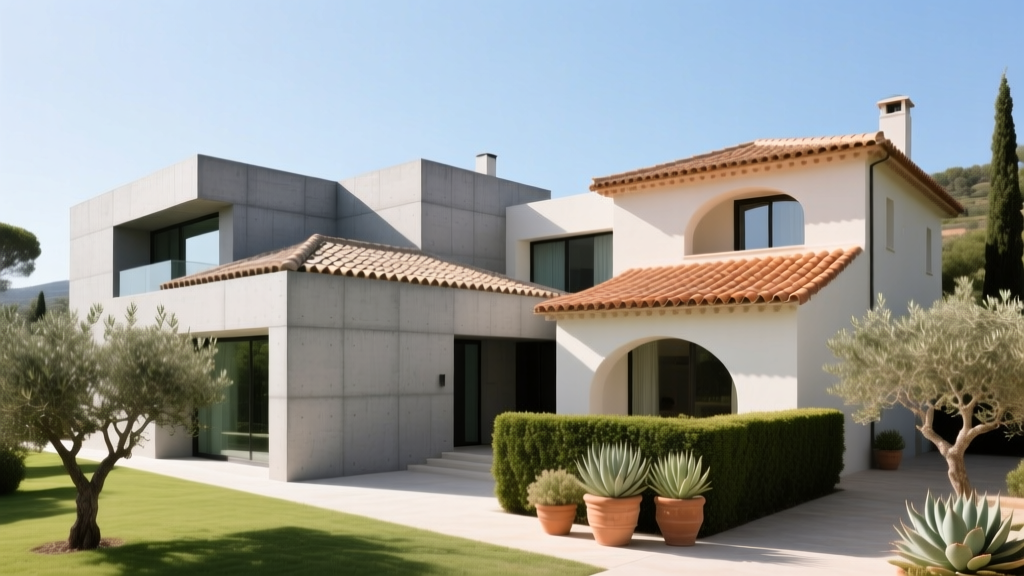
Maintenance: Efflorescence, Fading, and Underlayment
The maintenance profiles of concrete and clay differ significantly, primarily regarding aesthetics and the hidden waterproofing layers.
The Efflorescence Factor
Concrete tiles are prone to efflorescence—a white, powdery calcium carbonate deposit that migrates to the surface when moisture moves through the porous cement matrix. While efflorescence does not compromise structural integrity, it creates an unsightly, mottled appearance that usually takes 12 to 24 months to naturally weather away. Clay tiles do not suffer from efflorescence due to their vitrified, non-porous nature.
Color Fading and UV Degradation
If you choose concrete, opt for color-through tiles rather than slurry-coated options. Slurry coatings (a thin layer of pigmented cement applied to the surface) will inevitably chalk, fade, and wear away under intense UV exposure, requiring expensive elastomeric roof coatings every 15-20 years. Clay tiles derive their color from the mineral composition and kiln firing, meaning a terracotta or slate-gray clay tile will retain its exact hue for a century without UV degradation.
The Real Point of Failure: Underlayment
A common misconception is that the tiles themselves waterproof the roof. In reality, tile roofs are water-shedding systems; the true waterproofing barrier is the underlayment beneath the battens.
- Standard Practice: A single layer of ASTM D226 Type II asphalt felt or a high-tensile synthetic underlayment.
- Best Practice: A self-adhering polymer-modified bitumen membrane (ice and water shield) applied to the entire deck, or at minimum in all valleys, eaves, and penetrations.
- Lifespan Mismatch: Standard felt underlayment degrades in 30-40 years. If installed beneath a 100-year clay roof, the tiles will eventually need to be carefully removed, the underlayment replaced, and the tiles reinstalled—a massive labor expense. Specify high-temp, self-adhering membranes rated for 50+ years to match the tile's longevity.
Expert Verdict: Decision Framework for Specifiers
Choosing between a concrete tile roof vs clay tile requires balancing immediate budget constraints against structural capacity and long-term aesthetic goals. Use the following framework to finalize your material selection:
Specify Concrete Tile If:
- Budget is constrained, but a premium masonry look is required.
- The architectural style demands interlocking, slate-profile, or shake-profile tiles (concrete molds easily mimic wood and slate).
- The home is located in a high-hail region where concrete's impact resistance outperforms brittle clay.
- You are willing to accept potential color fading and efflorescence during the first few years.
Specify Clay Tile If:
- The project is a legacy build, historic restoration, or high-end luxury estate where 100-year lifespan is mandatory.
- The structure is in a coastal, salt-air environment or a severe freeze-thaw climate zone.
- The design calls for authentic Mediterranean, Spanish Mission, or traditional barrel profiles.
- Zero maintenance regarding color fading, chalking, or efflorescence is a strict requirement.
Both materials require specialized contractors. Verify that your roofing crew holds specific certifications from the Cool Roof Rating Council (CRCC) if you are specifying reflective, energy-efficient tile coatings, and always demand a structural engineering sign-off before loading heavy pallets onto your roof deck.
Written by
Sarah WhitfieldSarah Whitfield is a chartered quantity surveyor (MRICS) and construction cost analyst with 15 years of experience in material pricing, procurement strategy, and project budgeting. She earned her degree in Construction Management from the University of Reading (UK) and has worked on projects ranging from $2M custom homes to $180M mixed-use developments across North America and Europe. Sarah currently leads cost estimating for BuildMat Insight, maintaining a proprietary database of 4,000+ material price points updated quarterly. She is a frequent contributor to RSMeans cost data panels and has presented at the International Cost Engineering Council (ICEC) congress. Based in Denver, CO, Sarah is an avid trail runner and volunteer mentor for Women in Construction.
More from Sarah Whitfield
View all
Wood & Lumber
What Are the Different Types of Wood? A Builder's Guide
Compare structural softwoods, finish hardwoods, and engineered lumber. Analyze Janka ratings, MOE values, and 2026 pricing for construction.
Aug 4, 2026

Walls & Panels
Steel Framing vs Wood Framing: Corrosion and Moisture Defense
Compare steel framing vs wood framing for moisture resistance. Learn about galvanized coatings, condensation risks, and corrosion protection strategies.
Jul 21, 2026

Stone & Masonry
How to Cut Stone Veneer: Wet Saw vs Grinder Comparison
Compare the best tools for cutting stone veneer. We review wet saws, angle grinders, and chop saws to help you achieve clean, chip-free cuts.
Jul 21, 2026