Repair Scope Troubleshooting: Concrete Noun vs Abstract Noun Ambiguity
Learn how confusing a concrete noun vs abstract noun in repair contracts causes scope creep, and how to troubleshoot ambiguous construction specs.
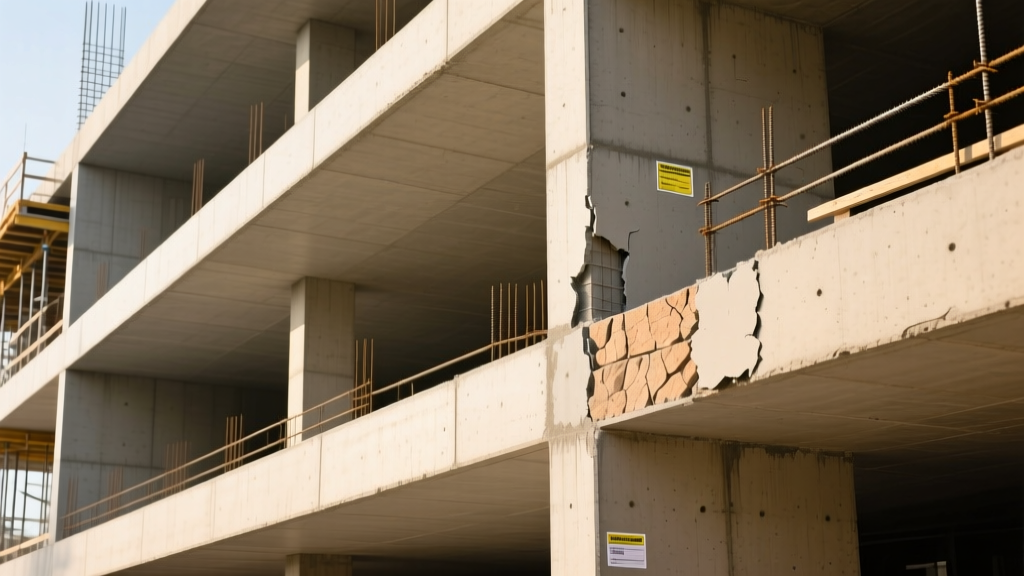
The Linguistic Root of Concrete Repair Disputes
Scope creep, rejected submittals, and litigated change orders in structural concrete repair rarely originate from a lack of engineering knowledge. Instead, they stem from linguistic imprecision in the contract documents. When drafting, bidding, or auditing repair scopes, the distinction between a concrete noun vs abstract noun dictates whether a directive is a measurable, billable action or a limitless legal liability.
In construction grammar, a concrete noun refers to physical, measurable entities perceivable by the senses (e.g., Portland cement, rebar, formwork, epoxy, crack). An abstract noun refers to concepts, qualities, or states of being (e.g., durability, workability, integrity, adhesion, compliance). When a specifier relies on abstract nouns to define a repair scope, they inadvertently create a "performance-only" trap that shifts all risk to the contractor and guarantees troubleshooting headaches during final inspection.
Concrete Noun vs Abstract Noun: A Specification Breakdown
To troubleshoot ambiguous repair contracts, project managers must first categorize the language used in the Division 03 (Concrete) specifications. The table below illustrates how abstract goals must be anchored to concrete materials to prevent disputes.
| Abstract Noun (The Goal / Liability Trap) | Concrete Noun (The Measurable Scope / Solution) | Troubleshooting Risk if Left Abstract |
|---|---|---|
| Durability | MasterEmaco S 488 CI, 2-inch depth | Owner rejects repair claiming it won't last 50 years. |
| Adhesion | SikaLatex R, applied at 150 sq ft/gallon | Inspector demands pull-off testing not in original bid. |
| Integrity | Sikadur 35 Hi-Mod epoxy injection | Contractor patches surface; engineer demands full-depth core. |
| Workability | Slump retention of 6 inches at 90 mins | Batch plant rejects load; contractor claims delay damages. |
Anytime a specification uses the word "ensure" followed by an abstract noun (e.g., "ensure structural integrity"), it is a red flag. You cannot bill for "ensuring." You can only bill for the labor and materials (concrete nouns) required to achieve a specified metric. According to the Construction Specifications Institute (CSI), prescriptive specifications (concrete) must always override vague performance expectations (abstract) to maintain equitable risk allocation.
Diagnostic Framework: Translating Abstracts to Concretes
When reviewing a repair scope for a parking garage, bridge deck, or industrial slab, use this three-step diagnostic framework to troubleshoot linguistic ambiguity before the project breaks ground.
Step 1: Highlight the Abstract Nouns
Read the scope of work and highlight every abstract noun. Common culprits in concrete repair include soundness, compatibility, longevity, proper, adequate, and seamless. If a sentence contains more abstract nouns than concrete nouns, it is un-biddable and un-inspectable.
Step 2: Demand the ASTM/ICRI Anchor
Every abstract concept in a repair contract must be tethered to a recognized testing standard. For example, if the spec demands "adequate bond strength" (abstract), the contractor must issue an RFI demanding the specific psi threshold. The American Bar Association’s Construction Industry Forum frequently cites undefined performance terms as the primary driver of mechanic's lien disputes.
Step 3: Substitute with Manufacturer TDS Metrics
Replace the abstract requirement with the concrete nouns found in a product's Technical Data Sheet (TDS). Instead of "apply a compatible bonding agent," the revised scope should read: "Apply SikaTop Armatec 110 EpoCem at a minimum thickness of 2mm to all exposed rebar prior to patching."
Case Study: The "Durability" vs "Epoxy Injection" Dispute
In a recent 2025 municipal infrastructure repair project, a contractor was tasked with rehabilitating a spalling concrete retaining wall. The engineer’s specification stated: "Contractor shall repair all spalled areas to restore structural integrity and ensure long-term durability."
The contractor interpreted this using concrete nouns: they chip-hammered the spalls, cleaned the rebar, and applied a high-build, polymer-modified cementitious mortar (SikaTop 122). The owner rejected the work, arguing that "durability" in a marine environment required full-depth epoxy injection and a silane sealer—neither of which were explicitly named in the contract.
Because the contract relied on the abstract noun durability rather than the concrete nouns silane sealer and epoxy resin, the contractor was forced into a costly change order dispute. The troubleshooting failure occurred during the pre-bid RFI phase, where the contractor should have forced the engineer to define "durability" using physical materials.
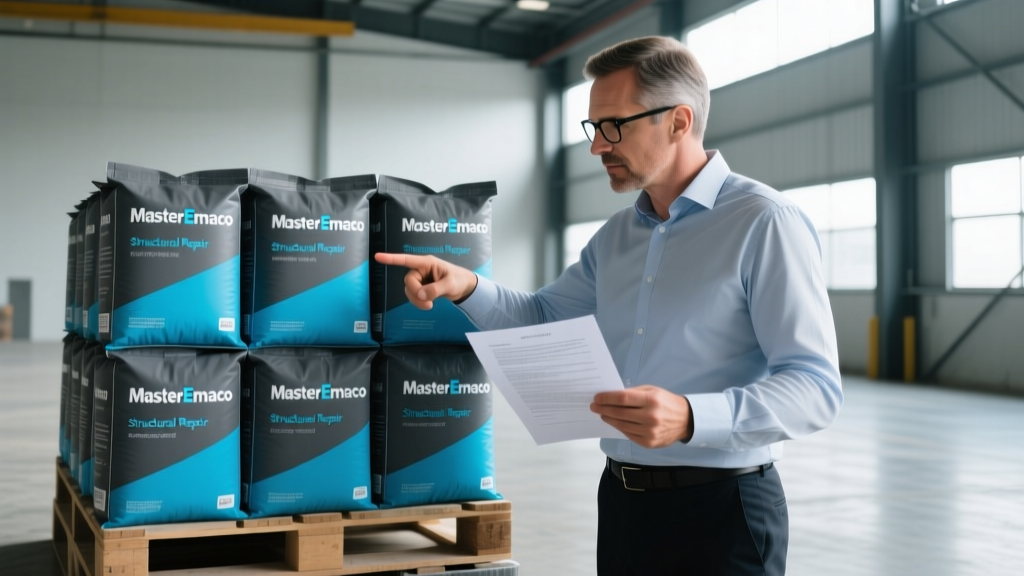
Specification Rewrite Matrix
Use this matrix to troubleshoot and rewrite ambiguous repair directives during the submittal or RFI process.
| Original Ambiguous Spec (Abstract Heavy) | Troubleshot RFI Response (Concrete Heavy) |
|---|---|
| "Prepare surface to ensure proper adhesion of repair mortar." | "Surface shall be prepared via high-pressure water blasting (10,000 PSI) to an ICRI CSP 5 profile, verified by comparator chips." |
| "Use a high-quality, non-shrink grout for void filling." | "Voids shall be filled with SikaGrout 328, mixed at 3.5 quarts of water per 50lb bag, achieving a flow consistency of 200%." |
| "Cure the concrete adequately to prevent cracking." | "Apply K-12 white pigmented curing compound at 200 sq ft per gallon immediately upon final finishing, maintaining for 7 days." |
Final Inspection Checklist for Scope Clarity
Before authorizing a concrete repair crew to mobilize, run the contract documents through this final linguistic checklist:
- Material Verification: Are all required repair mortars, epoxies, and sealers identified by specific manufacturer and product line (e.g., BASF MasterEmaco, Sika, Euclid Chemical)?
- Metric Anchoring: Are abstract concepts like "strength" tied to specific ASTM standards (e.g., ASTM C928 for rapid-hardening repair materials)?
- Quantity Boundaries: Does the scope define the physical limits of the repair using concrete nouns (e.g., "linear feet of crack," "square feet of spall") rather than abstract zones (e.g., "all deteriorated areas")?
- Testing Protocols: If the owner requires proof of an abstract concept (like "soundness"), is the specific NDT (Non-Destructive Testing) method and passing threshold explicitly named?
By rigorously enforcing the boundary between a concrete noun vs abstract noun, construction managers can eliminate the linguistic gray areas that lead to failed inspections, blown budgets, and compromised structural repairs.
Written by
Marcus ChenMarcus Chen is a licensed structural engineer (PE) and building materials analyst with over 12 years of experience across residential, commercial, and industrial construction. He holds a Master of Science in Civil Engineering from UC Berkeley and spent six years at Thornton Tomasetti before transitioning to independent consulting and technical writing. Marcus specializes in material selection for seismic-prone regions, concrete reinforcement strategies, and lifecycle cost analysis. His work has been cited by the American Concrete Institute (ACI) and the Structural Engineers Association of California (SEAOC). When he is not on a job site or at his desk, you will find him hiking the Sierra Nevada or restoring a 1920s craftsman bungalow in Oakland, CA.
More from Marcus Chen
View all
Construction Cost
How Much Did the Eiffel Tower Cost to Build?
How much did the Eiffel Tower cost to build in 1889? We adjust for inflation and compare its budget to modern skyscraper construction.
Aug 4, 2026

Fire Resistance
What Is a Fire Resistant Material? Testing & Certification Guide
Discover what is a fire resistant material through ASTM and UL testing. Learn how fire ratings, certifications, and assemblies work in construction.
Aug 4, 2026

Construction Cost
How Much Did the Burj Khalifa Cost to Build?
How much did the Burj Khalifa cost to build? We break down the $1.5B project and extract 5 money-saving strategies for your next build.
Jul 30, 2026