Running on Concrete vs Asphalt: Surface Impact and Joint Health
Discover the material science behind running on concrete vs asphalt. Compare shock absorption, ground reaction forces, and joint impact for runners.
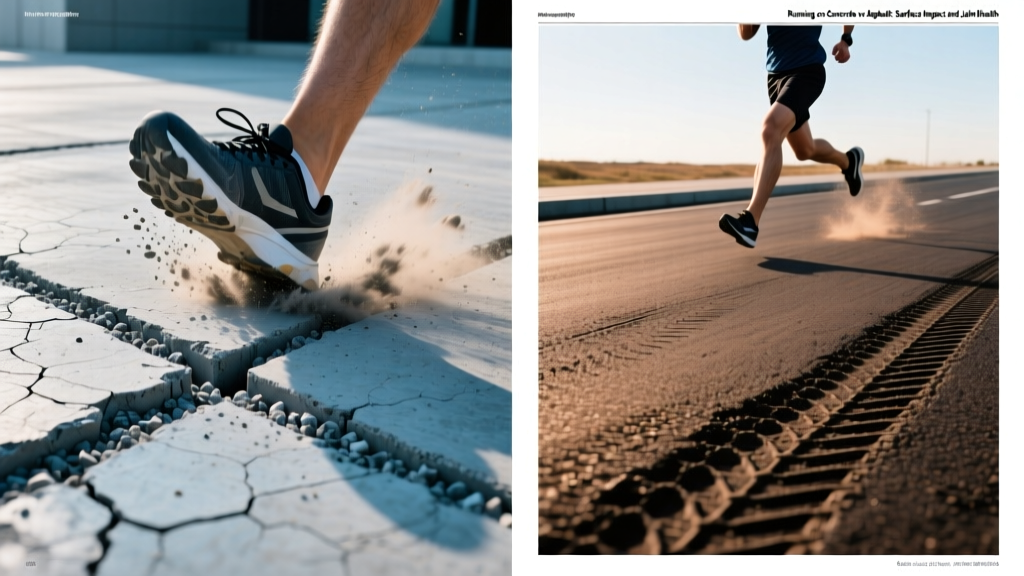
The Physics of the Strike: Ground Reaction Forces
Every time a runner's foot strikes the ground, the body absorbs a ground reaction force (GRF) equivalent to 2.5 to 3.0 times their body weight. For a 160-pound runner, this translates to over 400 pounds of instantaneous force traveling up the kinetic chain from the calcaneus (heel bone) through the tibia, femur, and into the lumbar spine. The severity of this impact is not dictated solely by the runner's biomechanics; it is fundamentally governed by the material properties of the surface beneath them. Understanding the material science behind running on concrete vs asphalt reveals why surface selection is a critical variable in injury prevention and performance optimization.
Material Science: Portland Cement vs. Bitumen
To understand the biomechanical toll of different running surfaces, we must examine the chemical and structural composition of the materials themselves. Sidewalks and paved roads are engineered for entirely different structural purposes, which directly dictates their shock-absorption capabilities.
Concrete: The Rigid Reflector
Standard municipal sidewalks are constructed from Portland cement concrete, a composite material consisting of cement, water, and fine/coarse aggregates. A typical sidewalk mix features a water-to-cement (w/c) ratio of 0.45 to 0.50, yielding a compressive strength of 3,000 to 4,000 psi. From a materials engineering perspective, concrete is highly rigid. Its modulus of elasticity ranges from 3 to 5 million psi. When a runner strikes concrete, the surface exhibits virtually zero deflection. The kinetic energy from the footstrike is not absorbed by the material; instead, it is reflected directly back into the runner's musculoskeletal system as high-frequency transient shockwaves.
Asphalt: The Viscoelastic Damper
Asphalt pavement (Hot Mix Asphalt or HMA) utilizes a petroleum-based bitumen binder mixed with crushed stone, sand, and gravel. Unlike the rigid crystalline structure of cured Portland cement, bitumen is a viscoelastic polymer. This means it exhibits both viscous and elastic characteristics when undergoing deformation. Under the rapid, high-impact load of a running stride, asphalt undergoes microscopic deflection. This viscoelastic damping effect absorbs a measurable percentage of the high-frequency impact transient, reducing the peak GRF that reaches the runner's joints.
Surface Comparison Matrix
The following matrix contrasts the physical properties of standard running surfaces, illustrating why material composition dictates impact attenuation.
| Material Property | Poured Concrete (Sidewalks) | Hot Mix Asphalt (Roads) | Synthetic Polyurethane (Tracks) |
|---|---|---|---|
| Primary Binder | Portland Cement (Hydraulic) | Bitumen (Petroleum-based) | Polyurethane / Rubber Crumb |
| Compressive Strength | 3,000 - 4,000 psi | 500 - 800 psi (Marshall Stability) | N/A (Measured in Tensile/Elongation) |
| Surface Deflection | 0.00 mm (Rigid) | 0.05 - 0.15 mm (Micro-deflection) | 2.0 - 4.0 mm (High deflection) |
| Shock Absorption | 0% - 2% | 10% - 15% | 35% - 45% |
| Temperature Sensitivity | Negligible | High (Softens in heat, hardens in freeze) | Moderate |
The Temperature Variable: Asphalt's Hidden Shift
A critical, often overlooked factor in the concrete vs. asphalt debate is temperature sensitivity. Concrete maintains its structural rigidity regardless of ambient weather. Asphalt, however, is graded by Performance Grade (PG) standards, such as PG 64-22, meaning it is engineered to perform optimally up to 64°C (147°F) and down to -22°C (-8°F).
When ambient temperatures drop below freezing, the bitumen binder in asphalt loses its viscous properties and becomes highly elastic and rigid. In winter conditions, the shock-absorbing benefits of asphalt diminish significantly, making frozen asphalt nearly as unforgiving on the joints as concrete. Runners must adjust their footwear or surface choice during winter months to compensate for this material phase shift.
Conversely, in peak summer heat exceeding 90°F, asphalt softens. While this increases shock absorption and reduces joint loading, it also increases the coefficient of friction and energy loss, making the surface feel "sluggish" and demanding more metabolic output from the runner to maintain pace.

Biomechanical Toll and Injury Profiles
The repetitive micro-trauma caused by surface stiffness directly correlates with specific overuse injuries. According to clinical data from the Mayo Clinic, the repetitive stress of high-impact activities on unyielding surfaces is a primary catalyst for lower extremity overuse syndromes.
- Medial Tibial Stress Syndrome (Shin Splints): Highly prevalent when runners transition too quickly to concrete. The lack of surface deflection forces the tibialis anterior and soleus muscles to work overtime to decelerate the foot, leading to periosteal inflammation along the tibia. Detailed pathology on this condition is well-documented by the Cleveland Clinic.
- Achilles Tendinopathy: Concrete surfaces require a faster, more abrupt ankle dorsiflexion upon impact. This rapid loading rate places immense eccentric strain on the Achilles tendon, accelerating micro-tears in the collagen matrix.
- Patellofemoral Pain Syndrome (Runner's Knee): The high-frequency shockwaves reflected by concrete travel up the tibia and compress the patella against the femoral groove. Asphalt's viscoelastic damping slightly reduces this peak compressive force, offering marginal protection for the cartilage.
Footwear Mitigation Strategies
If your training route dictates running on concrete vs asphalt, your footwear must act as the primary variable damper. Modern running shoe midsoles utilize advanced polymer foams to compensate for surface rigidity.
Concrete Mitigation
For concrete-heavy routes, prioritize maximum stack heights (35mm to 42mm in the heel) and highly resilient, low-density foams. Supercritical EVA (Ethylene-Vinyl Acetate) and PEBAX (Polyether block amide) foams offer energy return rates exceeding 80%, effectively replacing the shock absorption that the concrete surface lacks. Shoes featuring carbon-fiber plates can also aid in stabilizing the foot against the harsh, unforgiving impact of cement, reducing the intrinsic muscle fatigue in the foot arch.
Asphalt Optimization
Because asphalt already provides 10% to 15% inherent shock absorption, runners can opt for slightly firmer, more responsive midsoles on road days. Standard compression-molded EVA or TPU (Thermoplastic Polyurethane) foams in the 25mm to 32mm stack height range provide an optimal balance of ground feel and protection, allowing for a more efficient transfer of energy without bottoming out the foam upon impact.
Training Cycle Decision Framework
Elite coaches and sports physiologists do not view concrete and asphalt as strictly "good" or "bad"; rather, they are tools to be deployed at specific phases of a training macrocycle.
"Surface stiffness dictates the loading rate on the osteogenic (bone-building) pathways. Complete avoidance of hard surfaces leads to brittle bones, while exclusive use of hard surfaces leads to stress fractures. The key is periodized surface loading."
- Recovery & Long Slow Distance (LSD): Use asphalt or dirt trails. The viscoelastic nature of asphalt preserves joint cartilage and reduces delayed onset muscle soreness (DOMS) during high-volume, low-intensity aerobic base building.
- Tempo & Threshold Runs: Use asphalt. The slight energy loss in hot asphalt is negligible, and the surface provides enough stability for sustained, sub-maximal pacing without the harsh joint penalty of concrete.
- Short Strides & Biomechanical Priming: Use concrete. Short, 100-meter accelerations on concrete train the central nervous system to handle high loading rates, improving tendon stiffness and ground reactivity. Limit these sessions to 10-15 minutes to avoid cumulative tissue damage.
Ultimately, the choice between running on concrete vs asphalt requires an understanding of material science, environmental variables, and personal biomechanics. By matching the viscoelastic properties of your running surface to your daily training objective, and pairing it with the correct polymer foam footwear, you can optimize performance while actively mitigating the risk of chronic overuse injuries.
Written by
David NakamuraDavid Nakamura is a licensed architect (AIA) and construction technology writer focused on sustainable building methods, mass timber engineering, and high-performance building envelopes. He holds a Master of Architecture from the University of Washington and is a certified Passive House Consultant (CPHC). David spent eight years at the Seattle firm Mithun, where he led the design of three LEED Platinum projects, before founding his own practice specializing in net-zero residential design. He serves on the editorial advisory board of GreenBuilder Magazine and has authored peer-reviewed papers on cross-laminated timber (CLT) connections for the Journal of Structural Engineering. In his spare time, David teaches woodworking at Pratt Fine Arts Center and kayaks the Puget Sound.
More from David Nakamura
View all
Construction Cost
Labor Cost to Build a Deck Per Sq Ft: 2026 Installation Guide
Discover the exact labor cost to build a deck per sq ft in 2026. This installation guide breaks down contractor rates, complexity factors, and hidden fees.
Aug 4, 2026

Construction Cost
How Much Does It Cost to Build a 3 Bedroom House? Financing Guide
Learn exactly how much it costs to build a 3 bedroom house and explore 2026 financing options, construction loan types, and budget frameworks for your build.
Aug 4, 2026

Construction Cost
Cost to Build a Tennis Court: 2026 Guide
How much does it cost to build a tennis court in 2026? Breakdowns for asphalt, concrete, and synthetic surfaces plus fencing and lighting.
Jul 30, 2026