Sealed Concrete vs Unsealed: How Mix Design Dictates Protection
Discover how concrete mix design impacts the sealed concrete vs unsealed debate. Learn which sealers match specific w/c ratios, admixtures, and finishes.
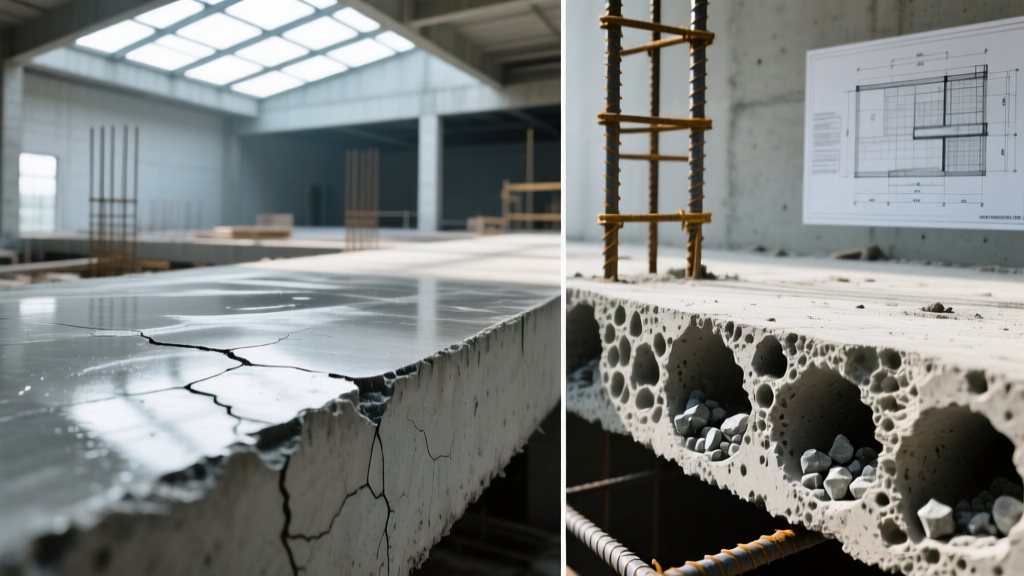
The Substrate Dictates the Shield: Beyond Aesthetics
The decision between sealed concrete vs unsealed surfaces is rarely just about visual sheen or basic stain resistance. From a materials science perspective, the viability of a sealer is entirely dependent on the underlying concrete mix design. Applying a film-forming sealer to a high water-to-cement (w/c) ratio mix, or using a reactive penetrating sealer on a high-slag blend, will result in catastrophic coating failure, delamination, or trapped efflorescence.
Understanding the chemical and physical properties of your specific concrete batch is the prerequisite for choosing a protection strategy. This guide breaks down how mix proportions, supplementary cementitious materials (SCMs), and finishing techniques determine whether a slab should remain unsealed or receive specific chemical treatments.
Never apply non-breathable film-forming sealers (like standard acrylics or epoxies) to concrete that has not reached a moisture vapor emission rate (MVER) of less than 3 lbs per 1,000 sq. ft. per 24 hours. Sealing 'green' concrete traps evaporating bleed water, leading to hydrostatic pressure buildup that will blister and peel the coating within weeks.
How Water-to-Cement (w/c) Ratio Alters Sealer Performance
The w/c ratio defines the capillary pore network of the hardened concrete. This network dictates both how deeply a penetrating sealer can absorb and how easily moisture vapor can escape.
Low w/c Mixes (0.35 to 0.42)
High-strength, low w/c mixes are exceptionally dense. The tight capillary structure prevents deep penetration of larger sealer molecules. For these mixes, silane sealers are required. Silanes possess the smallest molecular structure among penetrating sealers, allowing them to infiltrate dense substrates and react with free alkalis to form a hydrophobic resin deep within the pores. Unsealed low w/c concrete performs well structurally but is prone to surface micro-cracking and staining from oil-based contaminants due to its high surface tension.
High w/c Mixes (0.50 to 0.60+)
Mixes with higher water content feature a highly interconnected, porous capillary network. While this allows for deep sealer penetration, it also means the slab holds significantly more unhydrated salts and free lime. If you apply a film-forming sealer to a high w/c mix, the natural outward migration of moisture will carry these salts to the surface, trapping them beneath the sealer film as white, powdery efflorescence. For porous mixes, large-molecule siloxane sealers are optimal, as they bridge larger pores without completely blocking vapor transmission.
The Impact of Supplementary Cementitious Materials (SCMs)
Modern 2026 mix designs frequently utilize SCMs like fly ash, silica fume, and ground granulated blast-furnace slag (GGBFS) to reduce carbon footprints and increase long-term durability. However, SCMs fundamentally alter the surface chemistry of the concrete.
- Fly Ash (Class F): Consumes calcium hydroxide during the secondary pozzolanic reaction. This lowers the surface pH. Since silane and siloxane sealers require a high pH (above 10) to catalyze their hydrophobic reaction, high-fly-ash mixes may require a longer curing period (often 60+ days) before sealing, or the use of specialized catalyst-enhanced sealers.
- Silica Fume: Creates an ultra-dense surface matrix. Standard water-based sealers will simply bead up and fail to penetrate. Solvent-based, low-viscosity penetrating sealers are mandatory for silica fume mixes.
- Slag (GGBFS): Slows the initial curing process and retains moisture longer. Sealing high-slag concrete prematurely is a primary cause of osmotic blistering in epoxy and polyurethane topcoats.
Sealed Concrete vs Unsealed: Matrix by Mix and Finish Type
The following matrix outlines the optimal protection strategy based on common mix designs and finishing techniques.
| Concrete Finish / Mix Type | Ideal Sealer Chemistry | Unsealed Degradation Risk | Avg. Material Cost (2026) |
|---|---|---|---|
| Standard Broom Finish (Driveways) | Water-based Siloxane (Penetrating) | High (Freeze-thaw spalling, deicer scaling) | $0.25 - $0.45 / sq. ft. |
| Steel Troweled (Warehouses) | Unsealed + Liquid Densifier (Silicate) | Moderate (Dusting, minor abrasion) | $0.15 - $0.30 / sq. ft. |
| Exposed Aggregate (Patios) | Solvent-based Acrylic (Film-forming) | High (Aggregate pop-out, UV fading) | $0.40 - $0.75 / sq. ft. |
| Stamped / Colored Concrete | Polyurethane / Acrylic Hybrid | Severe (Color leaching, surface wear) | $0.80 - $1.50 / sq. ft. |
Air Entrainment and the Freeze-Thaw Dilemma
In northern climates, exterior concrete mixes are dosed with air-entraining admixtures (AEAs) to create microscopic air bubbles (typically 5% to 7% air content). These bubbles act as expansion chambers for freezing water, preventing internal cracking.
When evaluating sealed concrete vs unsealed slabs in freeze-thaw zones, the breathability of the sealer is non-negotiable. If a non-breathable film-forming sealer is applied to air-entrained concrete, surface water becomes trapped. When temperatures drop, the trapped water freezes and expands. Because the vapor cannot escape through the sealer film, the hydraulic pressure exceeds the tensile strength of the concrete surface, resulting in severe scaling and delamination. According to the Portland Cement Association, improper sealing is a leading cause of premature freeze-thaw failure in otherwise well-designed air-entrained mixes.
Before applying a penetrating sealer to an unsealed slab, sprinkle water on the surface. If the water beads up immediately, the surface is too dense or contaminated (laitance, curing compounds), and mechanical profiling (shot blasting or grinding) is required before sealing.
The Unsealed Argument: When to Leave Concrete Bare
Leaving concrete unsealed is not merely a cost-saving measure; in many structural and industrial applications, it is the technically superior choice. Unsealed concrete maintains maximum surface friction, which is critical for ADA-compliant ramps, steep driveways, and warehouse forklift traffic.
Furthermore, unsealed concrete allows for unrestricted moisture vapor transmission. In below-grade applications or slabs-on-grade without a continuous vapor barrier, sealing the top surface can trap rising groundwater, leading to sub-surface hydrostatic pressure that can buckle floor coverings or destroy the slab from within. For these scenarios, utilizing a lithium silicate liquid densifier is the preferred alternative. Densifiers do not form a surface film; they react internally with free lime to form calcium silicate hydrate (C-S-H) gel, hardening the surface matrix and reducing dusting without altering the slab's breathability or traction. Penn State Extension notes that densifiers are often misclassified as sealers, but their chemical mechanism is fundamentally different and highly advantageous for bare concrete maintenance.
Surface Preparation: The Hidden Cost of Sealing
The most common point of failure in the sealed concrete vs unsealed debate occurs before the sealer is even opened. New concrete often contains a layer of laitance—a weak, milky layer of cement and fines brought to the surface during troweling. Laitance has virtually no tensile strength. If a film-forming sealer is applied over laitance, it bonds to the weak layer rather than the structural concrete matrix. When traffic or thermal cycling occurs, the sealer peels off, taking the laitance with it.
Proper preparation requires removing this layer. For small residential projects, a mild acid etch (using a 10% solution of muriatic acid or buffered phosphoric acid) followed by thorough neutralization is standard. For commercial applications, planetary diamond grinding (using 40- to 80-grit metal-bonded diamonds) opens the pores and provides the necessary mechanical profile for optimal sealer adhesion.
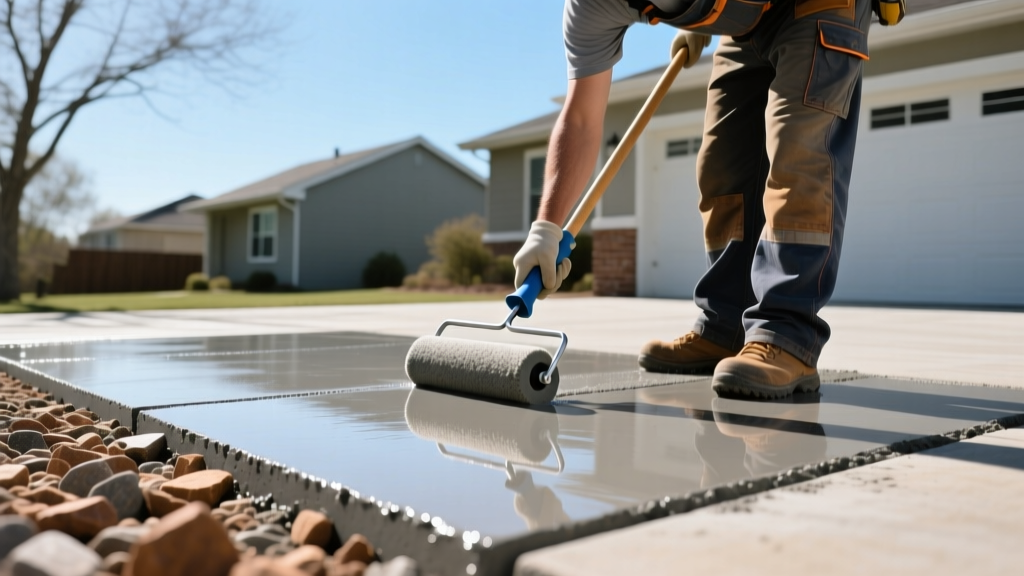
Summary Decision Framework
Use the following framework to finalize your protection strategy:
- Identify the w/c ratio and SCM content: Dense, low w/c mixes require small-molecule silanes or polyurethanes. High SCM mixes require extended curing times before sealing.
- Determine the moisture exposure: Exterior slabs in freeze-thaw zones must use breathable penetrating sealers (siloxane) or remain unsealed and densified.
- Assess the traffic and traction needs: High-traction areas (ramps, pool decks) should remain unsealed or use specialized anti-slip aggregate additives mixed into film-forming sealers.
- Evaluate the aesthetic requirement: If color enhancement and high gloss are mandatory (stamped or exposed aggregate), film-forming acrylics or polyurethanes are required, provided the slab is fully cured and dry.
By aligning your surface protection strategy with the specific chemical and physical realities of your concrete mix design, you ensure long-term durability and eliminate the costly cycle of premature coating failure. For further reading on surface preparation and application techniques, consult the technical guidelines provided by Concrete Construction magazine.
Written by
Marcus ChenMarcus Chen is a licensed structural engineer (PE) and building materials analyst with over 12 years of experience across residential, commercial, and industrial construction. He holds a Master of Science in Civil Engineering from UC Berkeley and spent six years at Thornton Tomasetti before transitioning to independent consulting and technical writing. Marcus specializes in material selection for seismic-prone regions, concrete reinforcement strategies, and lifecycle cost analysis. His work has been cited by the American Concrete Institute (ACI) and the Structural Engineers Association of California (SEAOC). When he is not on a job site or at his desk, you will find him hiking the Sierra Nevada or restoring a 1920s craftsman bungalow in Oakland, CA.
More from Marcus Chen
View all
Construction Cost
How Much Did the Eiffel Tower Cost to Build?
How much did the Eiffel Tower cost to build in 1889? We adjust for inflation and compare its budget to modern skyscraper construction.
Aug 4, 2026

Fire Resistance
What Is a Fire Resistant Material? Testing & Certification Guide
Discover what is a fire resistant material through ASTM and UL testing. Learn how fire ratings, certifications, and assemblies work in construction.
Aug 4, 2026

Construction Cost
How Much Did the Burj Khalifa Cost to Build?
How much did the Burj Khalifa cost to build? We break down the $1.5B project and extract 5 money-saving strategies for your next build.
Jul 30, 2026