How Much Does It Cost to Build a Treehouse? 2026 Cost Guide
Discover exactly how much it costs to build a treehouse in 2026. Get detailed pricing for materials, TAB hardware, labor, and luxury custom builds.
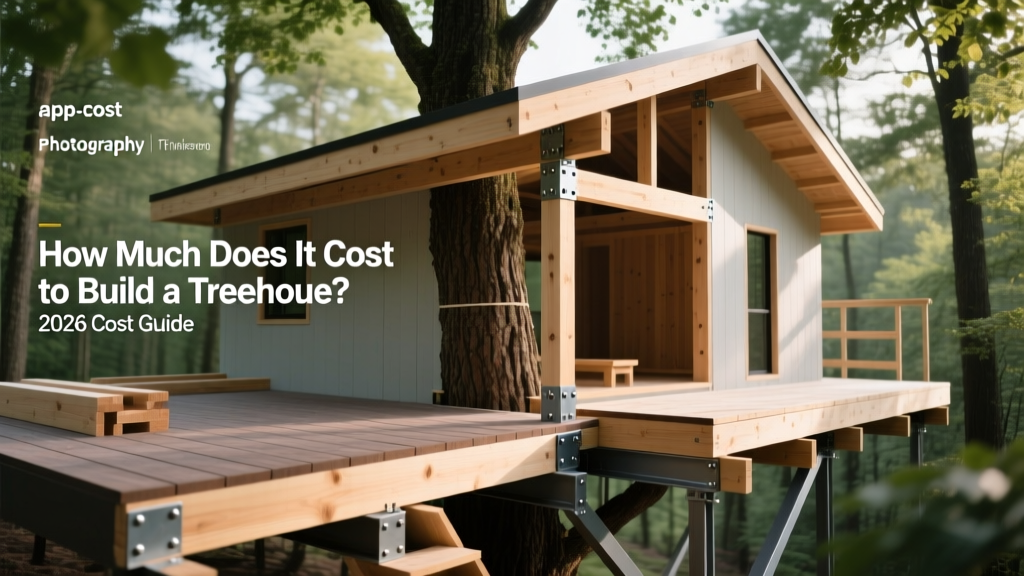
The national average to build a structurally sound, professionally installed residential treehouse in 2026 ranges from $18,000 to $45,000. However, the final price is heavily dictated by your attachment methodology, lumber selection, and site accessibility. While basic DIY platform kits can be assembled for $3,500 to $8,000, luxury multi-level structures with utility hookups routinely exceed $125,000. Understanding the engineering requirements and material costs is critical to avoiding catastrophic structural failure and budget overruns.
The 2026 Treehouse Construction Cost Matrix
Treehouse costs are not calculated by standard square-footage metrics used in ground-level construction. The complexity of working in a three-dimensional canopy, hoisting materials, and engineering dynamic load-bearing connections drives the price. Below is the current market breakdown based on build tier.
| Build Tier | Average Size | 2026 Cost Range | Primary Hardware & Materials |
|---|---|---|---|
| DIY Platform Kit | 40 - 60 sq ft | $3,500 - $8,500 | Standard lag screws, pressure-treated pine, pre-cut joists |
| Custom DIY Build | 80 - 120 sq ft | $10,000 - $22,000 | 1.25' TABs, Western Red Cedar, architectural shingles |
| Pro Residential | 120 - 250 sq ft | $25,000 - $65,000 | Heavy-duty TABs, composite decking, EPDM roofing, insulated walls |
| Luxury / Commercial | 250+ sq ft | $85,000 - $150,000+ | Steel I-beam armatures, custom glulam, plumbing/electrical, crane rental |
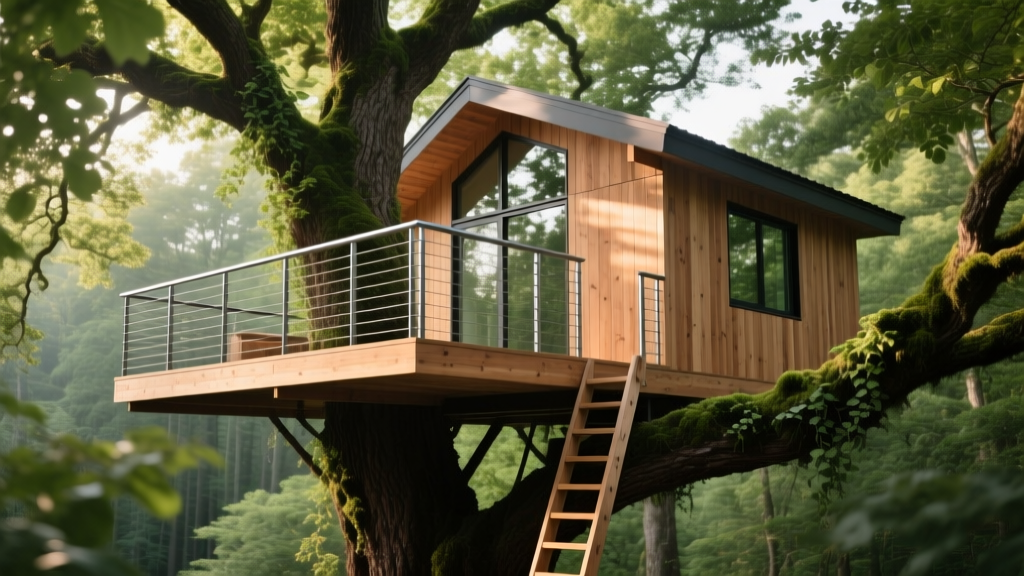
Structural Hardware: The TAB vs. Lag Screw Debate
The single most critical decision in your budget—and the primary differentiator between a safe structure and a hazardous one—is the attachment hardware. Historically, builders used large galvanized lag screws driven directly into the heartwood. This is now considered an outdated and dangerous practice by modern arborists and structural engineers.
Treehouse Attachment Bolts (TABs)
Modern treehouse construction relies on Treehouse Attachment Bolts (TABs). A TAB consists of a threaded bolt, a smooth cylindrical boss, and a thick metal collar. The collar rests flush against the tree's cambium layer, while the structural beam rests on the boss. As the tree grows, it expands outward over the smooth boss without engulfing the beam, maintaining a dry, structurally sound connection.
- Standard 1.25-inch TABs: $115 to $145 per unit. Suitable for loads up to 8,000 lbs per bolt in dense hardwoods (Oak, Hickory).
- Heavy-Duty 1.5-inch TABs: $160 to $210 per unit. Required for larger platforms or softer hardwoods (Maple, Ash).
- Installation Labor: Drilling the precise 3-inch deep, perfectly level pilot holes requires specialized ship auger bits and jigs. Professional installation adds $80 to $120 per TAB in labor.
'Always source TABs from specialized structural manufacturers rather than generic hardware suppliers. The shear strength and fatigue testing of the machined collar are non-negotiable for dynamic wind loads.' — Certified Master Builder Guidelines
Material Selection and Pricing Variables
Once the structural armature is secured, the decking, framing, and roofing materials will consume the bulk of your remaining budget. Moisture resistance and weight are the two competing factors in treehouse material selection.
Framing and Decking
Weight is a major concern in canopy construction. Every extra pound of dead load requires heavier, more expensive attachment hardware.
- Pressure-Treated Southern Yellow Pine (SYP): $4.50 - $6.00 per linear foot. Heavy and prone to warping, but highly rot-resistant and budget-friendly. Must be kiln-dried after treatment (KDAT) to minimize twisting.
- Western Red Cedar: $9.50 - $13.00 per linear foot. The industry standard for custom builds. It is naturally rot-resistant, dimensionally stable, and roughly 30% lighter than SYP, reducing stress on the TABs.
- Composite Decking (e.g., Trex, TimberTech): $12.00 - $18.00 per linear foot. Highly durable and zero-maintenance, but significantly heavier than wood. Requires closer joist spacing (12 inches on-center instead of 16 inches), increasing both material and weight costs.
Roofing and Weatherproofing
Treehouses experience more lateral movement and wind uplift than ground-level structures. Rigid roofing materials can crack under this torsion.
- EPDM Rubber Membrane: $3.50 - $5.50 per sq ft. The optimal choice for flat or low-slope treehouse roofs. It flexes with the tree's movement and provides a seamless waterproof barrier.
- Standing Seam Metal: $11.00 - $16.00 per sq ft. Excellent for pitched roofs. The interlocking panels handle wind uplift exceptionally well, though the material is heavier.
- Asphalt Shingles: $2.50 - $4.00 per sq ft. The cheapest option, but highly discouraged. The constant swaying of the tree will cause shingles to crack, lift, and leak within a few seasons.
Hidden Site Preparation and Labor Costs
Budgeting for a treehouse requires looking beyond the lumber and hardware. Site logistics often introduce unexpected expenses that can inflate the final cost by 20% to 30%.
Arborist Inspection and Tree Selection
Never build in a tree without a professional health assessment. You must hire a TRAQ-certified (Tree Risk Assessment Qualification) arborist to evaluate the tree's structural integrity, root health, and species viability. According to the Tree Care Industry Association, a comprehensive risk assessment typically costs between $300 and $550. Ideal species include mature White Oak, Douglas Fir, and Hickory. Avoid Willow, Poplar, and Birch, as their wood is too brittle to support dynamic loads. For more on identifying tree health issues before construction, refer to resources from the University of Minnesota Extension.
Crane Rental and Material Hoisting
If your treehouse is located in a fenced backyard without gate access, or if you are lifting pre-fabricated wall panels and steel beams, manual hoisting is impossible. A standard mobile crane rental costs $1,200 to $2,200 per day, plus mobilization fees. Factor in at least one full day of crane time for custom residential builds.
Utility Trenching and Routing
Adding electricity or plumbing transforms a simple playhouse into a habitable guest space. Trenching underground conduit from the main house to the base of the tree costs $45 to $75 per linear foot. Furthermore, all wiring running up the tree must be encased in flexible liquid-tight conduit to accommodate the tree's natural sway without severing the electrical lines.
Step-by-Step Budgeting Framework
To accurately forecast your specific project costs, follow this sequential allocation framework:
- Site & Feasibility (5% of budget): TRAQ arborist inspection, soil testing for ground-anchors (if using a hybrid support system), and municipal permit fees.
- Engineering & Hardware (20% of budget): Structural blueprints, TABs, dynamic cable bracing systems, and heavy-duty joist hangers.
- Core Materials (40% of budget): Framing lumber, decking, siding, windows, and roofing membrane.
- Labor & Logistics (25% of budget): Specialized carpentry labor, crane rental, scaffolding erection, and material hoisting.
- Finishes & Utilities (10% of budget): Interior insulation, electrical wiring, lighting fixtures, and exterior sealants (e.g., copper naphthenate for end-grain protection).
Expert Tips for Longevity and Safety
Building in a living, moving organism requires specialized maintenance protocols. To maximize the lifespan of your investment, implement the following standards:
- Allow for Growth Gaps: Leave a minimum 3-inch clearance gap around any trunk or major branch that passes through the deck or roof. Line these gaps with flexible rubber flanges to prevent water intrusion while allowing the tree's diameter to expand over the decades.
- End-Grain Sealing: Any cut ends of pressure-treated or cedar lumber must be immediately sealed with a copper naphthenate brush-on treatment to prevent fungal spores from entering the wood's vascular system.
- Dynamic Bracing: For multi-tree platforms, do not use rigid steel beams to connect the structures. Trees sway at different frequencies in high winds. Use specialized sliding brackets or tension-cable systems to allow independent movement without tearing the platform apart.
- Annual Inspections: Schedule an annual inspection to check the torque on TAB nuts and assess the tree's canopy health. The Arbor Day Foundation provides excellent seasonal checklists for monitoring tree stress and structural defects.
Accurately estimating the cost to build a treehouse requires abandoning standard construction metrics and embracing arboricultural engineering. By prioritizing specialized attachment hardware, selecting weight-appropriate materials, and budgeting for complex site logistics, you ensure a structure that is both financially predictable and structurally enduring.
Written by
David NakamuraDavid Nakamura is a licensed architect (AIA) and construction technology writer focused on sustainable building methods, mass timber engineering, and high-performance building envelopes. He holds a Master of Architecture from the University of Washington and is a certified Passive House Consultant (CPHC). David spent eight years at the Seattle firm Mithun, where he led the design of three LEED Platinum projects, before founding his own practice specializing in net-zero residential design. He serves on the editorial advisory board of GreenBuilder Magazine and has authored peer-reviewed papers on cross-laminated timber (CLT) connections for the Journal of Structural Engineering. In his spare time, David teaches woodworking at Pratt Fine Arts Center and kayaks the Puget Sound.
More from David Nakamura
View all
Construction Cost
Labor Cost to Build a Deck Per Sq Ft: 2026 Installation Guide
Discover the exact labor cost to build a deck per sq ft in 2026. This installation guide breaks down contractor rates, complexity factors, and hidden fees.
Aug 4, 2026

Construction Cost
How Much Does It Cost to Build a 3 Bedroom House? Financing Guide
Learn exactly how much it costs to build a 3 bedroom house and explore 2026 financing options, construction loan types, and budget frameworks for your build.
Aug 4, 2026

Construction Cost
Cost to Build a Tennis Court: 2026 Guide
How much does it cost to build a tennis court in 2026? Breakdowns for asphalt, concrete, and synthetic surfaces plus fencing and lighting.
Jul 30, 2026