How Much Does It Cost to Build a Plane? Kit & Financing Guide
Discover exactly how much it costs to build a plane. We break down experimental aircraft kit pricing, engine costs, and smart financing strategies.
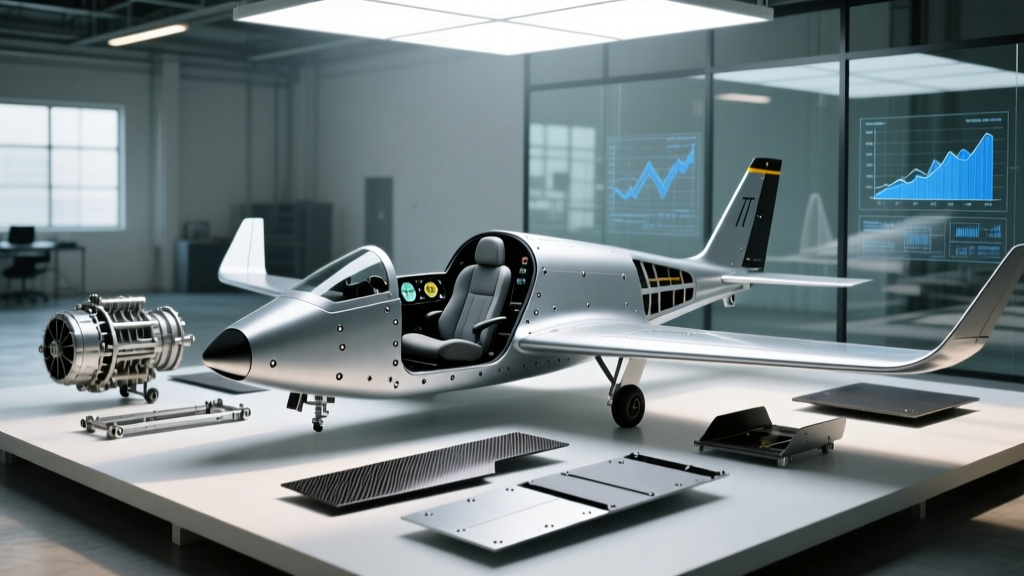
Building an experimental amateur-built (E-AB) aircraft is a multi-year construction project that blends structural engineering, avionics integration, and meticulous financial planning. When prospective builders ask how much it costs to build a plane, the answer is rarely a single number. Depending on the mission profile, material choices, and avionics suites, total capital requirements range from $75,000 for a basic backcountry STOL (Short Takeoff and Landing) aircraft to over $180,000 for a high-performance, IFR-capable cross-country machine. According to the Federal Aviation Administration (FAA), amateur builders must construct at least 51% of the aircraft for the major portion of the airframe, meaning your financial outlay is directly tied to your own sweat equity and material sourcing.
The True Price Tag: Breaking Down Homebuilt Aircraft Costs
To understand the financial commitment, we must separate the airframe kit from the powerplant, avionics, and finishing materials. The most common path for first-time builders is purchasing a matched-hole aluminum kit from a manufacturer like Van's Aircraft or Zenith. Below is a realistic 2026 cost matrix comparing a high-performance cruiser (Van's RV-14) with a budget-friendly STOL aircraft (Zenith CH 750).
| Cost Center | Van's RV-14 (High-Performance IFR) | Zenith CH 750 (Backcountry VFR) |
|---|---|---|
| Airframe Kit (Complete) | $42,500 | $28,000 |
| Powerplant (Engine & Prop) | $48,000 (Lycoming IO-390-EXP) | $24,000 (Rotax 912 ULS) |
| Avionics Panel | $24,000 (Dual Garmin G3X Touch) | $14,000 (Single Dynon SkyView) |
| Finishing (Paint, Glass, Interior) | $22,000 | $9,000 |
| Miscellaneous (Tools, Hardware, Wiring) | $12,000 | $6,000 |
| Estimated Total Build Cost | $148,500 | $81,000 |
Phased Purchasing: The Builder's Cash Flow Secret
Very few builders write a single check for $150,000 on day one. Kit manufacturers utilize a phased delivery system that acts as an organic, interest-free financing mechanism. By breaking the airframe into sub-kits, builders can align their cash flow with their construction timeline, which typically spans 1,500 to 2,500 hours over two to four years.
Always purchase the Empennage (tail section) kit first. For the RV-14, this costs roughly $7,500. It requires minimal shop space, takes about 250 hours to build, and teaches you the fundamental skills of clecoing, riveting, and structural assembly. By the time you finish the tail, you will have a clear understanding of your actual burn rate and can confidently finance the larger Fuselage ($12,500) and Wings ($16,500) kits.
Navigating Aviation Financing for Experimental Projects
Securing capital for an aircraft that does not yet exist is fundamentally different from getting a mortgage for a house or a loan for a certified Cessna. Traditional banks view unfinished experimental kits as high-risk assets. However, specialized aviation lenders like AOPA Aviation Finance and Pilot Finance Inc. offer tailored products for homebuilders.
- Kit Construction Loans: These are short-term loans (typically 3 to 5 years) designed specifically to fund the purchase of the kit, engine, and avionics. Because the collateral is essentially a pile of aluminum and uninstalled components, lenders usually require a minimum down payment of 20% to 30%. Interest rates for kit loans generally sit 1.5% to 2.5% higher than standard certified aircraft mortgages.
- Builder Assist Center Financing: Some manufacturers offer financing if you build the plane at their designated "Builder Assist" facilities. This guarantees the lender that the aircraft is being assembled under professional supervision, slightly reducing the risk profile and occasionally yielding better loan terms.
- The Certification Refinance: The most critical financial milestone in your build is the day the FAA Designated Airworthiness Representative (DAR) issues your Special Airworthiness Certificate. At this exact moment, your "kit" legally becomes an "aircraft." Builders frequently use this milestone to refinance their high-interest, short-term kit loan into a long-term (10 to 15 year) experimental aircraft mortgage with significantly lower monthly payments.
The Hangar Factor: Don't Ignore Construction Costs
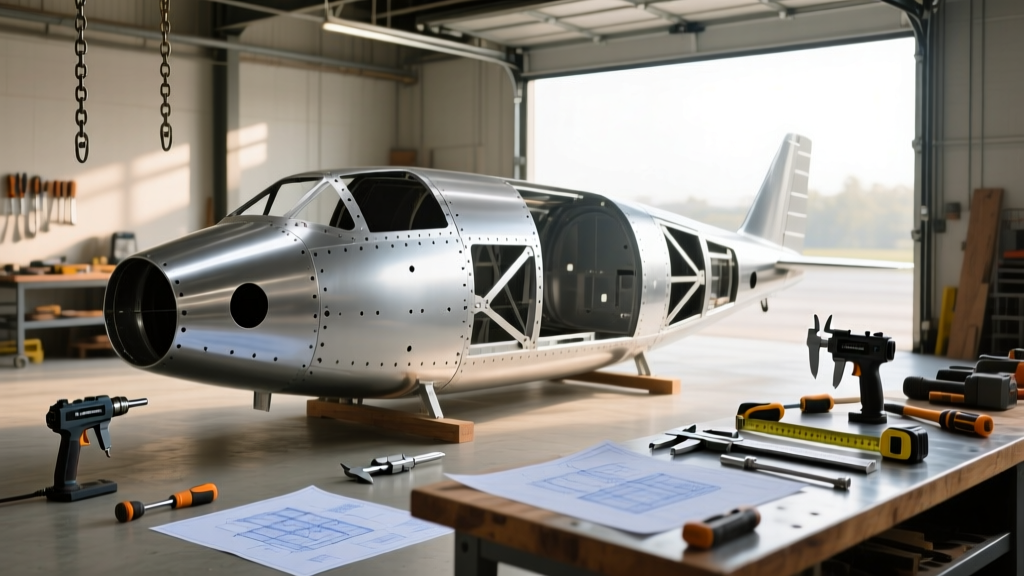
When calculating how much it costs to build a plane, many budgets fail to account for the facility required to build and store it. You cannot store an experimental aircraft outdoors; the UV degradation on composite fairings and the corrosion risk to unpunched aluminum rivets demand enclosed storage. Furthermore, assembling a 23-foot wingspan requires specialized real estate.
Steel Pole Buildings vs. Airport T-Hangars
If you are building on private property, constructing a custom steel pole building hangar is often the most cost-effective route. A standard 40x50 foot post-frame building with a 14-foot eave height and a 12x10 Schweiss hydraulic bifold door will cost between $65,000 and $95,000 to erect, including the concrete slab and basic electrical rough-in. This provides ample space for the aircraft, a dedicated avionics bench, and a paint booth. Conversely, leasing an airport T-Hangar shifts the capital expenditure to an operational expense. Monthly T-Hangar leases at non-towered regional airports average $350 to $600 per month. While this avoids the massive upfront construction cost of a private hangar, it introduces logistical friction: you must transport sub-assemblies from your home garage to the airport, and you are subject to airport authority rules regarding working hours and hazardous material disposal (like Alodine and primer).
Decision Framework: Which Funding Route Fits Your Build?
Choosing the right financial path depends on your liquidity, risk tolerance, and intended mission profile. Use this framework to dictate your capital strategy:
- The Cash-Flow Constrained Builder: Choose a Zenith or Sonex airframe. Pair it with a proven, lower-cost powerplant like a used Lycoming O-320 (approx. $18,000 overhauled) or a Rotax 912 ULS. Fund the project strictly through phased kit purchases using monthly savings. Avoid debt entirely by accepting a 4-year build timeline.
- The High-Performance IFR Builder: If your mission requires flying hard IFR in winter conditions, you need a Lycoming IO-390, dual ADAHRS Garmin G3X panels, and a certified GPS navigator (GTN 650Xi). This pushes the budget past $150,000. Utilize an AOPA kit loan with a 25% down payment to secure the major components immediately, protecting yourself against annual manufacturer price escalations.
- The Real Estate Integrated Builder: If you own rural land, bundle the hangar construction and the aircraft kit into a single residential construction loan or home equity line of credit (HELOC). HELOCs often carry lower interest rates than specialized aviation kit loans, allowing you to finance the $80,000 hangar and the $45,000 airframe kit simultaneously under one favorable credit facility.
"The most common financial failure mode in experimental aircraft building isn't running out of money for the aluminum; it's underestimating the 'last 10%' of the build. Upholstery, custom paint, engine baffling, and pitot-static system certification testing routinely consume 20% more capital than the initial spreadsheet predicted. Always hold a 15% cash contingency reserve that is completely walled off from your primary kit funding." — Senior EAA Technical Counselor
Ultimately, determining how much it costs to build a plane requires looking beyond the brochure price of the airframe kit. By strategically leveraging phased manufacturing, utilizing specialized aviation credit products, and accurately forecasting the construction costs of your hangar facility, you can transform a daunting six-figure project into a manageable, multi-year financial execution plan.
Written by
Sarah WhitfieldSarah Whitfield is a chartered quantity surveyor (MRICS) and construction cost analyst with 15 years of experience in material pricing, procurement strategy, and project budgeting. She earned her degree in Construction Management from the University of Reading (UK) and has worked on projects ranging from $2M custom homes to $180M mixed-use developments across North America and Europe. Sarah currently leads cost estimating for BuildMat Insight, maintaining a proprietary database of 4,000+ material price points updated quarterly. She is a frequent contributor to RSMeans cost data panels and has presented at the International Cost Engineering Council (ICEC) congress. Based in Denver, CO, Sarah is an avid trail runner and volunteer mentor for Women in Construction.
More from Sarah Whitfield
View all
Wood & Lumber
What Are the Different Types of Wood? A Builder's Guide
Compare structural softwoods, finish hardwoods, and engineered lumber. Analyze Janka ratings, MOE values, and 2026 pricing for construction.
Aug 4, 2026

Walls & Panels
Steel Framing vs Wood Framing: Corrosion and Moisture Defense
Compare steel framing vs wood framing for moisture resistance. Learn about galvanized coatings, condensation risks, and corrosion protection strategies.
Jul 21, 2026

Stone & Masonry
How to Cut Stone Veneer: Wet Saw vs Grinder Comparison
Compare the best tools for cutting stone veneer. We review wet saws, angle grinders, and chop saws to help you achieve clean, chip-free cuts.
Jul 21, 2026