How Much Would It Cost to Build a Guest House? 2026 Finance Guide
Discover how much it costs to build a guest house and explore the best financing options, loan types, and ROI projections for your ADU project.
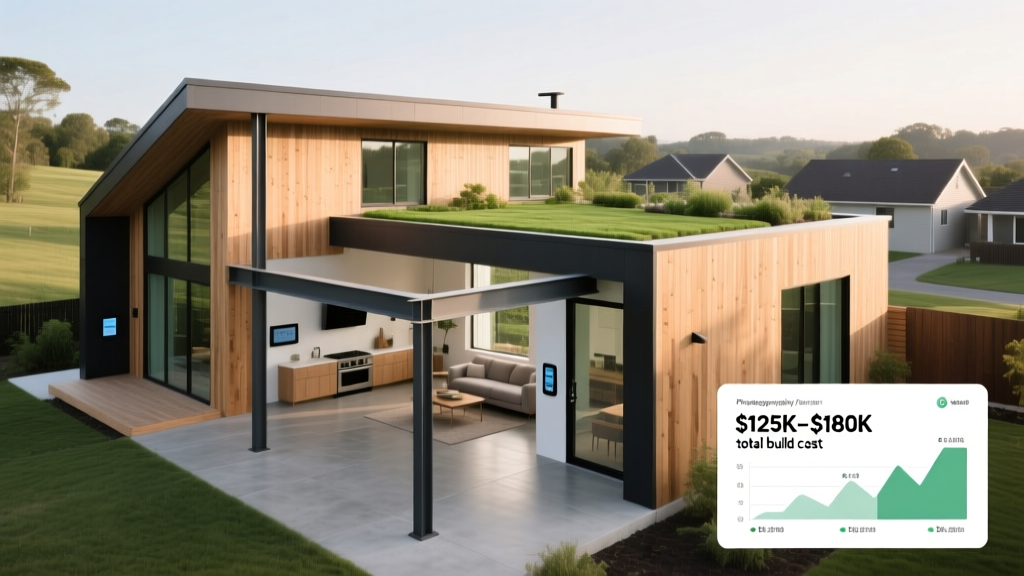
The True Cost to Build a Guest House (ADU) in 2026
When homeowners ask, 'how much would it cost to build a guest house,' the answer depends heavily on the build type: a ground-up detached Accessory Dwelling Unit (ADU), a garage conversion, or a prefabricated modular drop-in. In 2026, the national average for a fully finished, 600-square-foot detached guest house ranges from $165,000 to $285,000, translating to $275 to $475 per square foot.
Unlike standard home renovations, guest houses require independent utility connections, separate permitting, and distinct foundation work, which drives up the baseline costs. Below is a granular cost breakdown for a standard 600 sq. ft. stick-built detached ADU.
| Construction Phase | Estimated Cost Range | Percentage of Total |
|---|---|---|
| Site Prep, Trenching & Foundation | $18,000 - $32,000 | 12% |
| Framing, Roofing & Exterior Shell | $45,000 - $70,000 | 22% |
| MEP Rough-ins (Mechanical, Electrical, Plumbing) | $38,000 - $55,000 | 20% |
| Insulation, Drywall & Interior Finishes | $40,000 - $75,000 | 24% |
| Permits, Impact Fees & Design/Engineering | $15,000 - $35,000 | 14% |
| Appliances, Fixtures & Landscaping Restoration | $9,000 - $18,000 | 8% |
Note: Garage conversions typically cost 40% less ($85,000 - $130,000) because the foundation and exterior shell already exist, eliminating the most expensive site-work phases.
The 'Appraisal Gap': The Hidden Financing Trap
Standard home equity loans rely on your property's current appraised value. If you spend $200,000 building a guest house, an appraiser might only add $110,000 to your home's value due to a lack of comparable ADU sales in your zip code. This 'appraisal gap' can instantly push your Loan-to-Value (LTV) ratio above the 80% threshold, disqualifying you from standard HELOCs or home equity loans mid-construction.
To avoid this trap, you must secure financing based on the After-Repair Value (ARV) or utilize specialized ADU loan products that account for future rental income. According to Freddie Mac's ADU financing guidelines, lenders are increasingly allowing the projected rental income of the ADU to offset the borrower's debt-to-income (DTI) ratio, provided a 12-month lease agreement or market rent schedule is documented.
5 Financing Vehicles for Guest House Construction
Choosing the right capital stack depends on your existing mortgage rate, available equity, and whether you are building ground-up or converting existing space.
1. ADU-Specific Construction Loans (ARV-Based)
Products like the RenoFi ADU loan or specialized local credit union construction loans allow you to borrow against the future appraised value of your home once the guest house is complete. If your home is currently worth $600,000 and the ADU will push the ARV to $800,000, you can borrow up to 90% of the $800,000 ARV ($720,000), giving you ample room to fund a $200,000 build without touching your primary mortgage.
2. Home Equity Line of Credit (HELOC)
Best for garage conversions or prefab modular drops under $100,000. HELOCs offer flexible draw periods, meaning you only pay interest on the capital actively deployed to contractors. However, if your current LTV is already above 70%, a HELOC will likely not provide sufficient capital for a ground-up build.
3. Cash-Out Refinance
Only viable in 2026 if your current mortgage rate is higher than prevailing market rates, or if you have massive un-leveraged equity. If you are sitting on a legacy 3.5% mortgage rate, a cash-out refinance is mathematically destructive. You would be trading a cheap primary mortgage for a blended, higher-rate mortgage just to fund the ADU.
4. FHA Title 1 Property Improvement Loans
For budget-conscious homeowners looking to convert an existing basement or garage into a guest suite, the HUD FHA Title 1 program is a powerful tool. It allows borrowers to finance up to $25,090 for single-family property improvements. Crucially, Title 1 loans do not require equity if the loan amount is under $7,500, though larger amounts require a secured lien on the property. It is strictly for conversions and alterations, not ground-up new construction.
5. Local Subsidies and ADU Grants
Municipalities are aggressively incentivizing ADU construction to combat housing shortages. For example, California's CalHFA ADU Grant Program offers up to $40,000 in forgivable loans for low-to-moderate-income homeowners to cover pre-development and non-recurring closing costs. The National League of Cities maintains extensive databases on local zoning relaxations and municipal grant programs that can offset impact fees, which often exceed $20,000 in high-cost coastal markets.
Financing Decision Matrix
Use this framework to match your project scope with the optimal financial instrument.
| Loan Type | Best Project Scope | Max Funding Limit | Primary Advantage | Primary Drawback |
|---|---|---|---|---|
| ARV Construction Loan | Ground-up Detached ADU | 90% of Future ARV | Bypasses current appraisal gap | Higher interest rates during build phase |
| HELOC | Garage / Basement Conversion | 85% Current LTV | Interest-only draws; no closing costs | Variable rates; limited by current equity |
| FHA Title 1 | Minor structural conversions | $25,090 | Low equity requirements | Strict caps; cannot build new structures |
| Cash-Out Refi | Major build + Primary Reno | 80% Current LTV | Single monthly payment | Resets primary mortgage term and rate |
Step-by-Step Financing Execution Plan
- Order a 'Subject-To' Appraisal: Before applying for any loan, pay $500-$800 for an appraiser to evaluate your property 'subject-to' the completion of the ADU plans. This establishes your ARV and dictates your exact borrowing power.
- Calculate the Debt Service Coverage Ratio (DSCR): If you plan to rent the guest house, lenders will want to see a DSCR of at least 1.15x. Divide the projected monthly rent by the proposed monthly loan payment for the ADU portion. If the rent is $2,200/mo, your ADU loan payment cannot exceed $1,913/mo.
- Factor in Impact Fees and Utility Hookups: Many homeowners secure a $150,000 construction loan, only to be hit with $25,000 in municipal sewer tap fees and electrical grid upgrade requirements. Always buffer your loan amount by 15% for municipal soft costs.
- Lock in Rate Ceilings: Construction loans often feature variable rates during the 9-14 month build phase. Negotiate a rate cap or secure a forward-commitment lock with your lender to protect against bond market volatility before the loan converts to a permanent mortgage.
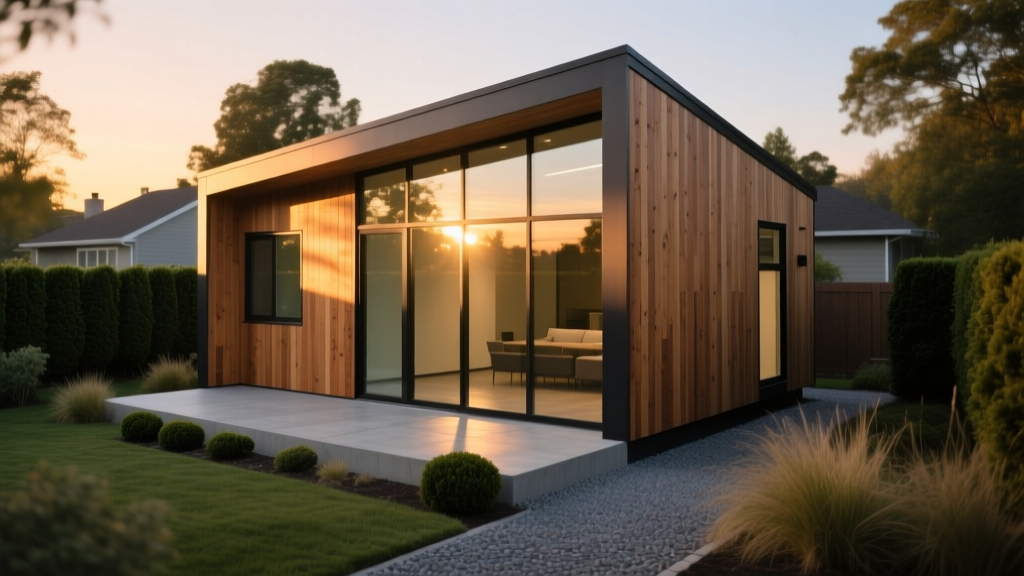
ROI and Rental Income Projections
Building a guest house is rarely a 1:1 value add on day one. The true ROI is realized through cash flow and long-term property appreciation in ADU-friendly zoning corridors.
In high-demand suburban and urban-adjacent markets, a 600 sq. ft. 1-bedroom/1-bathroom ADU generates between $1,600 and $2,400 in long-term rental income. Assuming a $200,000 build financed at 7.5% over 30 years (monthly payment ~$1,398), the property achieves positive cash flow from month one, yielding a cash-on-cash return of 8% to 12% when factoring in tax depreciation benefits.
For Short-Term Rentals (STRs like Airbnb), gross revenues can exceed $4,000 monthly, but operating expenses (cleaning, platform fees, furnishing depreciation) typically consume 35% of gross income. Furthermore, municipal STR ordinances are tightening in 2026; always verify local zoning laws before underwriting your loan based on projected Airbnb income. Ultimately, understanding exactly how much it costs to build a guest house is only half the equation; aligning those costs with the correct ARV-based financing ensures the project is a cash-flowing asset rather than a leveraged liability.
Written by
Elena RodriguezElena Rodriguez is a civil engineer and technical writer specializing in concrete technology, masonry systems, and ASTM/ACI compliance. She earned her B.S. in Civil Engineering from Texas A&M University and spent a decade at a materials testing laboratory, performing over 2,000 concrete compressive strength tests and masonry prism evaluations. Elena is an ACI-certified Field Testing Technician (Grade I) and a member of ASTM Committee C12 on Natural Building Stone. She currently consults on forensic engineering cases involving concrete failures and moisture intrusion. Based in San Antonio, TX, Elena is a proud member of the Society of Women Engineers (SWE) and coaches her daughter's FIRST Robotics team.
More from Elena Rodriguez
View all
Walls & Panels
Cost Analysis: Light Gauge Steel Framing Advantages and Disadvantages
Evaluate light gauge steel framing advantages and disadvantages through a strict cost analysis lens, comparing material, labor, and lifecycle expenses.
Aug 4, 2026

Walls & Panels
Gypsum Board Types: Exact Specifications, Thickness & Dimensions
Compare standard, Type X, and moisture-resistant gypsum board types. Get exact specifications, thicknesses, dimensions, and ASTM standards for your project.
Aug 4, 2026

Fire Resistance
Best Fire-Resistant Outdoor Decking Materials: 2026 Buyer Guide
Discover the best fire-resistant outdoor decking materials for 2026. Compare Class A PVC, aluminum, and hardwood options for WUI compliance and safety.
Aug 4, 2026