Cost to Build a Pool in Houston: 2026 Material & Builder Comparison
Compare the cost to build a pool in Houston by material type. Get 2026 pricing for concrete, fiberglass, and vinyl, plus local permit and excavation fees.

The Houston Factor: Why Local Soil Dictates Your Pool Cost
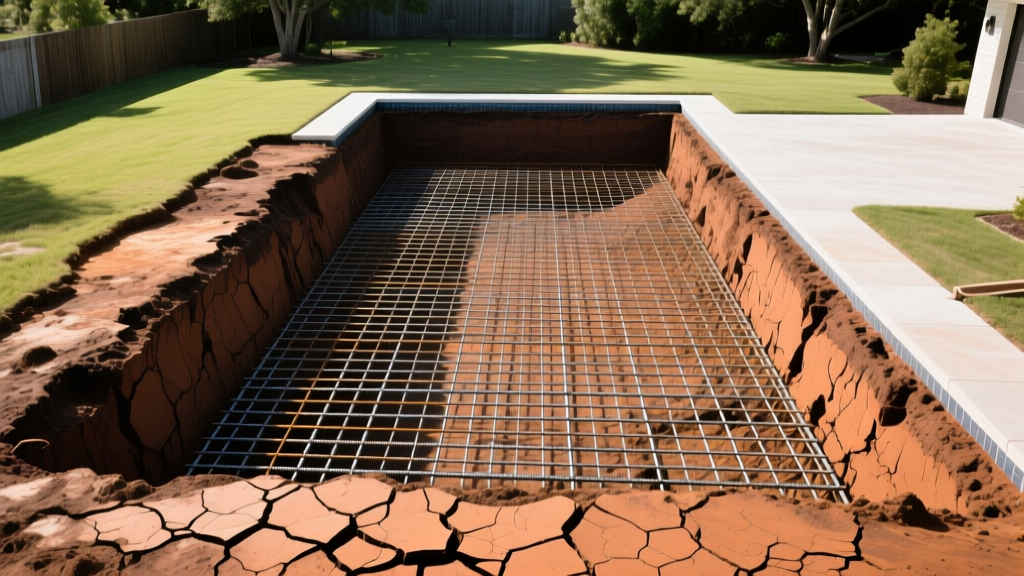
Estimating the cost to build a pool in Houston requires looking far beyond the surface finish. The defining variable in Houston pool construction is the region's infamous 'gumbo clay.' This highly expansive soil swells significantly when wet and shrinks during droughts, exerting thousands of pounds of lateral and vertical pressure on underground structures. According to soil data from Texas A&M AgriLife Extension, the Houston metropolitan area sits on the Beaumont Formation, characterized by heavy, poorly drained clays that demand specialized structural engineering for any subterranean construction.
To counteract this, reputable Houston builders mandate a geotechnical survey ($800 to $1,500) to determine the depth of stable bearing strata. Engineers then design a grid of drilled concrete piers—often extending 15 to 25 feet below the surface—to anchor the pool shell. This structural surcharge alone adds $4,500 to $9,000 to the baseline cost of a Houston pool, a line item rarely seen in regions with stable, sandy, or rocky soils.
Material Cost Matrix: Concrete vs. Fiberglass vs. Vinyl
When calculating the true cost to build a pool in Houston, the shell material determines not only the initial price but the long-term viability in shifting soil. Below is a 2026 cost comparison matrix tailored specifically to Gulf Coast conditions.
| Shell Material | Average Houston Cost | Soil Surcharge | Houston Viability |
|---|---|---|---|
| Shotcrete/Gunite (Concrete) | $85,000 - $140,000+ | $4,500 - $9,000 | Excellent (Highly Customizable) |
| Fiberglass | $65,000 - $95,000 | $2,000 - $4,000 | Good (Flexible, but size-limited) |
| Vinyl Liner | $55,000 - $75,000 | $3,000 - $5,000 | Poor (High risk of liner tearing) |
Deep Dive: Shotcrete and Gunite Engineering
Concrete pools dominate the Houston market for a reason. The Pool & Hot Tub Alliance (PHTA) standards recommend a minimum compressive strength of 4,000 PSI for pool shells in expansive soil regions. Houston builders typically use a wet-mix shotcrete application with a 3/8-inch aggregate and a high-density #3 or #4 steel rebar grid tied at 10-inch centers. Because concrete is rigid, it relies entirely on the aforementioned drilled piers to bridge the active clay zone. If you opt for a concrete pool, ensure your contract explicitly states the pier depth, diameter (usually 12 to 18 inches), and the specific PSI mix design.
The Fiberglass Advantage and Access Limitations
Fiberglass shells possess high tensile strength and inherent flexibility, allowing them to absorb minor soil movement without cracking. The installation requires a specialized gravel backfill that acts as a shock absorber against clay expansion. However, the primary cost barrier for fiberglass in Houston is lot access. The shells are manufactured off-site and delivered in one piece. If your Houston home is in a dense neighborhood like The Heights or River Oaks with narrow streets and heavy tree canopies, crane rental fees to lift the shell over the house can add $3,500 to $8,000 to the project.
Why Vinyl Liners Fail in Harris County
While vinyl pools offer the lowest entry price, they are highly discouraged by local engineers. The structural walls (typically steel or polymer) are susceptible to bowing under the immense lateral pressure of wet gumbo clay. Furthermore, Houston's high water table can cause groundwater to push up against the pool floor, creating hydrostatic pressure that causes the vinyl liner to 'float' or wrinkle, requiring premature replacement.
Hidden Houston Pool Costs: Permits, Utilities, and De-watering
Beyond the shell and the soil, local municipal requirements and environmental factors introduce secondary costs that out-of-state builders frequently underestimate.
- Municipal Permitting: The City of Houston Public Works and surrounding county offices require comprehensive structural, plumbing, and electrical permits. Expect to pay between $600 and $1,400 in municipal fees. If you live within an HOA, architectural review fees typically add another $250 to $500.
- Utility Locates and Relocation: Houston's urban infrastructure is dense. Before excavation, CenterPoint Energy and local water authorities must mark underground lines. If a primary sewer lateral or gas line crosses your planned pool footprint, relocation costs range from $2,000 to $6,500 depending on the depth and material of the pipe.
- Excavation De-watering: Houston is the 'Bayou City' for a reason. In areas near Clear Lake, Memorial, or Sugar Land, the water table can be just a few feet below the surface. Digging an 8-foot-deep pool in these zones requires continuous de-watering using wellpoint systems or sump pumps during construction. This specialized service adds $1,500 to $3,500 to the excavation phase.
- Hydrostatic Relief Valves: Mandatory for concrete pools in high-water-table zones, these one-way valves are installed in the pool floor to allow groundwater to seep into the pool rather than pushing the entire shell out of the ground. Installation and plumbing integration cost roughly $450 to $800.
Long-Term Maintenance in a Gulf Coast Climate
Houston's climate—characterized by intense UV radiation, high humidity, and prolonged heat waves—accelerates the degradation of certain pool finishes and coping materials.
'When selecting coping for a Houston pool, avoid dark-colored concrete cantilevers or asphalt-based products. They absorb extreme heat, making the deck unusable barefoot from May through September, and are prone to thermal spalling. Opt for light-colored travertine or textured quartzite, which reflect solar radiation and remain up to 20 degrees cooler to the touch.'
For interior finishes, standard white marcite (plaster) will degrade faster in Houston's heat, often requiring an acid wash or resurfacing within 7 to 9 years. Upgrading to a pebble-tec or quartz aggregate finish adds $4,000 to $7,000 to the initial build cost but extends the surface lifespan to 15-20 years, offering a superior long-term ROI. Additionally, saltwater chlorination systems are highly recommended over traditional liquid chlorine in Houston; the high ambient temperatures cause liquid chlorine to off-gas rapidly, whereas salt cells maintain consistent sanitation levels with less manual intervention.
Decision Framework: Which Pool Type Fits Your Houston Lot?
Use this practical matrix to determine the most cost-effective and structurally sound pool type for your specific property constraints.
Scenario A: Tight Urban Lot with Zero Lot Lines
Recommendation: Shotcrete/Gunite.
Why: Fiberglass shells require massive crane access. Shotcrete can be pumped over the house via a boom truck and applied manually, making it the only viable option for dense urban infill lots where heavy machinery cannot enter the backyard.
Scenario B: New Construction in Master-Planned Community (e.g., Woodlands, Cinco Ranch)
Recommendation: Fiberglass or Shotcrete.
Why: You have excellent crane access before the fence is built. Fiberglass offers a faster installation timeline (often 3-4 weeks vs. 3-4 months for concrete), allowing you to complete the pool before the final landscaping and fencing are installed, saving money on heavy equipment turf damage.
Scenario C: High Water Table / Flood Zone (e.g., Near Brays Bayou or Galveston Bay)
Recommendation: Shotcrete with deep piers and dual hydrostatic valves.
Why: Fiberglass and vinyl are highly susceptible to 'popping' out of the ground if the pool is drained during a flood event or heavy maintenance. A heavily engineered concrete shell anchored to deep piers provides the necessary mass and structural tie-down to resist extreme hydrostatic uplift.
Calculating the cost to build a pool in Houston is an exercise in geotechnical risk management. By prioritizing soil engineering, selecting materials that withstand expansive clay, and budgeting for the hidden costs of municipal permitting and de-watering, you can ensure your investment remains structurally sound and financially predictable for decades.
Written by
Elena RodriguezElena Rodriguez is a civil engineer and technical writer specializing in concrete technology, masonry systems, and ASTM/ACI compliance. She earned her B.S. in Civil Engineering from Texas A&M University and spent a decade at a materials testing laboratory, performing over 2,000 concrete compressive strength tests and masonry prism evaluations. Elena is an ACI-certified Field Testing Technician (Grade I) and a member of ASTM Committee C12 on Natural Building Stone. She currently consults on forensic engineering cases involving concrete failures and moisture intrusion. Based in San Antonio, TX, Elena is a proud member of the Society of Women Engineers (SWE) and coaches her daughter's FIRST Robotics team.
More from Elena Rodriguez
View all
Walls & Panels
Cost Analysis: Light Gauge Steel Framing Advantages and Disadvantages
Evaluate light gauge steel framing advantages and disadvantages through a strict cost analysis lens, comparing material, labor, and lifecycle expenses.
Aug 4, 2026

Walls & Panels
Gypsum Board Types: Exact Specifications, Thickness & Dimensions
Compare standard, Type X, and moisture-resistant gypsum board types. Get exact specifications, thicknesses, dimensions, and ASTM standards for your project.
Aug 4, 2026

Fire Resistance
Best Fire-Resistant Outdoor Decking Materials: 2026 Buyer Guide
Discover the best fire-resistant outdoor decking materials for 2026. Compare Class A PVC, aluminum, and hardwood options for WUI compliance and safety.
Aug 4, 2026