Cost to Build a House in Pennsylvania: 2026 Scope Calculator
Calculate the true cost to build a house in Pennsylvania. Break down regional pricing, material scopes, and climate-specific site prep for 2026.
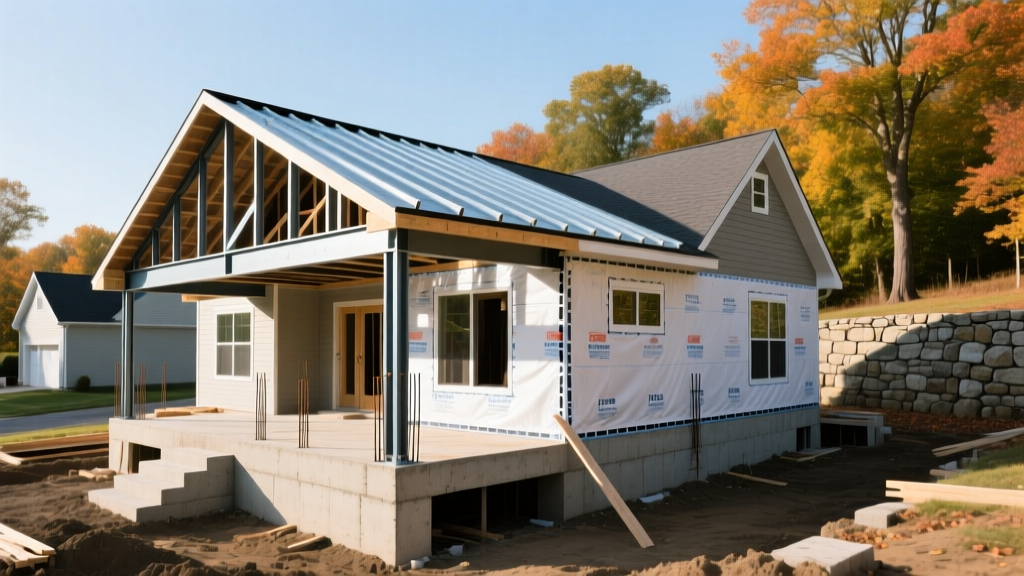
The Pennsylvania Building Baseline: Core Cost Metrics
Calculating the true cost to build a house in Pennsylvania requires moving beyond simple price-per-square-foot averages. While national benchmarks provide a starting point, Pennsylvania's diverse topography, strict municipal zoning, and specific climate zone requirements create a unique pricing environment. According to recent National Association of Home Builders data, the baseline cost for a custom, stick-built home in the Mid-Atlantic region ranges from $165 to $245 per square foot for the structure alone, excluding land and site work.
- Production/Tract Homes: $140 - $175 per sq. ft.
- Semi-Custom Builds: $180 - $240 per sq. ft.
- Full Custom/Architectural: $275 - $400+ per sq. ft.
- Average Build Time: 9 to 14 months (highly dependent on winter weather delays and municipal permitting).
Regional Pricing Matrix: Geography Dictates Labor
Labor rates and material delivery logistics vary drastically across the Commonwealth. A build in Chester County will carry a significantly different burden than a project in Tioga County. The following matrix breaks down regional multipliers based on current union and prevailing wage data, alongside local material supply chain realities.
| Region | Avg. Cost / Sq. Ft. | Labor Premium | Primary Cost Drivers |
|---|---|---|---|
| Philadelphia Suburbs (Chester/Montgomery) | $225 - $310 | +18% | High union density, strict zoning, expensive tap fees. |
| Pittsburgh Metro (Allegheny/Washington) | $190 - $260 | +8% | Hillside site prep, retaining walls, moderate labor costs. |
| Poconos / Northeast (Monroe/Pike) | $205 - $285 | +12% | Vacation home premiums, heavy snow load engineering, septic. |
| Central / Rural PA (Centre/Lycoming) | $165 - $215 | Baseline | Limestone rock excavation, well drilling, long material hauls. |
The Size & Scope Calculator: Geometry Over Square Footage
When utilizing a size and scope calculator, the most common error is assuming that a 2,500-square-foot house costs exactly 25% more than a 2,000-square-foot house. In reality, the geometric footprint and roof complexity dictate the true cost variance. Building science and U.S. Census Bureau construction data consistently show that the exterior envelope and foundation account for nearly 35% of total hard costs.
The Perimeter-to-Area Ratio Trap
Consider two homes, both offering 1,500 square feet of living space:
- Home A (The Rectangle): 30 ft x 50 ft. Perimeter = 160 linear feet. Corners = 4.
- Home B (The L-Shape): Complex footprint with multiple offsets. Perimeter = 210 linear feet. Corners = 12.
Home B requires 31% more foundation footing, 31% more exterior wall framing, additional roof valleys, and significantly more labor for framing and flashing corners. In Pennsylvania, where frost walls must be poured to a minimum depth of 36 to 48 inches depending on the county, that extra 50 linear feet of foundation can add $12,000 to $18,000 to the concrete budget alone.
Climate-Driven Scope: Engineering for IECC Zone 5
Pennsylvania is predominantly classified as IECC Climate Zone 5, with northern tier counties edging into Zone 6. This classification fundamentally alters the material scope required for code compliance and long-term energy efficiency. According to Department of Energy climate zone guidelines, builders must account for high heating degree days (HDD) and significant freeze-thaw cycles.
Mandatory Scope Adjustments for PA Builds:
- Insulation Upgrades: While code may mandate R-49 in the attic and R-20 in walls, optimal PA scope dictates R-60 attic insulation (using blown-in cellulose or closed-cell spray foam at the rim joists) and R-21+ exterior continuous insulation to prevent thermal bridging.
- Window Specifications: Standard single-pane or low-grade dual-pane vinyl windows will fail to meet comfort standards. The scope must include dual-pane, Low-E, argon-filled fiberglass or composite windows (e.g., Andersen 100 Series Fibrex or Pella Impervia) with a U-Factor of 0.27 or lower.
- Ice and Water Shield: Due to heavy snow loads and ice damming risks, the roofing scope must include a minimum 6-foot application of ice and water shield at the eaves, extending past the interior heated wall line.
Material & Assembly Cost Breakdown
Selecting materials is where the scope calculator either balances or breaks. Below is a realistic 2026 pricing matrix for common exterior assemblies used in Pennsylvania custom builds.
| Assembly Category | Standard Scope (Budget) | Premium Scope (High-Performance) | Cost Variance |
|---|---|---|---|
| Wall Sheathing & WRB | OSB + Tyvek Housewrap | Huber ZIP System R-Sheathing | +$4.50 - $6.00 / sq. ft. |
| Exterior Cladding | Vinyl Siding (Standard Profile) | James Hardie Fiber Cement + Rainscreen | +$8.00 - $12.00 / sq. ft. |
| Roofing System | Architectural Asphalt Shingles | 24-Gauge Standing Seam Metal | +$11.00 - $16.00 / sq. ft. |
| HVAC System | Standard Gas Furnace + Central AC | Cold-Climate Air Source Heat Pump (e.g., Bosch IDS 2.0) | +$3,500 - $6,000 flat |
Site Prep: The Unpredictable PA Variables
The most volatile section of any Pennsylvania size and scope calculator is site preparation. Unlike flat, sandy terrains in the coastal south, PA land is characterized by heavy clay, shale, and limestone bedrock. Before finalizing your construction budget, you must allocate funds for the following site-specific scopes:
Rock Excavation and Blasting
In Central and Eastern PA, hitting limestone or blue shale ledge during foundation excavation is highly probable. Standard excavation contracts exclude rock removal. If a contractor encounters solid rock, you will need to hire a specialized blasting or hydraulic hammer crew. Budget an emergency contingency of $15 to $35 per cubic yard for rock excavation. A typical full basement hitting ledge can add $15,000 to $40,000 to the site prep budget.
Water and Wastewater (Perc Tests & Wells)
If building outside of a municipal tap zone, you are at the mercy of the Pennsylvania Department of Environmental Protection (DEP) regulations. A percolation (perc) test and soil evaluation will cost between $1,500 and $3,500. If the soil fails a conventional perc test, you will be required to install an engineered sand mound septic system, which costs between $25,000 and $45,000—roughly triple the cost of a standard gravity-fed trench system. Furthermore, drilling a water well through PA shale typically yields 10 to 30 gallons per minute, but drilling depths can exceed 400 feet, pushing well costs past $18,000.
Step-by-Step Scope Calibration Framework
To ensure your project remains financially viable, apply this sequential framework when running your numbers:
- Lock the Envelope First: Finalize the foundation perimeter and roof pitch before selecting interior finishes. Reducing the footprint by 10% yields exponentially higher savings than downgrading from quartz to laminate countertops.
- Perform a Geotech Soil Boring: Spend $2,500 on a geotechnical soil report before purchasing the land or finalizing the foundation engineering. This prevents catastrophic budget overruns related to hidden bedrock or high water tables.
- Value-Engineer the Mechanicals: In PA's climate, investing heavily in the building envelope (ZIP sheathing, spray foam rim joists, triple-pane windows) allows you to downsize the HVAC tonnage and furnace BTU output, offsetting the insulation costs while lowering long-term utility bills.
- Factor in the 'Winter Build' Tax: If your foundation is being poured or framing is occurring between December and March, add a 4% to 7% premium to your labor and material budget for cold-weather concrete admixtures, ground thawing, and temporary heating enclosures.
By treating the cost to build a house in Pennsylvania as a dynamic equation of geometry, climate engineering, and subsurface conditions, you can accurately forecast your budget and avoid the hidden variables that routinely derail custom builds in the Commonwealth.
Written by
Elena RodriguezElena Rodriguez is a civil engineer and technical writer specializing in concrete technology, masonry systems, and ASTM/ACI compliance. She earned her B.S. in Civil Engineering from Texas A&M University and spent a decade at a materials testing laboratory, performing over 2,000 concrete compressive strength tests and masonry prism evaluations. Elena is an ACI-certified Field Testing Technician (Grade I) and a member of ASTM Committee C12 on Natural Building Stone. She currently consults on forensic engineering cases involving concrete failures and moisture intrusion. Based in San Antonio, TX, Elena is a proud member of the Society of Women Engineers (SWE) and coaches her daughter's FIRST Robotics team.
More from Elena Rodriguez
View all
Walls & Panels
Cost Analysis: Light Gauge Steel Framing Advantages and Disadvantages
Evaluate light gauge steel framing advantages and disadvantages through a strict cost analysis lens, comparing material, labor, and lifecycle expenses.
Aug 4, 2026

Walls & Panels
Gypsum Board Types: Exact Specifications, Thickness & Dimensions
Compare standard, Type X, and moisture-resistant gypsum board types. Get exact specifications, thicknesses, dimensions, and ASTM standards for your project.
Aug 4, 2026

Fire Resistance
Best Fire-Resistant Outdoor Decking Materials: 2026 Buyer Guide
Discover the best fire-resistant outdoor decking materials for 2026. Compare Class A PVC, aluminum, and hardwood options for WUI compliance and safety.
Aug 4, 2026