2026 Cost Per Square Foot to Build a House in Texas: Full Breakdown
Discover the true cost per square foot to build a house in Texas in 2026. Get detailed regional pricing, material breakdowns, and foundation cost data.
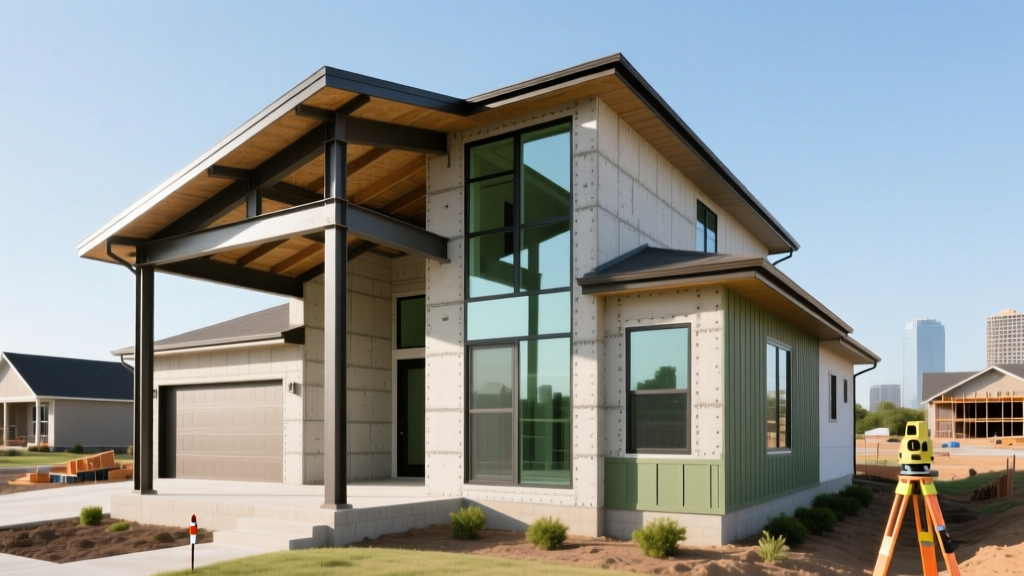
The Reality of Texas Construction Costs in 2026
Calculating the exact cost per square foot to build a house in Texas requires moving beyond national averages. While the U.S. national baseline for custom home construction hovers around $150 to $200 per square foot, Texas presents a highly fragmented pricing landscape driven by extreme regional soil variations, municipal utility structures, and intense climate demands. As of 2026, the cost per square foot to build a house in Texas ranges from $135 in rural West Texas to over $240 in the custom enclaves of Austin and Dallas-Fort Worth.
According to data tracked by the National Association of Home Builders (NAHB), regional labor shortages and localized material logistics heavily skew pricing. However, the true differentiator in Texas construction estimating is the hidden cost of environmental adaptation—specifically, engineering for expansive clay soils and designing thermal envelopes capable of withstanding 100°F+ summer peaks.
2026 Texas Construction Cost Snapshot
- Statewide Average (Semi-Custom): $165 - $195 per sq. ft.
- High-End Custom (Austin/DFW): $220 - $280+ per sq. ft.
- Rural / Production Baseline: $135 - $155 per sq. ft.
- Primary Cost Drivers: Foundation engineering, HVAC tonnage, and municipal impact fees.
Regional Cost Matrix: From the Panhandle to the Gulf
Texas is not a monolith. The geology and municipal regulations change drastically across the state, directly impacting your hard construction costs. Below is a detailed breakdown of what to expect based on your specific build zone.
| Region | Avg Cost / Sq. Ft. | Primary Cost Driver | Soil & Foundation Profile |
|---|---|---|---|
| Dallas-Fort Worth (DFW) | $175 - $230 | Expansive clay foundations, hail-resistant roofing, high municipal impact fees. | Blackland Prairie clay (High Plasticity Index). Requires post-tension slabs. |
| Austin / Hill Country | $190 - $260+ | Limestone excavation, steep lot grading, premium architectural finishes. | Shallow topsoil over solid limestone. Often requires rock blasting or pier-and-beam. |
| Houston / Gulf Coast | $160 - $210 | Windstorm mitigation (WPI-8), elevated foundations, high humidity envelope sealing. | Gumbo clay and coastal sand. Requires deep-driven piers or heavily reinforced slabs. |
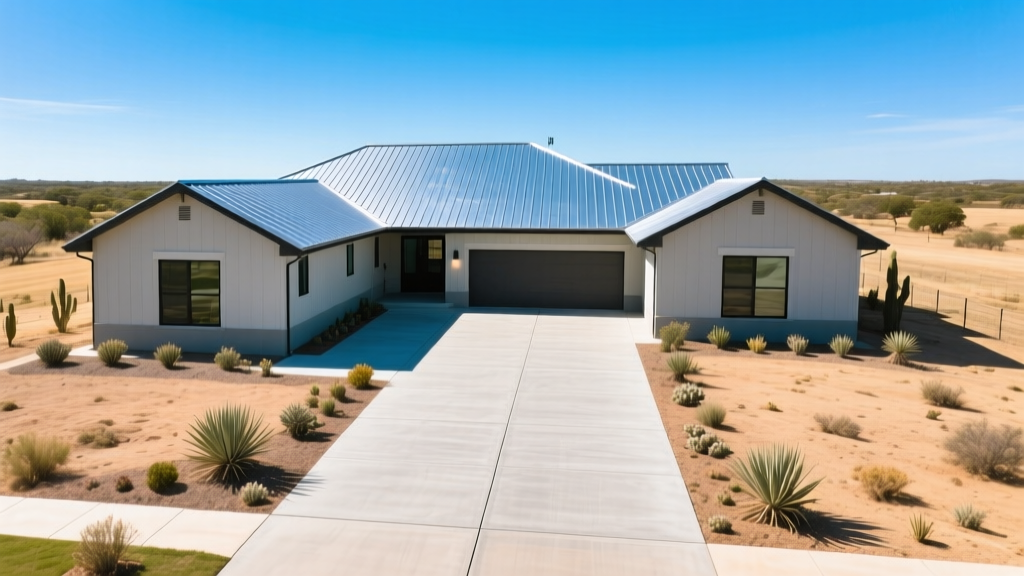
| West Texas / Panhandle | $135 - $165 | Material transport logistics, high-wind engineering, lower labor density. | Stable caliche and sandy loam. Standard slab-on-grade is usually sufficient. |
The Expansive Clay Factor: Engineering Your Foundation
The single most misunderstood line item in a Texas construction budget is the foundation. The Texas A&M Real Estate Center frequently highlights foundation failure as a top issue for residential properties in the state, primarily due to expansive soils. Soils with a Plasticity Index (PI) greater than 18 are considered expansive; the Blackland Prairie soils running through DFW and Austin frequently exceed a PI of 35.
Building a standard waffle slab on high-PI soil without proper engineering is a recipe for catastrophic structural cracking. Here is how the three primary foundation systems compare in Texas:
Foundation System Comparison
- Standard Waffle Slab: ($5.50 - $7.00 / sq. ft.) Suitable only for stable soils (West Texas). Uses cardboard void forms to create a grid of grade beams. Highly prone to failure in DFW/Austin clay.
- Post-Tensioned Slab: ($8.50 - $11.50 / sq. ft.) The gold standard for Texas clay. High-strength steel cables encased in plastic sheathing are tensioned to 33,000 psi after the concrete cures. This compresses the slab, actively resisting the upward swell of wet clay. Always demand a post-tension slab in high-PI zones.
- Pier and Beam (Drilled Piers): ($14.00 - $22.00+ / sq. ft.) Required in the Hill Country where limestone prevents standard slab excavation, or in coastal Houston where soil liquefaction is a risk. Bell-drilled piers are poured 15 to 30 feet deep to anchor into stable bedrock.
Climate-Specific Envelope: HVAC and Impact Roofing
Texas weather demands aggressive thermal and impact engineering. Skimping on the building envelope will result in exorbitant utility bills and premature material failure.
HVAC Sizing and SEER2 Requirements
The standard national rule of thumb for HVAC sizing is one ton of cooling per 500 square feet. In Texas, this is dangerously inadequate. Due to extended periods of 100°F+ ambient temperatures, Texas homes typically require one ton per 400 square feet, unless you upgrade your insulation package. According to the U.S. Energy Information Administration (EIA), cooling accounts for a massive percentage of regional energy expenditure. Specify 16 SEER2 as your absolute minimum, but for homes over 3,000 square feet, invest in an 18+ SEER2 variable-speed compressor (such as the Trane XV20i or Lennox SL28XCV). Variable-speed units run continuously at low capacity, which is critical for dehumidifying the heavy Texas spring and Gulf coast air.
Expert Directive: Never allow a builder to size your HVAC using 'rule of thumb' square footage math. Mandate an ACCA Manual J load calculation and a Manual S equipment selection. This ensures your ductwork and tonnage are precisely matched to your home's specific solar orientation and window glazing.
Hail Zone Roofing Standards
If you are building in DFW, San Antonio, or Austin, you are in a high-hail corridor. Standard 30-year architectural shingles will be destroyed by the first major spring supercell. You must specify UL 2218 Class 4 impact-resistant shingles (e.g., Owens Corning Duration Storm or Malarkey Vista) or upgrade to a 24-gauge standing seam metal roof. While Class 4 shingles carry a 15% to 20% material premium, they routinely qualify homeowners for 15% to 25% discounts on wind and hail insurance premiums, yielding a return on investment within five years.
Hard Cost vs. Soft Cost Breakdown (2,500 Sq. Ft. Model)
To provide a concrete understanding of the cost per square foot to build a house in Texas, below is a detailed line-item breakdown for a 2,500 sq. ft. semi-custom home in the Dallas-Fort Worth metroplex, built in 2026 at an all-in cost of $185 per square foot ($462,500 total).
| Category | Estimated Cost | % of Total | Key Texas Specifics |
|---|---|---|---|
| Site Work & Prep | $28,000 | 6.0% | Includes soil testing (geotech report) and tree mitigation fees common in Austin/DFW. |
| Foundation | $32,500 | 7.0% | Post-tensioned slab engineered for PI > 25 clay soils. |
| Framing & Lumber | $65,000 | 14.0% | Engineered I-joists and 2x6 exterior walls for deeper insulation cavities. |
| Exterior Envelope | $58,000 | 12.5% | Class 4 impact roofing, Low-E3 vinyl windows, and HardiePlank fiber cement siding. |
| MEP (Mech/Elec/Plumb) | $78,000 | 16.8% | 18 SEER2 variable speed HVAC, PEX plumbing, 200-amp electrical service. |
| Interior Finishes | $115,000 | 24.8% | Quartz countertops, LVP flooring, custom cabinetry, and Level 4 drywall finish. |
| Soft Costs & Permits | $45,000 | 9.7% | Architectural plans, city impact fees, MUD assessments, and builder overhead. |
| Lot/Land Cost | $41,000 | 8.8% | Varies wildly; this reflects a standard subdivision lot in a suburban MUD. |
The Hidden Budget Killers: MUDs, PIDs, and Impact Fees
When evaluating land costs in Texas, the sticker price of the lot is only half the story. Texas relies heavily on Municipal Utility Districts (MUDs) and Public Improvement Districts (PIDs) to finance suburban infrastructure.
In a MUD, the developer issues municipal bonds to build the roads, water lines, and sewer systems, then passes that debt onto the homeowner via an elevated property tax rate (often 2.8% to 3.5% total, compared to a standard 2.1%). While this keeps the upfront lot purchase price artificially low, it severely impacts your monthly mortgage carrying costs and long-term equity. Conversely, cities like Frisco and McKinney charge massive upfront 'Water and Wastewater Impact Fees' that can add $10,000 to $15,000 to your soft costs before a single shovel hits the dirt. Always request a comprehensive tax certificate and impact fee schedule from the local municipality before purchasing your lot.
Strategic Budget Allocation Framework
Knowing where to allocate your budget is critical when managing the cost per square foot to build a house in Texas. Use this framework to maximize resale value and structural longevity.
Where to Spend (Do Not Compromise)
- Foundation Engineering: Always pay for the geotech report and upgrade to post-tension if recommended.
- Attic Insulation: Upgrade from blown-in fiberglass to closed-cell spray foam (R-7 per inch) on the roof deck. This turns your attic into a semi-conditioned space, drastically reducing HVAC load.
- Roofing Impact Rating: Class 4 shingles or standing seam metal are non-negotiable in North/Central Texas.
Where to Save (Smart Compromises)
- Exterior Masonry: Full brick elevations are expensive and offer minimal structural benefit over framed walls. Use brick or stone only as wainscoting (bottom 3 feet) paired with high-quality fiber cement siding above.
- Interior Door Hardware: Skip the heavy custom forged iron interior handles. Standard solid-core doors with mid-tier lever hardware provide the same acoustic privacy for a fraction of the cost.
- Lighting Fixtures: Builder-grade lighting packages are notoriously overpriced. Allocate a bare-minimum allowance and source your own fixtures from direct-to-consumer online retailers post-closing.
Frequently Asked Questions
Is it cheaper to build or buy an existing home in Texas right now?
In 2026, building a custom home in Texas generally costs 10% to 15% more per square foot than purchasing a comparable existing resale home, primarily due to the premium of current labor rates and the cost of raw land. However, building allows you to integrate modern energy efficiencies (like spray foam and 18 SEER2 HVAC) that drastically reduce monthly utility costs, often narrowing the total cost of ownership gap within three to five years.
How do Texas property taxes affect new construction budgets?
Texas has no state income tax, relying heavily on property taxes to fund local services. When you build a new home, the county appraisal district will assess the value of the land plus the completed structure. New construction frequently triggers 'supplemental tax bills' mid-year as the assessor updates the property value from 'vacant lot' to 'improved property.' Always budget an extra 3% to 5% of your total build cost in cash reserves to cover these prorated supplemental tax bills at closing.
Written by
David NakamuraDavid Nakamura is a licensed architect (AIA) and construction technology writer focused on sustainable building methods, mass timber engineering, and high-performance building envelopes. He holds a Master of Architecture from the University of Washington and is a certified Passive House Consultant (CPHC). David spent eight years at the Seattle firm Mithun, where he led the design of three LEED Platinum projects, before founding his own practice specializing in net-zero residential design. He serves on the editorial advisory board of GreenBuilder Magazine and has authored peer-reviewed papers on cross-laminated timber (CLT) connections for the Journal of Structural Engineering. In his spare time, David teaches woodworking at Pratt Fine Arts Center and kayaks the Puget Sound.
More from David Nakamura
View all
Construction Cost
Labor Cost to Build a Deck Per Sq Ft: 2026 Installation Guide
Discover the exact labor cost to build a deck per sq ft in 2026. This installation guide breaks down contractor rates, complexity factors, and hidden fees.
Aug 4, 2026

Construction Cost
How Much Does It Cost to Build a 3 Bedroom House? Financing Guide
Learn exactly how much it costs to build a 3 bedroom house and explore 2026 financing options, construction loan types, and budget frameworks for your build.
Aug 4, 2026

Construction Cost
Cost to Build a Tennis Court: 2026 Guide
How much does it cost to build a tennis court in 2026? Breakdowns for asphalt, concrete, and synthetic surfaces plus fencing and lighting.
Jul 30, 2026