How Much Did It Cost to Build the Twin Towers? A Financing Analysis
Discover exactly how much it cost to build the Twin Towers, adjusted for inflation, and extract mega-project financing lessons for modern developers.
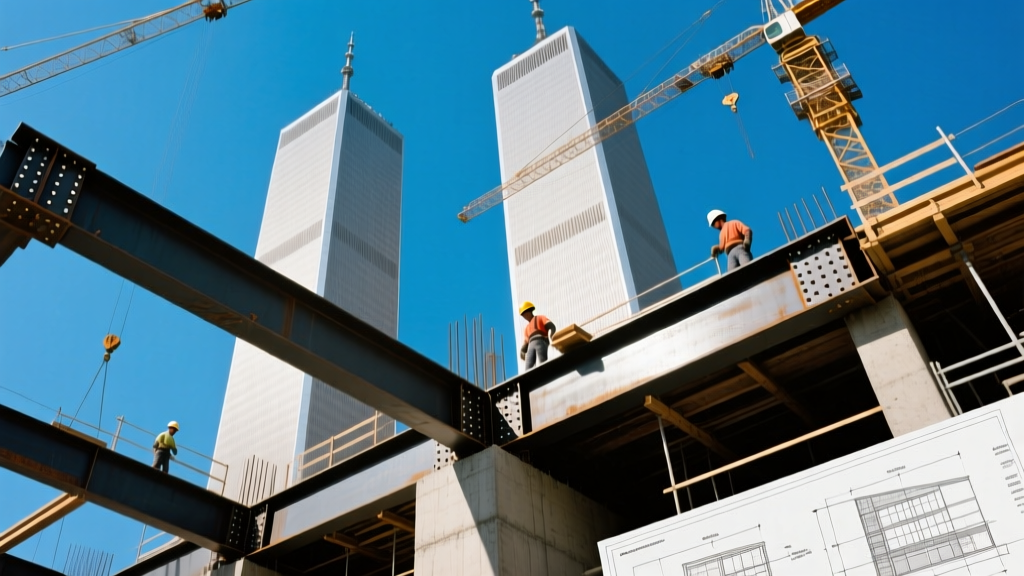
The Original Price Tag: How Much Did It Cost to Build the Twin Towers?
When analyzing the financial architecture of mega-projects, few case studies are as thoroughly documented—or as frequently misunderstood—as the original World Trade Center complex. To answer the core question: the initial estimated cost to build the Twin Towers and the surrounding five-building plaza was $400 million in 1968. However, by the time the complex was officially dedicated in April 1973, the final construction cost had ballooned to approximately $500 million (equivalent to roughly $900 million for the Twin Towers alone, with the remainder allocated to WTC 3, 4, 5, and the subterranean infrastructure).
This 25% budget overrun was not merely a product of poor estimating; it was driven by unprecedented geotechnical and structural challenges. The site, located on the west side of Lower Manhattan, was essentially landfill resting on bedrock up to 70 feet below the surface, adjacent to the Hudson River. To prevent the site from flooding during excavation, engineers utilized the "slurry trench" method, digging deep trenches and filling them with a bentonite clay slurry to hold back the earth and water before pouring concrete. This foundation alone cost tens of millions of dollars, representing a massive premium over standard shallow spread footings used in typical mid-century high-rises.
Inflation-Adjusted Reality: What the Twin Towers Would Cost Today
Understanding historical construction costs requires rigorous inflation adjustment. Using the Consumer Price Index (CPI) data tracked by the Federal Reserve Economic Data (FRED), we can translate 1973 construction dollars into modern purchasing power. However, raw CPI adjustments often understate the true escalation in commercial construction costs, which are driven by specialized labor, advanced material codes, and modern safety regulations.
| Cost Category | 1973 Nominal Cost | 2026 CPI-Adjusted Cost | 2026 Estimated Market Cost |
|---|---|---|---|
| Land Acquisition & Clearing (Radio Row) | $35 Million | $245 Million | $1.2 Billion+ |
| Slurry Trench Foundation & Substructure | $60 Million | $420 Million | $850 Million |
| Steel Superstructure (Twin Towers) | $180 Million | $1.26 Billion | $2.1 Billion |
| Mechanical, Electrical, Plumbing (MEP) | $90 Million | $630 Million | $1.4 Billion |
| Architectural Finishes & Fit-Out | $135 Million | $945 Million | $1.8 Billion |
| Total Complex Estimate | $500 Million | $3.5 Billion | $7.35 Billion |
While the raw CPI adjustment places the original complex at roughly $3.5 billion in today's dollars, the actual market cost to build identical 110-story towers in 2026 Manhattan would easily exceed $7 billion. This delta highlights the "soft cost escalation" in modern development: contemporary projects require LEED certification, advanced seismic and wind-load engineering, post-9/11 structural hardening, and prevailing wage labor rates that simply did not exist in the late 1960s.
Dissecting the Financing Structure: Bonds, Backing, and Bureaucracy
The most brilliant aspect of the original World Trade Center was not its architectural height, but its financial engineering. The project was developed by the Port Authority of New York and New Jersey (PANYNJ). Because the Port Authority is a bi-state public agency, it possessed a unique financing superpower: the ability to issue tax-exempt municipal revenue bonds.
The Cross-Collateralization Strategy
The Port Authority did not finance the Twin Towers through direct taxpayer appropriations or standard commercial bank loans. Instead, they utilized cross-collateralization. The PANYNJ owned and operated the region's most profitable infrastructure assets, including the George Washington Bridge, the Lincoln and Holland Tunnels, and the regional airports. By pledging the massive, predictable toll and fee revenues from these existing assets as a backstop, the Port Authority secured a AAA bond rating.
Financing Insight: The Power of the Balance Sheet
Modern developers can replicate this strategy through "portfolio securitization." If you are developing a high-risk, capital-intensive new project, cross-collateralizing the debt with the stabilized net operating income (NOI) of your existing, cash-flowing assets can lower your blended interest rate by 150 to 300 basis points compared to standalone construction loans.
Furthermore, because the Port Authority was a public entity, the interest paid to bondholders was exempt from federal and state income taxes. This allowed the PANYNJ to offer lower interest rates to investors while still raising the massive $500 million required. In 1973, a tax-exempt bond yielding 5% was highly attractive to institutional investors, effectively subsidizing the cost of capital for the construction.
The Rebuilding Paradigm: Financing One World Trade Center
To fully understand the financing evolution of the site, we must contrast the original build with the reconstruction effort following the 2001 attacks. The National Institute of Standards and Technology (NIST) extensively documented the structural failures of the original towers, which directly influenced the exorbitant safety costs built into the new One World Trade Center (Freedom Tower).
One WTC was completed in 2014 at a staggering cost of $3.9 billion. The financing for this rebuilding effort was a complex mosaic that modern developers should study:
- Insurance Payouts: The initial capital stack was heavily reliant on a protracted, multi-billion-dollar insurance settlement from the 9/11 attacks, which provided the base equity for site clearing and foundation work.
- Liberty Bonds: The federal government authorized $8 billion in "Liberty Bonds," a special class of tax-exempt private activity bonds, specifically to stimulate Lower Manhattan's recovery. This drastically reduced the developer's cost of debt.
- Direct Public Equity: The Port Authority and the State of New York injected billions in direct public funds, recognizing that the project's financial viability as a standalone commercial real estate venture was compromised by its massive security requirements and symbolic nature.
Actionable Financing Frameworks for Modern High-Rise Developers
While most private developers do not have the bi-state monopoly power of the Port Authority, the financial mechanics used to build and rebuild the Twin Towers offer three highly actionable frameworks for 2026 commercial construction estimating and capital raising.
1. Leverage PILOT Bonds for Public Benefit Projects
The original WTC utilized its public-agency status to avoid property taxes during construction. Today, private developers building mixed-use or affordable housing components can negotiate Payment in Lieu of Taxes (PILOT) agreements with municipal governments. By securitizing the future PILOT stream into tax-exempt bonds, developers can finance 20% to 30% of their hard construction costs at rates significantly below conventional SOFR-indexed construction loans.
2. Implement Phased Substructure Financing
The slurry trench foundation of the Twin Towers was a massive upfront capital sink. Modern high-rise developers should structure their capital stack to utilize "foundation-only" bridge loans. Because substructure work carries the highest geotechnical risk, lenders often price this phase aggressively. By isolating the foundation phase into a separate, higher-yield mezzanine tranche, you can protect your senior construction loan from early-stage draw defaults and keep your primary interest reserves intact for the vertical superstructure phase.
3. Factor "Security and Resilience" Premiums into Early Estimates
The NIST investigations into the original towers proved that progressive collapse and fireproofing adhesion were critical vulnerabilities. For any 2026 high-rise estimate, developers must allocate a specific "Resilience Premium" line item. Based on current structural engineering standards, expect to add 8% to 12% to your structural steel and concrete budget for enhanced fireproofing (e.g., using intumescent coatings or denser spray-applied fire-resistive materials), wider egress stairwells, and hardened ground-floor perimeters. Failing to estimate these post-9/11 code requirements is a primary driver of modern mega-project budget overruns.
"The history of the World Trade Center is a masterclass in how the cost of capital and the cost of concrete are inextricably linked. You cannot accurately estimate the physical build without first engineering the financial foundation."

Summary: The True Cost of Ambition
When asking how much it cost to build the Twin Towers, the nominal $500 million figure is merely the starting point. The true cost includes the pioneering geotechnical risks, the innovative use of tax-exempt municipal debt, and the subsequent multi-billion-dollar lessons learned during the rebuilding phase. For today's construction estimators and commercial developers, the WTC remains the ultimate benchmark for understanding how public backing, cross-collateralization, and rigorous risk-adjusted estimating dictate the skyline.
Written by
Elena RodriguezElena Rodriguez is a civil engineer and technical writer specializing in concrete technology, masonry systems, and ASTM/ACI compliance. She earned her B.S. in Civil Engineering from Texas A&M University and spent a decade at a materials testing laboratory, performing over 2,000 concrete compressive strength tests and masonry prism evaluations. Elena is an ACI-certified Field Testing Technician (Grade I) and a member of ASTM Committee C12 on Natural Building Stone. She currently consults on forensic engineering cases involving concrete failures and moisture intrusion. Based in San Antonio, TX, Elena is a proud member of the Society of Women Engineers (SWE) and coaches her daughter's FIRST Robotics team.
More from Elena Rodriguez
View all
Walls & Panels
Cost Analysis: Light Gauge Steel Framing Advantages and Disadvantages
Evaluate light gauge steel framing advantages and disadvantages through a strict cost analysis lens, comparing material, labor, and lifecycle expenses.
Aug 4, 2026

Walls & Panels
Gypsum Board Types: Exact Specifications, Thickness & Dimensions
Compare standard, Type X, and moisture-resistant gypsum board types. Get exact specifications, thicknesses, dimensions, and ASTM standards for your project.
Aug 4, 2026

Fire Resistance
Best Fire-Resistant Outdoor Decking Materials: 2026 Buyer Guide
Discover the best fire-resistant outdoor decking materials for 2026. Compare Class A PVC, aluminum, and hardwood options for WUI compliance and safety.
Aug 4, 2026