Cost & Comparison: 15' by 15' Composite Deck Materials in 2026
Compare top 15' by 15' composite deck materials for 2026. Get exact board counts, hidden fastener math, and pricing for Trex, TimberTech, and more.

The 225-Square-Foot Blueprint: Calculating Exact Material Yields
Building a 15-foot by 15-foot deck yields exactly 225 square feet of surface area. However, ordering 225 square feet of composite decking will leave you short. To accurately price 15' by 15' composite deck materials, you must calculate linear footage based on standard board dimensions and account for structural waste.
Most premium capped composite boards measure 5.5 inches wide. When you factor in the mandatory 0.25-inch gap for thermal expansion and drainage, each board covers 5.75 inches (0.479 feet) of lateral space. Dividing the 15-foot width by 0.479 feet dictates that you need 31.3 rows of decking. Rounding up, you will lay 32 rows.
- Row Count: 32 rows
- Board Length: 16-foot grooved boards (minimizes end-joints on a 15-foot span)
- Base Requirement: 32 boards
- Waste Factor (10%): 3.2 boards (accounts for angled cuts, stair treads, or defective extrusions)
- Total Order: 36 boards (16-foot length)
- Total Linear Footage: 576 LF
Head-to-Head Matrix: Top Capped Composite Lines
Not all composite decking is manufactured equally. The market is currently dominated by high-density polyethylene (HDPE) and polypropylene shells wrapped around wood-flour cores. Below is a direct comparison of the top-tier lines suited for a mid-sized 225-square-foot footprint.
| Brand & Line | Core Material | Cap Technology | 2026 Avg. Price / LF |
|---|---|---|---|
| Trex Transcend Lineage | Recycled Wood/PE | 3-Sided Polymer Shell | $9.85 |
| TimberTech Prime+ | Recycled Wood/PE | 4-Sided Polymer Cap | $8.90 |
| Deckorators Voyage | Mineral-Based (MBC) | Co-Extruded Polypropylene | $10.45 |
| Fiberon Sanctuary | Recycled Wood/PE | 3-Sided PermaTech Cap | $7.65 |
Trex Transcend Lineage vs. TimberTech Prime+
Trex Transcend Lineage features a highly reflective, heat-mitigating polymer shell. In direct sunlight, Lineage boards test up to 40 degrees cooler than standard dark composites. However, the 3-sided cap leaves the bottom exposed, which can lead to moisture absorption if the deck is built less than 18 inches above grade. According to the official Trex installation guidelines, maintaining proper under-deck ventilation is non-negotiable to prevent cupping.
TimberTech Prime+ utilizes a full 4-sided cap, making it impervious to ground-level moisture and ideal for low-clearance builds. The multi-width board option (available in Prime+) allows you to break up the visual repetition of a perfectly square 15x15 layout, creating a custom, high-end aesthetic without upgrading to their premium Landmark series.
Deckorators Voyage vs. Fiberon Sanctuary
Deckorators Voyage is technically a mineral-based composite (MBC). By replacing wood flour with calcium carbonate, Deckorators eliminates organic material from the core. This results in zero water absorption and virtually no thermal expansion. If your 15x15 deck is in a region with extreme temperature swings, Voyage prevents the unsightly end-gaps that plague traditional wood-plastic composites in winter.
Fiberon Sanctuary is the value leader in this comparison. While it lacks the advanced heat-mitigation of Trex or the mineral core of Deckorators, its PermaTech cap provides excellent scratch resistance. For a 225-square-foot deck, choosing Sanctuary over Lineage saves approximately $1,260 in material costs alone, making it the optimal choice for budget-conscious builders who still demand a 25-year fade and stain warranty.
Hidden Fasteners and Framing: The Unseen Costs
Surface boards are only half the equation. A 15-foot by 15-foot composite deck requires specific joist spacing and fastening hardware that drastically impacts the final budget.
Unlike pressure-treated lumber, which can span 16 inches on center (OC), most composite decking manufacturers require a maximum 12-inch OC joist spacing for standard installations, and 8-inch OC for diagonal patterns. Always verify local building codes and manufacturer specs via resources like the North American Decking and Railing Association (NADRA) before framing.
Fastener Math for a 15x15 Footprint
Assuming a standard perpendicular board layout with 12-inch OC joist spacing, your 15-foot span will require 16 joists (including the rim joists).
- Board-to-Joist Intersections: 32 rows × 16 joists = 512 intersections.
- Fastener Type: Universal hidden clips (e.g., Trex Hideaway or CAMO Marksman Pro).
- Hardware Requirement: 512 clips + 10% overage = ~565 clips.
- Estimated Hardware Cost: At $0.85 per clip, budget $480 strictly for hidden fasteners.
Do not forget the starter clips for the first board and color-matched composite screws (like Simpson Strong-Tie or FastenMaster) for the perimeter picture-frame boards. Face-screwing the perimeter requires approximately 120 specialized screws, adding another $65 to the hardware budget.
Thermal Expansion and End-Joint Management
Wood-plastic composites expand and contract primarily along their length based on temperature fluctuations at the time of installation. If you install 16-foot boards on a 70°F day, they will shrink in the winter and expand in the summer.
Because your deck is 15 feet wide, using 16-foot boards allows you to run continuous lengths without end-joints, entirely eliminating the need for breaker boards or mid-span butt joints. This is a massive structural and aesthetic advantage of the 15x15 dimension. You simply cut one inch off the ends after installation to achieve a perfectly flush fascia line. If your design requires a picture-frame border, you will need to order 4 additional 16-foot square-edge (uncapped groove) boards to frame the perimeter, hiding the cut ends of the grooved field boards.
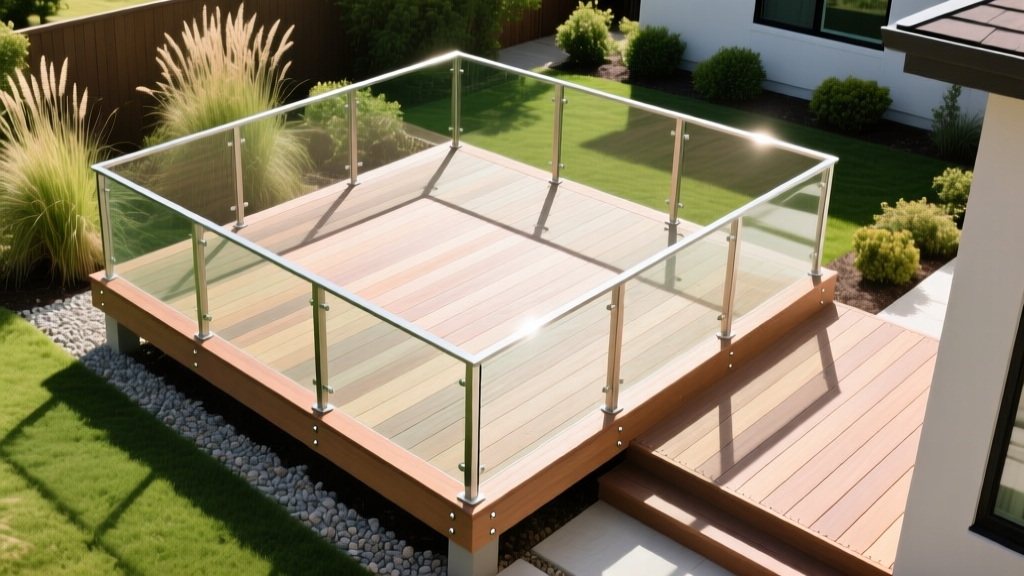
2026 Pricing Breakdown for 15' by 15' Composite Deck Materials
The following table isolates the decking and fastener costs for a 225-square-foot build. This does not include substructure (joists, beams, posts, footings) or railing, which typically add 40% to 60% to the total project cost.
| Material Component | Fiberon Sanctuary | TimberTech Prime+ | Trex Transcend Lineage |
|---|---|---|---|
| Field Boards (576 LF) | $4,406 | $5,126 | $5,673 |
| Fascia/Picture Frame (64 LF) | $620 | $750 | $810 |
| Hidden Fasteners & Screws | $525 | $545 | $560 |
| Total Surface Material Cost | $5,551 | $6,421 | $7,043 |
Final Verdict: Which Line Fits Your Build?
Choose Fiberon Sanctuary If:
You are maximizing ROI on a rental property or a strict residential budget. It delivers the essential capped-composite protection against mold and fading at the lowest price per linear foot in the premium tier.
Choose TimberTech Prime+ If:
Your 15x15 deck is close to the ground or built over a damp substrate. The 4-sided cap provides superior moisture defense, and the multi-width options allow for high-end custom designs without paying luxury premiums. Review the TimberTech warranty documentation to ensure your specific installation method maintains full coverage.
Choose Trex Transcend Lineage If:
The deck faces direct, unshaded southern exposure. The heat-mitigating shell is a functional necessity for barefoot traffic in peak summer, preventing the surface temperatures from reaching unsafe levels.
Written by
James ThorntonJames Thornton is a construction industry veteran with 25 years of hands-on experience in wood framing, lumber grading, and residential building codes. He started as a framing carpenter in rural Oregon, earned his ICC Residential Building Inspector certification, and eventually became a senior plan reviewer for the City of Portland Bureau of Development Services. James holds a B.S. in Wood Science & Technology from Oregon State University and is a certified lumber grader through the West Coast Lumber Inspection Bureau (WCLIB). He has inspected over 3,000 residential construction sites and authored the city's internal guide on advanced framing techniques (2x6 at 24" O.C.). James lives in Bend, OR, where he builds custom timber-frame cabins and competes in lumberjack sports.
More from James Thornton
View all
Insulation
Best Home Insulation Materials: Complete 2026 Guide
Compare top home insulation materials for 2026. Find R-values, installed costs per square foot, and best uses for fiberglass, spray foam, and mineral wool.
Aug 4, 2026

Sustainable Building
Certify Your Green Building Material for LEED and WELL
Step-by-step guide to certifying a green building material for LEED v5 and WELL v2. Master EPDs, HPDs, and VOC limits for 2026 project specifications.
Aug 4, 2026

Stone & Masonry
Veneer Stacked Stone Panels: Interior Design & Style Showcase
Discover how veneer stacked stone panels transform interiors. Explore modern design profiles, material pairings, and technical installation specs.
Aug 4, 2026