Aluminum Boat Decking Material Cost Breakdown Guide
Analyze 2026 costs for aluminum boat decking material, comparing 5083 vs 5086 alloys, extruded profiles, and hidden fabrication expenses for marine refits.

The True Cost of Aluminum Boat Decking Material in 2026
Transitioning from traditional marine plywood or heavy fiberglass to aluminum boat decking material fundamentally alters a vessel's weight distribution, maintenance requirements, and structural lifespan. However, the upfront capital required for marine-grade aluminum is significantly higher than composite or wood alternatives. Accurate budgeting requires moving beyond basic square-footage material quotes and accounting for specific alloy tempers, extrusion profiles, and the specialized labor required for marine fabrication.
Material Selection: 5083 vs. 5086 Alloys and Profiles
Not all aluminum is suitable for marine environments. According to The Aluminum Association, the 5xxx series (alloyed with magnesium) is the industry standard for saltwater and harsh freshwater applications due to its exceptional resistance to pitting and exfoliation corrosion. Using architectural 6061 aluminum for a boat deck will result in rapid galvanic degradation and structural failure.
Alloy and Temper Specifications
- 5086-H116 or H321: The premium choice for decking. The H116 and H321 tempers are specifically strain-hardened to resist exfoliation corrosion in continuous saltwater exposure. Material cost: $11.00 - $14.50 per sq ft (raw sheet).
- 5083-H116: Slightly higher magnesium content than 5086, offering marginally better weldability and tensile strength, though often at a 5-8% price premium. Ideal for heavy-load commercial decks.
Profile Types: Extruded T&G vs. Diamond Tread
For modern center consoles and skiffs, flat diamond tread plate is largely obsolete for primary decking. Extruded tongue-and-groove (T&G) planks, typically 6 inches wide and 1/8-inch thick, are the current standard. T&G profiles interlock, creating a watertight seal that sheds water away from the bilge and subframe, while allowing for hidden fastener systems. Extruded T&G planks with integrated anti-skid routing cost between $21.00 and $28.50 per square foot, compared to $12.00 to $16.00 for flat diamond plate.
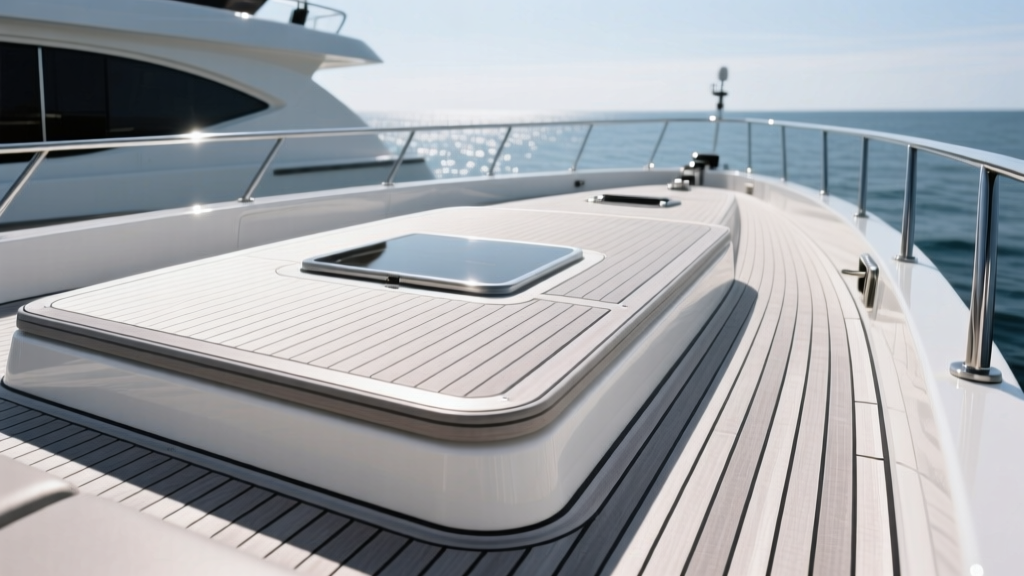
Comprehensive Cost Breakdown Matrix
The following matrix details the material and direct labor costs for a standard 100-square-foot center console deck refit using 5086-H116 extruded T&G planks.
| Component | Specification | Cost per Sq Ft | Procurement Notes |
|---|---|---|---|
| Base Decking Material | 5086-H116 Extruded T&G (6" width) | $22.50 - $26.00 | Order 10% overage for CNC waste and hatch cutouts. |
| Anti-Skid Surface | CNC routed or marine-grade powder coat | $4.00 - $7.50 | Powder coating requires zirconium prep to prevent under-film corrosion. |
| Fasteners | 316L SS pan-head with neoprene washers | $1.75 - $2.50 | Never use 304 SS or standard zinc-plated screws in marine applications. |
| Structural Adhesive | Methacrylate marine adhesive (e.g., Plexus) | $2.00 - $3.50 | Used for perimeter sealing and subframe bonding to reduce vibration. |
| Fabrication Labor | CNC cutting, TIG welding, and fitting | $15.00 - $25.00 | Based on $95-$125/hr marine fabrication rates; varies by hatch complexity. |
Hidden Installation and Fabrication Costs
Budget overruns in aluminum decking projects rarely stem from the raw metal; they originate in the secondary fabrication and integration processes. When planning your build, account for the following specialized expenses:
1. CNC Routing and Hatch Fabrication
Cutting access hatches into an interlocked T&G aluminum deck requires precision CNC routing to maintain the structural integrity of the remaining planks and ensure watertight gasket seating. Marine fabricators typically charge between $85 and $125 per hour for CNC programming and cutting. A standard deck with three access hatches will add $400 to $750 in labor costs alone.
2. Welding vs. Mechanical Fastening
While extruded T&G planks are designed for mechanical fastening, the perimeter framing and subframe integration often require welding. Welding 5xxx series aluminum requires ER5356 filler wire and strict heat management to prevent warping and sensitization (which degrades corrosion resistance). TIG welding labor adds $90 to $140 per hour to the project. If your boat's existing subframe is fiberglass, you cannot weld the deck directly; you must use mechanical fasteners and methacrylate adhesives, shifting costs from welding labor to high-grade marine sealants and isolation hardware.
Aluminum is highly anodic. If your aluminum decking contacts carbon fiber components, stainless steel hardware, or copper-based anti-fouling paints without a dielectric barrier, rapid galvanic corrosion will destroy the deck. You must budget for UHMW (Ultra-High-Molecular-Weight) polyethylene tape or neoprene isolation pads ($1.50 - $3.00 per linear foot) to separate the aluminum from dissimilar metals and composite subframes. The National Marine Manufacturers Association (NMMA) strictly mandates dielectric isolation in their construction standards for mixed-material marine assemblies.
Long-Term ROI: Aluminum vs. Marine Plywood
To justify the premium cost of aluminum boat decking material, builders must evaluate the 10-year lifecycle cost. Marine plywood, even when encapsulated in epoxy, is susceptible to delamination, rot, and hardware pull-out over time.
10-Year Lifecycle Cost Analysis (Per 100 Sq Ft Deck)
- Marine Plywood + Fiberglass Encapsulation: Initial cost: $1,800 - $2,500. Maintenance (sanding, re-gelcoating, hardware sealing): $400 every 3 years. Replacement at year 8-10: $2,500. Total 10-Year Cost: ~$6,100.
- 5086 Aluminum Extruded Decking: Initial cost: $4,500 - $6,500. Maintenance (wash down, inspect fasteners): $50 annually. Replacement: Never (50+ year lifespan). Total 10-Year Cost: ~$5,000 - $7,000.
While the aluminum deck commands a 150% to 200% higher initial material cost, the elimination of structural replacement and the reduction in vessel weight (improving fuel efficiency by 4-8% depending on the hull) result in a net-positive return on investment for vessels kept longer than seven years. Furthermore, aluminum decking significantly increases the resale valuation of custom and refitted center consoles, a factor heavily weighted by marine surveyors.
Expert Sourcing and Procurement Tips
Procuring marine-grade aluminum requires bypassing standard architectural metal suppliers. Architectural yards frequently mislabel 6061-T6 as 'marine suitable' because it is used in dock structures, but it lacks the magnesium content required for continuous saltwater immersion. Always demand the mill test report (MTR) from your supplier to verify the 5083 or 5086 alloy and the H116/H321 temper. Purchasing directly from marine-specific extruders or specialized marine metal distributors ensures you receive material that meets The Aluminum Association standards for marine structural applications, preventing catastrophic warranty voids and premature deck failure.
Written by
David NakamuraDavid Nakamura is a licensed architect (AIA) and construction technology writer focused on sustainable building methods, mass timber engineering, and high-performance building envelopes. He holds a Master of Architecture from the University of Washington and is a certified Passive House Consultant (CPHC). David spent eight years at the Seattle firm Mithun, where he led the design of three LEED Platinum projects, before founding his own practice specializing in net-zero residential design. He serves on the editorial advisory board of GreenBuilder Magazine and has authored peer-reviewed papers on cross-laminated timber (CLT) connections for the Journal of Structural Engineering. In his spare time, David teaches woodworking at Pratt Fine Arts Center and kayaks the Puget Sound.
More from David Nakamura
View all
Construction Cost
Labor Cost to Build a Deck Per Sq Ft: 2026 Installation Guide
Discover the exact labor cost to build a deck per sq ft in 2026. This installation guide breaks down contractor rates, complexity factors, and hidden fees.
Aug 4, 2026

Construction Cost
How Much Does It Cost to Build a 3 Bedroom House? Financing Guide
Learn exactly how much it costs to build a 3 bedroom house and explore 2026 financing options, construction loan types, and budget frameworks for your build.
Aug 4, 2026

Construction Cost
Cost to Build a Tennis Court: 2026 Guide
How much does it cost to build a tennis court in 2026? Breakdowns for asphalt, concrete, and synthetic surfaces plus fencing and lighting.
Jul 30, 2026