Aluminum Decking Material Selection Framework for Modern Patios
Evaluate aluminum decking material for your outdoor space using our technical selection framework, covering profiles, pricing, and structural specs.
The Structural and Environmental Case for Aluminum
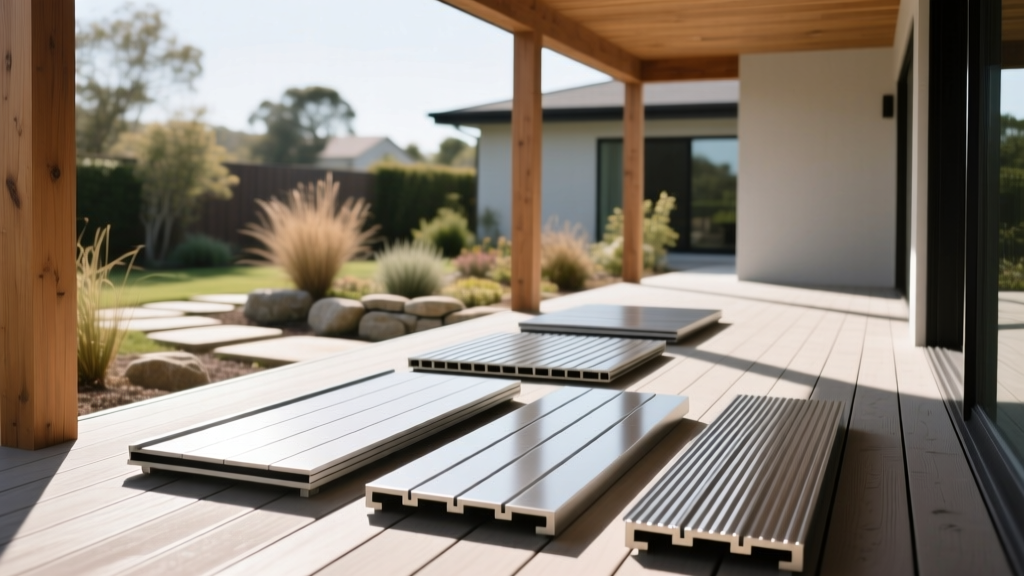
Specifying the correct outdoor flooring requires balancing structural longevity, environmental compliance, and lifecycle maintenance. While composite and pressure-treated lumber dominate the residential market, aluminum decking material has emerged as the premier specification for high-performance, fire-prone, and moisture-heavy environments. Extruded from 6063-T6 marine-grade aluminum alloy, these decking systems offer a strength-to-weight ratio that allows for wider joist spacing while remaining entirely impervious to rot, termite infiltration, and moisture absorption.
Beyond basic durability, aluminum is increasingly mandated in Wildland-Urban Interface (WUI) zones. According to the National Fire Protection Association (NFPA), exterior decking in WUI areas must resist ignition from wind-blown embers. Aluminum decking material inherently meets and exceeds these strict Class A fire-rating requirements without the need for chemical fire retardants that can leach into the soil over time. Furthermore, aluminum is 100% recyclable at the end of its 50-plus year lifespan, aligning with modern sustainable building certifications like LEED.
Selection Matrix: When to Specify Aluminum Decking Material
Aluminum is not a universal replacement for wood; it is a specialized solution. Use the decision matrix below to determine if aluminum decking material aligns with your project parameters.
| Project Scenario | Suitability | Recommended Profile Type |
|---|---|---|
| Wildland-Urban Interface (WUI) / Fire Zone | Optimal | Standard gap-drainage or interlocking |
| Second-Story Deck over Living Space | Optimal | Watertight interlocking (e.g., AridDek) |
| Marine / Saltwater Docking | Optimal | Standard gap-drainage with 316 SS hardware |
| Ground-Level Patio (Budget-Conscious) | Poor | N/A (Consider concrete pavers or composite) |
| Heavy Commercial / High Foot Traffic | Good | Heavy-duty commercial profile (12" OC joists) |
Profile Engineering: Interlocking vs. Standard Planks
The physical geometry of the extrusion dictates both the drainage capabilities and the structural load limits of the deck. Manufacturers generally produce two distinct profile categories.
Watertight Interlocking Systems
Interlocking profiles feature integrated tongue-and-groove edges with built-in drainage channels. When fastened, the boards create a continuous, watertight membrane that routes rainwater to the perimeter or designated downspouts. This makes them the mandatory choice for second-story decks where the space below must remain dry. Because the interlocking lip adds structural rigidity, some premium interlocking boards permit 24-inch on-center (OC) joist spacing in residential applications, reducing substructure material costs.
Standard Gap-Drainage Profiles
Standard profiles mimic traditional wood planks and rely on a 1/8-inch to 3/16-inch gap between boards for water drainage. These are lighter, easier to cut, and generally less expensive than interlocking systems. They are ideal for ground-level decks, docks, and first-story structures where under-deck dryness is irrelevant. Standard profiles strictly require 16-inch OC joist spacing to prevent deflection under concentrated live loads.
Brand Benchmarks and Material Cost Analysis
Pricing for aluminum decking material varies significantly based on the extrusion weight (thickness of the aluminum walls) and the complexity of the powder-coating process. Below are current benchmarks for leading manufacturers.
| Manufacturer / Product | Profile Type | Material Cost (Per Sq. Ft.) | Key Differentiator |
|---|---|---|---|
| Wahoo Decks (AridDek) | Interlocking | $22.00 - $26.00 | Integrated dry-deck drainage, 24" OC allowable |
| LockDry | Interlocking | $18.00 - $23.00 | Heavy-gauge extrusion, commercial-grade slip resistance |
| Knotwood | Standard / Clip | $24.00 - $29.00 | Premium wood-grain sublimation finishes |
| Craft-Bilt | Standard / Interlocking | $16.00 - $20.00 | Cost-effective, hidden fastener systems |
Note: Material costs do not include substructure framing, fasteners, or labor. Total installed costs typically range from $45 to $65 per square foot.
Thermal Dynamics and Installation Tolerances
One of the most common installation failures with aluminum decking material stems from ignoring its coefficient of thermal expansion. According to data published by The Aluminum Association, aluminum expands and contracts at a rate of approximately 13 x 10^-6 in/in/°F. While this is roughly half the expansion rate of PVC composite decking, it is twice that of steel. Over a 20-foot run experiencing a 50°F temperature swing from winter night to summer day, the plank will expand by nearly 1/8 of an inch.
- Butt Joint Gapping: Never install boards tight against each other end-to-end. Maintain a strict 1/16-inch to 1/8-inch gap at all butt joints, scaling the gap based on the ambient temperature at the time of installation.
- Fastener Selection: Galvanic corrosion is a critical risk. Aluminum is highly anodic. If bare steel or standard galvanized screws are used, moisture will create an electrolytic cell, rapidly destroying the aluminum around the fastener hole. You must use 304 or 316 stainless steel screws, or manufacturer-approved coated fasteners with neoprene sealing washers.
- Cutting Protocols: Use carbide-tipped blades with a high tooth count (80-tooth or higher) designed for non-ferrous metals. Apply a non-flammable cutting wax to the blade to prevent aluminum burring and binding. Never use abrasive masonry blades, which will melt the aluminum and ruin the powder-coated edges.
Surface Traction and ADA Compliance
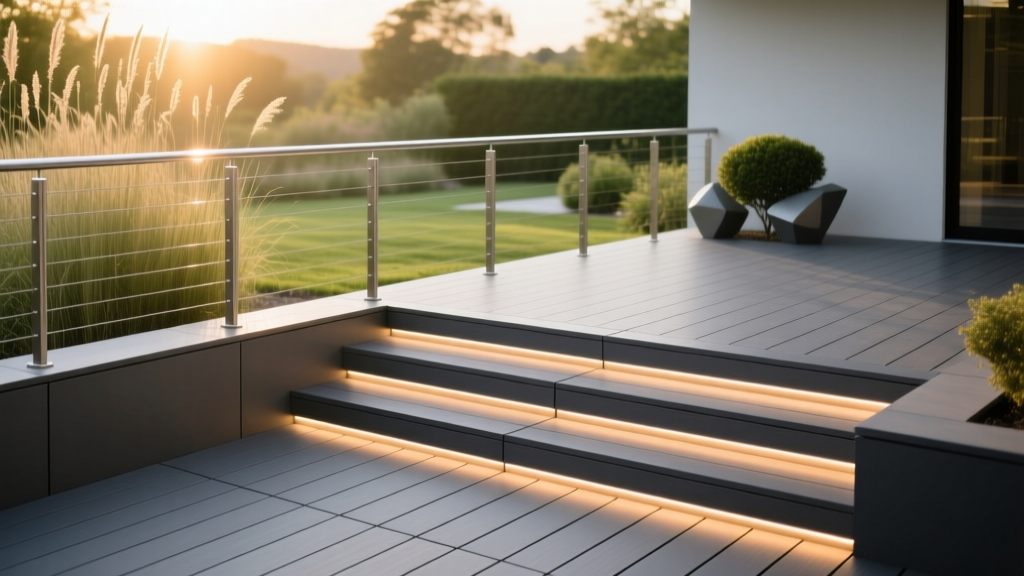
A frequent concern with metal decking is slip resistance, particularly when wet or covered in morning dew. Bare, milled aluminum is highly slippery. However, modern aluminum decking material utilizes textured, embedded-grit powder coatings to achieve high static coefficients of friction (SCOF).
For commercial projects or public spaces requiring compliance with the Americans with Disabilities Act (ADA), specifications must meet the OSHA walking-working surfaces guidelines, which generally recommend a SCOF of 0.50 or greater. Premium aluminum decking profiles achieve SCOF ratings between 0.65 and 0.85 under wet conditions, easily surpassing regulatory minimums. When specifying for commercial or municipal applications, request the manufacturer's independent DIN 51130 slip-resistance test certificates to verify compliance with local building codes.
Written by
Sarah WhitfieldSarah Whitfield is a chartered quantity surveyor (MRICS) and construction cost analyst with 15 years of experience in material pricing, procurement strategy, and project budgeting. She earned her degree in Construction Management from the University of Reading (UK) and has worked on projects ranging from $2M custom homes to $180M mixed-use developments across North America and Europe. Sarah currently leads cost estimating for BuildMat Insight, maintaining a proprietary database of 4,000+ material price points updated quarterly. She is a frequent contributor to RSMeans cost data panels and has presented at the International Cost Engineering Council (ICEC) congress. Based in Denver, CO, Sarah is an avid trail runner and volunteer mentor for Women in Construction.
More from Sarah Whitfield
View all
Wood & Lumber
What Are the Different Types of Wood? A Builder's Guide
Compare structural softwoods, finish hardwoods, and engineered lumber. Analyze Janka ratings, MOE values, and 2026 pricing for construction.
Aug 4, 2026

Walls & Panels
Steel Framing vs Wood Framing: Corrosion and Moisture Defense
Compare steel framing vs wood framing for moisture resistance. Learn about galvanized coatings, condensation risks, and corrosion protection strategies.
Jul 21, 2026

Stone & Masonry
How to Cut Stone Veneer: Wet Saw vs Grinder Comparison
Compare the best tools for cutting stone veneer. We review wet saws, angle grinders, and chop saws to help you achieve clean, chip-free cuts.
Jul 21, 2026