How Much Does It Cost to Build a New Deck? 2026 Cost Framework
Discover exactly how much it costs to build a new deck in 2026. Our selection framework breaks down material, labor, and hidden costs per square foot.
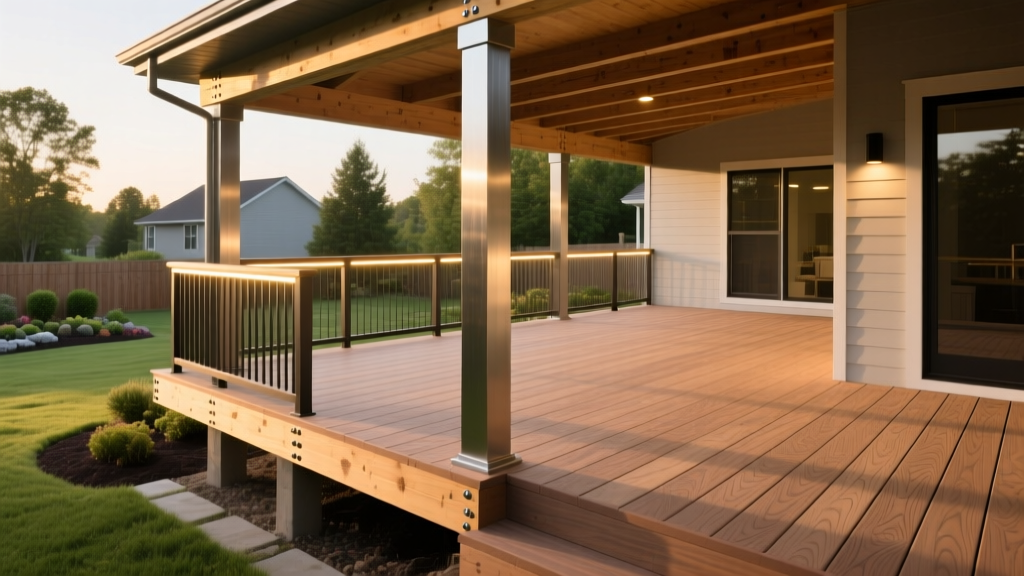
The True Cost to Build a New Deck in 2026
When homeowners ask, 'how much does it cost to build a new deck,' the answer requires looking beyond simple square-footage averages. As of 2026, the national average to build a standard 200 to 300-square-foot elevated deck ranges from $8,500 to $22,000, translating to roughly $35 to $75 per square foot fully installed. However, this wide variance is driven by material tiers, structural framing requirements, and site-specific complexities. According to Angi's comprehensive deck cost data, labor alone now accounts for 50% to 60% of the total project cost, with skilled carpentry rates climbing to $65–$110 per hour in major metropolitan markets.
To accurately budget your project, you must abandon flat-rate estimators and adopt a selection framework that aligns your material choices, structural longevity, and site conditions with your financial parameters.
The Deck Cost Selection Framework
Choosing the right deck configuration requires balancing upfront capital expenditure against long-term maintenance and lifespan. Use this decision matrix to identify the tier that matches your property goals.
| Budget Tier | Primary Decking Material | Framing System | Fastening Method | Target Lifespan | Best Use Case |
|---|---|---|---|---|---|
| Entry-Level | Pressure-Treated Pine | Standard PT Wood | Face-driven deck screws | 10–15 Years | Investment properties, tight budgets, short-term ownership |
| Mid-Tier | Trex Enhance / Select | Standard PT Wood | Edge-clip hidden fasteners | 25–30 Years | Primary residences, balance of cost and low maintenance |
| Premium | TimberTech Landmark / Trex Transcend | PT Wood with flashing tape | Hidden clip systems | 30–50 Years | Forever homes, luxury outdoor living, high-traffic areas |
| Ultra-Premium | PVC (Azek) or Aluminum (Wahoo) | Galvanized Steel (e.g., Fortress) | Proprietary hidden locks | 50+ Years | Coastal environments, wildfire zones, zero-maintenance mandates |
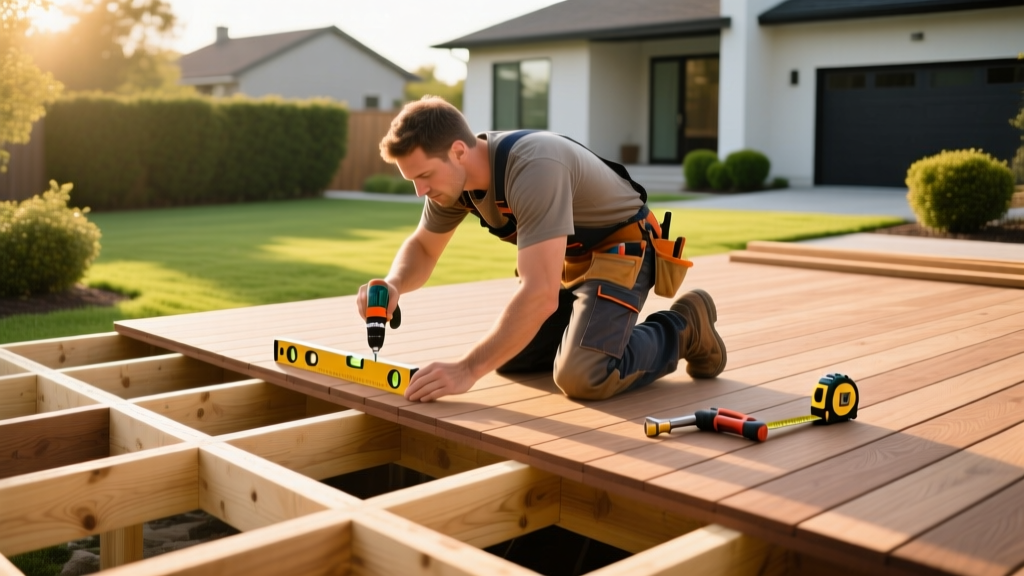
Material Cost Breakdown by Tier (2026 Pricing)
The decking boards themselves typically represent only 25% to 35% of the total project cost. Below is the current material-only pricing per square foot, followed by the fully installed cost (including standard wood framing and labor). For a detailed look at composite tiers, refer to the official Trex decking material specifications.
1. Pressure-Treated Wood (Entry-Level)
- Material Cost: $3.50 – $5.50 per sq. ft.
- Installed Cost: $20 – $28 per sq. ft.
- Expert Insight: While the upfront cost is lowest, PT pine requires annual sealing and staining (adding $2–$3 per sq. ft. annually). Over 15 years, the total cost of ownership often eclipses mid-tier composites.
2. Mid-Tier Composite
- Material Cost: $7.50 – $10.00 per sq. ft.
- Installed Cost: $35 – $48 per sq. ft.
- Expert Insight: Boards like Trex Enhance feature a scalloped bottom profile, which reduces material weight and cost but requires closer joist spacing (12 inches on-center instead of 16 inches) to prevent sagging, slightly increasing framing labor.
3. Premium Composite & Capped Polymer
- Material Cost: $11.00 – $16.00 per sq. ft.
- Installed Cost: $48 – $65 per sq. ft.
- Expert Insight: Premium lines use advanced polymer caps that resist staining and fading. These boards are heavier and denser, requiring specialized carbide-tipped saw blades and strict adherence to manufacturer gapping tolerances (usually 1/4 inch) to account for thermal expansion.
Framing, Footings, and Structural Variables
The substructure is where budgets frequently derail. A deck is only as strong as its footings and joists. In 2026, building codes in most jurisdictions mandate deeper footings to accommodate frost lines and heavier composite loads.
Traditional concrete Sonotubes cost $75–$150 per footing installed but require extensive digging, soil inspection, and curing time. Helical piles (such as those from Tecnica or Diamond Pier) cost $250–$400 per pile but can be driven into the ground with hydraulic equipment in minutes, bypassing bedrock and eliminating concrete curing delays. For elevated decks over 8 feet high, helical piles provide superior uplift resistance and are increasingly mandated by structural engineers in high-wind zones.
The Steel Framing Shift
While pressure-treated lumber remains the standard for joists and beams, steel framing systems like Fortress Evolution are gaining traction for premium builds. Steel framing adds $9.00 to $14.00 per square foot to the total project cost. However, it guarantees a perfectly flat substructure that will never warp, twist, or rot, ensuring that high-end PVC or composite boards do not develop uneven seams over time.
The 'Hidden' Line Items Contractors Omit
When evaluating bids, homeowners often compare the cost of the deck boards and basic labor, missing the ancillary costs that inflate the final invoice. According to Forbes Home Improvement's deck pricing analysis, the following line items must be factored into your selection framework:
- Demolition and Haul-Away: Tearing down an existing 200 sq. ft. wood deck and disposing of the materials at a local landfill costs between $1,000 and $2,500, depending on local dump fees and asbestos-treated wood protocols.
- Permitting and Engineering: Municipal building permits range from $250 to $800. If your deck exceeds 10 feet in height or attaches to a masonry veneer home, a structural engineer's stamp (required by most modern building departments) will add $500 to $1,200.
- Stairs and Landings: Stairs are priced per tread, not per square foot. Expect to pay $150 to $300 per tread for composite-wrapped stairs with custom aluminum stringers. Code-compliant landings at the base of the stairs require independent footings, adding $400–$800.
- Electrical and Lighting: Integrating low-voltage LED post cap lights, under-rail illumination, and stair riser lights requires trenching, transformers, and weatherproof junction boxes. Budget $1,200 to $2,500 for a fully integrated lighting package.
- Flashing and Waterproofing: Applying butyl flashing tape (like Trex Protect) to all joists and beams adds $1.50 to $2.50 per square foot but is non-negotiable for preventing premature wood rot beneath composite decking.
Site Condition Multipliers
Your property's topography directly dictates labor hours and equipment needs. Apply these multipliers to your baseline square-foot estimates to understand true site costs:
- Ground-Level / Floating Decks (1.0x Multiplier): Built less than 30 inches off the ground. No guardrails required by code, minimal footing depth, and easy material staging. Lowest labor cost.
- Standard Elevated Decks (1.2x Multiplier): 4 to 8 feet off the ground. Requires code-compliant guardrails (adding $40–$90 per linear foot), cross-bracing for lateral sway, and scaffolding for the crew.
- Multi-Level or Steep Slope Decks (1.5x to 2.0x Multiplier): Requires retaining walls, complex stair transitions, engineered beam spans, and potentially crane lifts to move steel beams or large glulam posts over the house.
Budget Allocation and ROI Reality
Understanding how to allocate your budget ensures you do not overspend on surface materials while underfunding the structural skeleton. A well-engineered deck in 2026 should follow this capital distribution:
- Substructure & Footings: 30% (Do not cut corners here; a failing frame ruins premium boards).
- Decking Boards & Fascia: 35%
- Railings & Stairs: 20% (Aluminum and glass cable railings drastically increase this percentage).
- Labor & Project Management: 15% (If materials are purchased separately).
Regarding return on investment, a wood deck replacement consistently recoups a significant portion of its cost at resale. However, the shift toward composite materials has altered the ROI calculus. While composite decks cost 40% to 60% more upfront than wood, they eliminate the $1,500+ bi-annual maintenance costs, yielding a higher net-value over a 10-year holding period. When finalizing your framework, base your material selection not just on the day-one installation cost, but on the total cost of ownership and your intended duration in the home.
Written by
David NakamuraDavid Nakamura is a licensed architect (AIA) and construction technology writer focused on sustainable building methods, mass timber engineering, and high-performance building envelopes. He holds a Master of Architecture from the University of Washington and is a certified Passive House Consultant (CPHC). David spent eight years at the Seattle firm Mithun, where he led the design of three LEED Platinum projects, before founding his own practice specializing in net-zero residential design. He serves on the editorial advisory board of GreenBuilder Magazine and has authored peer-reviewed papers on cross-laminated timber (CLT) connections for the Journal of Structural Engineering. In his spare time, David teaches woodworking at Pratt Fine Arts Center and kayaks the Puget Sound.
More from David Nakamura
View all
Construction Cost
Labor Cost to Build a Deck Per Sq Ft: 2026 Installation Guide
Discover the exact labor cost to build a deck per sq ft in 2026. This installation guide breaks down contractor rates, complexity factors, and hidden fees.
Aug 4, 2026

Construction Cost
How Much Does It Cost to Build a 3 Bedroom House? Financing Guide
Learn exactly how much it costs to build a 3 bedroom house and explore 2026 financing options, construction loan types, and budget frameworks for your build.
Aug 4, 2026

Construction Cost
Cost to Build a Tennis Court: 2026 Guide
How much does it cost to build a tennis court in 2026? Breakdowns for asphalt, concrete, and synthetic surfaces plus fencing and lighting.
Jul 30, 2026