Aluminum Decking Materials Cost Breakdown: 2026 Pricing Guide
Explore the 2026 cost breakdown for aluminum decking materials. Compare per-square-foot pricing, hidden installation costs, and long-term ROI.
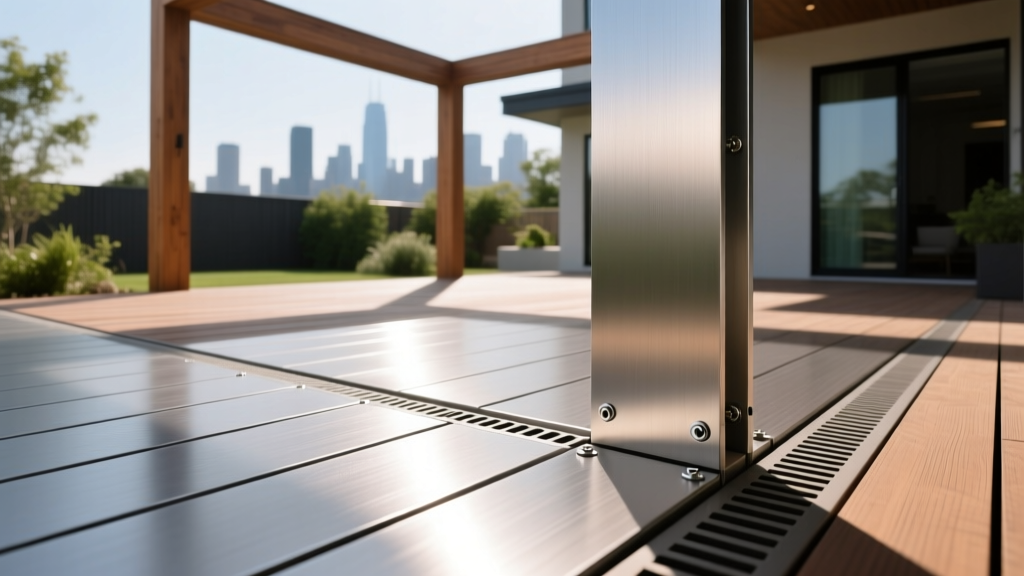
The True Upfront Cost of Aluminum Decking
When evaluating outdoor flooring, aluminum decking materials occupy the premium tier of the market. Unlike pressure-treated lumber or standard composite boards, extruded aluminum planks are engineered for specific structural and environmental challenges: complete waterproofing, non-combustibility, and zero organic degradation. However, this performance comes with a distinct pricing structure that extends far beyond the per-square-foot cost of the boards themselves.
For the 2026 building season, the baseline material cost for aluminum decking ranges from $11.50 to $18.00 per square foot. Yet, calculating a realistic project budget requires factoring in specialized hidden fasteners, specific joist protection, and non-standard cutting tooling. According to The Aluminum Association, the adoption of aluminum in residential and commercial outdoor structures has accelerated due to its infinite recyclability and structural strength-to-weight ratio, but misjudging the accessory costs remains the most common budgeting error for contractors and DIYers alike.
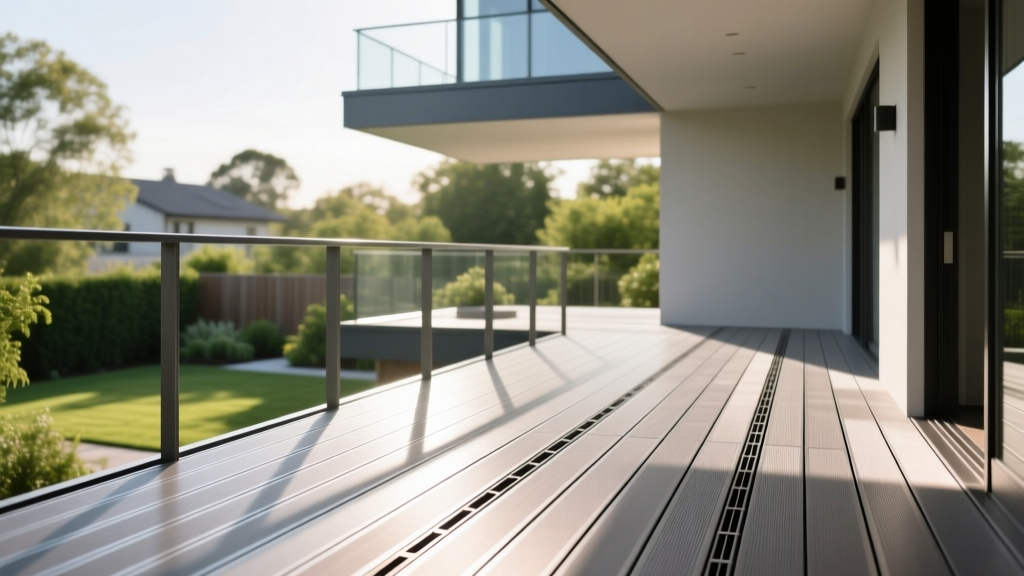
Material Pricing Matrix: Top Brands and Profiles
Not all aluminum decking is identical. The market is divided into standard open-gap marine profiles and interlocking waterproof dry-deck systems. Below is a breakdown of current pricing for the leading extruded aluminum decking profiles.
| Brand / Profile | System Type | Avg. Cost (Per Sq. Ft.) | Max Joist Spacing | Waterproofing |
|---|---|---|---|---|
| Wahoo Decks (AridDek) | Interlocking Dry | $15.50 - $17.50 | 24" O.C. | Yes (Integrated) |
| LockDry | Interlocking Dry | $14.00 - $16.00 | 24" O.C. | Yes (Integrated) |
| Wahoo Decks (DryJoistEZ) | Structural Joist | $18.00 - $22.00 | N/A (Is Joist) | Yes (Structural) |
| Generic Marine-Grade | Open Gap | $11.50 - $13.50 | 16" O.C. | No |
Breaking Down the Accessories and Fasteners
You cannot use standard face screws or composite hidden clips on aluminum decking. The interlocking channels require specialized stainless-steel starter clips and mid-plank retaining clips to allow for thermal movement while securing the board to the joist.
- Stainless Steel Hidden Clips: $0.85 to $1.25 per square foot.
- Starter/Finish Trim Pieces: $4.50 to $6.00 per linear foot.
- Integrally Routed Drainage Gutters (if applicable): $2.00 to $3.50 per linear foot.
- Butyl Joist Tape: $0.40 to $0.60 per linear foot (mandatory for protecting wood framing beneath waterproof aluminum systems).
Hidden Costs: Framing, Labor, and Tooling
The most frequent point of budget overrun in aluminum deck construction occurs during the framing and cutting phases. Aluminum behaves fundamentally differently than wood or PVC, demanding strict adherence to structural tolerances.
Framing and Joist Protection
While the aluminum boards themselves will never rot, the pressure-treated wooden joists beneath them will if moisture becomes trapped. Interlocking aluminum decking creates a near-umbrella effect, but condensation and wind-driven rain can still reach the substructure. Applying a high-grade butyl flashing tape (such as Trex Protect or G-Tape) to the top of every joist is non-negotiable. For a standard 400-square-foot deck with 16-inch on-center joist spacing, expect to add $250 to $350 to your material budget strictly for joist tape.
Specialized Cutting Tooling
Labor Premiums
Contractors typically charge a 15% to 25% labor premium for aluminum decking compared to composite. This reflects the slower cutting speed, the precision required to align interlocking waterproof channels, and the meticulous layout needed to maintain proper thermal expansion gaps. Expect labor costs to range from $14.00 to $22.00 per square foot, heavily dependent on regional rates and site accessibility.
The Thermal Expansion Factor: A Critical Installation Cost
Aluminum has a high coefficient of thermal expansion. In environments where seasonal temperature swings exceed 60°F, a 20-foot run of aluminum decking can expand or contract by nearly 1/4 inch. If installers butt the boards tightly against fascia boards or house rim joists without leaving the manufacturer-specified 1/8-inch gap per 10 feet of board length, the deck will buckle and warp in the summer heat.
Accommodating this movement requires specialized expansion joints for runs longer than 24 feet, and oversized fastener slots. Failing to account for this during the material takeoff phase results in wasted boards and structural callbacks. Always order 5% to 8% overage for aluminum decking to account for the precise miter cuts required at expansion joints.
Long-Term ROI: Aluminum vs. Composite vs. Wood
To justify the initial capital expenditure, you must evaluate the 20-year total cost of ownership. Aluminum decking materials eliminate the recurring maintenance costs associated with organic and semi-organic materials.
- Pressure-Treated Wood: Initial cost is low ($6 - $9/sq ft installed), but requires power washing, sanding, and sealing every 2 to 3 years. Over 20 years, maintenance adds $12 to $18 per square foot.
- Capped Composite: Initial cost is moderate ($14 - $19/sq ft installed). Requires annual chemical cleaning to prevent mold and staining. Susceptible to scratching and thermal softening in high heat.
- Extruded Aluminum: Initial cost is high ($25 - $40/sq ft fully installed). Maintenance is virtually zero beyond occasional rinsing with a garden hose. The powder-coated finish is UV-stable and will not chalk, fade, or harbor mold.
Furthermore, aluminum decking is entirely non-combustible. For properties located in Wildland-Urban Interface (WUI) zones, local building codes often mandate non-combustible decking materials. The International Wildland-Urban Interface Code (IWUIC) strictly regulates materials used in these high-fire-risk areas. In these jurisdictions, aluminum is not just a luxury upgrade; it is often the only code-compliant alternative to heavy timber or concrete, effectively eliminating the choice between wood and composite altogether.
Strategic Decision Framework: When to Specify Aluminum
Aluminum decking is not a universal replacement for wood or composite. Use the following parameters to determine if the investment aligns with your project requirements.
- Building a second-story deck where a dry, usable space is required underneath (using interlocking dry-deck profiles).
- Constructing in a WUI fire zone where combustible composites are prohibited by local fire marshals.
- Building over water (docks, boat lifts, or lakefront properties) where moisture intrusion and rot are guaranteed with wood.
- Designing a deck in extreme-heat environments (e.g., Arizona, Nevada) where composite boards become too soft or hot to walk on. Aluminum dissipates heat significantly faster than dense composite cores.
- The design features curved or radius deck edges. Aluminum extrusions cannot be heat-bent or flexed like composite or PVC; creating curves requires complex, expensive custom fabrication.
- The budget is strictly constrained to under $18 per square foot for total installed costs.
- A natural, authentic wood-grain aesthetic is the primary design goal. While modern powder-coating mimics wood tones, the metallic acoustic signature (the sound of footsteps) and rigid feel remain distinctly non-organic.
Accurately forecasting the cost of aluminum decking materials requires looking past the sticker price of the planks. By budgeting for non-fer cutting tooling, stainless steel retaining clips, butyl joist protection, and the labor premium for precision thermal-gap installation, you ensure a structurally sound, code-compliant, and permanently maintenance-free outdoor space.
Written by
James ThorntonJames Thornton is a construction industry veteran with 25 years of hands-on experience in wood framing, lumber grading, and residential building codes. He started as a framing carpenter in rural Oregon, earned his ICC Residential Building Inspector certification, and eventually became a senior plan reviewer for the City of Portland Bureau of Development Services. James holds a B.S. in Wood Science & Technology from Oregon State University and is a certified lumber grader through the West Coast Lumber Inspection Bureau (WCLIB). He has inspected over 3,000 residential construction sites and authored the city's internal guide on advanced framing techniques (2x6 at 24" O.C.). James lives in Bend, OR, where he builds custom timber-frame cabins and competes in lumberjack sports.
More from James Thornton
View all
Insulation
Best Home Insulation Materials: Complete 2026 Guide
Compare top home insulation materials for 2026. Find R-values, installed costs per square foot, and best uses for fiberglass, spray foam, and mineral wool.
Aug 4, 2026

Sustainable Building
Certify Your Green Building Material for LEED and WELL
Step-by-step guide to certifying a green building material for LEED v5 and WELL v2. Master EPDs, HPDs, and VOC limits for 2026 project specifications.
Aug 4, 2026

Stone & Masonry
Veneer Stacked Stone Panels: Interior Design & Style Showcase
Discover how veneer stacked stone panels transform interiors. Explore modern design profiles, material pairings, and technical installation specs.
Aug 4, 2026