Ratings of Composite Decking Material: A 2026 Selection Framework
Learn to interpret structural, fire, and slip ratings of composite decking material to choose the right capped polymer boards for your outdoor build.
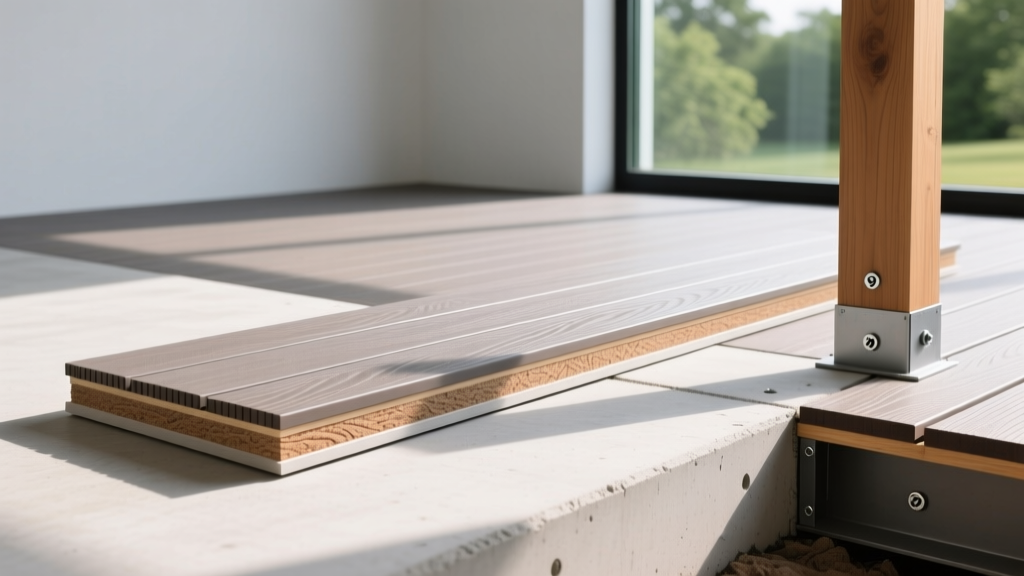
The Anatomy of Decking Ratings: Beyond the Warranty Sticker
When evaluating composite and capped polymer decking, most homeowners fixate on fade and stain warranties. However, professional builders and structural engineers rely on a much deeper set of standardized ratings to determine if a specific board will survive local microclimates, meet municipal building codes, and maintain structural integrity over decades. Understanding the true ratings of composite decking material requires looking past marketing brochures and examining ASTM (American Society for Testing and Materials) test results, ICC-ES evaluation reports, and dynamic friction coefficients.
This selection framework breaks down the critical performance metrics you must verify before specifying a decking product for your 2026 outdoor living project.
Structural Span and Load Ratings (ICC-ES ESR Reports)
Composite decking is not regulated by the same prescriptive span tables as natural lumber in the International Residential Code (IRC). Instead, manufacturers must obtain an Evaluation Service Report (ESR) from the International Code Council Evaluation Service. These reports dictate the maximum allowable joist spacing based on the board's specific polymer formulation and extrusion profile.
Decoding the ESR Span Tables
- Perpendicular Installation: Most premium capped composites (like Trex Transcend Lineage or Fiberon Promenade) are rated for 16 inches on-center (OC) joist spacing when installed perpendicular to the joists.
- Diagonal Installation: If your design calls for a 45-degree picture-frame or diagonal pattern, the span rating almost universally drops to 12 inches OC. Failing to adjust joist spacing for diagonal layouts is the leading cause of mid-span sagging in composite decks.
- Stair Tread Ratings: Standard 5/4x6 deck boards are rarely rated for stair treads. You must use specific stair-tread profiles (typically 1.25 inches thick) rated for 12-inch OC stringer spacing, or reinforce standard boards with aluminum stair brackets.
Fire Performance and WUI Compliance Ratings
Fire ratings are arguably the most critical regulatory hurdle for composite decking, especially in regions prone to wildfires. The standard test is ASTM E84, which measures the Flame Spread Index (FSI) and Smoke Developed Index (SDI).
Class A vs. Class B vs. Class C
- Class A (FSI 0-25): Typically achieved by capped PVC boards (e.g., TimberTech Advanced PVC, Fiberon Paramount). These are often mandatory for decks in Wildland-Urban Interface (WUI) zones.
- Class B (FSI 26-75): The standard rating for most wood-plastic composites (WPC) utilizing a high-density polyethylene (HDPE) core and polymer cap.
- Class C (FSI 76-200): Older generation or uncapped composite materials. Avoid these entirely for modern builds.
If you are building in California, Colorado, or other high-risk fire zones, your local municipality will likely enforce NFPA 1144 or Chapter 7A of the California Building Code. These codes require WUI-compliant materials. Always request the manufacturer's specific WUI approval letter, as a Class A rating alone does not automatically guarantee WUI compliance if the board's ember-resistance profile hasn't been separately tested.
Surface Performance: Slip, Scratch, and Heat Metrics
The surface cap of a composite board dictates its daily usability. We evaluate surface performance using three distinct laboratory metrics.
1. Slip Resistance (DCOF)
Slip resistance is measured using the Dynamic Coefficient of Friction (DCOF) via the ANSI A326.3 standard. A DCOF of 0.42 or higher is considered safe for level, wet surfaces. For ADA-compliant ramps or pool surrounds, specify boards with a DCOF of 0.50 or higher. Embossed wood-grain textures generally yield higher DCOF ratings than smooth, modern-wire-brushed finishes.
2. Scratch and Abrasion Resistance
Capstock thickness is the primary indicator of scratch resistance. Premium boards feature a polymer cap ranging from 3/16-inch to a full 1/4-inch thick on all four sides (capped composite). Budget boards may only have a 1/16-inch top cap. Thicker caps withstand the Taber Abrasion test (ASTM D4060) significantly better, resisting damage from dragged patio furniture and pet claws.
3. Thermal Retention
While not a formal ASTM rating, thermal retention is a critical 2026 spec. Technologies like MoistureShield's CoolDeck or TimberTech's CoolDeck equivalents use specialized infrared-reflective pigments in the capstock to reduce surface heat absorption by up to 35% compared to standard dark-colored composites.
| Product Line (2026) | Core / Cap Type | DCOF Rating | Fire Class | Avg. Cost / LF |
|---|---|---|---|---|
| Trex Transcend Lineage | HDPE / 3-Sided Cap | 0.52 | Class B | $11.50 - $12.80 |
| TimberTech Advanced PVC | PVC / 4-Sided Cap | 0.58 | Class A | $13.20 - $15.50 |
| MoistureShield Vision | HDPE / 4-Sided Cap | 0.55 | Class B | $10.80 - $12.00 |
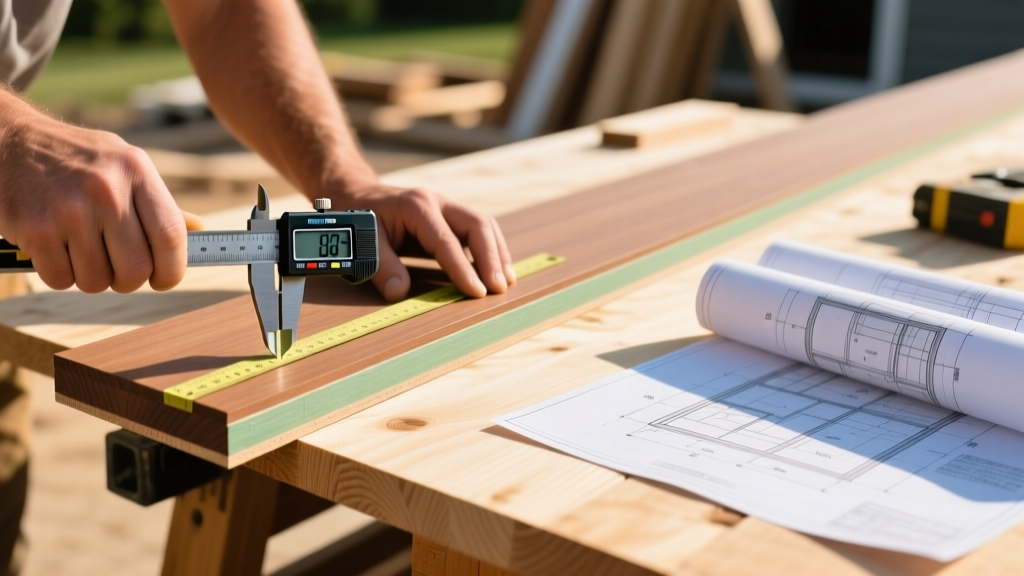
The 2026 Selection Matrix: Matching Ratings to Microclimates
Use this decision framework to align material ratings with your specific environmental challenges. The Whole Building Design Guide emphasizes that material selection must always account for localized environmental stressors rather than relying on generic national averages.
- Coastal / High-Salt Environments: Prioritize 4-sided capped composites or solid PVC. The fully encapsulated core prevents saltwater intrusion and micro-fissure expansion. Ensure the hidden fastener system is rated for marine-grade stainless steel (Type 316).
- High-Altitude / High-UV Zones: Focus on the UV-inhibitor package in the capstock. Look for products offering a 50-year fade warranty that specifically covers 'color shifting' rather than just 'chalking'. Lighter color palettes (e.g., coastal gray, pale teak) will inherently outperform dark browns in thermal expansion metrics.
- Heavy Snow Load / Freeze-Thaw Regions: The critical rating here is water absorption (ASTM D570). Premium capped composites absorb less than 0.5% moisture by weight. If a board absorbs more than 1%, trapped water will freeze, expand, and delaminate the capstock from the core over 3-5 winter cycles.
Thermal Expansion and Fastener Shear Ratings
A frequently overlooked metric in composite selection is the coefficient of linear thermal expansion. PVC boards expand and contract at a rate roughly 30% to 50% higher than HDPE wood-plastic composites.
Furthermore, evaluate the fastener pull-through and shear ratings. Hidden clip systems rely on the groove milled into the edge of the composite board. If the composite mix is too brittle (often the case in high-mineral, low-polymer budget boards), the edge can shear off under lateral wind loads or heavy foot traffic. Always use the manufacturer's proprietary hidden fasteners, as third-party clips are rarely tested for the specific shear strength of the board's groove profile.
Frequently Asked Technical Questions
Does a thicker board always mean a higher structural rating?
Not necessarily. A 5/4-inch (1.25") thick board with a hollow, scalloped underside may have a lower load-bearing rating than a solid 1-inch thick board. The structural rating is dictated by the moment of inertia of the extrusion profile and the density of the polymer core, not just the overall thickness.
Can I use composite decking for ground-contact applications?
Most composite boards are strictly rated for above-ground, ventilated applications. However, specific product lines (like MoistureShield's solid-core boards) carry a specific 'ground contact' rating due to their near-zero water absorption rates. Always verify the ESR report for explicit ground-contact approval before building planter boxes or low-clearance decks.
How do I verify the slip rating of an older composite deck?
If you are assessing an existing structure, laboratory DCOF ratings are no longer valid due to surface wear and biological growth. You must hire a certified inspector to perform an in-situ pendulum slip resistance test (PTV) to determine the current safety profile of the deck surface.
Written by
Sarah WhitfieldSarah Whitfield is a chartered quantity surveyor (MRICS) and construction cost analyst with 15 years of experience in material pricing, procurement strategy, and project budgeting. She earned her degree in Construction Management from the University of Reading (UK) and has worked on projects ranging from $2M custom homes to $180M mixed-use developments across North America and Europe. Sarah currently leads cost estimating for BuildMat Insight, maintaining a proprietary database of 4,000+ material price points updated quarterly. She is a frequent contributor to RSMeans cost data panels and has presented at the International Cost Engineering Council (ICEC) congress. Based in Denver, CO, Sarah is an avid trail runner and volunteer mentor for Women in Construction.
More from Sarah Whitfield
View all
Wood & Lumber
What Are the Different Types of Wood? A Builder's Guide
Compare structural softwoods, finish hardwoods, and engineered lumber. Analyze Janka ratings, MOE values, and 2026 pricing for construction.
Aug 4, 2026

Walls & Panels
Steel Framing vs Wood Framing: Corrosion and Moisture Defense
Compare steel framing vs wood framing for moisture resistance. Learn about galvanized coatings, condensation risks, and corrosion protection strategies.
Jul 21, 2026

Stone & Masonry
How to Cut Stone Veneer: Wet Saw vs Grinder Comparison
Compare the best tools for cutting stone veneer. We review wet saws, angle grinders, and chop saws to help you achieve clean, chip-free cuts.
Jul 21, 2026