Cost to Build a 10 x 10 Deck: 2026 Maintenance & Lifecycle Guide
Analyze the true cost to build a 10 x 10 deck in 2026. Compare material prices, 10-year lifecycle costs, and expert maintenance protocols.
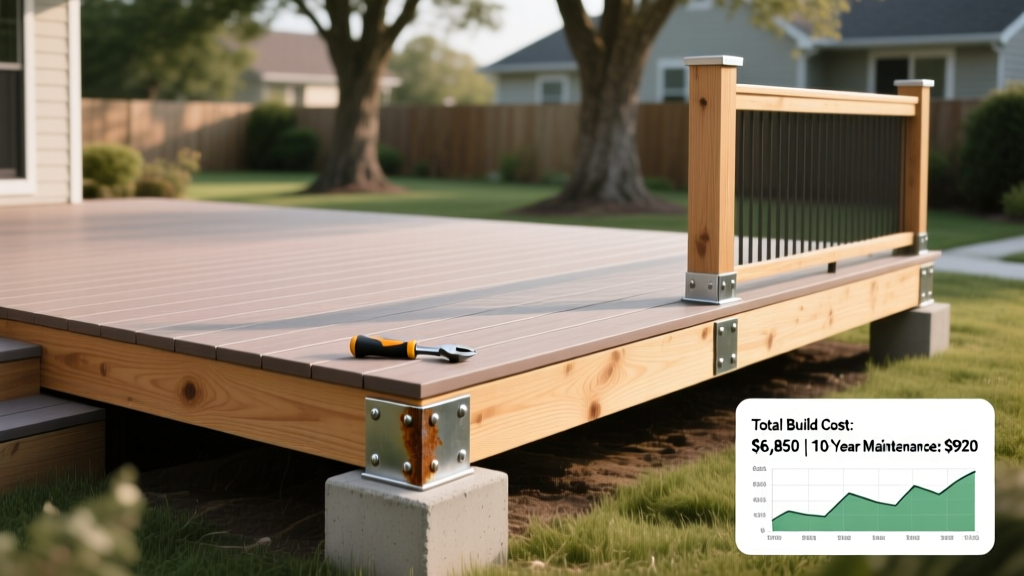
The True Baseline: Initial Cost to Build a 10 x 10 Deck
A 10 x 10 deck (100 square feet) is the industry standard footprint for urban rowhomes, secondary bedroom walkouts, and compact patio extensions. When homeowners calculate the initial cost to build a 10 x 10 deck, they typically stop at the contractor’s installation invoice. However, a deck is an exposed exterior structure subjected to UV degradation, freeze-thaw cycles, and hydrostatic pressure. The true financial impact of your deck is dictated by its 10-year lifecycle cost, which combines the initial build price with mandatory material-specific maintenance.
Below is the 2026 baseline pricing for a standard 100-square-foot deck, including substructure (pressure-treated joists), hardware, and labor. Prices reflect national averages and assume a ground-level or low-elevation build (under 30 inches) without complex stairs or premium railings.
| Decking Material | Material Cost (100 sq ft) | Installed Cost (100 sq ft) | Expected Lifespan |
|---|---|---|---|
| Pressure-Treated (PT) Pine | $600 - $900 | $2,800 - $3,800 | 10 - 15 Years |
| Western Red Cedar | $1,200 - $1,800 | $4,200 - $5,500 | 15 - 20 Years |
| Capped Composite (e.g., Trex Select) | $2,500 - $3,200 | $6,500 - $8,000 | 25 - 30 Years |
| Advanced PVC (e.g., TimberTech Landmark) | $3,500 - $4,500 | $8,500 - $10,500 | 30 - 50 Years |
Material-Specific Maintenance Protocols
The maintenance required for your 10 x 10 deck depends entirely on the surface material. Applying the wrong chemical treatment or sealing method is the leading cause of premature decking failure.
Pressure-Treated Pine & Cedar: The Penetrating Oil Rule
Wood decking requires annual or bi-annual sealing to prevent moisture intrusion and UV graying. The most common mistake homeowners make is using film-forming solid-color stains or polyurethanes. These products sit on the surface, trap moisture underneath, and inevitably peel or flake within 18 months, requiring aggressive sanding to remove.
Instead, use high-quality penetrating oil-based sealers like Armstrong Clark or Penofin Hardwood Formula. These oils soak into the wood fibers, conditioning the lumber and fading gracefully over time without peeling. Reapplication requires only a light cleaning with a wood brightener (oxalic acid), eliminating the need for mechanical sanding. According to the University of Minnesota Extension, allowing wood to breathe while repelling liquid water is the most effective strategy for preventing dimensional warping and checking.
Never use a pressure washer above 1,200 PSI on wood decking, and keep the nozzle at least 12 inches from the surface. High pressure destroys the soft springwood between the grain lines, creating a fuzzy, splintered surface that actually absorbs more water and accelerates rot.
Capped Composite & PVC: Mold and Polymer Management
Capped composite boards (like Trex Transcend Lineage) and advanced PVC (like Azek Landmark) do not require sealing, staining, or sanding. However, they are not "maintenance-free"; they are "low-maintenance." The primary threat to composite decking is organic growth (mold and mildew) in shaded, damp areas, which feeds on the wood flour core if the polymer cap is scratched.
To clean composite decking, avoid chlorine bleach, which degrades the plastic polymers and strips the UV inhibitors from the cap layer. Instead, use an oxygen-based bleach (sodium percarbonate) or a specialized composite cleaner like Wash Safe. For grease stains from outdoor grills, immediate application of a commercial degreaser is required, as composite materials are highly porous to oil-based stains if left untreated. Refer to the official Trex Care and Cleaning guidelines for specific warranty-compliant cleaning agents.
The 10-Year Lifecycle Cost Matrix
To understand the long-term financial reality of your project, we must add the 10-year maintenance, repair, and refinishing costs to the initial cost to build a 10 x 10 deck. This matrix assumes a 100-square-foot footprint and professional maintenance rates.
| Material | Initial Build Cost | 10-Year Maint. Cost | Total 10-Year Cost | Cost Per Sq Ft / Year |
|---|---|---|---|---|
| PT Pine | $3,300 | $2,500 (Staining/Cleaning) | $5,800 | $5.80 |
| Cedar | $4,850 | $2,000 (Oiling/Cleaning) | $6,850 | $6.85 |
| Composite | $7,250 | $400 (Basic Cleaning) | $7,650 | $7.65 |
| Advanced PVC | $9,500 | $300 (Basic Cleaning) | $9,800 | $9.80 |
Data Insight: While the initial cost to build a 10 x 10 deck with pressure-treated pine is less than half the cost of composite, the 10-year lifecycle cost narrows the gap significantly. By year 12, the cumulative maintenance costs of wood typically surpass the premium paid for composite materials.
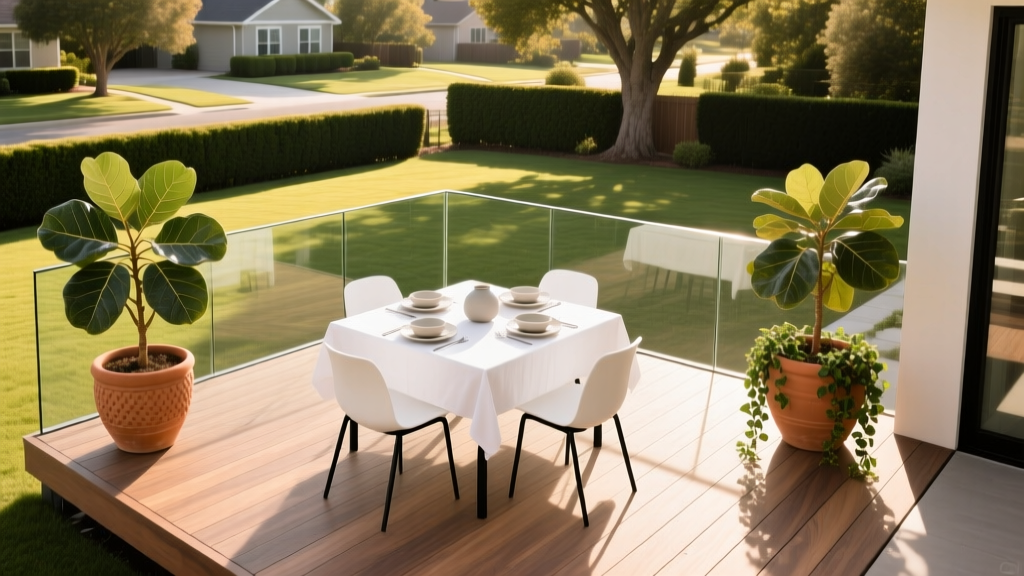
Hidden Structural Maintenance & Failure Modes
Surface decking gets the most attention, but structural failure occurs in the substructure. A 10 x 10 deck relies on a ledger board, joists, and footings. Neglecting these hidden elements leads to catastrophic collapse.
- The Ledger Board Connection: The ledger board attaches the deck to the house. It must be secured with structural screws (e.g., Simpson Strong-Tie SDWS), not standard lag bolts, which can snap under sheer stress. More importantly, the top edge of the ledger must be protected by a butyl-based flashing tape (like Grace Vycor Plus). Asphalt-based papers will bleed onto composite surfaces and degrade under UV exposure.
- Joist Rot and Tape: Water pools on top of horizontal joists, leading to rot long before the surface decking fails. During the initial build, applying a butyl joist tape (like Trex Protect) over every joist and beam is a $150 upgrade that doubles the lifespan of the pressure-treated substructure.
- Hardware Corrosion: Modern pressure-treated lumber (like MicroPro or ACQ) is highly corrosive to standard galvanized steel. All joist hangers, post bases, and fasteners must be rated ZMAX (G185 galvanization) or, ideally, 304/316 stainless steel to prevent structural hardware from rusting through within five years.
Your Annual Deck Maintenance Checklist
Execute this protocol every spring to preserve your investment and maintain manufacturer warranties.
- Clear the Gaps: Use a putty knife or specialized deck gap tool to remove impacted debris between deck boards. Trapped organic matter holds moisture against the board edges, accelerating rot in wood and causing frost-heave expansion in composite.
- Inspect the Substructure: Get under the deck with a flashlight. Probe the joists and ledger board with an awl. If the wood is spongy or the awl penetrates easily, you have active fungal decay that requires joist sistering or replacement.
- Torque Check: Use an impact driver to check the tension on all structural screws in the ledger board and post bases. Wood shrinks and expands seasonally, which can loosen hardware over time.
- Wash the Surface: Apply an oxygen-bleach solution, let it dwell for 15 minutes (do not let it dry), agitate with a stiff-bristle synthetic broom, and rinse with a garden hose.
- Check Railings: Apply lateral pressure to all railing posts. If there is any deflection at the base, tighten the structural through-bolts or replace the mounting brackets.
If your budget for the initial cost to build a 10 x 10 deck is strictly under $4,000, pressure-treated pine is your only viable option, provided you commit to annual oil-based sealing. If you can finance a $7,000+ upfront investment, capped composite eliminates the weekend labor of sanding and staining, ultimately delivering a lower cost-per-square-foot-per-year over a 20-year horizon.
Written by
Sarah WhitfieldSarah Whitfield is a chartered quantity surveyor (MRICS) and construction cost analyst with 15 years of experience in material pricing, procurement strategy, and project budgeting. She earned her degree in Construction Management from the University of Reading (UK) and has worked on projects ranging from $2M custom homes to $180M mixed-use developments across North America and Europe. Sarah currently leads cost estimating for BuildMat Insight, maintaining a proprietary database of 4,000+ material price points updated quarterly. She is a frequent contributor to RSMeans cost data panels and has presented at the International Cost Engineering Council (ICEC) congress. Based in Denver, CO, Sarah is an avid trail runner and volunteer mentor for Women in Construction.
More from Sarah Whitfield
View all
Wood & Lumber
What Are the Different Types of Wood? A Builder's Guide
Compare structural softwoods, finish hardwoods, and engineered lumber. Analyze Janka ratings, MOE values, and 2026 pricing for construction.
Aug 4, 2026

Walls & Panels
Steel Framing vs Wood Framing: Corrosion and Moisture Defense
Compare steel framing vs wood framing for moisture resistance. Learn about galvanized coatings, condensation risks, and corrosion protection strategies.
Jul 21, 2026

Stone & Masonry
How to Cut Stone Veneer: Wet Saw vs Grinder Comparison
Compare the best tools for cutting stone veneer. We review wet saws, angle grinders, and chop saws to help you achieve clean, chip-free cuts.
Jul 21, 2026